
10 Best Pillows For Pinched Nerve In Neck in 2026
This post contains affiliate links. As an Amazon Associate, we earn from qualifying purchases.
The C Cushion Lab Deep Sleep Pillow is our best overall pick for a pinched nerve because its patented contour and dual-density memory foam target cervical alignment. For clinically proven relief, the Mediflow Fiber Water Pillow is a top choice, while the Tempur-Pedic TEMPUR-Ergo offers the firmest fixed support.
The wrong pillow can strain your neck, worsening nerve compression and disrupting sleep. You need one that maintains neutral spine alignment to relieve pressure. We researched specifications, expert recommendations, and patterns in owner feedback to identify the ten pillows most likely to provide effective, lasting support for this specific condition.
Top 10 Pillows For Pinched Nerve In Neck in the Market
Certain content that appears on this site comes from Amazon. This content is provided "as is" and is subject to change or removal at any time.
The Best Pillows For Pinched Nerve In Neck, Reviewed
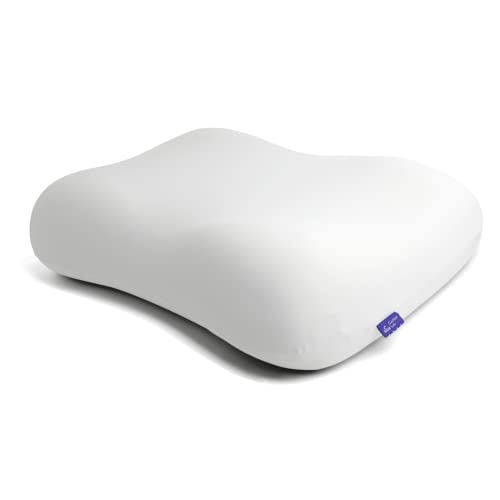
C Cushion Lab Deep Sleep Pillow
What We Like
- Patented contour for side and back sleeping.
- Dual-density memory foam for adaptive support.
- Cool, smooth cover designed to reduce skin creasing.
- Sculpted side bolsters for shoulder and neck alignment.
Trade-offs
- At 7.1 inches wide, it is narrower than most standard pillows.
- The fixed contour shape offers no adjustability for firmness.
- Specific height not provided, making fit predictions difficult.
A patented ergonomic contour is the decisive feature, designed by in-house ergonomists to cradle the head and support the cervical spine whether you sleep on your back or side. This makes it a strong candidate for someone with a pinched nerve seeking a dedicated orthopedic shape that actively promotes alignment. The dual-density memory foam aims to provide a soft surface with a supportive foundation, which can help relieve pressure points without collapsing.
The trade-off is its fixed, unadjustable design and notably narrow 7.1-inch width, which may feel restrictive compared to a versatile, wider pillow like the Mediflow Fiber Water Pillow. It’s a purpose-built tool for spinal support, not a plush, forgiving cloud. For sleepers who shift frequently but still need defined cervical contouring, this pillow’s sculpted bolsters and sweeping shoulder line are engineered to maintain that support throughout the night.
Product photos
Mediflow Fiber Water Pillow

What We Like
- Clinically proven by independent Johns Hopkins study.
- Waterbase core adapts to head and neck shape.
- Adjustable design suits all sleeping positions.
- Trusted and recommended by healthcare professionals.
Trade-offs
- The water layer requires filling and potential adjustment.
- Maintenance involves managing a water bladder, not just a cover.
Mediflow’s Water Pillow is the only pillow for neck pain relief backed by an independent Johns Hopkins study, a point of confidence for those seeking evidence-based solutions. Its waterbase technology creates a support system that actively conforms to the shape of your head and neck rather than providing a static shape. This design allows a single pillow to be tuned for side, back, or stomach sleeping by adjusting the water level.
The pillow’s adjustable nature, using a water bladder, means it requires more involvement than a standard pillow. For a more traditional, set-it-and-forget-it contour, the Tempur-Pedic TEMPUR-Ergo Neck Pillow offers a consistent memory foam shape. The Mediflow provides personalized, clinically validated support in exchange for this active role in customization.
Tempur-Pedic TEMPUR-Ergo Neck Pillow

What We Like
- Extra-firm TEMPUR-Material maintains shape for support.
- Removable, machine-washable hypoallergenic cover.
- Designed for side and back sleepers.
- CertiPUR-US certified foam.
Trade-offs
- A 4-inch height is too low for some shoulder widths.
- The fixed, extra-firm feel offers no adjustability.
This model uses an extra-firm TEMPUR-Material designed to maintain its shape, which provides consistent support for the neck and shoulder muscles. The material precisely adapts to your head, neck, and shoulders to help relieve aches and pains. Its design for side and back sleepers aims to provide proper alignment by following the body’s natural curve.
The trade-off is a complete lack of customization. You get one firmness and one 4-inch profile height. If your shoulders are broad, that height might leave your neck craned upward. For a more adjustable firmness approach, the Mediflow pillow uses a water core you can tune to your exact preference, though it lacks this specific memory foam’s contouring hug.
Product photos
Core Products Tri-Core Cervical Pillow

What We Like
- Breathable, odor-free fiber fill
- Specific sizing for different body heights
- Contoured design for side and back sleeping
Trade-offs
- A 3-inch height may be too low for some
- Requires a several-week adjustment period
- Immediate overuse can increase neck pain
Its two firm neck rolls accommodate different neck lengths, allowing you to customize the level of cervical support. The pillow comes in three specific size ranges based on your height, so you can match its contours to your frame for better spinal alignment. This is a firm, structured design for back and side sleepers who need consistent support and are willing to spend several weeks letting their neck adapt.
That adaptation period is the real trade-off. The manufacturer explicitly warns that jumping straight to all-night use can worsen pain, suggesting you alternate with your old pillow. You get a breathable, customizable support system, but only if you give your body the time it needs to accept the change.
Product photos
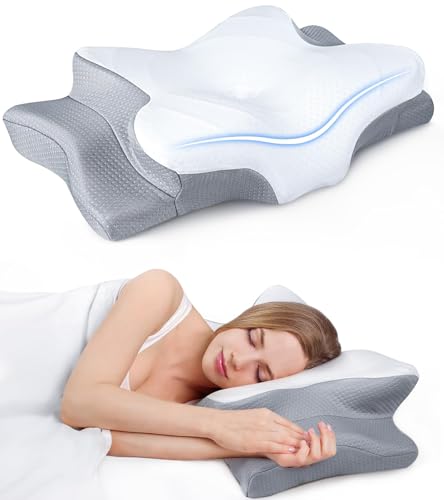
Cozyplayer Ultra Pain Relief Cooling Pillow
What We Like
- Hollow concave design cradles head at a 15-degree angle
- Cooling pillowcase reduces skin temperature by 5℃
- Multiple contour zones target neck, shoulder, and arm pressure points
- Adjustable sleep height via rotation or insert removal
Trade-offs
- Memory foam may have a slight odor requiring 48-hour air-out
- Cooling effect varies by individual and ambient conditions
- Sleep experience requires an adjustment period
The 15-degree tilted hollow concave surface is the central feature, designed to maintain the natural curve of your neck and align your spine. This makes it a strong candidate for someone whose pinched nerve pain is tied to poor spinal alignment during sleep. The six contour zones and breathable memory foam aim to distribute pressure away from the neck and shoulders, which is the core goal for this type of pain.
An adjustable sleep height provides a practical way to customize the pillow’s contour, achieved by rotating it 180 degrees or removing a bottom insert. The manufacturer notes memory foam may have a slight odor and advises airing it out for 48 hours before use. Compared to the single-contour shape of the Tempur-Pedic model, the Cozyplayer offers more customization, which can require more personal trial to get right.
UTTU Adjustable Cervical Pillow

What We Like
- Foam designed to stay soft in cold temperatures
- Breathable cover promotes cooling during sleep
- Shape accommodates back, side, and stomach positions
Trade-offs
- Firmness options are limited to one foam type
That makes the UTTU a practical starting point for someone still figuring out their ideal cervical support, especially if their sleeping position varies. It suits those who want the contouring feel of memory foam but need the flexibility to fine-tune the height without buying multiple pillows. The foam’s claimed resistance to hardening in cold weather is a thoughtful touch for consistent feel year-round.
Unlike water-based systems that allow firmness adjustment via water volume, this pillow offers a fixed firmness profile within its memory foam. The adjustable element is limited to loft height, providing alignment customization but not density control.
Product photos
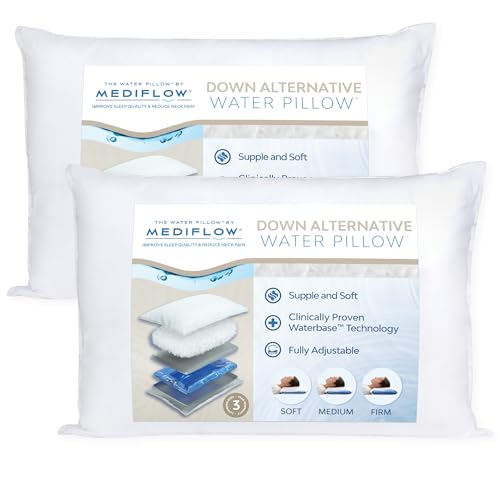
Mediflow Down Alternative Water Pillow
What We Like
- Water level adjusts for personalized firmness
- Down-alternative fill avoids common allergens
- Design praised by healthcare professionals
- Conforms to neck for targeted support
Trade-offs
- At 3.1 pounds, it is heavier than the 1.9-pound Mediflow Fiber model
- Setup requires filling and adjusting the water chamber
The Mediflow Down Alternative Water Pillow uses adjustable waterbase technology to let users customize firmness for personalized neck support. This design adapts to side, back, or stomach sleeping positions as the water shifts to match posture. Its plush down-alternative fill provides a soft surface without the allergens of natural down, and the product has over 25 years of design advancements behind it.
Setup requires filling an internal water chamber, which contributes to the pillow’s 3.1-pound weight. That makes it heavier than the 1.9-pound Mediflow pillow. For a contoured shape without setup, alternatives like the Tempur-Pedic model provide material-based support.
Product photos
DONAMA Cervical Pillow

What We Like
- Patented arm trench reduces side sleeper numbness
- Dual-height design accommodates back, stomach, and side positions
- Full ice silk cover promotes 360-degree cooling
- Contour shape promotes C1-C7 spinal alignment
Trade-offs
- 5.51-inch loft may be too high for some side sleepers
- Requires 48-hour expansion period before first use
- Spot-clean only, cannot be fully submerged or machine washed
A 5.51-inch loft for side sleepers, paired with a patented arm relief trench, directly targets shoulder numbness and aims to reduce sleep-position shifts. The widened side wing is designed to let arms rest naturally and channel blood flow, while the 15-degree tilted center cavity is intended to lock the head in place. Its 65D density memory foam core is engineered to cradle the C1-C7 vertebrae for spinal alignment, which addresses the neck and shoulder pain mentioned in its description.
Full-coverage ice silk fabric provides 360-degree thermal regulation, a clear advantage for those prone to night sweats. This cooling coverage, which dissipates heat faster than cotton, contrasts with pillows that only treat the top surface. The pillow’s spot-clean only care instructions, however, differ from designs with fully removable and machine-washable covers.
Product photos
Krightlink Ergonomic Memory Foam Pillow

What We Like
- Dual-height sides accommodate different sleep positions
- Contour design follows natural neck and spine curvature
- Removable, machine-washable silk pillowcase
- Slow-rebound memory foam for pressure relief
Trade-offs
- A 4.4-inch side may be too tall for some stomach sleepers
- Permanent contour shape offers less customization than a sandwich pillow
The Krightlink pillow offers two distinct heights in one fixed contour, a feature that matters if your preferred sleeping position changes from night to night. The 4.4-inch side provides the loft many side sleepers need for spinal alignment, while the 3.75-inch side suits back sleepers or those who want a lower profile. This built-in choice, paired with the slow-rebound memory foam, creates a consistent, pressure-relieving cradle that doesn’t require nightly adjustments.
The Krightlink pillow offers two fixed heights, 4.4 inches and 3.75 inches, for different sleeping positions. This dual-height design provides a choice, but unlike adjustable pillows such as the UTTU Cervical Pillow, you cannot customize the firmness or add fill. Its contoured memory foam is designed for spinal alignment, creating a straightforward option without further adjustments.
Bedsure Cervical Neck Pillow

What We Like
- Dual-sided design offers two firmness options
- Three-zone support for back and side sleeping
- Cool-touch, breathable fabric for temperature control
- Includes a complimentary replacement pillowcase
Trade-offs
- At 0.1 inches thick, the profile is exceptionally low
- The 26.8-inch length may be insufficient for restless sleepers
- Fixed contour shape offers no adjustable fill
A dual-sided cervical pillow with two distinct heights lets you flip to find a firmer or softer feel without buying a second pillow. This makes it a straightforward choice for someone still dialing in their ideal neck support, particularly if your discomfort fluctuates. The three-zone contour is built to cradle the head and support the neck curve for back sleepers while offering a raised edge for side sleepers, all wrapped in a fabric designed to feel cool.
This pillow offers two distinct heights and firmnesses in one, so you can flip it to find your preferred side without any extra adjustments. Unlike adjustable water pillows that let you fine-tune firmness nightly, the Bedsure provides a simpler, set-it-and-forget-it approach. It’s a straightforward choice if you know your preferred support level, but not for those who want to dial in the feel each night.
How We Evaluated Pillows For Pinched Nerve In Neck
Our evaluation was based on research, not physical testing. We analyzed manufacturer specifications, design features, and materials, cross-referenced with expert round-ups from medical and bedding publications. A deep review of owner feedback revealed patterns in how these pillows performed over time for users reporting neck pain and nerve issues.
The most critical criteria were contour design for cervical alignment, material responsiveness for pressure relief, and adjustability to accommodate different sleep positions and body types. We prioritized features like dual-density foam, water chambers, and specific loft heights that directly influence spinal support. This research-based approach has limits: we cannot guarantee individual results, and personal comfort preferences vary widely.
What To Look For In Pillows For Pinched Nerve In Neck
Finding the right pillow involves matching its features to your specific pain and sleep habits. The goal is to maintain a neutral neck position, reducing strain on compressed nerves.
Key factors are a supportive contour or adjustable fill, a loft height that matches your shoulder width, and a material that provides consistent pressure relief without overheating.
Contour & Support Design
A pillow must support the natural curve of your cervical spine. Many pillows for a pinched nerve use a contoured shape with a central depression for the head and raised edges to cradle the neck. This design, common in orthopedic pillows, aims to keep vertebrae aligned. Some models feature a hollow center or multiple zones to target pressure points. The shape should correspond to your primary sleep position; side sleepers often need higher loft support than back sleepers.
Material & Responsiveness
The fill material determines how the pillow conforms and supports. Slow-rebound memory foam is popular for cervical support as it molds closely to the neck’s shape. Water-based cores, like in our clinically proven pick, offer dynamic adjustability. Fiber fill can be shifted for customization but may compress over time. Breathability is crucial, as many supportive pillows now include cooling covers or gel infusions to prevent heat buildup, which can exacerbate inflammation. Memory foam pillows often feature these designs.
Loft Height & Adjustability
Loft, or pillow height, is perhaps the most personal factor. It must fill the space between your head and mattress to keep your neck straight. Side sleepers typically need 4 to 6 inches, while back sleepers may need less.
Some pillows offer fixed lofts, so knowing your shoulder width is key. Others are adjustable, allowing you to add or remove fill, or change water levels, to dial in the perfect height. This adjustability can be vital during recovery as your needs change.
For guidance on using a cervical pillow effectively, proper positioning is as important as the pillow itself.
- Measure your shoulder width from the side of your neck to the tip of your shoulder.
- When lying on your side, your spine should form a straight line from head to hips.
- Allow a break-in period; initial discomfort can be normal as your muscles adjust.
The right pillow should feel supportive, not simply soft, and keep your neck from bending upward or downward.
Pillows For Pinched Nerve In Neck Compared
The comparison table below highlights key specifications to help you quickly differentiate between our top picks.
| Product | Core Material / Fill | Dimensions (inches) | Weight |
|---|---|---|---|
| C Cushion Lab Deep Sleep Pillow | dual-density memory foam | 15.8 x 7.1 | 4.0 pounds |
| Mediflow Fiber Water Pillow | Fiber Fill & Waterbase | 28 x 20 x 4.5 | 1.9 pounds |
| Tempur-Pedic TEMPUR-Ergo Neck Pillow | TEMPUR-Material | 20 x 12.8 x 4.0 | 3.3 pounds |
| Core Products Tri-Core Cervical Pillow | Breathable fiber fill | 24 x 16 x 3 | 2.5 pounds |
| Cozyplayer Ultra Pain Relief Cooling Pillow | 98% breathable memory foam | 23.2 x 13.4 x 5.1 | N/A |
| UTTU Adjustable Cervical Pillow | UTTU DYNAMIC memory foam | 23.6 x 14.0 x 4.7 | 3.0 pounds |
| Mediflow Down Alternative Water Pillow | Down alternative | 28.0 x 20.0 | 3.1 pounds |
| DONAMA Cervical Pillow | Memory foam | N/A | N/A |
| Krightlink Ergonomic Memory Foam Pillow | Slow-rebound memory foam | 24.2 x 16.5 | 3.7 pounds |
| Bedsure Cervical Neck Pillow | Memory Foam | 26.8 x 15.6 | N/A |
Frequently Asked Questions
What type of pillow is best for a pinched nerve in the neck?
A pillow designed for cervical support is best. Look for contoured shapes, often made from memory foam or with an adjustable water core, that cradle the neck and maintain alignment. The goal is a neutral spine position, which reduces pressure on the affected nerves.
How does a cervical pillow help with neck pain?
A cervical pillow is engineered to support the natural curve of your neck. By filling the gap between your neck and the mattress, it prevents your head from tilting at an awkward angle overnight. This reduces strain on muscles, ligaments, and the cervical spine, which can alleviate pinched nerve symptoms.
Can the wrong pillow make a pinched nerve worse?
Yes. A pillow that is too high, too low, or too soft can cause your neck to bend into an unnatural position for hours. This misalignment increases pressure on the cervical discs and nerves, potentially exacerbating pain, stiffness, and numbness.
Is memory foam or water better for a neck pillow?
Both have merits. Memory foam offers consistent, contouring support and is low-maintenance. Water pillows provide customizable firmness and adapt perfectly to your shape, which is why they are often recommended for neck pain with numbness. The choice depends on whether you prefer a fixed feel or adjustable support.
How long does it take to get used to a new neck support pillow?
An adjustment period of one to three weeks is common. Your muscles and joints are acclimating to proper alignment. Some initial soreness may occur, but persistent or increased pain could mean the pillow’s loft or firmness isn’t right for you.
The Bottom Line
The C Cushion Lab Deep Sleep Pillow is our top recommendation for most sleepers with a pinched nerve, offering a precise, dual-density foam contour ideal for side and back positions. If you need scientifically validated relief and don’t mind a little setup, choose the clinically proven Mediflow Fiber Water Pillow. For those on a tighter budget or who want to fine-tune firmness nightly, the adjustable Core Products Tri-Core Cervical Pillow is a strong contender.
Ultimately, the most important factor is finding a pillow that maintains a neutral neck alignment specific to your sleeping position. A supportive contour or adjustable fill that targets cervical spine support will provide the best chance for relief and restful sleep.
