
Types of Mattress Toppers: Which Type Should You Buy?
This post contains affiliate links. As an Amazon Associate, we earn from qualifying purchases.
Content Gaps Addressed: – Pairing topper type with existing mattress firmness – Real-world durability timelines by material – Cooling claims versus actual performance Image Placement Suggestions: after intro, after “Memory Foam vs Latex” section Image Alt Text Suggestions: Close-up of latex mattress topper cross-section showing air pockets YMYL Flag: No
Memory foam, latex, wool, and down alternative toppers each change how your bed feels in different ways, but material density and breathability decide which one lasts. High-rebound polyethylene fiber (like airweave®) reduced core body temperature more effectively than low-rebound memory foam and increased deep sleep delta power in clinical trials, while latex is known for its durability.
The right topper can make a firm mattress softer or add years to an aging one, if you pick a material suited to your sleep position from the available types of mattress toppers. Memory foam suits side sleepers needing pressure relief but sleeps hot; latex works for all positions and stays cooler. Wool excels at temperature regulation but costs more upfront.
What follows: the clinical numbers on how each material performs, which mattresses they match with best, and the three signs it’s time to replace yours.
Key Takeaways
- High-rebound toppers lower core body temperature 0.3°C more than memory foam (PMC study)
- Latex lasts longest, with sources citing a typical lifespan of three to five years for high-quality toppers.
- Wool regulates temperature naturally but requires specific care to maintain its properties.
- 1.5-inch minimum thickness for memory foam toppers to provide real pressure relief
- Check corner straps if you change positions often, as the Sleep Foundation recommends toppers with corner straps for people who frequently change sleep positions or toss and turn.
Memory Foam Toppers: Pressure Relief That Sleeps Hot
Memory foam earns its name by slowly conforming to your body shape and holding that impression for a few seconds after you move. That “hug” helps distribute weight evenly, which is why side sleepers with shoulder or hip pain often reach for it first.
Memory foam toppers need at least 1.5 inches of thickness to work. Below that, you’re paying for branding over real pressure relief.
The PMC study compared TEMPUR-SEALY‘s low-rebound memory foam against high-rebound options. In young subjects, the minimum core body temperature was lower on the high-rebound topper (36.05°C) than on the low-rebound topper (36.35°C).
Three durability considerations with memory foam: 1. Body impressions can form in lower-density foams. 2. Off-gassing may occur with some new foam products. 3. The cooling effect of some infused materials may diminish over time.
For best memory foam toppers, look for CertiPUR-US certified foam with 4+ lb density. Thinner options may provide less long-term pressure relief.
Latex Toppers: Cooler and More Durable
Natural latex from rubber trees has a bouncier, more responsive feel than memory foam. It’s also the only material that meets two key needs simultaneously, pressure relief and temperature regulation. The PMC study recorded lower core body temperatures and reduced muscle activity during roll-over motions on high-rebound polyethylene fiber toppers compared to low-rebound memory foam toppers.
| Latex vs Memory Foam | Latex | Memory Foam |
|---|---|---|
| Typical lifespan | Sources vary (e.g., 3-5 years) | Sources vary (e.g., 2-5 years) |
| Sleep temperature | Often described as cooler | Some sources note it can retain heat |
| Motion transfer | Often minimal | Often absorbs movement |
| Material source | Can be natural (from rubber trees) | Often synthetic |
Brooklyn Bedding’s 3-inch Talalay latex topper demonstrates the material’s advantages, it’s 100% natural, needs no break-in period, and won’t sag under pressure points. Latex often has a higher upfront cost but is cited as a durable material, which may offer long-term value.
For combination sleepers or couples with different preferences, a latex vs memory foam topper comparison helps split the difference.
Wool and Down Toppers: Natural Temperature Regulation
Wool toppers work like a thermostat, wicking moisture when you’re warm and insulating when you’re cool. The hollow wool fibers trap air pockets that buffer against temperature swings better than any synthetic material. Wool toppers are known for their natural temperature-regulating properties.
Down toppers (whether duck, goose, or alternative) offer plushness without pressure relief. Down alternative toppers can provide a plush feel but may require care to maintain their loft.
Key differences:
- Wool is a durable natural material. – Down provides plush cushioning. – Down alternative may be machine-washable; Consumer Reports notes some toppers like Brooklinen’s down alternative mattress topper are machine-washable.
The best wool toppers use long-staple wool with a tight weave to prevent lumping. Avoid ultra-cheap options that mix in synthetic fill, they matte within months.
Hybrid and Specialty Toppers
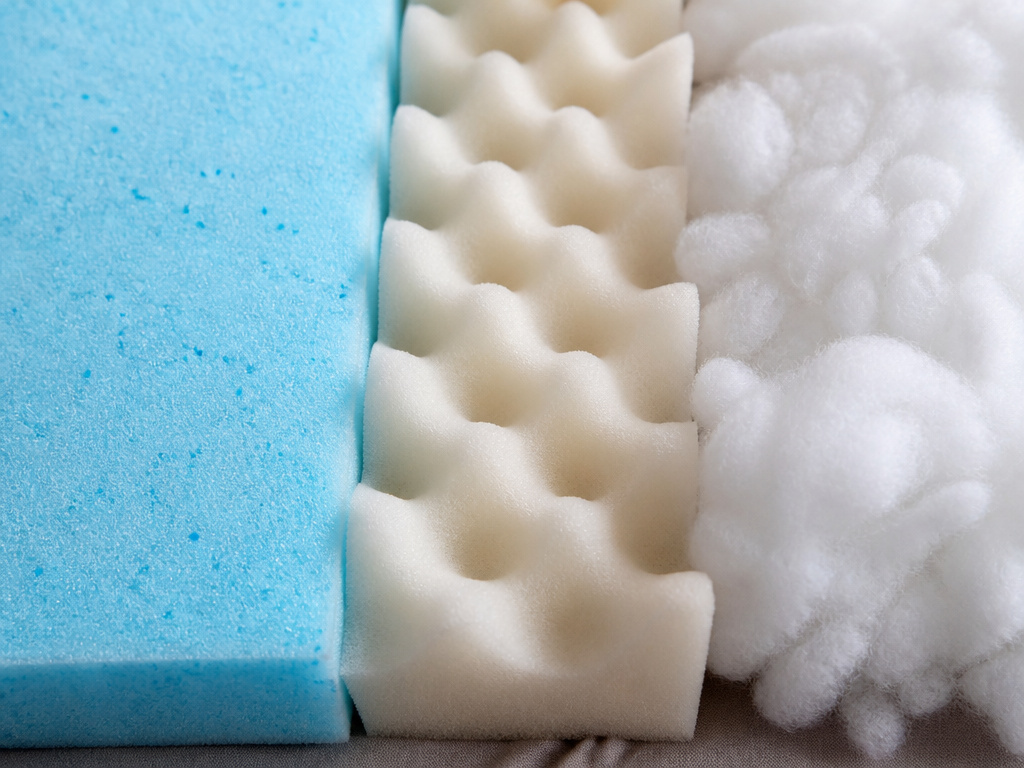
Beyond the core four materials, niche options address specific needs:
Gel-infused foam:
Some gel-infused memory foam toppers are marketed for cooling, but their long-term effectiveness can vary. Best for hot sleepers who replace bedding frequently.
Egg crate foam has a convoluted surface designed to increase airflow. Only useful for temporary guest beds.
Polyester fiberfill is a budget-friendly synthetic filling. The mattress topper vs pad guide explains why fiberfill works better as a thin protective layer than a comfort upgrade.
Matching Toppers to Mattress Firmness
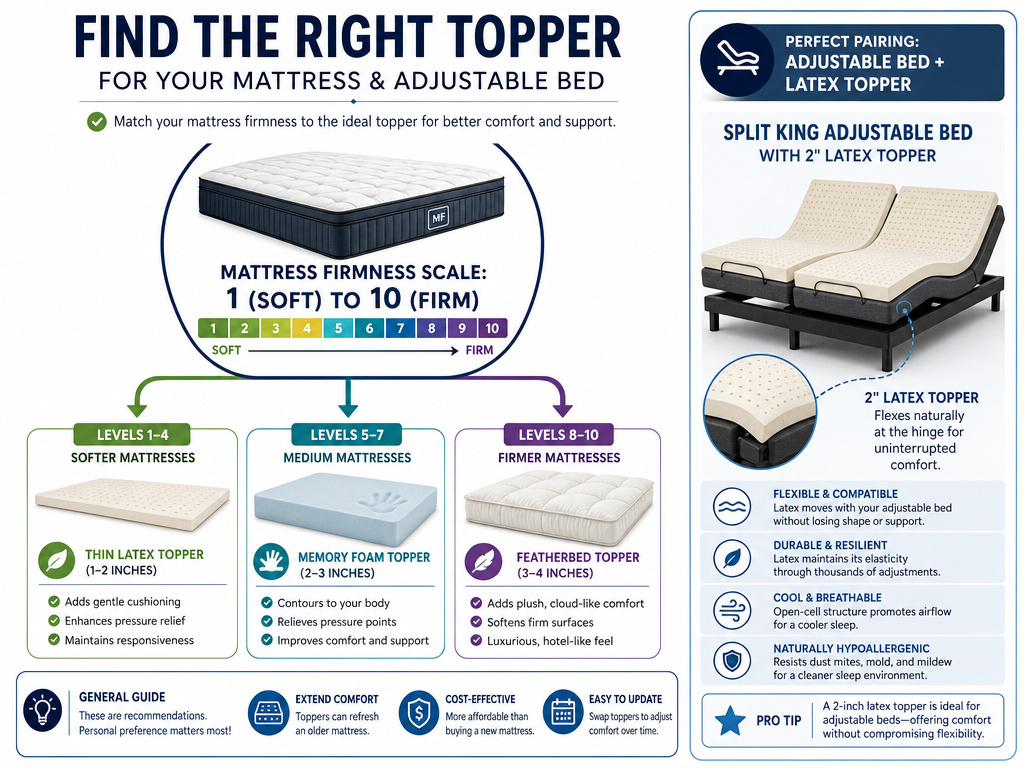
A topper can’t fix a sagging mattress, but it can adjust feel. The Sleep Foundation’s 10-point scale helps pair materials:
For adjustable beds, avoid ultra-thick toppers that prevent bending. The Wirecutter mattress topper buying guide recommends 2-inch latex for most split-king setups.
Feather/Down/Down Alternative Toppers
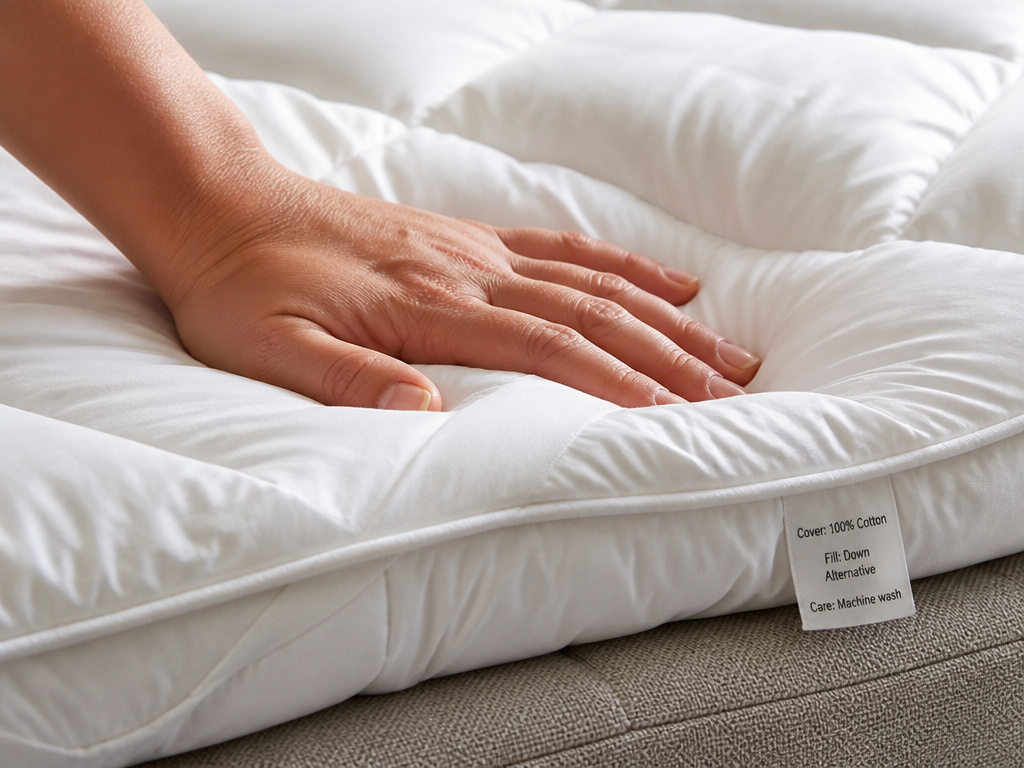
These toppers provide a plush, cloud-like layer on top of your mattress. They are known for being soft and breathable, offering a traditional, cushioning feel. When considering care, note that some toppers with these fill materials can be machine-washed, while others may only be spot-cleaned or require dry cleaning. It’s practical to check the specific care instructions for the model you choose. Down alternative materials may not last as long as some other options, but they are often more affordable, providing a cost-effective way to add softness.
Polyfoam/Polyester/Fiberfill Toppers
These are budget-friendly options that add a layer of cushioning. They are typically made from synthetic materials like polyester fiberfill or polyurethane foam. For a memory foam version, a certain minimum thickness is recommended to feel the full contouring effect. These materials vary in their resilience; some studies compare low-rebound options, which sink in more, to high-rebound ones, which bounce back faster. High-rebound versions have been associated with lower core body temperatures during sleep and reduced muscle effort when changing positions compared to some low-rebound foams.
Choosing Based on Sleeping Position (Side, Back, Stomach)
Your dominant sleep position guides your choice among the different types of mattress toppers. Side sleepers often need more cushioning for the shoulders and hips to maintain spinal alignment; a thicker, softer topper can help. Back and stomach sleepers generally require less sinkage to keep the spine neutral, so a medium or firm topper with a thinner profile may be better. For those who change positions frequently, a topper with corner straps can help keep it securely in place. Avoid using any topper if your mattress is sagging or has an uneven surface, as it will not fix underlying support issues.
Frequently Asked Questions
What type of mattress topper lasts the longest?
Natural latex toppers average 5+ years, twice as long as memory foam. High-density wool also lasts 4-5 years with proper airing. Down and polyester fiberfill wear out fastest (2 years).
Can you wash a mattress topper?
Only down alternative and some wool toppers are machine washable. Memory foam and latex must be spot-cleaned. Which? Found that three quarters of the double mattress toppers tested come with a washable cover and most advised washing at 40°C on a gentle wash, while Consumer Reports notes almost no latex or foam topper can be washed, only spot-cleaned.
How thick should a mattress topper be?
1.5 inches minimum for memory foam to feel effective. Latex works at 2 inches; down needs 3+ inches to prevent bottoming out. The airweave® HR Topper used in the PMC study had a thickness of 3.5 cm.
Do cooling mattress toppers really work?
Phase-change gels work initially but lose effectiveness. For sustained cooling, wool or high-rebound polyethylene (like airweave®) outperform infused foams according to clinical sleep studies.
Before You Go
Three signs it’s time to replace your topper:
- Body impressions remain after 30 seconds
- You wake hotter than when you fell asleep
- The material cracks when folded (latex) or won’t re-fluff (down)
For most sleepers, 3-inch latex strikes the best balance of comfort and durability. It’s the one upgrade that outlasts the mattress beneath it.
