
10 Best Pillows For Tension Headaches in 2026
This post contains affiliate links. As an Amazon Associate, we earn from qualifying purchases.
Our research points to the Mediflow Fiber Water Pillow as the best overall for tension headaches, thanks to its clinically validated, adjustable water base that supports proper neck alignment. For cooling support, the Purple Harmony Pillow stands out, while the Sidney Sleep Adjustable Curved Pillow is the top choice for personal fine-tuning.
Tension headaches often stem from overnight neck strain. The wrong pillow can leave your head unsupported or your spine misaligned, tightening muscles that trigger morning pain. This guide was built by comparing manufacturer specs, expert insights, and patterns in owner feedback across ten leading pillows designed to address this specific problem.
Top 10 Pillows For Tension Headaches in the Market
Certain content that appears on this site comes from Amazon. This content is provided "as is" and is subject to change or removal at any time.
The Best Pillows For Tension Headaches, Reviewed
Mediflow Fiber Water Pillow

What We Like
- Clinically proven neck pain relief from Johns Hopkins study
- Waterbase adjusts firmness for all sleeping positions
- FDA registered as a medical device
- Trusted by sleep doctors and chiropractors
Trade-offs
- Water layer requires filling and adjustment, not a simple drop-in-place
- The 4.5-inch height may be too low for some side sleepers without adjustment
The Mediflow Fiber Water Pillow is the only pillow for neck pain relief backed by an independent Johns Hopkins study, meaning its claims are supported by clinical research. Its design uses a two-layer system: a plush Fiber Fill top for cushioned comfort and a Waterbase bottom for personalized support. This combination adapts to the shape of your head and neck, providing adjustable firmness and height for side, back, and stomach sleepers.
The water component requires filling to achieve a preferred firmness, which adds a step compared to pillows that are ready to use immediately. For those who prioritize a pillow with a clinically proven reduction in neck pain and the ability to adjust its feel, the Mediflow system provides that documented, customizable support.
Purple Harmony Pillow
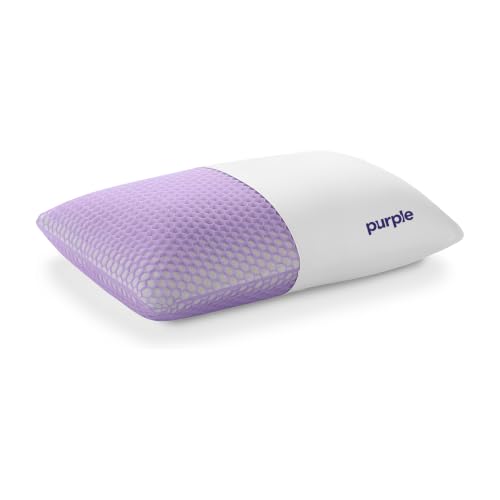
What We Like
- GelFlex Grid and latex for pressure-relieving support.
- Temperature-balancing materials promote all-night cooling.
- Holds shape without fluffing or flattening.
- Machine-washable cover simplifies maintenance.
Trade-offs
- Single medium feel lacks adjustable height options.
- At 1.0 pound, may feel insubstantial for some preferences.
- Standard 26-inch length is shorter than some competitors.
Purple’s GelFlex Grid and Talalay Latex foam cradle the head and neck to ease pressure points, which is the primary relief mechanism for tension headaches. The cooling gel technology and aerated latex actively pull heat away, making it a standout for hot sleepers who need that relief to stay asleep. Its Medium loft of 6.5 inches is noted as a favorite for side sleepers who feel shoulder pressure, and the pillow is tuned to one balanced medium feel, supportive but never hard.
The trade-off is its fixed, medium feel, which doesn’t offer the personalized adjustability of a water-based pillow like the Mediflow. While the Harmony’s materials promise durable, weightless support that needs no maintenance, its lighter weight and standard length might not satisfy someone seeking a heavier, more enveloping contour. For those whose headaches are exacerbated by heat retention, however, its cooling design provides the relief hot sleepers look for and rarely find.
Sidney Sleep Adjustable Curved Pillow
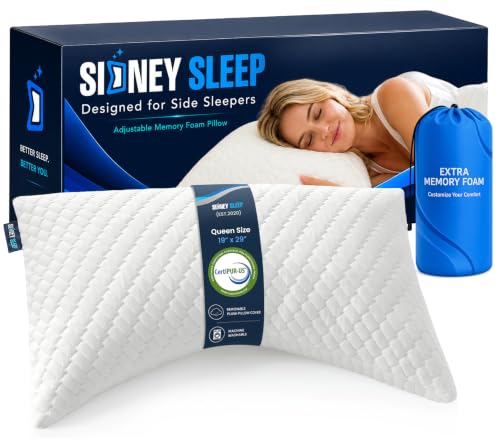
What We Like
- Adjustable fill lets you customize firmness and loft
- Curved design cradles neck for side and back sleepers
- Machine-washable cover simplifies upkeep
- Shredded fill resists flattening for long-term shape
Trade-offs
- Adjustable design requires manual setup to find ideal fill
- Queen size pillow requires a 19 x 29 inch pillowcase
The ability to add or remove shredded fill is the central feature, letting you dial in the exact loft and firmness your head and neck need to align without pressure. This makes it a strong candidate for anyone whose tension headaches are tied to waking up with a stiff neck, as you can tweak it nightly until the support feels just right. It’s built to contour and adapt, suiting both side and back sleepers who want a pillow that conforms rather than forcing a single posture.
Achieving the right support requires an initial investment of time, as you must experiment by adding or removing shredded fill over several nights to find your preferred firmness and loft. This process is less immediate than using a pillow that arrives with a preset feel.
Product photos
Tempur-Pedic TEMPUR-Ergo Neck Pillow

What We Like
- Extra-firm TEMPUR-Material for consistent support.
- Contour shape aids head and neck alignment.
- Removable, machine-washable hypoallergenic cover.
- CertiPUR-US certified for material integrity.
Trade-offs
- At 3.3 pounds, it is heavier than many pillows.
The extra-firm TEMPUR-Material is the defining feature here, designed to maintain its shape without collapsing. This creates a consistent contour that keeps the neck and shoulder muscles supported throughout the night. According to the brand, this design is perfect for side and back sleepers seeking proper alignment.
That support comes from a fixed, medium-profile shape, which means the feel is not adjustable like some other cervical pillows on the market. Its extra-firm material provides a set level of support suited for its stated purpose, offering a different experience than pillows designed for soft conforming or customization. This makes it a long-term solution backed by a five-year limited warranty.
Product photos
UTTU Cervical Pillow

What We Like
- Foam stays pliable in cold temperatures
- Breathable cover promotes cooling
- Contoured shape for multiple sleep positions
Trade-offs
- Lowest contour height of 3.2 inches may be too shallow for some
- Shorter length than the Mediflow Fiber Water Pillow
UTTU’s pillow provides adjustable loft for neck pain relief, letting sleepers choose between two height configurations. Its unique sandwich design offers a high and low contour in each setup, with heights of 5.2 and 4.5 inches initially, or 4.0 and 3.2 inches after removing the middle layer. This makes it a practical choice for someone whose ideal neck support shifts with their sleeping position or who shares the bed with a partner needing a different height. Its proprietary memory foam is designed to resist hardening in the cold, which maintains its pressure-relieving contour year-round. The breathable cover adds a cooling element, and the overall design accommodates side, back, and stomach sleeping.
The trade-off is that its firmness is fixed, unlike pillows with adjustable shredded fill. Its 23.6-inch length is shorter than the Mediflow Fiber Water Pillow’s 28.0-inch length, which may be a consideration for taller individuals. For the person seeking straightforward, adjustable loft control without the fuss of adding or removing fill, this pillow delivers a clear, cooling solution.
Product photos
Cozyplayer Ultra Pain Relief Pillow

What We Like
- Hollow concave design cradles head at a 15-degree angle.
- Six contour zones target neck, shoulder, and arm pressure points.
- Adjustable sleep height via rotation or insert removal.
Trade-offs
- Memory foam may have a slight odor requiring 48-hour air-out.
- Cooling effect varies by individual and ambient conditions.
- Body may need an adjustment period for the contoured shape.
The hollow concave surface tilted at 15 degrees is designed to maintain the natural curve of your neck while aligning your spine. This makes it a candidate for anyone whose tension headaches stem from cervical misalignment during sleep. Its six contour zones aim to distribute pressure away from the neck and shoulders, and the breathable memory foam core paired with a specialized cooling pillowcase targets night sweats, a common headache trigger. It’s built for sleepers seeking a structured, orthopedic approach to pillow support.
You can rotate the pillow 180 degrees or remove a bottom insert to adjust its contouring and find a preferred sleep height. The manufacturer notes the cooling effect depends on individual and ambient conditions, and that the sleep experience may vary, requiring some adjustment time. Among other contoured pillows, the Sidney Sleep Adjustable Curved Pillow is also listed as having extra shredded fill.
DONAMA Cervical Pillow

What We Like
- Patented arm trench aims to prevent side-sleeper numbness
- Full-coverage cooling fabric for all-night temperature regulation
- Contour design intended to promote C1-C7 spinal alignment
Trade-offs
- 48-hour full expansion time requires planning before first use
- Spot-clean only care limits laundering options
- Fixed contour shape offers less adjustability than shredded-fill models
Side sleepers get a 5.51-inch loft and a patented arm relief trench, which aims to reduce shoulder pressure and hand numbness by letting the arm rest naturally. The high-density memory foam core is designed to cradle the C1 to C7 vertebrae to promote spinal alignment. A third-party lab test reported a claimed 83% reduction in sleep-position shifts, which may help some users stay in a supported posture.
The pillow’s contour is a fixed shape, unlike adjustable options such as the Sidney Sleep Curved Pillow where fill can be added or removed. Its ergonomic curve and two loft heights require a commitment to that specific design. The 100% uniform ice silk fabric provides full-coverage cooling, but the pillow requires 48 hours to fully expand and is limited to spot cleaning.
Product photos
VYLEE Cervical Neck Pillow
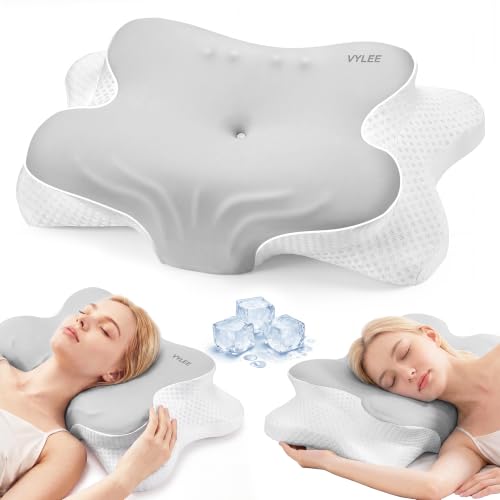
What We Like
- Dual-height design for personalized neck support
- Contour shape supports head, neck, and shoulders
- Cooling, breathable, and washable pillowcase
- Memory foam adapts without flattening over time
Trade-offs
- Fixed foam design lacks adjustable fill for fine-tuning
A dual-height design with 3.9-inch and 4.9-inch sides provides the core adjustment, letting you find the loft that best aligns your neck. This allows side or back sleepers to experiment for personalized support. Its butterfly contour shape and memory foam are designed to cradle the head and neck, which can help reduce muscular strain.
Its 11.5-inch length results in a compact form focused on cervical support. While feature bullets state it supports the head, neck, shoulders, and upper back, its narrower profile is designed for targeted alignment rather than broad shoulder coverage. For sleepers wanting a different type of adjustability, the Sidney Sleep Adjustable Curved Pillow offers a larger, curved queen-size shape.
Product photos
Latree 5X Pain Relief Pillow

What We Like
- Butterfly contour cradles head for spinal alignment
- Open cell foam and 3D mesh case for cooling
- Six support zones and armrests for all sleep positions
- Dual-height design maintains recommended 15-degree angle
Trade-offs
- Low 0.1-inch height dimension suggests a very flat profile
- Butterfly shape may not suit those preferring a simple rectangle
- Cooling relies on case breathability, not a gel or phase-change layer
Latree’s pillow uses a 95% open cell memory foam core and a 3D mesh pillowcase, which the brand says provides three times the breathability of other contour pillows for a cooler sleep surface. Its butterfly-shaped design includes six contour zones and built-in armrests to support the neck and shoulders, aiming to relieve muscle stiffness for side, back, and stomach sleepers. Rotating the pillow 180 degrees changes the contour height, a feature intended to help maintain the 15-degree cervical angle cited by Dr. Jim.
The design is a specific contour shape with a central hollow, differing from the rectangular form of other products like the Mediflow Fiber Water Pillow. Its ergonomic hollow contour aims to cradle the head and maintain the neck’s natural curve for pain relief. For sleepers concerned with heat and seeking structured neck support, the pillow combines its cooling claims with multi-zone design.
Cozyhealth Cervical Neck Pillow

What We Like
- Unique 2-in-1 neck roll and cervical pillow design
- Ergonomic concave shape fits and gently stretches the neck
- Memory foam core retains shape for long-term support
- Includes a removable, hypoallergenic pillowcase for easy cleaning
Trade-offs
- Initial use may cause discomfort, requiring a gradual break-in period.
This pillow’s 2-in-1 design merges a neck roll for gentle stretching with a cervical pillow’s contour, directly targeting the gap between neck and mattress. It suits someone who needs precise, unchanging alignment for pain relief. The memory foam core has a slow rebound feature and keeps its shape without going flat, which maintains consistent support. A removable, washable pillowcase adds practicality for nightly use.
With a width of 7.1 inches, the pillow functions solely as a neck bolster, not a full head pillow. Most users will need to place it on top of a standard pillow. Among other cervical pillows, the Tempur-Pedic TEMPUR-Ergo Neck Pillow shares a similar dedicated cervical support role but weighs 3.3 pounds, over three times more than this 1.0-pound model.
Product photos
How We Evaluated Pillows For Tension Headaches
This guide is based on a review of product specifications and manufacturer information to compare materials, adjustability, and recommended sleep positions. It also considers professional recommendations and patterns in verified customer reviews, with particular attention to reports of lasting neck support and headache relief.
We prioritized criteria with a direct link to reducing neck strain: adjustable height for personalized alignment, material and design for consistent support, and features like cooling or ergonomic contours that address common sleep complaints. We considered ease of maintenance and initial setup as practical factors.
A research-led approach has limits. We cannot replicate the personal experience of sleeping on a pillow, and individual body dimensions and pain sensitivity play a huge role. Our findings highlight well-regarded options, but your perfect match may require some personal experimentation.
What To Look For In Pillows For Tension Headaches
Choosing the right pillow is about filling the gap between your head, neck, and mattress to keep your spine neutral. The wrong loft or firmness strains the suboccipital muscles at the base of your skull, a common source of tension-type and cervicogenic headaches.
Look for adjustable height or a fixed contour that matches your sleep position, materials that maintain support without trapping heat, and a design that targets cervical alignment to reduce overnight neck strain.
Height and Adjustability
Pillow height, or loft, is critical. Side sleepers generally need a higher loft (around 4 to 6 inches) to fill the shoulder-to-neck gap and keep the spine straight. Back sleepers need a lower, thinner pillow to avoid pushing the chin toward the chest. Stomach sleepers often do best with a very flat option. Many of the best pillows for headaches offer adjustable fill or dual-height designs, like the UTTU Cervical Pillow, allowing you to fine-tune the support night-to-night as your needs change.
Material and Support
The material determines how well a pillow holds its supportive shape. Memory foam and latex conform to your head and neck, providing consistent pressure relief, while water bases offer a unique, adjustable firmness. Traditional down or polyester fills can compress over time, losing the necessary loft. For those sensitive to heat, materials like gel-infused foam, latex, or breathable covers are key; a pillow that traps heat and disrupts sleep can be a common cause of headaches. Look for cervical pillows or contour pillows designed with ergonomic shapes to cradle the neck.
Sleep Position Compatibility
Your dominant sleep position dictates the pillow shape you need. Side sleepers benefit from firmer, higher-loft pillows or designs with arm trenches, like the DONAMA Cervical Pillow. Back sleepers often find relief with a medium-loft pillow that has a central contour or recess for the head. Stomach sleepers require a very soft, almost flat pillow to minimize neck rotation. Some pillows for migraines and tension headaches are designed for multiple positions, but verifying a pillow’s intended use is a crucial step in making the right choice.
- Measure your shoulder width to estimate the loft needed for side sleeping.
- Check if the pillow’s care instructions (machine-washable cover, spot-clean only) match your maintenance preferences.
- Allow for a break-in period, as some firmer foams or new shapes require adjustment.
The right pillow should keep your head level with your spine, not tilted up or down.
Pillows For Tension Headaches Compared
The following table compares key features of our top picks at a glance.
| Product | Sleep Position Support | Core Material | Cover Features |
|---|---|---|---|
| Mediflow Fiber Water Pillow | Side, back, stomach | Fiber fill top, Waterbase bottom | N/A |
| Purple Harmony Pillow | Side Sleeper Pillow | GelFlex Grid & Talalay Latex | Machine-washable, moisture-wicking |
| Sidney Sleep Adjustable Curved Pillow | Side and back sleepers | Shredded | Removable, machine washable |
| Tempur-Pedic TEMPUR-Ergo Neck Pillow | Side and back sleepers | TEMPUR-Material | Removable polyester knit |
| UTTU Cervical Pillow | Side back stomach sleeper | UTTU DYNAMIC FOAM | Breathable, machine washable |
| Cozyplayer Ultra Pain Relief Pillow | Side Back Stomach Sleeper | Memory Foam | Q-Max 0.4 Arc-Chill cooling |
| DONAMA Cervical Pillow | Side Back Stomach Sleepers | CertiPUR-US memory foam | Full-coverage Ice Silk Fabric |
| VYLEE Cervical Neck Pillow | Side, Back and Stomach Sleepers | High-density memory foam | Removable nylon-spandex blend |
| Latree 5X Pain Relief Pillow | Side Back Stomach Sleeper | 95% open cell memory foam | 3D mesh pillowcase |
| Cozyhealth Cervical Neck Pillow | N/A | Memory foam | Removable, washable |
Frequently Asked Questions
What type of pillow is best for tension headaches?
Pillows that promote proper cervical alignment are best. Look for ergonomic designs like contours or cervical shapes, and materials that maintain supportive loft, such as memory foam, latex, or adjustable water bases. The goal is to keep your head neutrally aligned with your spine all night.
How to sleep if you have a tension headache?
Sleep in a position that minimizes neck strain. For many, this is on your back with a supportive, medium-loft pillow, or on your side with a pillow that fills the gap to your shoulder. Avoid stomach sleeping, as it twists the neck. Using a supportive pillow designed for your sleep position is key.
What type of pillow is best for migraines?
While individual triggers vary, migraine sufferers often benefit from pillows with pressure-relieving support and temperature-regulating features. Cooling gel pillows, breathable latex, or adjustable options can help manage sensitivity.
How to calm down a tension headache?
Gentle neck stretches, applying a warm compress to the neck and shoulders, and resting in a quiet, dark room can help. Ensuring you have a supportive sleep setup, including a proper pillow, addresses the root muscular tension that often causes these headaches.
Can a pillow cause neck pain and headaches?
Yes, an unsupportive pillow is a common culprit. A pillow that is too high, too flat, or loses its shape can strain the muscles and joints at the base of your skull, leading to tension-type or cervicogenic headaches. Replacing an old or ill-fitting pillow is a practical first step.
The Bottom Line
For most sleepers seeking relief from tension headaches, the Mediflow Fiber Water Pillow is the best overall choice. It stands out because of its unique water-adjustable core and clinical validation. This combination delivers customizable, neck-supporting firmness. If you’re on a budget or need a very specific feature like integrated cooling or a firm contour, look to our corresponding award winners like the Purple Harmony Pillow or Tempur-Pedic TEMPUR-Ergo Neck Pillow by name.
Ultimately, the most important factor is matching the pillow’s loft and support to your primary sleep position to maintain neutral spinal alignment. This alignment is the foundation for reducing the overnight neck strain that fuels morning headaches.
