
10 Best Outdoor Mattresses in 2026
This post contains affiliate links. As an Amazon Associate, we earn from qualifying purchases.
Our best overall outdoor mattress is the Therm-a-Rest MondoKing 3D Self-Inflating Sleeping Pad for its excellent insulation and plush comfort, ideal for car campers. For couples, we recommend the Exped MegaMat Max, and ultralight backpackers should consider the Therm-a-Rest NeoAir Xlite NXT. Carrying a sleeping pad from your vehicle is different than packing one for miles on the trail.
The right choice depends on warmth, weight, and how you sleep. We researched specifications, manufacturer documentation, and patterns in expert round-ups to build this list. You will find ten picks covering different needs, from extreme cold to fast setup.
Top 10 Outdoor Mattresses in the Market
Certain content that appears on this site comes from Amazon. This content is provided "as is" and is subject to change or removal at any time.
The Best Outdoor Mattresses, Reviewed
Therm-a-Rest MondoKing 3D Self-Inflating Sleeping Pad

What We Like
- High 7.0 R-value insulates in extreme cold
- 4.25-inch thickness with vertical sidewalls for comfort
- TwinLock valve system for easy inflation and deflation
- Includes a combined stuff sack and pump sack
Trade-offs
- At 4.38 pounds, it is heavy for backpacking
A 7.0 R-value insulates in extreme conditions, so you stay warm on frozen ground. This pad’s 4.25-inch thickness and stretch-knit fabric create a bed-like surface for car campers who prioritize sleep quality. Its TwinLock valve system uses separate valves for inflation and deflation to simplify setup and pack-up. The included combination stuff sack and pump sack is large enough to make topping the mat off a breeze.
The trade-off is its packed weight and bulk. At over four pounds, it’s a commitment to carry any distance. Rolling it up takes a bit of work, a common trait for thick foam mats. For pure car-camping luxury where weight is irrelevant, the Exped MegaMat Max offers a thicker profile. However, the MondoKing’s superior insulation and efficient pump sack give it a decisive edge for three-season comfort, especially when the temperature drops.
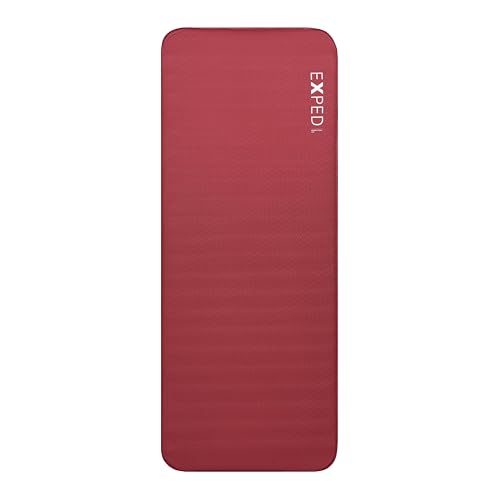
Exped MegaMat Max Sleeping Pad
What We Like
- 6-inch foam core for plush, soft surface
- Vertical sidewalls maximize usable sleep space
- Separate valves and pump allow firmness customization
- Welded handles for easier transport
Trade-offs
- At 7.4 pounds, it's heavy for backpacking
- Deflation and rolling require more effort than thinner mats
Six inches of foam makes this the thickest self-inflating pad in the lineup, a difference you feel immediately as a genuinely soft, pressure-relieving surface. That depth, combined with its 30-inch width and non-tapered edges, creates a true double-bed experience for car campers or tent-based couples who prioritize comfort above all else. The included pump lets you dial in the firmness, so one partner can have a firmer side while the other stays plush.
At 7.4 pounds, the Exped MegaMat Max is a substantial piece of gear suited for car or truck camping where weight is not a primary concern. Its 6-inch thickness and 30% extra foam coring create a plush, pressure-relieving surface that reviewers describe as exceptionally soft. This level of comfort comes with a packed size that fits best in a vehicle rather than a backpack.
Therm-a-Rest NeoAir Xlite NXT Sleeping Pad

What We Like
- High 4.5 R-value for year-round warmth
- Stable 3-inch thick baffled support
Trade-offs
- Regular Wide width is 25 inches, narrower than many car-camping mats
Weighing only 16 ounces, the Therm-a-Rest NeoAir Xlite NXT is built for backpackers who prioritize minimal pack weight. Its foam-free NeoAir design rolls up as small as a conventional one-liter bottle, which saves considerable space for other gear. Reflective ThermaCapture technology and Triangular Core Matrix construction yield a 4.5 R-value, providing enough insulation for cold-weather trips, while the 3-inch thick baffled structure offers stable support that belies its light weight.
Achieving that minimal packed size means forgoing some luxuries. Inflation requires using the included pump sack, unlike self-inflating models. The Regular Wide pad is 25 inches across, which is narrower than many car-camping mats designed for sprawling comfort.
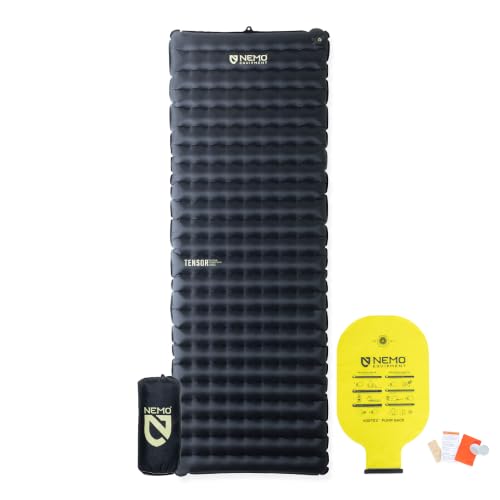
NEMO Equipment Tensor Extreme Sleeping Pad
What We Like
- Exceptional 8.5 R-value for extreme cold
- Ultralight 1.4-pound pack weight
- Quiet, stable 3.5-inch loft for comfort
- Bluesign-approved, durable nylon construction
Trade-offs
- 3.5-inch thickness is lower than some luxury car-camping mats
- Narrower 25.2-inch width than double-wide pads
- Lacks a built-in pump or self-inflating feature
An R-value of 8.5 is the headline, a number that translates directly to reliable warmth on frozen ground or high-altitude snow. This pad is engineered for the gram-counting mountaineer or winter backpacker who needs uncompromising insulation without hauling extra pounds. Its combination of ultralight weight and serious thermal resistance makes it a specialist tool for the coldest conditions, suspending multiple layers of metallized film in a quiet, stable air matrix that shaves ounces, not degrees.
With an R-value of 8.5, the NEMO Tensor Extreme is made for extreme cold, so it provides substantial insulation for mountaineering and winter trekking. Its Apex baffle design suspends multiple insulating layers to achieve that high warmth rating. The pad uses four layers of Thermal Mirror film and weighs 1.4 pounds, giving it a notable warmth-to-weight ratio for an ultralight pack. At 3.5 inches of loft, it offers stable cushioning, though this height is less than some dedicated car-camping mats like the 6-inch thick Exped MegaMat Max.
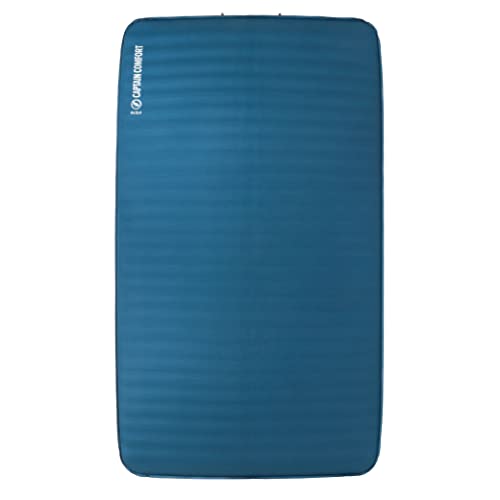
Big Agnes Captain Comfort Deluxe Sleeping Pad
What We Like
- High-density foam for maximum insulation
- Stretch top for a quiet, soft sleeping surface
- Dual valves for easy inflation and firmness adjustment
- Vertical side walls create a sturdy, large sleeping area
Trade-offs
- Weighs 7.5 pounds, heavy for backpacking
- Requires halving before rolling for optimal pack size
An R-Value of 8.9 means this pad is built to handle serious cold, making it a fortress against frozen ground. The five-inch cushion of high-density foam and a stretch top create a sleep surface that feels more like a bed than a camping mat. It suits car campers and base campers who prioritize deep-sleep comfort and warmth over every ounce of pack weight. The wide, stable platform and vertical walls mean you won’t feel like you’re rolling off a narrow ledge in the middle of the night.
That substantial comfort comes with a physical trade-off. Compared to a backpacking-focused pad like the Big Agnes Rapide SL, which sacrifices some thickness and R-value to weigh just 2.3 pounds, the Captain Comfort Deluxe is a luxury reserved for when your vehicle does the heavy lifting. The dual valves do make dialing in the perfect firmness straightforward. This is a small but appreciated touch on a pad designed for extended comfort.
Product photos
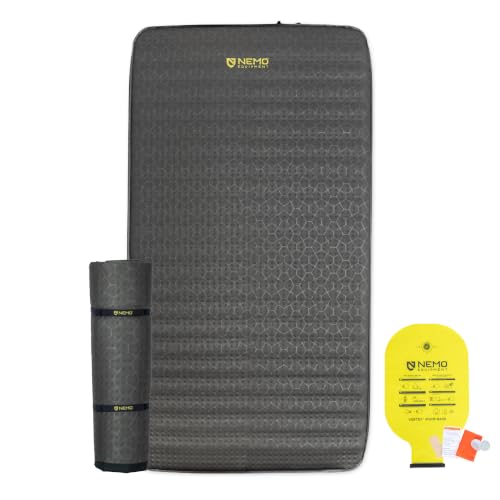
NEMO Equipment Roamer Sleeping Pad
What We Like
- Four-inch thickness absorbs ground irregularities
- Flow Core channels enable fast inflation and deflation
- Dual-valve system allows precise firmness adjustment
Trade-offs
- At 7.0 pounds, it is heavier than most backpacking pads
The Roamer’s Flow Core construction and strategic valve placement provide incredibly fast self-inflation, so you spend less time preparing your campsite. This speed suits car campers who prioritize a thick, comfortable sleep surface. The 4-inch-thick cushioning practically eats up rocks and roots to provide a smooth sleep surface.
That comfort comes with a physical trade-off in packability. Its 7.0-pound weight and 8.0-inch packed height are listed, which can be a factor for transport. For drive-up sites where weight is less critical, the Roamer’s quick-inflating design is a feature. If you need to carry it far, the bulk is a consideration.
Product photos
Pretyw Ultralight Sleeping Pad

What We Like
- Built-in foot pump inflates in 30-60 seconds
- Ultralight 1.8-pound, water-bottle-sized packability
- Side buttons to connect multiple pads together
- Integrated pillow adds convenience
Trade-offs
- Standard 27.5-inch width
- Weighs 1.8 pounds
A built-in foot pump that inflates the pad in under a minute means you can set up camp without getting lightheaded. That feature, combined with a pack size about as big as a water bottle, makes the Pretyw Ultralight a strong option for backpackers who prioritize speed and convenience over absolute minimal weight. The 4-inch thickness and integrated pillow provide decent cushioning for a decent night’s sleep after a long day on the trail.
The built-in foot pump is the standout feature, letting you inflate this pad in about half a minute without any extra gear. That makes it a practical choice for anyone wanting to avoid the effort of manual inflation after a long day on the trail. You do trade some plushness for that convenience, as its four-inch thickness is comfortable but less than models designed purely for base camp luxury. Its 27.5-inch width is standard, so side sleepers who move around a lot might occasionally feel the edges. For a backpacker prioritizing speed and simplicity, the trade-off is sensible.
Product photos
Intex Dura-Beam Air Mattress

What We Like
- Built-in electric pump for quick setup
- High 600 lb weight capacity for stability
- Velvety sleeping surface is easy to clean
- Fiber-Tech beam construction resists sagging
Trade-offs
- Requires a 110-120V AC power source
- Initial stretch requires re-inflation over first few nights
- At 9.9 lb, it's heavier than backpacking mats
A 600 lb weight capacity and a 10-inch raised bed height deliver the substantial, stable feel of a home mattress. This makes it a logical choice for car campers or anyone needing a reliable spare bed who prioritizes familiar comfort over portability. The integrated AC pump gets it ready in just over two minutes, a significant convenience when you just want to unroll and sleep. The velvety top also simplifies cleaning after a weekend in the woods.
The clear trade-off is its reliance on mains power and its packed bulk, which rules it out for backcountry trips. For those, a model like the Therm-a-Rest NeoAir Xlite NXT, at just one pound, is the obvious alternative. But if your campsite has a power outlet and your car has the space, the Dura-Beam’s design focuses its effort where it counts. It creates a durable, hassle-free sleeping platform that won’t bottom out.
Product photos
Big Agnes Rapide SL Sleeping Pad

What We Like
- High R-value of 4.8 for three-season warmth
- Includes high-volume inflation sack for moisture-free setup
- Lifetime guarantee against manufacturing defects
Trade-offs
- At 40 inches wide, it requires significant pack space.
- 2.3 pounds is heavy compared to ultralight solo pads.
With an R-value up to 4.8, the Big Agnes Rapide SL pad is intended for three-season use where temperatures can drop. Its 40-inch width qualifies as a double-wide size. The quilted top and offset I-beam construction are designed to create a cushioned surface and consistent stability.
The pad weighs 2.3 pounds, which is more than some ultralight solo pads like the 1.0-pound Therm-a-Rest NeoAir Xlite NXT. It includes a Pumphouse inflation sack that can inflate the pad in seconds without introducing moisture.
Product photos
Exped LuxeMat Sleeping Pad
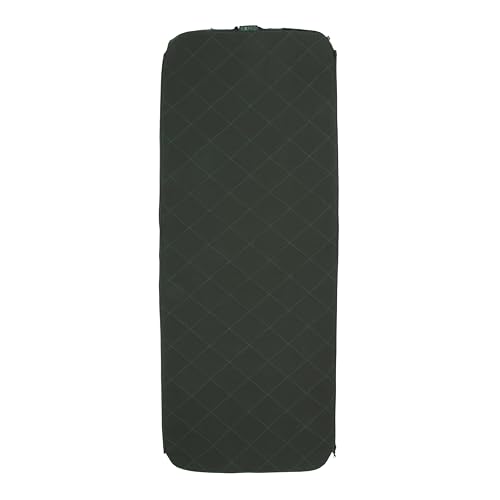
What We Like
- 4-inch foam base for substantial car camping comfort
- Side zippers create a gap-free double sleeping surface
- Removable, machine-washable wool-blend cover regulates temperature
- Recycled ripstop shell and grab handles add practical durability
Trade-offs
- At 8.6 pounds, it's heavy for anything beyond car or basecamp use
- The 4-inch height requires a tent with ample vertical space
- The wide 30.3-inch width demands a large tent footprint
The LuxeMat’s side zippers let you connect multiple pads gap-free, which is the definitive feature for campers wanting to create a double bed or a larger communal sleeping area. It suits anyone prioritizing a unified sleep surface over individual mats, especially for vehicle camping or family tent setups. The 4-inch foam and organic wool cover deliver a sleep experience focused on customizable, home-like comfort rather than portability.
Weighing 8.6 pounds, the Exped LuxeMat is designed for car camping rather than backpacking. Its substantial comfort comes from a 4-inch foam base and a removable organic cotton and wool cover, which adds bulk. For a thicker car-camping option, the Exped MegaMat Max measures 6 inches in height, while backpackers can look to pads like the Therm-a-Rest NeoAir Xlite NXT, which weighs just 1 pound.
How We Evaluated Outdoor Mattresses
Our evaluation focused on comparing manufacturer specifications and documented features across a wide range of models. We analyzed expert round-ups from trusted outdoor publications to understand performance patterns and common trade-offs. We also reviewed owner feedback for recurring comments on durability, setup ease, and comfort.
Key criteria included insulation (R-value), packed size and weight, sleeping surface dimensions, and inflation method. These factors directly determine whether a mat suits car camping, backpacking, or specialized conditions like winter trips. A high R-value is critical for cold weather, while low weight and packability are non-negotiable for backpacking.
This is a research-led evaluation. We did not physically test these products, so our insights are based on aggregated data and documented experiences rather than first-hand testing.
What To Look For In Outdoor Mattresses
Choosing an outdoor mattress means balancing warmth, comfort, and portability. Your camping style dictates which features matter most.
The key is to match the pad to your primary activity. Car campers can prioritize thickness and luxury, while backpackers must focus on weight and packed size. Always check the R-value for insulation and the inflation method for convenience.
Insulation (R-value)
The R-value measures a pad’s resistance to heat loss. A higher number means better insulation. For summer camping, an R-value around 2-4 is often sufficient. For three-season use, aim for R-4 or higher. For winter or extreme cold, you need a pad with an R-value of 6 or more, like those designed for alpine conditions on lightweight camping mattresses.
Size and Weight
Dimensions and weight are the main differentiators between car-camping and backpacking mats. A thick, double-wide mat offers luxurious space but may weigh over 7 pounds and be bulky to transport. Backpacking mats compress to a water-bottle size and weigh under 2 pounds. Consider the packed dimensions and whether your pack or vehicle can accommodate it.
Inflation Method
Inflation systems range from manual breath to built-in pumps. Self-inflating pads use open-cell foam to expand automatically, requiring only a few breaths to finish. They are a versatile choice for many camping situations. Mats with separate pump sacks are common, while some have integrated foot pumps for quick setup. Electric pumps, like on some air mattresses for camping, require a power source but are effortless.
Thickness and Comfort
Thickness, measured in inches, impacts how well the pad isolates you from ground irregularities. Car-camping mats often have 4 inches or more of loft. Vertical sidewalls increase the usable sleep area and prevent roll-off. The surface material also affects comfort; some have soft, stretch-knit tops.
- Check the thickness: 2-3 inches is standard for backpacking; 4+ inches is for car camping.
- Consider width: 20-25 inches is standard solo; 30+ inches is for sprawling or couples.
- Look for features like vertical sidewalls or a non-slip bottom.
- Verify the valve type; separate inflation and deflation valves allow for easier firmness adjustment.
- Read about the outer fabric’s durability, often listed in denier (D).
A good rule of thumb: prioritize R-value and weight for backpacking; prioritize thickness and width for car camping.
Outdoor Mattresses Compared
The following table compares key specifications for our top picks to help you see the differences at a glance.
| Product | Thickness | Weight | Dimensions |
|---|---|---|---|
| Therm-a-Rest MondoKing 3D Self-Inflating Sleeping Pad | 4.25 inches | 4.38 pounds | 77 x 25 inches |
| Exped MegaMat Max Sleeping Pad | 6.0 inches | 7.4 pounds | 77.6 x 30.3 inches |
| Therm-a-Rest NeoAir Xlite NXT Sleeping Pad | 3 inches | 1.0 pounds | 25 x 72 inches |
| NEMO Equipment Tensor Extreme Sleeping Pad | 3.5 inches | 1.4 Pounds | 72.0 x 25.2 inches |
| Big Agnes Captain Comfort Deluxe Sleeping Pad | 5 inches | 7.5 pounds | 41" x 72" |
| NEMO Equipment Roamer Sleeping Pad | 4 inches | 7.0 pounds | N/A |
| Pretyw Ultralight Sleeping Pad | 4 inches | 1.8 pounds | 79 x 27.5 inches |
| Intex Dura-Beam Air Mattress | 10 inches | 9.9 pounds | N/A |
| Big Agnes Rapide SL Sleeping Pad | 4.2 Inches | 2.3 pounds | 72 x 40 x 4.2 in |
| Exped LuxeMat Sleeping Pad | 4.0 inches | 8.6 pounds | 77.6" L x 30.3" W |
Frequently Asked Questions
What is the most comfortable camping mattress?
The most comfortable camping mattresses are typically thick, self-inflating pads designed for car camping. Models like the Therm-a-Rest MondoKing 3D and the Exped MegaMat Max offer several inches of foam and air cushioning, creating a sleep surface close to a home mattress. Comfort is subjective, but these pads consistently receive high marks from owners for support and pressure relief.
How do I choose between a self-inflating pad and an air mattress?
Choose a self-inflating pad for a balance of insulation, comfort, and moderate packability; they are excellent all-arounders. Choose a dedicated air mattress, like the Intex Dura-Beam, primarily for car camping where maximum thickness and a built-in electric pump are desired, but be aware they often provide less insulation.
What R-value do I need for cold weather camping?
For cold-weather camping, you generally need a pad with an R-value of 4 or higher. For winter conditions or sleeping on snow, an R-value of 6 or more is recommended. Our pick for extreme cold, the NEMO Tensor Extreme, has an R-value of 8.5, which is suitable for mountaineering and alpine environments.
Can I connect two single sleeping pads together?
Yes, some sleeping pads are designed to connect. Models like the Exped LuxeMat feature side zippers that allow you to join two pads into a double bed. Other pads, like the Pretyw Ultralight, have side connection systems. This is a key feature for couples who want individualized firmness control on camping mattresses.
Are foam camping pads a good option?
Foam camping pads, like traditional roll-up styles, are a durable and affordable option. They are virtually fail-proof, provide consistent insulation, and are easy to clean. However, they are much bulkier to carry and offer less cushioning than modern inflatable or self-inflating mattresses. They are best suited for short trips where pack volume is not a major constraint.
The Bottom Line
The Therm-a-Rest MondoKing 3D Self-Inflating Sleeping Pad is the best overall outdoor mattress for most campers who drive to their site. It delivers top-tier warmth and comfort in a manageable package. If you are on a tight budget and have power access, the Intex Dura-Beam Air Mattress offers a stable sleep surface. For backpackers who count every ounce, the Therm-a-Rest NeoAir Xlite NXT is the clear choice.
Ultimately, your decision hinges on where you’ll use the mat most. Match the pad’s weight and packed size to your activity, and never compromise on the R-value for the conditions you expect to face.
