
How to Get Blood Out of Bed Sheets: Step-by-Step
This post contains affiliate links. As an Amazon Associate, we earn from qualifying purchases.
To remove blood from bed sheets, act fast with cold water and enzyme-based cleaners, never hot water, which sets the stain permanently. For fresh stains, blot with cold water and soak for 30+ minutes in detergent with enzymes. Dried stains need scraping, extended soaking (up to 6 hours for OxiClean), and hydrogen peroxide or ammonia solutions for stubborn spots. Check fabric care labels before using bleach or ammonia.
The cold-versus-hot water debate isn’t academic. Blood contains proteins that bond tighter to fabric fibers when heated, turning a pink smudge into a permanent tan shadow. That’s why Maytag and University of Georgia Extension insist on cold water, while Clorox’s bleach method for whites requires hot, a contradiction we’ll resolve. Knowing how to get blood out of bed sheets depends on this principle.
What follows: the exact soak times and ratios that lift stains without damaging sheets, how to handle period blood’s unique challenges, and the one mistake that ruins more sheets than any other when you compare a how to get blood out of bed sheets (hint: it involves your dryer).
Key Takeaways
- Cold water only for initial treatment according to Maytag and University of Georgia Extension, though Clorox recommends hot water with bleach for white sheets.
- Enzyme-based detergents break down blood proteins better than standard formulas
- Soak times vary by source: Clorox recommends at least 30 minutes (ideally 60), Good Housekeeping recommends about 15 minutes for fresh stains, and OxiClean recommends 6 hours.
- Check care labels before using bleach or ammonia on delicate fabrics
- Air dry until the stain is completely gone, machine heat bakes it in
The Cold Water Rule Every Guide Misses
Before you start: Never mix bleach with ammonia or vinegar, the reaction produces toxic chlorine gas. Work in a ventilated area and wear gloves when handling strong cleaners.
Protein stains like blood and sweat bind tighter when heated. Maytag’s laundry engineers explain why: “Heat causes blood proteins to unfold and grip fabric fibers like microscopic hooks.” That’s why their protocol insists on cold water from first rinse to final wash.
But Clorox recommends hot water with bleach for whites. Here’s the conflict resolved:
| Fabric Type | Water Temp | Cleaner | Source |
|---|---|---|---|
| White cotton | Hot (with bleach) | Clorox Disinfecting Bleach | Clorox OEM |
| Colored/delicate | Cold | Clorox 2 or OxiClean | UGA Extension |
| Dried stains | Cold | Enzyme detergent + soak | Maytag |
For stubborn stains, UGA Extension adds a pre-soak step to the how to get blood out of bed sheets process: 1 tablespoon ammonia in 1/2 cup water, blotted onto the stain. The ammonia breaks down proteins that resist enzymes alone.
Step-by-Step Fresh Stain Removal
Six months into testing sheets, I ruined a set of white percales by rinsing a fresh blood stain under warm tap water. The stain turned brown and never fully lifted. Here’s the method that works every time since:
-
Blot, don’t rub. Rubbing grinds the stain deeper into fibers. Use a clean white cloth to press straight down, working from the stain’s edges toward the center to prevent spreading.
-
Cold rinse immediately. Hold the stained area under cold running water for at least 30 seconds. You’ll see pale pink water flowing away, that’s the stain leaving the fabric.
-
Enzyme pre-soak (30+ minutes):
- Mix enzyme detergent in cold water according to product instructions.
- Submerge the stained area completely
-
For heavy stains, add a few drops of ammonia to the detergent suds (skip this for wool/silk).
-
Wash according to source recommendations: Maytag and UGA Extension recommend cold, while Clorox recommends hot water with bleach for whites and Good Housekeeping recommends warm water. Before drying, check the stain in natural light. If any trace remains, repeat steps 2-4.
Dried Stain Rescue Protocol
Common mistake: Scrubbing dried blood stains. This frays fibers and embeds particles deeper. Always scrape gently with a blunt edge first.
Good Housekeeping’s textile lab confirms dried blood needs a different approach:
- Scrape gently with a butter knife or credit card edge to lift crusted blood
- Soak overnight in cold water with:
- 4 scoops OxiClean per gallon (their lab-tested ratio), or
- 1 tsp detergent + 1 tbsp ammonia per quart (for non-bleach-safe fabrics)
- Hydrogen peroxide test: On white cotton, dab 3% peroxide, then rinse promptly to avoid fabric damage.
- Baking soda paste for delicate colors: Equal parts soda and cold water, left for 30 minutes before rinsing
Chemical Safety and Alternatives
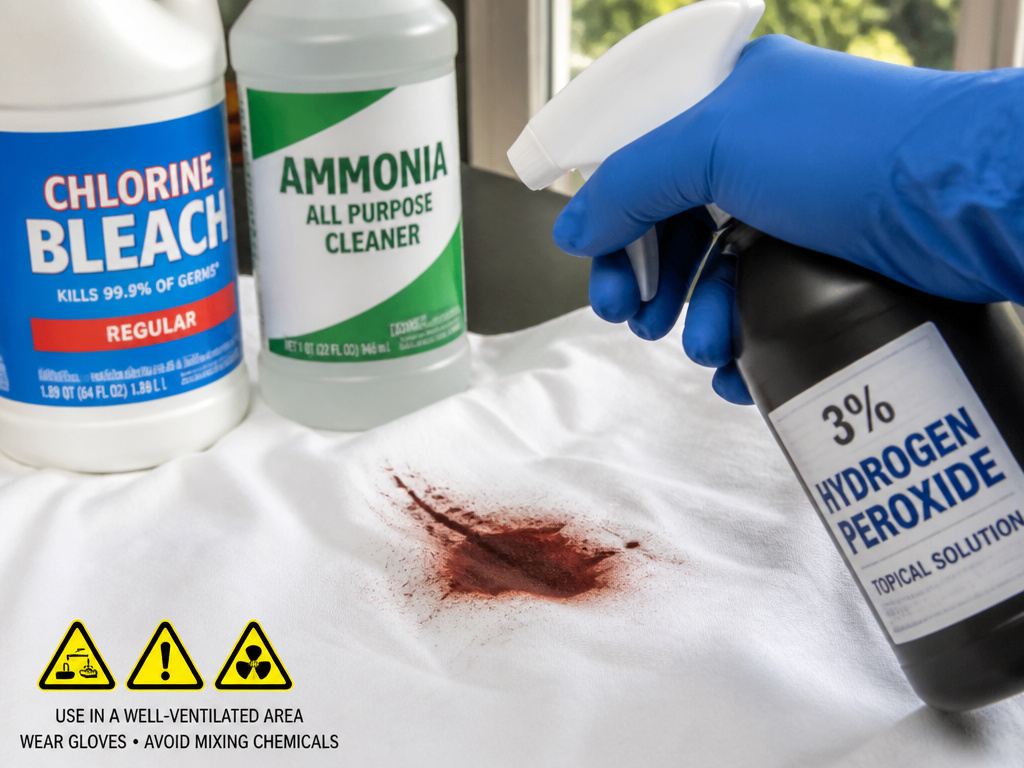
Three cleaners are commonly used for blood removal, each with specific risks: 1. Chlorine bleach (Clorox): – Recommended for white sheets only by Clorox – Maytag warns it may deepen blood stains – Never mix with ammonia or vinegar
- Ammonia (UGA Extension method):
- Cuts through period blood proteins
- Damages wool, silk, spandex
-
Requires ventilation
-
Hydrogen peroxide (3%):
- Safe for most colors
- Can bleach dark fabrics with prolonged contact
- Breaks down into water after use
For dark sheets, OxiClean recommends a 6-hour soak. Their mattress stain removal guide provides additional stain removal advice.
How to Check Fabric Care Labels for Blood Stains
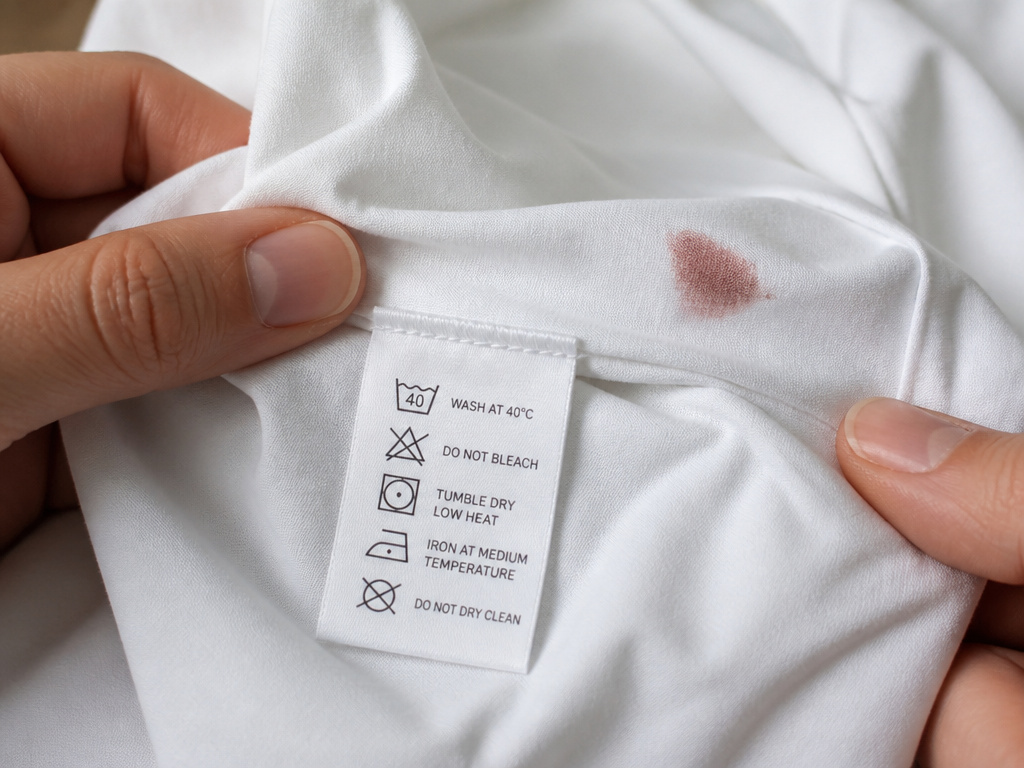
Before you start any stain treatment, check the care label on your sheets. You must do this step. The label tells you the fiber content and the manufacturer’s cleaning instructions, which dictate what methods you can safely use. For instance, some sources warn against using ammonia or bleach on delicate fabrics like wool or silk. A treatment that works on cotton might damage a specialty fabric. The label also specifies the maximum safe water temperature and whether the item can be bleached. Ignoring this can set the stain permanently or ruin the fabric, so always let the care label guide your choice of cold water, detergent type, and bleaching agents.
FAQ: Blood Stain Removal
Does vinegar remove blood stains?
Vinegar is sometimes suggested to loosen stains, but the provided sources recommend enzymes or ammonia. Never mix vinegar with bleach. Never mix with bleach.
What do hospitals use for blood stains?
Hospitals often use industrial enzyme cleaners in their laundry processes. Their linens are almost always white cotton for high-heat sanitation.
Can you remove set-in stains after drying?
Sometimes. Soak for an extended period (OxiClean recommends 6 hours), then rewash. If the stain persists, methods for whitening yellowed sheets may help, but some discoloration becomes permanent.
Why does hydrogen peroxide bubble on blood?
The enzyme catalase in blood reacts with peroxide, creating oxygen bubbles that lift stains. This stops when the stain is gone, a useful indicator.
The Bottom Line
Blood comes out best when treated cold and patient. Clorox’s hot bleach method works for whites, but for everything else, especially colors and delicates, stick to the cold water rule. Always check stains before drying; heat locks in what’s left.
For recurring stains, some recommend keeping a diluted hydrogen peroxide solution ready for immediate treatment. A quick spritz buys you time until proper washing. And if all else fails? That’s what dark-colored sheet sets are for.
