
Why Do Sheets Ball up in the Washer and Dryer?
This post contains affiliate links. As an Amazon Associate, we earn from qualifying purchases.
Sheets ball up in the washer and dryer when overloaded or improperly loaded, twisting around themselves and trapping smaller items. The fix comes down to three things: leaving space for items to move, using dryer balls or towels to separate fabric, and shaking sheets out before drying to prevent tight knots from forming.
Damp sheets cling together, and a crowded drum gives them no room to separate. That’s how a single fitted sheet can twist around everything else, creating a dense, damp core that resists drying. This is the main reason why do sheets ball up in the washer and dryer.
What follows: the physics behind the why do sheets ball up in the washer and dryer problem, washer-specific fixes competitors skip, and the one tool that mechanically prevents tangling.
Key Takeaways
- Leave enough space in both washer and dryer drums, overloaded machines guarantee tangles
- Wool dryer balls outperform plastic or tennis balls at separating sheets without static
- Shake each sheet before drying to prevent tight knots from forming.
- The Wad-Free Bed Sheet Detangler uses clips to hold corners apart, solving the problem mechanically
- Wash sheets separately from towels and clothing, mixed loads tangle worst
The Core Problem: Why Sheets Twist and Ball
When the dryer drum spins, damp sheets can cling together mid-air. When two damp surfaces meet mid-air, surface tension makes them stick. Add a third sheet, and you’ve got the start of a knot.
The 2023 patent US20230392318A1 documents how high-capacity appliances exacerbate tangling, with consumers reporting stopped cycles to manually untangle sheets. Larger drums let items cluster before separating.
Three factors worsen it:
- Overloading. Whirlpool’s testing shows sheets need room to unfurl fully. Sheets need room to unfurl fully.
- Mixed fabric types. A cotton sheet grabs a polyester shirt differently than another cotton sheet, creating uneven tension points.
- High spin speeds. High spin speeds in washing machines can start the tangling before drying even begins.
You’ll know it’s happening when the dryer thumps unevenly or stops mid-cycle, the weight distribution triggers imbalance sensors, which is a classic sign of why do sheets ball up in the washer and dryer.
Washer-Specific Prevention
Front-load and top-load washers need different approaches. I learned this the hard way with a queen flannel set that came out stiff and dull after crowding them with a duvet cover. Now I never fill past two-thirds for sheets.
For Front-Load Washers
- LG specifies 60% max capacity for bedding to allow proper tumbling, though user reports suggest tangling can persist even at lower capacities.
- Use the “Bedding” or “Anti-Tangle” cycle if available, it pauses agitation briefly to let items separate
- Add each sheet individually rather than dumping all in at once
For Top-Load Washers
- Distribute sheets around the agitator, not in one pile
- The Good Housekeeping Institute method works: gather each sheet by its center, let all four corners hang free, then bring corners to the center before loading
- Avoid over-sudsing, excess detergent makes fabric clingier
The Dryer Fixes That Actually Work
Dryer Balls vs. Towels vs. Gadgets
| Method | Pros | Cons |
|---|---|---|
| Wool dryer balls | Reusable, reduce static, soften fabric | Cost more upfront than alternatives |
| Clean dry towel | Absorbs moisture, free if you own one | Can wrap around sheets if overloaded |
| Wad-Free Detangler | Mechanical solution, no heat needed | Only works on flat and fitted sheets |
Maytag notes that wool dryer balls can help prevent clothes or sheets from clumping in the dryer by tumbling between items. The natural fibers grab moisture slightly, creating micro-gaps between layers.
Heat and Timing Matter
- Whirlpool recommends lower heat settings to reduce balling, while Maytag emphasizes cycle selection (e.g., using correct settings per care label).
- Maytag emphasizes cycle selection (e.g., “Sheets” or “Delicate”)
- Either way, remove promptly when dry, because lingering in a warm drum lets wrinkles set.
Common mistake: Assuming one “Dry” setting fits all. A king-size cotton sheet needs different heat than a polyester blend.
Rescue Steps for a Balled-Up Load
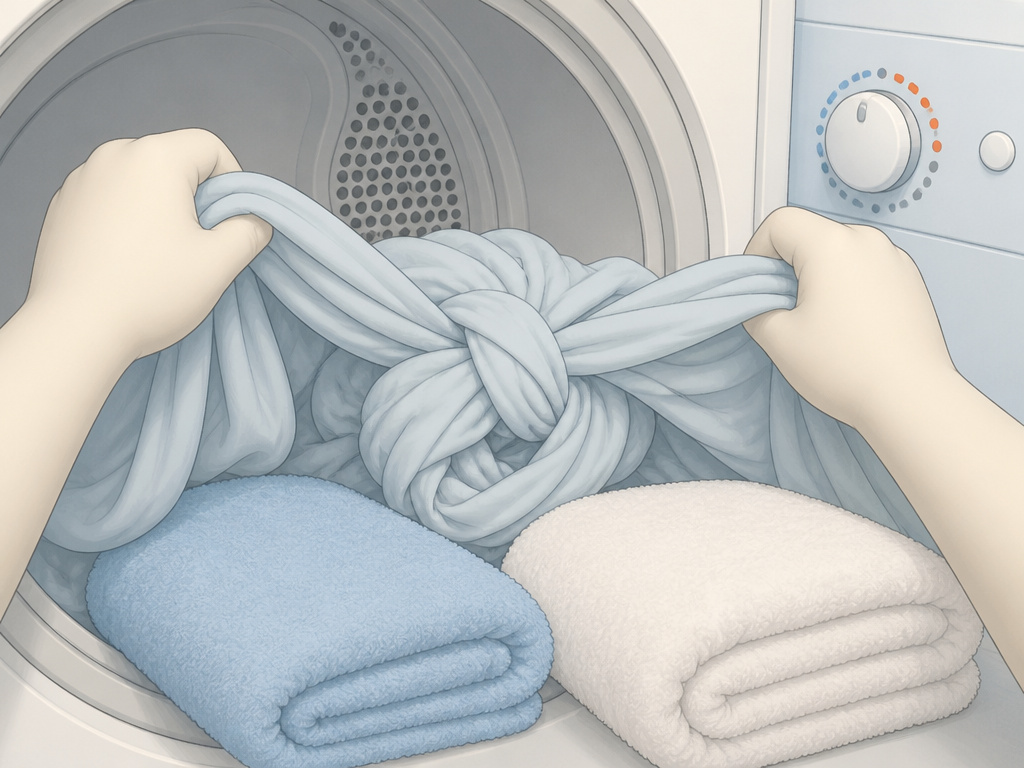
When you open the dryer to find a damp knot:
- Shake out the entire load, grip opposite corners and snap them apart
- Redistribute items evenly in the drum
- Add two dry towels to absorb moisture
- Run an additional cycle on a medium heat setting.
- Check every 5 minutes to prevent re-tangling
For severe cases, hang the bundle over a shower rod and manually untwist before returning to the dryer.
Should you zip or button a duvet cover before washing?
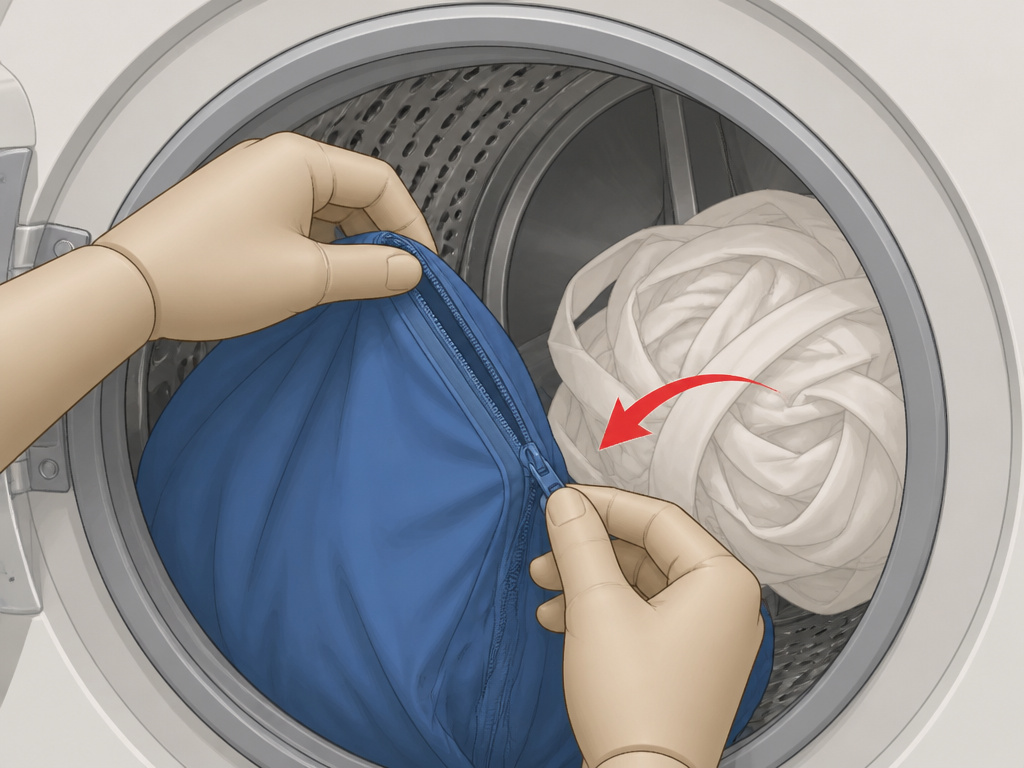
Always secure all closures on a duvet cover before washing. A closed cover helps contain the duvet insert itself, but more importantly, it prevents the loose fabric panels from twisting and knotting around themselves or other laundry. An open cover acts like a giant, floppy bag that can easily wrap around sheets and pillowcases, creating a tight ball in the washer. This twisting is a primary cause of the wadding problem. Keeping it zipped or buttoned gives the cover a more defined shape, allowing it to move through the wash cycle with less chance of grabbing and tangling with other items. It’s a simple step that significantly reduces the chaos inside your machine.
FAQ
How can I keep my sheets from rolling into a ball in the dryer?
Use wool dryer balls, don’t overload the drum, and shake sheets thoroughly before drying. The Wad-Free Bed Sheet Detangler clips to corners to prevent twisting.
Why do my sheets turn into a ball in the dryer?
Damp sheets cling together when crowded, and the dryer’s motion wraps them tighter. High spin speeds in washing machines can start the tangling before drying even begins.
Do dryer sheets help prevent balling?
Dryer sheets reduce static but don’t physically separate sheets like wool dryer balls or the Wad-Free clips. Some report they make tangling worse by increasing cling.
Can I use tennis balls instead of dryer balls?
Tennis balls can damage dryer drums over time and are louder than wool dryer balls. They also don’t absorb moisture or reduce static as effectively.
The Bottom Line
Sheets tangle when overloaded, period. Keep loads manageable, use wool dryer balls, and consider mechanical solutions like the Wad-Free for stubborn cases. Remember: a front-loader needs different care than a top-loader, and no setting fixes a stuffed drum.
Here’s the test: if you can’t easily slide your hand between items in the dryer, it’s too full. That simple check prevents most tangling before it starts.
