
10 Best Pillows For Upper Back And Neck Pain in 2026
This post contains affiliate links. As an Amazon Associate, we earn from qualifying purchases.
Our best overall pillow for upper back and neck pain is the Mediflow Fiber Water Pillow because its adjustable, clinically proven design supports all sleeping positions. The Tempur-Pedic TEMPUR-Ergo Neck Pillow is the best extra-firm option, and the Purple Harmony Pillow excels at cooling contour support. The right pillow for pain relief maintains neutral spinal alignment overnight, not just initial comfort. We researched specifications, expert guidance, and patterns in owner feedback to identify these ten pillows, helping you move past guesswork toward real support.
Top 10 Pillows For Upper Back And Neck Pain in the Market
Certain content that appears on this site comes from Amazon. This content is provided "as is" and is subject to change or removal at any time.
The Best Pillows For Upper Back And Neck Pain, Reviewed
Mediflow Fiber Water Pillow

What We Like
- Clinically proven for neck pain reduction
- Fully adjustable for all sleeping positions
- Two-layer design for comfort and support
- Trusted by healthcare professionals globally
Trade-offs
- At 4.5 inches tall, may be too low for some side sleepers
- Water layer requires initial setup and adjustment
A Johns Hopkins study backs its claim to reduce neck pain, which is a level of clinical validation few pillows offer. That makes it a serious choice for anyone whose sleep is disrupted by chronic discomfort. Its two-layer design combines a plush fiber surface with a customizable water base, letting you dial in the exact firmness and height your neck needs. This adjustability also makes it one of the few pillows that genuinely works for back, stomach, and side sleepers.
Adjusting the Mediflow Fiber Water Pillow requires filling its water chamber, a step that adds effort compared to simply unpacking a standard pillow. Its height is also less than some other cervical pillows, which could be a limitation for sleepers who prefer a very high loft.
Tempur-Pedic TEMPUR-Ergo Neck Pillow

What We Like
- TEMPUR-Material adapts precisely to head and neck
- Extra-firm feel maintains shape for consistent support
- Removable hypoallergenic cover aids in long-term cleanliness
- CertiPUR-US certified and backed by a substantial warranty
Trade-offs
- At 4.0 inches, the medium profile is too low for some
The defining feature is its extra-firm TEMPUR-Material, which doesn’t just conform but pushes back with a distinct, steady resistance. This makes it a serious tool for anyone whose neck pain stems from a lack of foundational support, as it holds its shape to keep the spine aligned without collapsing. It suits side and back sleepers who need that unyielding cradle to fully relax their shoulder muscles.
The Tempur-Pedic TEMPUR-Ergo Neck Pillow’s extra-firm TEMPUR-Material maintains its shape throughout the night, which keeps neck and shoulder muscles supported. This firm commitment creates a specific fit. Its 4-inch loft is a precise measurement, so alignment can falter if your shoulder height or mattress sinkage doesn’t match it. For someone needing more adjustability within a firm feel, the Mediflow Fiber Water Pillow offers a different approach with its adjustable design.
Product photos
Purple Harmony Pillow
What We Like
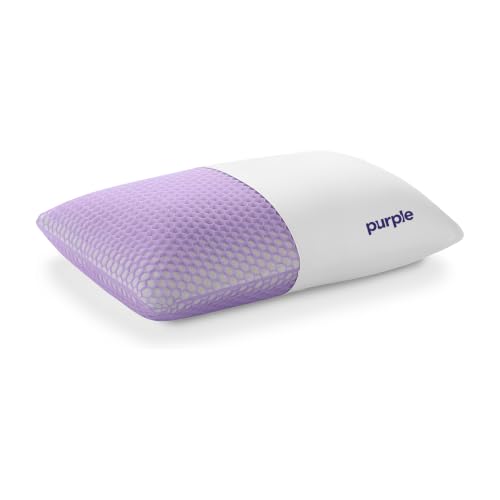
- Cooling GelFlex Grid pulls heat away.
- Durable materials hold shape without fluffing.
- Pressure-relieving support for head and neck.
Trade-offs
- No adjustable fill; loft choice is final.
- Only one firmness feel: balanced medium.
The Purple Harmony Pillow’s three specific loft heights directly map to sleeping styles, making it a precision choice for someone who knows their posture. Its medium, weightless feel comes from a dual-layer core of cooling GelFlex Grid and aerated Talalay latex, a combination designed to cradle without trapping heat. This makes it a standout for hot sleepers or anyone whose discomfort comes from pressure points rather than a need for deep, rigid support. It suits side sleepers with shoulder pressure and back sleepers equally well, provided you select the correct height.
Unlike the Mediflow Fiber Water Pillow, the Purple Harmony Pillow has a fixed construction, which means you cannot add or remove material to adjust its height. Once you select a loft, you are committed to that specific level of support. The pillow’s feel comes from a honeycomb GelFlex Grid and Talalay Latex foam, designed for a balanced medium feel that is supportive but never hard. This creates a buoyant, pressure-relieving experience focused on airflow and a consistent shape, suited for sleepers who prioritize a cool night over customizable firmness.
Osteo Cervical Pillow
What We Like
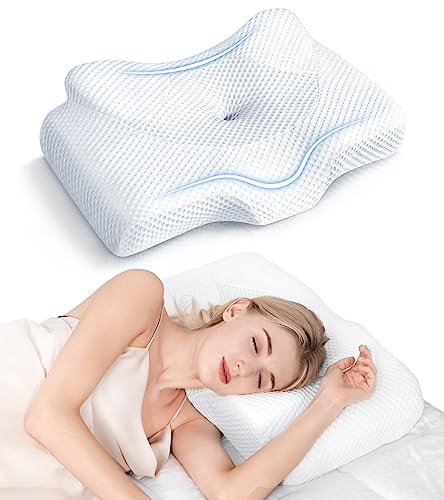
- Hollow center design cradles head for cervical alignment
- Cooling mesh case for temperature regulation
- Adjustable height fits multiple sleep positions
- Certified materials without harmful substances
Trade-offs
- Requires 48-hour airing period before first use
- Comfort is highly individual, based on body shape and sleep position
Its hollow center is the key feature, designed to cradle the head and maintain the natural cervical curve. This contour aims to relieve pressure and muscle tension, which suits sleepers who wake up with stiffness. The height can be adjusted by rotating the pillow 180 degrees or using the removable insert at the bottom. A 3D mesh fiber pillowcase allows heat to escape, and the memory foam is both odorless and certified by CertiPUR-US and Oeko-Tex.
The benefits rely on a precise anatomical fit, so its 5.2-inch height and distinct contours won’t suit every neck curve. It requires a 48-hour airing period before first use to allow for full expansion. Among other cervical pillows, the Osteo is heavier than the Mediflow Fiber Water Pillow but lighter than the Purple DreamLayer Pillow.
Product photos
DONAMA Cervical Pillow

What We Like
- Dual-height design accommodates side and back sleepers
- Patented arm trench aims to reduce side-sleeper numbness
- Full-coverage cooling fabric for temperature regulation
- High-density foam intended for C1-C7 vertebral support
Trade-offs
- Spot-clean only care restricts laundering options
- Requires a 48-hour expansion period before first use
- Ergonomic contour may be too structured for stomach sleepers
Side sleepers get a 5.51-inch loft designed to align the C1-C7 vertebrae, which helps keep the neck and spine in a neutral position overnight. A patented widened side wing lets arms rest naturally to channel blood flow and reduce pressure, directly targeting the common issue of waking up with numb hands. This pillow is best for someone who needs structured, orthopedic support and values full-coverage cooling fabric.
The trade-off is a maintenance routine limited to spot cleaning, which won’t suit everyone. Compared to the adjustable water fill of a Mediflow pillow, the DONAMA offers a fixed, memory foam structure, you’re getting a specific ergonomic shape rather than a customizable one. It’s a mid-range option that bets its value on patented design features targeting side-sleeper anatomy directly.
Product photos
C CUSHION LAB Deep Sleep Pillow
What We Like
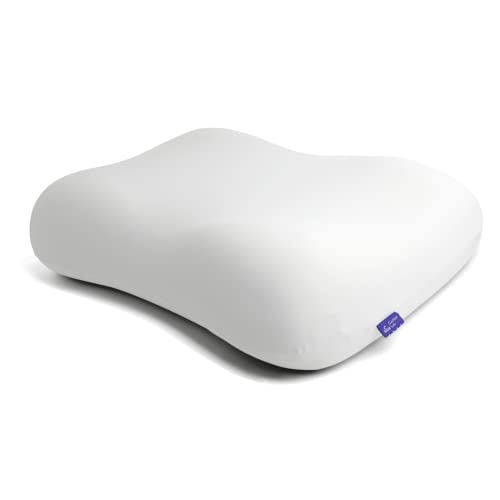
- Patented sculpted bolsters for side sleeping support
- Dual-density foam for soft top and adaptive foundation
- Smooth, cooling cover designed to prevent skin creases
- Contoured center and shoulder line for back sleepers
Trade-offs
- Unconventional 15.8-inch length may not suit all pillowcases
- Specific contour shape limits stomach sleeping positions
Its patented ergonomic contour cradles the head and supports the neck for side and back sleeping. A dual-density memory foam construction uses a soft top layer over a firmer foundation, aiming to maintain alignment without a rigid feel. This design suits combination sleepers who shift between those positions. The included smooth, anti-wrinkle cover may appeal to those concerned about morning skin creases or hair frizz.
The pillow’s fixed 7.1-inch width and pronounced contour create a specific fit. It will not suit those who prefer a flatter, more malleable surface or who sleep primarily on their stomachs. Among the listed products, the Mediflow Fiber Water Pillow is wider and lighter, at 20.0 inches wide and 1.9 pounds. The C CUSHION LAB pillow’s comfort depends on how well your body matches its predetermined shape.
Product photos
Cozyplayer Ultra Pain Relief Pillow

What We Like
- Hollow concave design cradles head, aligns spine
- Cooling pillowcase reduces skin temperature
- Multiple contour zones target pressure points
- Adjustable loft for personalized sleep height
Trade-offs
- Memory foam may require 48-hour air-out period
- Cooling effect varies by individual and environment
- Body may need an adjustment period for new support
Its hollow concave surface is tilted at a 15-degree angle to cradle the head and align the spine, which targets neck pain and stiffness. The design is categorized as an orthopedic bed pillow, indicating structured support for side, back, and stomach sleepers. A cooling pillowcase reduces skin temperature, addressing the warmth common to memory foam materials.
The pillow’s six contour zones and memory foam core create a specific support feel that may require a body adjustment period, as noted by the manufacturer. Unlike the Mediflow Water Pillow, which is adjustable with water, the Cozyplayer allows customization by rotating it 180 degrees or removing an insert to change sleep height. This provides a different method of loft adjustment for personalized comfort.
Royal Therapy Memory Foam Pillow

What We Like
- Three-layer design for customizable loft and support
- Breathable foam engineered for ventilation
- Contoured shape supports natural spinal alignment
- Washable, moisture-wicking bamboo cover
Trade-offs
- The 1.1-pound weight offers less substantial heft than the 4-pound Osteo pillow
- Medium firmness may not suit those needing very soft or very firm support
The Royal Therapy pillow’s removable middle layer lets you adjust its height to match your shoulder width and sleeping position. This makes it suitable for sleepers who find other contour pillows too tall or too shallow. Its medium-firm CertiPUR-US foam and ventilated design aim for a balanced feel that cradles without trapping heat, while the contoured shape works to keep the neck in a neutral alignment for back or side sleeping.
At 1.1 pounds, it is lighter than many other cervical pillows. For comparison, the Tempur-Pedic TEMPUR-Ergo Neck Pillow weighs 3.3 pounds. The Mediflow Water Pillow offers a different adjustable experience by letting you dial in support by adding or removing water, while the Royal Therapy relies on removing a foam layer for simpler, less granular control.
Mediflow Down Alternative Water Pillow
What We Like
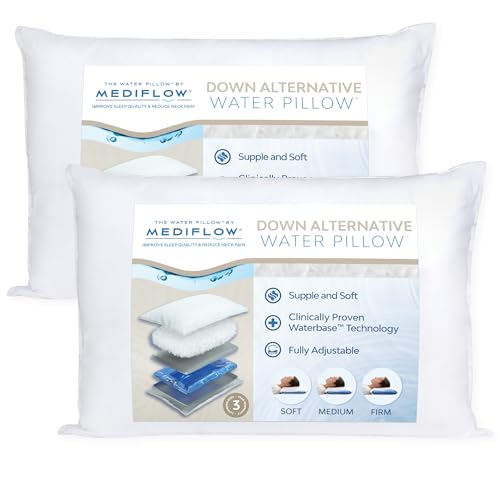
- Water-based core provides customizable, adaptive support
- Down alternative fill is hypoallergenic and breathable
- Adapts to all sleeping positions via firmness adjustment
- Design praised by healthcare professionals for support
Trade-offs
- Water component requires careful handling during setup and travel
- Initial setup involves adjusting water level for personal preference
The adjustable waterbase is the defining feature, letting you dial in the exact firmness your neck needs each night. This makes the Mediflow a standout for anyone with sensitivities, as its down alternative fill sidesteps allergens while the water core provides consistent, contouring support. It’s a logical pick if your pain relief requires fine-tuning and you prefer a plush surface without traditional memory foam.
The trade-off is in its heft and maintenance; at over three pounds, it has a substantial feel, and the water layer isn’t something you can casually toss in the wash. For a simpler, lighter hypoallergenic option, the Mediflow Fiber Water Pillow uses a polyester fill with the same water core but weighs nearly a pound less. If your priority is a set-it-and-forget-it contour, the firmer, pre-shaped Tempur-Pedic TEMPUR-Ergo Neck Pillow offers a different approach.
Product photos
Purple DreamLayer Pillow
What We Like
- Adjustable loft with two removable boosters
- Cooling GelFlex Grid and MicroAir Foam core
- Soft, contour-hugging support molds to head and neck
- Washable, moisture-wicking cover promotes dryness
Trade-offs
- At 8.4 pounds, it is heavier than many foam pillows
- Standard size is narrower than some contour pillows like the Osteo
- No single, fixed ergonomic shape for strict cervical alignment
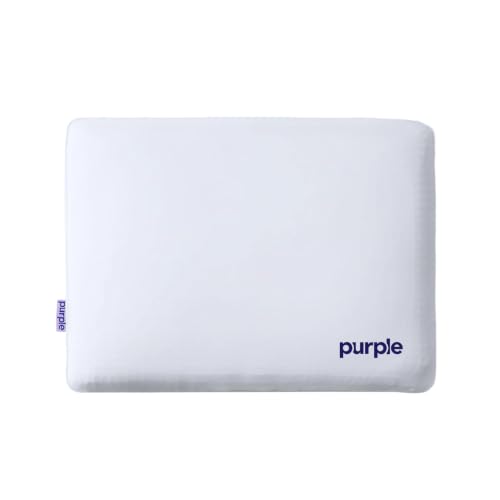
The removable boosters that let you set the loft to 5, 6, or 7 inches are the defining feature here. This makes it a strong choice for sleepers who shift positions or haven’t dialed in their perfect height, as it can adapt to stomach, back, and side sleeping. The GelFlex Grid and MicroAir Foam core aim to cradle your head with a memory-foam-like hug while actively drawing heat away, which is a clear design answer for hot sleepers who want contouring support.
The Purple DreamLayer Pillow can be adjusted to three heights using its two removable boosters, so it can be customized for stomach, back, side, or combination sleepers. This adaptable design means it lacks the pronounced, single-profile contour of a dedicated cervical pillow like the Tempur-Pedic TEMPUR-Ergo. For someone who values a pillow that can change with their sleep style, this adjustable construction is its main advantage over a fixed-loft alternative.
How We Evaluated Pillows For Upper Back And Neck Pain
Our evaluation focused on manufacturer specifications and documented expert recommendations for spinal alignment. We prioritized criteria like adjustable height, material supportiveness for different sleep positions, and features that address common pain points like overheating. We also analyzed consistent patterns in owner feedback regarding long-term comfort and pain relief. Since this is a research-based guide, we cannot replicate the personal experience of sleeping on each pillow, which is why we emphasize adjustable designs and trial periods.
What To Look For In Pillows For Upper Back And Neck Pain
Finding the right pillow means matching its features to your body and sleep habits to promote neutral alignment from your head to your upper back.
Look for a pillow that keeps your ears aligned with your shoulders. Key factors are adjustable loft for personalized height, material density for your sleep position, and breathable designs for temperature regulation.
Loft And Adjustability
Pillow height, or loft, is critical. A loft that’s too high or too low forces your neck into an angled position, straining muscles overnight. For back sleepers, experts recommend a medium loft that cradles the neck’s curve without tilting the head. Side sleepers generally need a higher, firmer loft to fill the space between shoulder and head. Adjustable pillows, like those with removable inserts or a water core, let you fine-tune this height, making them a versatile choice for many sleepers.
Supportive Materials And Shape
The material must provide consistent support without collapsing. Dense memory foam and latex are common in orthopedic pillows for their contouring ability. Contoured or cervical pillows have a sculpted shape with a central dip or raised edges designed to cradle the head and support the neck curve. For those seeking a balance of support and softness, a contoured memory foam pillow can be effective for neck pain.
Sleep Position Compatibility
Your dominant sleep style dictates the ideal pillow profile. Side sleepers need higher loft and firm edges. Back sleepers require a medium loft with central support. Stomach sleepers are advised to use a very low, soft pillow or transition to side sleeping, as the position inherently strains the neck. If you shift positions, look for a pillow that accommodates multiple postures, or follow a detailed selection guide.
- Measure from your shoulder to your ear while lying on your side to estimate your needed loft.
- Check if a pillow requires a break-in period, as some memory foam needs 48 hours to fully expand.
- Consider a pillow’s care instructions; some contoured designs are spot-clean only.
The most important rule is that your pillow should keep your spine in a straight, neutral line from your hips to your head.
Pillows For Upper Back And Neck Pain Compared
The following table compares key features of our picks at a glance to help you see the differences in design, material, and adjustability.
| Product | Material / Core | Adjustable Height / Firmness | Sleep Positions | Dimensions (inches) |
|---|---|---|---|---|
| Mediflow Fiber Water Pillow | Fiber fill, waterbase | Water fill level | Side, back, stomach | 28.0 x 20.0 x 4.5 |
| Tempur-Pedic TEMPUR-Ergo Neck Pillow | TEMPUR-Material | N/A | Side, back | 20.0 x 12.8 x 4.0 |
| Purple Harmony Pillow | GelFlex Grid & Talalay Latex | 5.5", 6.5", 7.5" | Stomach, back, side | 26.0 x 17.0 |
| Osteo Cervical Pillow | Odorless memory foam | Adjustable via rotation | Side, back | 25.5 x 16.5 x 5.2 |
| DONAMA Cervical Pillow | Premium memory foam | 3.54", 5.51" | Side, back, stomach | N/A |
| C CUSHION LAB Deep Sleep Pillow | Dual-density memory foam | N/A | Side, back | 15.8 x 7.1 |
| Cozyplayer Ultra Pain Relief Pillow | 98% breathable memory foam | Rotatable core, removable insert | Side, back, stomach | 23.2 x 13.4 x 5.1 |
| Royal Therapy Memory Foam Pillow | CertiPUR-US memory foam | Removable middle foam layer | Side, back, stomach | 24 x 14 x 5 |
| Mediflow Down Alternative Water Pillow | Down alternative and water | Water level customization | Side, back, stomach | 28.0 x 20.0 |
| Purple DreamLayer Pillow | GelFlex Grid, MicroAir Foam | 5", 6", or 7" | Stomach, back, side | 22.5 x 16.2 |
Frequently Asked Questions
What type of pillow is best for upper back and neck pain?
Pillows designed to maintain neutral spinal alignment are best. Look for contoured shapes, adjustable loft, and supportive materials like dense memory foam or latex. The goal is a pillow that cradles your head and neck without letting them sink too deeply or tilt upward, which strains the upper back.
What’s the best way to sleep if you have neck and upper back pain?
Sleeping on your back or side is recommended. Back sleeping with a medium-loft pillow under your head and a small pillow under your knees helps maintain spinal curves. Side sleeping with a higher-loft pillow and a pillow between your knees keeps your hips and spine aligned. Stomach sleeping typically exacerbates neck pain.
What kind of pillow is good for neck pain and back pain?
A pillow good for both neck and back pain supports the cervical spine and promotes overall posture. Contoured cervical pillows, adjustable water pillows, and firm memory foam options can provide this full-spine support. Pairing your head pillow with strategic knee or leg support is also crucial for lower back relief.
Why does my neck hurt no matter what pillow I use?
Persistent neck pain can stem from an underlying issue like a herniated disc, poor mattress support, or ingrained sleep posture habits. Your pillow may also be the wrong loft or firmness for your specific sleep position. If pain continues after trying a well-fitted, supportive pillow, consulting a healthcare professional is advised.
How do I choose a pillow for my sleeping position?
Match the pillow’s loft and firmness to your position. Use our guide on choosing a pillow for your sleeping position for specifics. Side sleepers need high, firm support; back sleepers need medium loft with neck cradling; stomach sleepers need very low, soft pillows or should consider changing positions.
The Bottom Line
The Mediflow Fiber Water Pillow is our top choice for its clinically backed, adjustable support that suits most sleepers seeking neck pain relief. For those needing rigid, unchanging support, choose the Tempur-Pedic TEMPUR-Ergo Neck Pillow; for hot sleepers who prefer a fixed contour, the Purple Harmony Pillow is ideal. Ultimately, finding a pillow that maintains neutral alignment from your neck through your upper back is the single most important factor for waking up without pain.
