
10 Best Face Down Pillows After Eye Surgery in 2026
This post contains affiliate links. As an Amazon Associate, we earn from qualifying purchases.
Our best overall pick is the Kölbs Face Down Pillow After Eye Surgery for its dual-sided cover and adjustable shredded foam fill, which offer straightforward comfort and easy hygiene. The Siennal pillow is best for easy breathing, and the HOMCA model is best for its certified foam.
Following retinal surgery, patients must maintain a strict face-down position for days or weeks to protect their vision. A proper recovery pillow is essential to prevent strain and support compliance. This guide compares ten top-rated options based on specifications, manufacturer details, and patterns in owner feedback to help you find the right support for your recovery journey.
Top 10 Face Down Pillows After Eye Surgery in the Market
Certain content that appears on this site comes from Amazon. This content is provided "as is" and is subject to change or removal at any time.
The Best Face Down Pillows After Eye Surgery, Reviewed
Kölbs Face Down Pillow After Eye Surgery

What We Like
- Dual-sided velvet and satin cover for temperature preference
- Removable, washable cover for hygiene during recovery
- Shredded memory foam fill conforms for plush support
Trade-offs
- No dimensions provided to gauge its size on a bed
- Requires 24-hour decompression time before first use
The dual-sided velvet and satin cover is the decisive feature, letting you flip between a cozy or cool surface depending on how you feel each night. This makes the Kölbs pillow a versatile mainstay for the strict face-down period after vitrectomy, where comfort and hygiene are non-negotiable. Its shredded memory foam conforms without being too firm, and the removable cover is practical for a clean recovery. It’s suited for anyone who values having a simple, adjustable comfort choice during a prescribed healing routine.
This pillow prioritizes dual-surface comfort over engineered airflow channels. While other models like the Siennal list a ‘3-Vent Breathing Design’, the Kölbs design offers a choice between a warm velvet side and a cool satin side without such specified vents. Its shredded memory foam fill provides plush support, but the design does not include mentioned features for directed airflow. For recovery requiring a simple, textured surface choice and easy hygiene, its two-sided, washable cover serves as a straightforward option.
Siennal Face Down Pillow for Eye Surgery

What We Like
- Three-vent design for clearer breathing.
- Adjustable shredded foam for personalized loft.
- Soft, washable cover maintains hygiene.
Trade-offs
- Requires 24-48 hours to expand after unboxing.
- Finding optimal head angle for airflow needs adjustment.
- At 28 inches long, it demands significant bed space.
Three breathing gaps tackle the main discomfort of face-down recovery by offering more flexibility to find a clear airway than single-hole designs, which is crucial for the long hours required after procedures like vitrectomy. This multi-vent system suits anyone whose primary concern is easing the claustrophobia of prone positioning. The adjustable shredded memory foam lets you set the loft and firmness, while a dedicated chest cushion is included for support.
The trade-off is that you must plan ahead, as the vacuum-packed pillow needs 24 to 48 hours to reach its full size and for any scent to air out. Its 28-inch length offers stable support but occupies a notable portion of the mattress. Compared to a more compact option like the 23-inch Gliterra Face Down Recovery Pillow, the Siennal provides a larger recovery platform but requires more patience and bed space.
Product photos
HOMCA Face Down Pillow After Eye Surgery

What We Like
- Dual foam and textile safety certifications
- Removable cover simplifies post-surgery hygiene
- Shredded foam fill allows for adjustable fluffing
- Contoured design supports spine alignment face-down
Trade-offs
- No adjustable strap for secure positioning
- Fluffing process requires 24-hour wait time
The dual CertiPUR-US and OEKO-TEX certifications mean the materials touching your skin during a vulnerable recovery are verified for safety, a critical detail when you’re spending hours face-down after eye surgery. This pillow suits someone who prioritizes material purity and a straightforward, contoured design that aims to reduce neck strain by aligning the spine. The shredded memory foam fill lets you adjust the density, which is useful for finding a comfortable spot between support and pressure relief over long periods.
Its design prioritizes core support over extra features, so it lacks the adjustable strap seen on the SanoViva that could help keep it in place during sleep. The focus is on a straightforward, supportive shape with a safety-certified fill, making it a considered choice for recovery where material safety is a primary concern. Those needing more active positioning aids might find its approach too basic.
Product photos
SanoViva Face Down Recovery Pillow
What We Like
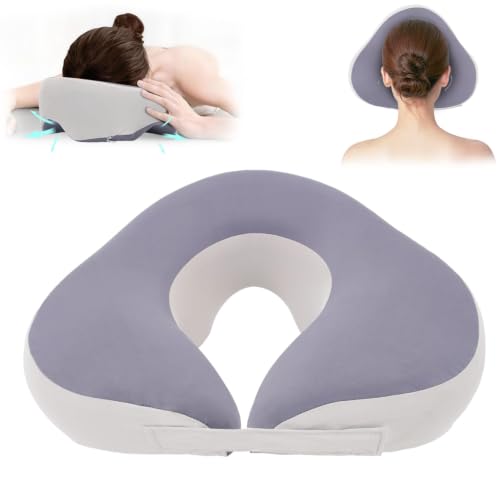
- Adjustable strap for a secure, customized fit
- Breathable open-face design for clear airways
- Memory foam conforms to facial contours
- Moisture-wicking bamboo charcoal infusion
Trade-offs
- Memory foam may feel firmer in cold temperatures
- Initial odor requires airing for one to two days
The adjustable hook-and-loop strap is the defining feature, letting you cinch the pillow snugly to prevent shifting during sleep. This makes the SanoViva a logical pick for anyone anxious about maintaining strict face-down positioning through the night, as a loose pillow could compromise healing. Its medical-grade intent and breathable open-face design directly address the core discomforts of post-surgical recovery.
Designed for strict face-down positioning after procedures like vitrectomy or BBL surgery, this pillow’s medical-grade support is its defining feature. Its high-density memory foam conforms to facial contours to release pressure, which is critical for long-term prone healing. Like many memory foam products, it may have a slight initial odor that dissipates after airing for a day or two, and the foam can feel firmer if stored in cold temperatures. The Siennal and HOMCA models list CertiPUR-US foam approvals in their product descriptions.
Product photos
Gliterra Face Down Recovery Pillow
What We Like
- Dual-layer foam and cotton provides both steady and gentle support
- Adjustable internal airflow gap reduces overheating during long sessions
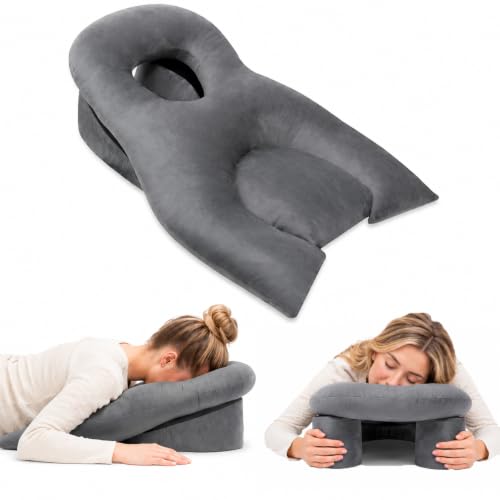
- Zipperless face cutout prevents skin rub and irritation
- Machine-washable velvet cover simplifies hygiene maintenance
Trade-offs
- 23 by 14 inch surface area
- No temperature control feature
A zipperless face cutout eliminates a common source of post-op skin irritation. This design pairs with a dual-layer structure: a solid foam base for steady support and a soft PP cotton top. An adjustable airflow gap inside the pillow helps reduce overheating, which can make extended face-down periods more comfortable.
The trade-off is in its footprint. At 23 by 14 inches, it provides a smaller resting area than larger models like the Siennal, which might matter if you tend to shift or want more room for your arms. It also forgoes extra features like temperature control or a strap. For pure, simplified prone support with a focus on breathability and a soft interface, the Gliterra delivers. If you need maximum real estate or cooling inserts, you’d look to the other contenders.
Product photos
ZNALDP Inflatable Face Down Pillow

What We Like
- Adjustable firmness via air pressure
- Dual-valve system minimizes air leakage
- Ergonomic stomach support reduces strain
- Easy to clean and deflates for storage
Trade-offs
- Requires user to ensure valves are fully closed
- No specific dimensions or weight provided
The ability to adjust firmness by adding or releasing air is the central feature here. This lets you find a balance between soft comfort and the rigid support needed to keep your face safely positioned after procedures like a vitrectomy. It’s a strong pick for anyone whose recovery needs might change night by night, or who simply prefers a firmer or softer feel than a static pillow can offer. The stomach support and face hole are designed to work in tandem, aiming to reduce neck and shoulder strain during those long, mandatory face-down hours.
The ZNALDP pillow’s surface is made of PVC with a soft suede finish, a combination that reviewers note is durable and simple to clean with a damp cloth. This material choice differs from fabric-covered memory foam options like the HOMCA, focusing instead on the practical benefits of its inflatable design. That design allows you to adjust the firmness by controlling air pressure, so you can personalize the support for your recovery, and it deflates for straightforward storage or travel.
Product photos
Selavo Face Down Pillow for Eye Surgery
What We Like
- Shredded memory foam for conforming support
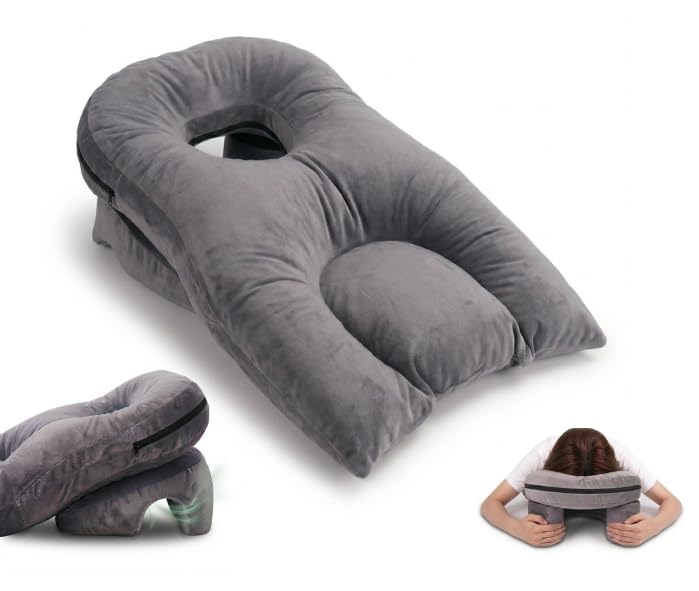
- Three-vent design for airflow during prone recovery
- Face hole design accommodates various sleeping positions
Trade-offs
- Lacks a temperature-regulating feature like gel or dual sides
The Selavo pillow’s shredded memory foam fill is its decisive feature, molding closely to the head and neck without the firm pressure of a solid block. This makes it a strong candidate for someone whose primary post-surgery concern is finding a gentle, adaptable cradle that won’t create pressure points during long recovery periods. It suits a patient who values a softer, more forgiving support surface and plans to use the pillow primarily in bed, where the three vents can provide necessary airflow without relying on active cooling.
The Selavo pillow uses a 3-vent design for airflow, which is important for breathing comfortably when your face is down in the pillow for extended recovery periods. Its shredded memory foam fill molds to your head and neck, providing a supportive cradle that can help maintain a face-down position through gentle contouring rather than active restraint. This makes it a straightforward option for home recovery where some minor repositioning is manageable, unlike models such as the SanoViva that include an adjustable strap for more secure stabilization.
Product photos
BEYOUDO Face Down Pillow After Eye Surgery
What We Like
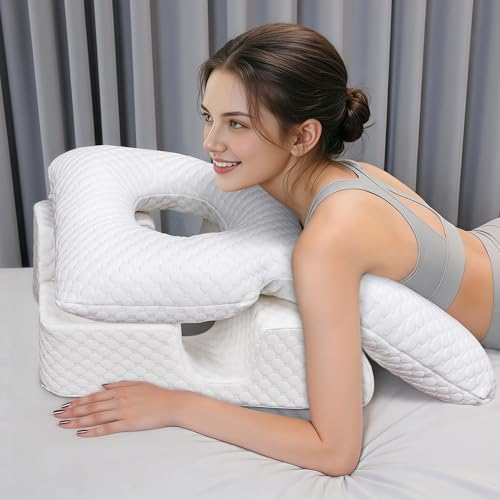
- Adjustable vent buckle for customizable airflow
- Dual-layer design for soft cushioning and firm support
- Large 28" x 21.3" surface for head and arm support
- Multi-purpose use for recovery and general comfort
Trade-offs
- Fixed 18.75-degree tilt may not suit all sleeping postures
- At 3.8 lb, it's lighter than the 4.6 lb Siennal model
- Single vent design, unlike multi-vent competitors
The adjustable buckle on the ventilation hole is the standout feature, letting you fine-tune the opening without lifting your head or moving the pillow. That makes it a strong option for anyone facing the long, tedious hours of face-down recovery after vitrectomy, where even small comforts matter. The dual-layer construction with a structured base and a soft top pillow aims to provide support without creating pressure points on your face, neck, or shoulders.
Its 18.75-degree tilt is engineered for comfortable stomach lying without back pain, providing a specific, fixed posture for recovery. While the Siennal pillow uses a three-vent breathing design, this model concentrates on a single, adjustable airflow vent. That adjustable buckle lets you customize the opening size hands-free, a feature that offers personalized comfort without the need to lift your head.
Product photos
Mello Active Face Down Pillow
What We Like
- Ergonomic design for face-down support
- Functions as pillow and chair alternative
- Premium material construction
- Versatile for home use recovery
Trade-offs
- No specific dimensions or weight provided
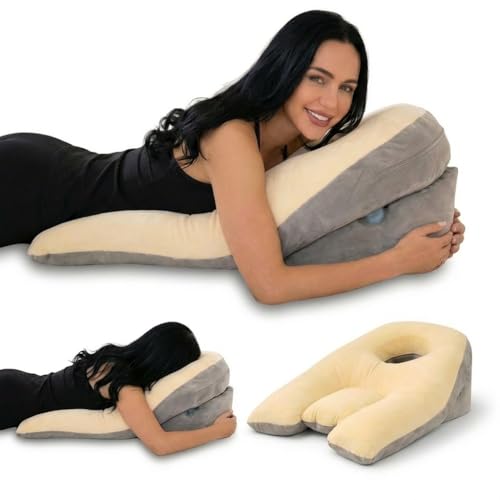
The Mello Active pillow is designed as an ergonomic chair alternative for face-down support, which provides a structured option for sitting upright during recovery. Its promotion as versatile home-use equipment suggests utility beyond the bed. A focus on premium materials indicates an intent toward durable construction and surface comfort.
Versatility is a noted feature, but the product’s listing omits the detailed airflow specifications that some rivals, like the Siennal model with its 3-vent design, explicitly promote.
Product photos
HOMBYS HEALTH Face Down Recovery Pillow
What We Like
- Non-slip base reduces shifting on firm surfaces
- Soft yet supportive memory foam for pressure reduction
- Versatile for post-surgery recovery and massage use
- Easy-care removable cover for machine washing
Trade-offs
- User height limit of 5'10" excludes taller individuals
- Requires 48-72 hours to fully expand after unboxing
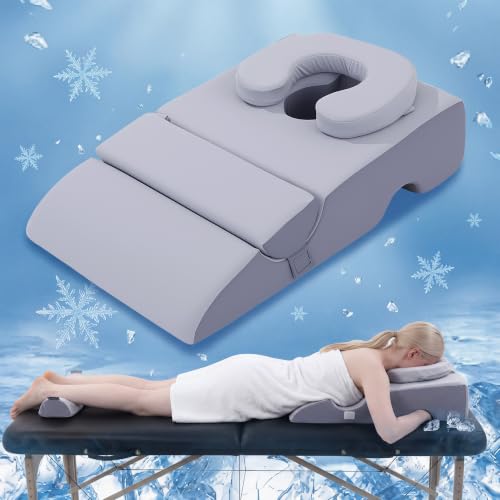
The non-slip base is the defining feature here, designed to hold the pillow steady on a massage table or firm mattress. That makes it a straightforward choice for someone whose primary concern is the pillow migrating during a required face-down period. Its memory foam aims for a balance of softness and support, and the washable cover simplifies hygiene. It suits a user under 5’10” and 180 pounds looking for a stable, no-fuss recovery aid.
You get a reliable, grippy foundation and general comfort, but if easy airflow during prone positioning is a top priority, you’d want to compare the design more closely against pillows built with that specific focus.
Product photos
How We Evaluated Face Down Pillows After Eye Surgery
This guide is based on manufacturer specifications, product certifications, and patterns found in user reviews. It prioritizes criteria important for post-surgical comfort and compliance, such as ventilation design, material safety and hygiene, and features for secure, adjustable support. Practical considerations like required expansion times or size constraints are also noted. The evaluation relies on documented product features and owner experiences.
What To Look For In Face Down Pillows After Eye Surgery
Choosing the right pillow can make a challenging recovery period more manageable. Focus on features that directly support your face-down positioning and overall comfort.
Look for a design that suspends pressure from the eye, provides clear airflow, and offers adjustable support with easy-to-clean materials. Secure fit and verified material safety are also key.
Ventilation & Breathing Ease
Adequate airflow is critical to prevent feelings of suffocation during long prone sessions. Look for pillows with dedicated vent holes or an open-face design, like the three-vent system on the Siennal model. An adjustable vent buckle, as on the BEYOUDO pillow, allows you to customize airflow, which is especially helpful if you find a standard opening too restrictive or too drafty. Proper ventilation supports a calm recovery by reducing anxiety and claustrophobia.
Material Safety & Hygiene
Post-surgery hygiene is paramount. Prioritize pillows with removable, machine-washable covers for easy cleaning. For material safety, some pillows offer certifications, like the HOMCA model’s dual foam and textile certifications, which verify low chemical emissions. The fill material also matters; shredded memory foam conforms to your face for pressure relief, while inflatable options like the ZNALDP pillow allow you to adjust firmness. Avoid pillows that lack clear material descriptions.
Secure & Adjustable Support
A pillow that shifts can compromise your healing position. Features like an adjustable strap, found on the SanoViva pillow, help secure the pillow to your body or a chair. The support surface should be large enough for your head and arms; the BEYOUDO pillow offers a 28″ x 21.3″ surface for this purpose. For those needing versatile positioning, some designs like the Mello Active pillow function as both a prone support and a chair alternative. Consider your sleeping habits, restless sleepers benefit more from a non-slip base or strap.
- Check the pillow’s dimensions against your available bed or chair space.
- Confirm if a cover is included and if it is machine washable.
- Note any required expansion or decompression time before first use.
- Verify any user limitations, such as the HOMBYS HEALTH pillow’s 5’10” height limit.
- Consider if you need a dedicated pillow with ear holes for additional pressure relief.
The ideal pillow keeps your eye suspended without pressure, lets you breathe easily, and stays securely in place throughout your recovery.
Face Down Pillows After Eye Surgery Compared
The comparison table below details the key features of all ten pillows side-by-side.
| Product | Fill Material | Cover | Face Opening Design |
|---|---|---|---|
| Kölbs Face Down Pillow After Eye Surgery | Shredded memory foam | Plush velvet & satin | Dual-sided (warm/cool) |
| Siennal Face Down Pillow for Eye Surgery | Shredded memory foam | Machine-washable velvet | 6 to 8 inches |
| HOMCA Face Down Pillow After Eye Surgery | Shredded memory foam | Removable, washable velvet | Face cutout |
| SanoViva Face Down Recovery Pillow | High-density memory foam | Removable, machine-washable | Open-face contour |
| Gliterra Face Down Recovery Pillow | Dual-layer solid foam and PP cotton | Plush velvet, removable and washable | Zipperless face cutout |
| ZNALDP Inflatable Face Down Pillow | PVC with soft suede surface | N/A | N/A |
| Selavo Face Down Pillow for Eye Surgery | Shredded memory foam | N/A | Yes |
| BEYOUDO Face Down Pillow After Eye Surgery | 25D sponge & 675g cotton | Removable, machine-washable | 8.7 inches |
| Mello Active Face Down Pillow | Premium materials | N/A | Ergonomic face-down support |
| HOMBYS HEALTH Face Down Recovery Pillow | Memory foam | Removable, machine washable | N/A |
Frequently Asked Questions
What is the most important feature in a face down recovery pillow?
The most critical feature is a design that suspends all pressure away from the healing eye socket to prevent increased intraocular pressure. Combined with this, adequate ventilation is essential for clear breathing and reducing anxiety during long face-down sessions.
How long do I typically need to use a face down pillow after eye surgery?
Your surgeon will provide specific instructions, but face-down positioning is often required for most of every hour for a period of time following procedures like a vitrectomy. The pillow supports compliance during this critical healing period.
Can I use a regular pillow instead of a specialized recovery pillow?
Using a standard pillow is not recommended. It can press directly on the eye socket, restrict airflow causing “air hunger,” and lead to significant neck and shoulder strain due to poor ergonomic support, potentially jeopardizing your surgical outcome.
Are there pillows designed for other types of surgical recovery?
Yes, specialized support pillows are made for various recoveries. You can find pillows for recovering from facial procedures, cervical support pillows for neck surgery, and post-surgery wedge pillows for elevated sleeping.
What should I do if I am a side sleeper recovering from eye surgery?
Strict face-down positioning is usually non-negotiable for a period after retinal surgery. A high-quality recovery pillow is designed to make this position more tolerable. For times when you are allowed to sit up, a pillow for sleeping in a reclined position may provide necessary support.
The Bottom Line
The Kölbs Face Down Pillow After Eye Surgery is the best overall choice for most recovering patients due to its comfortable, adjustable shredded foam and easy-clean, dual-sided cover. If you are on a budget, look for models that prioritize the essential features of ventilation and washability.
For those who move a lot in their sleep, the SanoViva pillow with its adjustable strap or the HOMBYS HEALTH pillow with its non-slip base offer more security. Ultimately, ensuring the pillow provides zero pressure on the eye and allows you to breathe comfortably is the single most important factor for a successful recovery.
