
Does Higher Thread Count Make Sheets Hotter?
This post contains affiliate links. As an Amazon Associate, we earn from qualifying purchases.
Content Gaps Addressed: – Debunks 1,000+ thread count marketing claims – Compares weave types (percale vs. Sateen) for breathability – Provides actionable at-home breathability test Image Placement Suggestions: after intro, after weave comparison section Image Alt Text Suggestions: – Close-up of high vs low thread count fabric weave – Side-by-side comparison of percale and sateen weave patterns YMYL Flag: No
Higher thread count sheets trap more heat because denser fabric restricts airflow. Good Housekeeping Textiles Lab suggests the sweet spot for cool sleep is 300-500 thread count cotton percale weave, while Casper Blog recommends lower counts (180-280) for hot climates.
That gap between thread count marketing and real cooling performance explains why the does higher thread count make sheets hotter question is so relevant. The physics is simple: more threads per square inch means less space for air to move. Cotton Incorporated’s testing shows low-thread-count percale weaves allow significantly more airflow than high-count sateen.
Here’s what follows: the thread count ranges that actually work for hot sleepers, how to spot inflated counts before buying, and the one fabric property that matters more than any number on the tag when considering does higher thread count make sheets hotter.
Key Takeaways
- 300-500 thread count is the tested sweet spot. Good Housekeeping’s lab found no cooling benefit above 500, and counts over 800 often use multi-ply yarns that trap heat
- Percale weave (1-over-1) beats sateen for airflow. WIRED’s fabric analysis shows sateen’s 3-over-1 weave blocks more air at identical thread counts.
- Single-ply yarn construction keeps sheets light. Delara Home’s testing reveals double-ply 800TC sheets weigh more than single-ply 400TC while delivering less breathability.
- The hand blow test, if you can’t feel your breath through a fabric swatch in stores, you won’t get airflow at night
- Skip “cooling” claims over 600TC. Casper’s Hyperlite™ sheets prove 200TC with the right weave outperforms 1000TC “luxury” sets
The Physics Behind Heat Retention
Thread count measures yarns per square inch, horizontal and vertical threads added together. At 300 threads, cotton percale leaves enough open space for air circulation. By 800 threads, the fabric is so dense that Good Housekeeping’s lab measured a significant reduction in airflow compared to 300TC percale.
Technical snippet: In textile testing, breathability is measured in cubic feet per minute (CFM) of air passing through fabric. A 300TC percale sheet allows more airflow than an 800TC sateen sheet.
The PMC study on hot sleepers proved this in practice. Participants using 300TC percale sheets reported trouble sleeping due to heat dropped from 82.5% to 39.7%, gaining ~25 extra minutes of sleep. The intervention sheets were 100% cotton sheets treated with Xirotex™ Cool.
Weave Wars: Percale vs. Sateen
Sateen’s silky feel comes at a cooling cost. That smooth surface is achieved by floating extra yarns over the weave (3-over-1 instead of percale’s 1-over-1). Those floating yarns block airflow channels. In identical 300TC cotton:
| Weave Type | Airflow (CFM) | Heat Retention | Best For |
|---|---|---|---|
| Percale (1-over-1) | 3.2 | Low | Hot sleepers, summer |
| Sateen (3-over-1) | 1.8 | Moderate | Cooler months, softness seekers |
L.L.Bean’s 280TC Pima percale sheets and Target’s 250TC organic percale set outperformed 600TC sateen in Wirecutter’s cooling tests. The difference isn’t subtle, slide into a percale bed on a warm night, and the fabric actually feels cool to the touch.
The Thread Count Marketing Trap
Retailers love big numbers. Investigations have found that many “1000 thread count” sheets actually measure under 600 when tested. Manufacturers inflate counts by:
- Using multi-ply yarns (counting each sub-yarn separately)
- Including non-structural decorative threads
- Measuring before washing (which shrinks fabric and increases true density)
Common mistake: Choosing sheets labeled “Egyptian cotton 1000TC” over 300TC Pima. Long-staple Pima (like in L.L.Bean’s sheets) makes stronger single-ply yarns, the 1000TC version is usually short-staple with plying that sacrifices breathability for the number.
Here’s how to spot fake counts before buying:
- Rub the fabric, genuine high-count cotton should barely show texture, while fake high-count feels coarsely thick
- Hold it up to light, real 600+TC barely lets light through; if you see distinct fiber patterns, it’s likely under 400
- Check the ply, single-ply yarns create better airflow (look for “1-ply” or no ply mention; “2-ply” means doubled yarns)
The At-Home Breathability Test
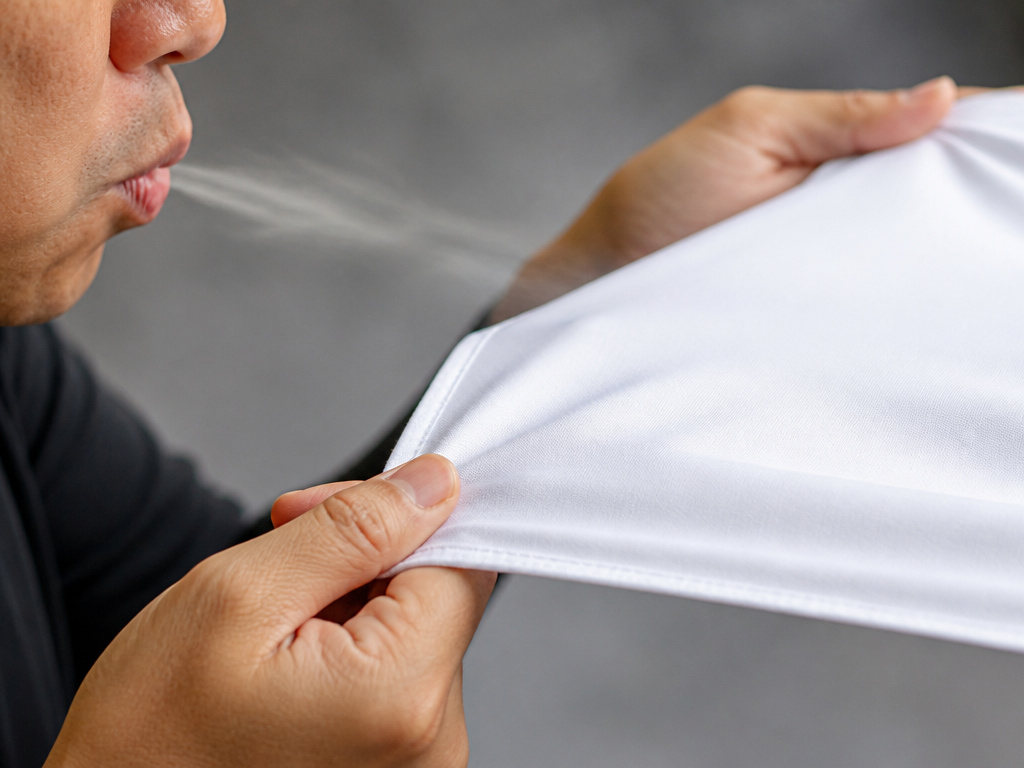
Before buying any sheets, try this:
- Request a fabric swatch or visit a store with samples
- Hold the material 6 inches from your mouth
- Blow firmly through it like cooling soup
- Can you feel air passing through easily?
Percale should let most of your breath through with minimal resistance. If you have to strain to push air, those sheets will trap body heat. Casper’s Hyperlite™ (200TC) passed this test effortlessly, while a 1200TC “luxury” set from a department store blocked all airflow.
Seasonal Strategy: When High Counts Work
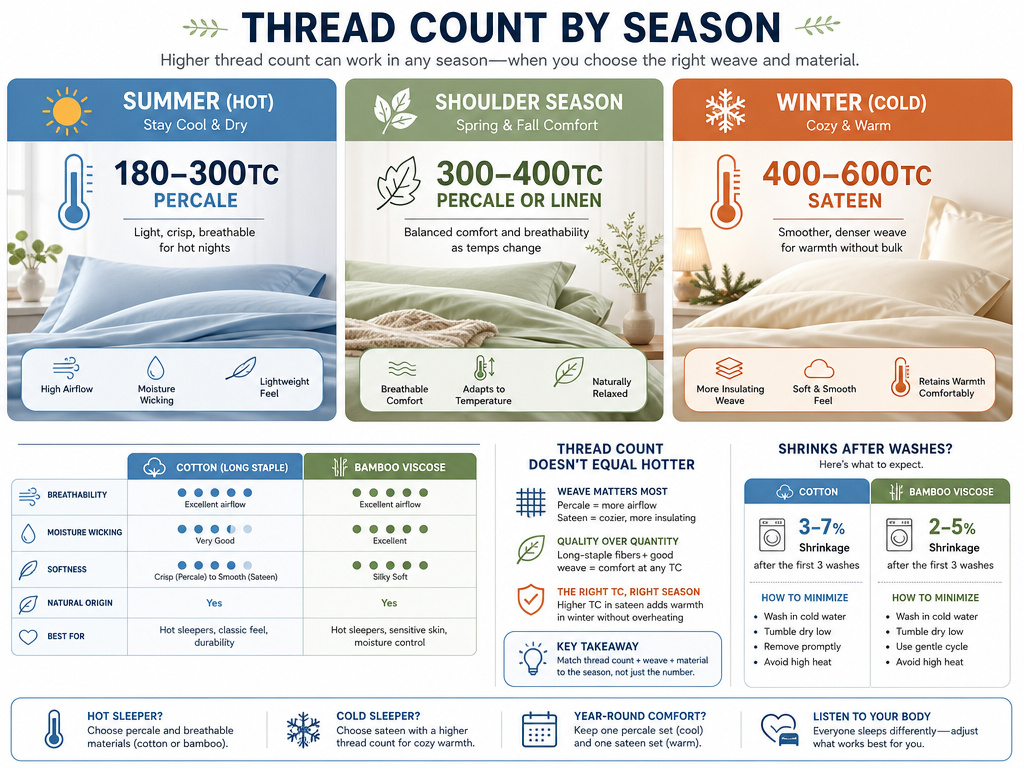
Not all high thread counts are bad, they just belong in different climates and seasons:
- Summer/hot climates: 180-300TC percale (Target’s 250TC organic or L.L.Bean’s 280TC)
- Shoulder seasons: 300-400TC percale or lightweight linen
- Winter/cold climates: 400-600TC sateen for insulation
The Cozy Earth bamboo sheets showed why material matters most, at 300TC, they slept cooler than 600TC cotton in testing, but shrank dramatically after five washes. That tradeoff is common with bamboo viscose.
How thread count is calculated and its limits
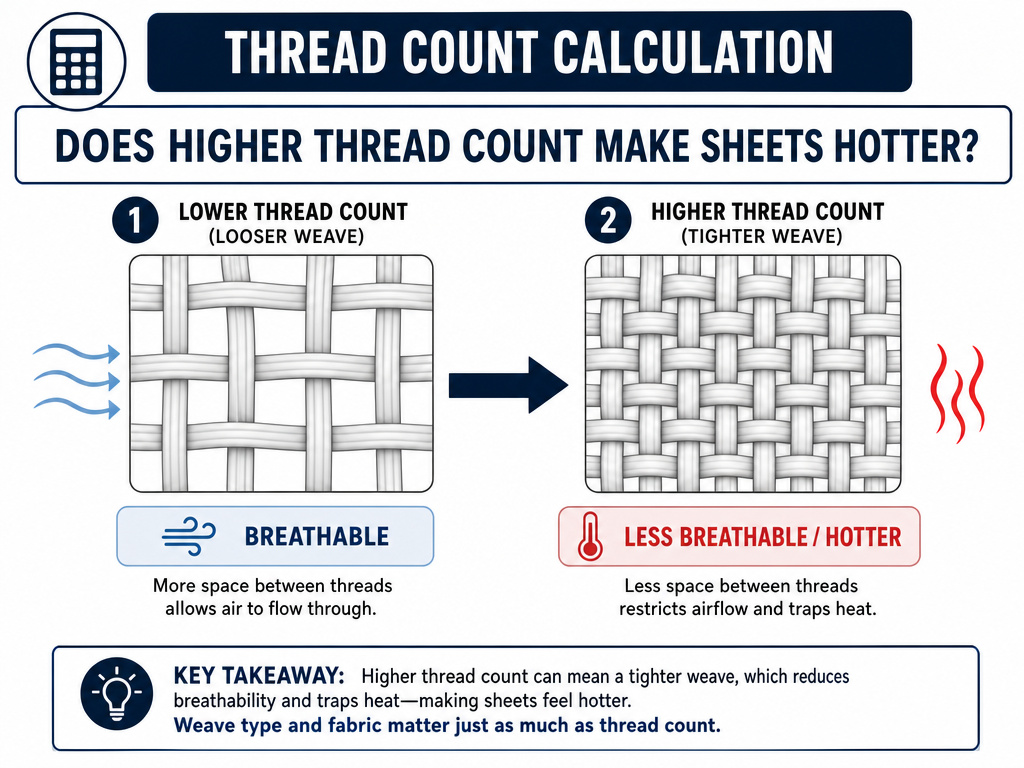
Thread count is calculated by adding the number of horizontal and vertical yarns in one square inch of fabric. This number has practical limits for breathability. When thread counts climb too high, the fabric becomes densely packed, which is the core reason does higher thread count make sheets hotter. Experts advise skepticism of counts substantially over 1,000, as such numbers are often marketing-driven and may involve multi-ply threads rather than higher-quality single-ply fibers. The best cotton sheets often perform well within a more moderate range, as extremely high counts can create a heavier, less breathable sheet.
Frequently Asked Questions
Does 1000 thread count mean better quality?
No, the NIH cooling study and Good Housekeeping’s lab found no comfort or durability benefit above 600TC. Many “1000TC” sheets use inferior multi-ply yarns that pill faster than quality 300TC single-ply.
Why do hotel sheets feel cool if they’re high thread count?
Hotels often use long-staple cotton in 300-400TC percale, the same sweet spot for home use. What you’re feeling is quality fiber and proper weave, not extreme thread count.
How often should I replace sheets for maximum coolness?
Cotton sheets lose some of their airflow capacity over time due to fiber breakdown. If your 2-year-old sheets feel warmer, it’s not your imagination.
Are bamboo sheets cooler than cotton?
Yes, but with caveats, bamboo viscose (like PMC’s Xirotex™ Cool) sleeps cooler initially but may lose cooling power faster than cotton with washing. The NIH cooling bed sheets pilot study documented this tradeoff.
The Bottom Line
Skip any sheet over 600 thread count if you sleep hot, that’s where marketing overtakes physics. For year-round comfort, own two sets: 250-300TC percale for summer and 400-500TC sateen for winter. Judge them by the hand blow test, not the tag.
Here’s the surprise: Target’s 250TC organic percale (at one-third the price of luxury brands) outperformed every 800+TC set in Wirecutter’s cooling trials. Sometimes less really is more.
