
10 Best Pillows For Petite Woman With Neck Pain in 2026
This post contains affiliate links. As an Amazon Associate, we earn from qualifying purchases.
Our top choice for petite women with neck pain is the Tempur-Pedic TEMPUR Neck Pillow, which wins for its extra-firm support and 3.5-inch profile ideal for smaller shoulder frames. We also highlight the Core Products Tri-Core Cervical Pillow for adjustable support and the SMDR Ultra Slim Ergonomic Cervical Pillow for an ultra-thin profile.
Petite frames often find standard pillows too thick, forcing the neck into an uncomfortable angle that worsens pain. This guide focuses on finding pillows with a lower loft, proper cervical support, and dimensions suited to smaller bodies. Our research compares specifications, expert insights on spinal alignment, and patterns in owner feedback to identify ten options that address these specific needs.
Top 10 Pillows For Petite Women With Neck Pain in the Market
Certain content that appears on this site comes from Amazon. This content is provided "as is" and is subject to change or removal at any time.
The Best Pillows For Petite Women With Neck Pain, Reviewed
Tempur-Pedic TEMPUR Neck Pillow

What We Like
- Extra-firm TEMPUR-Material maintains shape for support.
- Small 3.5-inch profile suits petite shoulder frames.
- Removable, machine-washable cover for easy care.
- CertiPUR-US certified and hypoallergenic construction.
Trade-offs
- Non-adjustable 3.5-inch loft may be too low for some.
- 20 x 12.5-inch dimensions are narrower than standard.
The 3.5-inch height is the key here. For a petite woman, that low profile means her head isn’t propped too high, which is a common culprit for neck strain. The extra-firm TEMPUR-Material is designed not to collapse, so it keeps her cervical spine aligned through the night without sinking. This combination of a specifically petite-friendly dimension and a material that holds its supportive shape makes it a standout for addressing the root of neck pain in smaller frames.
The pillow’s fixed, extra-firm design means it won’t suit someone who prefers a plush hug or needs to customize the loft. Unlike the LOFE Adjustable Memory Foam Pillow with its four height options, the Tempur-Pedic provides one optimized solution centered on its TEMPUR-Material. This focus comes with a 5-year limited warranty, suggesting a product built to last. It’s a pillow that makes a specific support decision for you.
Product photos
Core Products Tri-Core Cervical Pillow

What We Like
- Explicitly sized for petite frames under 4'10"
- Adjustable neck rolls for custom support height
- Raised side panels for side sleeping alignment
- Breathable, odor-free fiber fill
Trade-offs
- Requires a multi-week adjustment period, immediate use may increase pain
- Full size dimensions may feel oversized for smaller beds
Designed for users 5’6″ and taller, the Core Products Tri-Core Cervical Pillow’s Full Size model provides a larger surface area to properly fit taller frames. Its two firm neck rolls allow sleepers to adjust the support height, a feature that helps address the common problem of a pillow lifting the head too high and straining the neck. This adjustability, combined with distinct zones for side and back sleeping, makes it a clear choice for a taller person needing precise spinal alignment who sleeps in multiple positions.
That firm 3-inch loft and the required adjustment period are the trade-offs. The pillow demands patience; you’re instructed to alternate with your old pillow for weeks to avoid increased pain, which isn’t a quick fix. Compared to the ultra-low 0.8-inch SMDR Ultra Slim, the Tri-Core provides more structured contouring, but its firmer, taller profile won’t suit someone seeking a nearly flat surface or who dislikes a pronounced cervical curve.
Product photos
SMDR Ultra Slim Ergonomic Cervical Pillow
What We Like
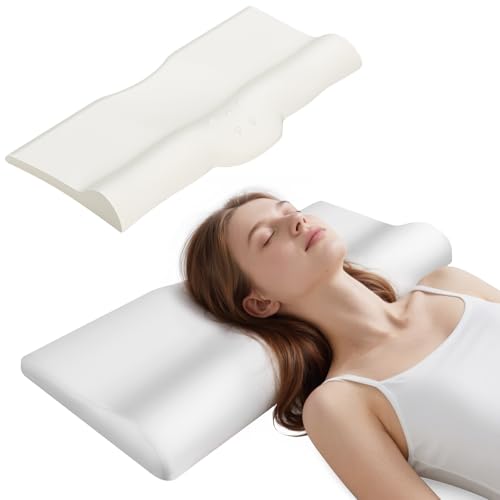
- Ultra-thin 0.8-inch edge suits petite frames and stomach sleepers
- Central concave groove cradles the head for cervical alignment
- Slow-rebound memory foam provides consistent, gentle firmness
- Machine-washable dual-layer cover maintains hygiene easily
Trade-offs
- At 0.8 inches, the lowest side may be too flat for some side sleepers
- The 11.8-inch width is narrower than many cervical pillows
- Initial adjustment period may cause slight discomfort
The SMDR Ultra Slim Ergonomic Cervical Pillow has a high-low contour ranging from 2 inches to 0.8 inches. This ultra-thin design is intended to support the neck and spine without raising the head too high, which the brand states makes it suitable for stomach, side, and back sleepers. Its central concave groove is meant to cradle the head and support the cervical curve for balanced alignment. The memory foam core is designed to provide stable, conforming support that the brand says won’t flatten over time.
The pillow’s design is specialized for a low profile. Its 0.8-inch minimum height is lower than many cervical pillows, such as the LOFE Adjustable Memory Foam Pillow which offers heights up to 4.8 inches. The SMDR’s 2-inch to 0.8-inch contour provides a specific, non-adjustable shape focused on delivering what the brand calls light, precise support without over-lifting the head. This makes it a dedicated option for those seeking minimal loft.
Product photos
Purple DreamLayer Pillow
What We Like
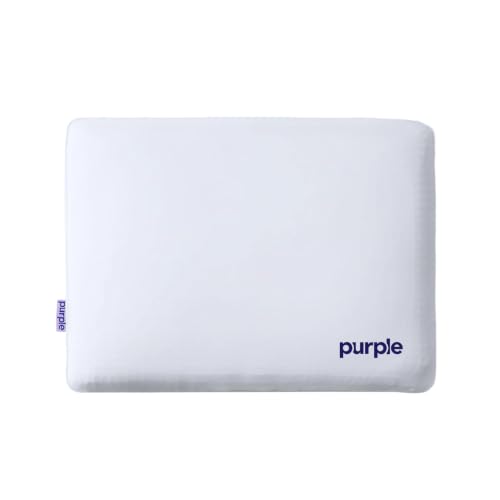
- Three distinct loft heights from removable boosters
- Cooling GelFlex Grid and foam promote airflow
- Soft, contour-hugging support molds to head and neck
- Washable cover helps maintain hygiene
Trade-offs
- At 8.4 pounds, it is a heavier pillow to move
With two removable boosters, the Purple DreamLayer Pillow adjusts between 5, 6, and 7 inches of loft, letting sleepers customize the height for stomach, back, or side positions. Its GelFlex Grid and MicroAir Foam core mold to the head and neck for pressure relief without trapping heat, a clear advantage for those who sleep warm. This three-height system allows someone to fine-tune their pillow for spinal alignment as their preferred sleeping position changes.
The pillow weighs 8.4 pounds, giving it a substantial feel compared to lighter cervical options like the 2.5-pound Core Products Tri-Core. While its adjustable loft and cooling features are central, its design relies on a conforming grid rather than a fixed contoured shape like many dedicated orthopedic pillows. It solves the loft question thoroughly but provides cervical support through molding action, a different approach than a pre-shaped pillow.
LOFE Adjustable Memory Foam Pillow

What We Like
- Four adjustable heights from 1.2 to 4.8 inches
- Medium-firm memory foam for consistent support
- Breathable cover with ventilation holes
- Layers can be shared for a lower loft
Trade-offs
- Requires a 15-20°C room for ideal softness
- Initial 'foamy' odor may need airing out
A height range from 1.2 to 4.8 inches means a petite woman can finally stop her head from tilting up on a standard pillow or sinking too low on a flat one. The four foam layers let you dial in the exact loft to keep your cervical spine neutral, which is the whole point of fighting neck pain. You can remove layers to share with another stomach sleeper or add them back to find the combination that works for your sleep position.
The foam’s firmness is temperature-sensitive, so if your bedroom runs cool, you might find it a bit stiffer than advertised. It weighs 3.6 pounds, which gives it a more substantial feel than the 1.0-pound Tempur-Pedic TEMPUR Neck Pillow. The medium-firm memory foam is designed to maintain resilient support without collapsing under the weight of your head.
OtterRest Contour Memory Foam Pillow
What We Like
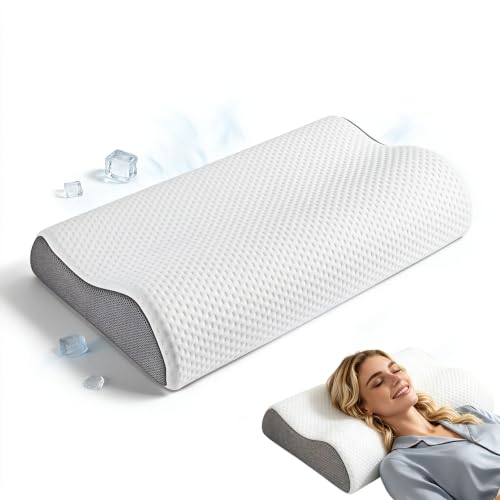
- Dual-height design accommodates varied sleep postures.
- Low-profile contour provides mild neck lift for alignment.
- Breathable, washable cover maintains freshness and airflow.
- Vacuum-packed format is convenient for travel and storage.
Trade-offs
- Not suitable for sleepers who prefer firm, thick pillows.
- The 4-inch high side is only for narrow-shouldered side sleepers.
Designed for those who prefer a thin, medium-firm pillow, the OtterRest Contour uses a dual-height shape with a 3.15-inch low side and a 4-inch high side. This contour provides a mild neck lift to support spinal alignment without creating a steep angle, which can help ease cervical stress. It is specifically intended for back sleepers and narrow-build side sleepers who find standard pillows push their head forward.
This pillow’s fit is quite specific. It is not suitable for people who like firm, thick pillows, as stated in its own description. While the adjustable LOFE pillow offers four height options up to 4.8 inches for changing preferences, the OtterRest provides two fixed contours. Its dedicated, low-profile design offers consistent support but less flexibility for someone whose preferred sleeping position varies.
Product photos
Bluewave Bedding Ultra Slim Gel Memory Foam Pillow
What We Like
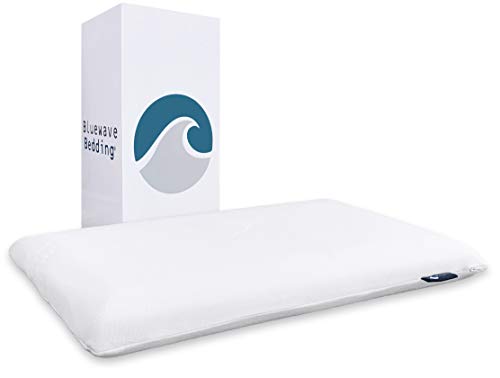
- Ultra-slim 2.75-inch height for spinal alignment
- High-density foam retains shape for years
- Gel and channels actively dissipate heat
- Washable cover maintains hygiene easily
Trade-offs
- Too low for most side sleepers' shoulder gap
- Firm, dense feel lacks plush surface softness
A 2.75-inch loft is the central fact here, placing it firmly in the niche for petite stomach and back sleepers. That specific height aims to keep the head and neck level with the spine, which is the foundational goal for easing neck strain. The high-density memory foam provides a substantial, unchanging cradle, and the gel infusion with ventilation channels directly targets the heat retention common in memory foam. This combination of precise low profile and active cooling makes it a standout for a sleeper who overheats and needs minimal lift.
Bluewave’s pillow focuses on a single, precise 2.75-inch height, which is designed to keep the head and neck in a straight line for stomach and back sleepers. It uses a 3.25 lb high-density memory foam that provides a substantial, cushiony cradle, so it holds its shape over time instead of flattening. A gel infusion and ventilation channels work to draw warmth away from the head, aiming to prevent overheating during the night. The family-owned brand offers this model in five specific loft heights, allowing buyers to select a different size if the standard 2.75 inches isn’t their perfect fit.
Product photos
JKNJKN Low Profile Cervical Pillow
What We Like
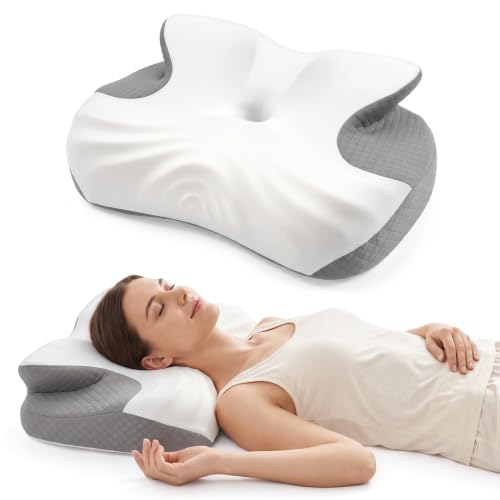
- Butterfly contour provides dedicated arm rest space
- Dual loft options accommodate different preferences
- Removable, washable cover simplifies maintenance
Trade-offs
- Fixed contour shape limits adjustability
- 5.1-inch loft may still be too high for some
A 4.3-inch loft provides a lower height option, which can suit sleepers preferring less elevation. This side of the pillow also incorporates a butterfly shape that gives your arm a natural place to rest, aiming to prevent waking up with shoulder pressure. The design offers an alternative to pillows with a single, often higher, contour.
The trade-off is the fixed, contoured shape, which demands you stay roughly in the position it dictates. If you shift around a lot, you might find yourself off the support. For someone who prefers a flatter, more malleable surface, the SMDR Ultra Slim Ergonomic Cervical Pillow offers a much thinner, more flexible profile, though it lacks the dedicated arm support.
Product photos
NOFFA Dual-Height Cervical Pillow
What We Like
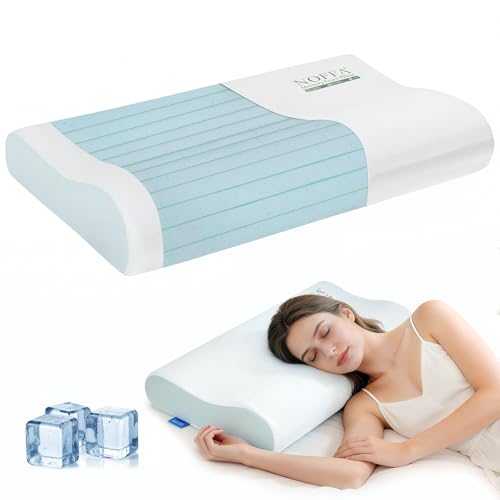
- Dual-height design accommodates side and back sleepers
- Gel-infused foam and ventilation grooves reduce heat buildup
- Zoned support contours to cervical curve for alignment
- Removable, breathable pillowcase simplifies cleaning
Trade-offs
- At nearly 4 to 5 inches, the loft may be too high for strict stomach sleepers
- Initial odor requires 48-hour airing out post-unboxing
The medium-soft firmness and contoured, zoned design aim to cradle the neck without excessive pushback, a balance that can be hard to find for smaller frames. Sixteen ventilation grooves cut into the surface, paired with the cooling gel infusion, address the common complaint of memory foam trapping heat, making it a strong option for those who sleep warm.
The trade-off is that even the lower height option sits higher than dedicated low-profile models like the SMDR Ultra Slim. This pillow’s design prioritizes contour and airflow over an ultra-flat profile, so strict stomach sleepers or those seeking a very firm, unchanging surface might find it too accommodating. For a petite side or back sleeper whose main grievances are neck pain and night sweats, however, the combination of adjustable support and active cooling is a thoughtful answer.
Product photos
Bespilow Round Cervical Bolster

What We Like
- Dual-core structure provides firm traction with a soft surface
- CertiPUR-US foam and cooling, washable cover
- Designed for targeted 15-30 minute daily decompression sessions
Trade-offs
- Specialized for short-term therapy, not full-night sleep
- Round bolster shape suits only back sleepers
- No adjustable loft or height options
Weighing 0.8 pounds, this round bolster is designed for a specific daily ritual: 15 to 30 minutes of neck decompression therapy. It acts as a corrective restorative tool for back sleepers to pull the head back into alignment, not a pillow for sleeping through the night. The dual-core structure provides a firm push for traction, sheathed in a soft memory foam layer for comfort. Certified with CertiPUR-US and OEKO-TEX Standard 100, it offers a compact, safe option for resetting spinal alignment during breaks or before sleep.
Its design is specialized for short-term structural restoration. The product profile is intended for quick naps or pre-sleep relaxation rather than eight-hour sleep. This means the corrective traction roll serves a different function than pillows designed for all-night support, like many contoured or adjustable models in the other-products list.
How We Evaluated Pillows For Petite Women With Neck Pain
Our evaluation began with manufacturer specifications, focusing on loft height, firmness, and dimensions. We prioritized pillows explicitly designed for petite frames or those with low-profile contours, as these are critical for proper spinal alignment in smaller bodies. Our research also included expert round-ups on orthopedic support and patterns in owner feedback regarding comfort and pain relief over time.
The key criteria were loft height, material support, and suitability for primary sleep position. A pillow’s loft, or thickness, is paramount; too high a loft cranes the neck upward, while too low fails to fill the space between neck and mattress. We looked for materials like firm memory foam or adjustable fills that maintain shape. Finally, we matched designs to common sleeping postures, as a stomach sleeper’s needs differ vastly from a side sleeper’s.
Our research-based approach has limits. We cannot replicate the personal experience of sleeping on a pillow for weeks, and individual sensitivity to firmness or material varies. While we identify promising options based on design and reported performance, finding your perfect match may require personal trial.
What To Look For In Pillows For Petite Women With Neck Pain
For petite women, the wrong pillow height is often the root cause of neck pain. A pillow that’s too thick pushes the head forward, straining the cervical spine. Look for designs that provide firm support with a lower overall loft to match a smaller shoulder-to-ear distance.
Most petite sleepers should prioritize a low loft between 2.5 and 4 inches. They also need firm material support to prevent sinking. Finally, look for a design that aligns your cervical spine based on whether you sleep on your side, back, or stomach.
Loft Height
Loft, or pillow thickness, is the most critical factor. Petite side and back sleepers generally need a lower loft to fill the gap between neck and mattress without lifting the head too high. Stomach sleepers require an ultra-thin loft to keep the spine neutral. Some pillows offer adjustable lofts via removable inserts, providing customization for finding your exact height.
Material and Support
The material determines how well the pillow holds its supportive shape. Medium-firm to firm memory foam is common, as it contours without excessive sink. Look for high-density foams that resist flattening. Some designs use shredded foam or fiber for a more malleable, adjustable feel. Gel infusions or ventilation channels can help with temperature regulation, which is important as some memory foam retains heat.
Sleep Position Design
Your dominant sleep posture dictates the pillow shape you need. Side sleepers require the highest loft and firmest support to keep the head level with the spine; contoured or cervical pillows with raised edges can help. Back sleepers need a medium loft with a gentle cradle for the head and support under the neck. Stomach sleepers need the lowest, softest loft to minimize neck rotation. For a detailed breakdown, consult our guide on choosing a pillow for your sleep position.
- Measure your shoulder-to-ear distance while lying in your typical sleep position to estimate your ideal loft.
- Check if the pillow’s width accommodates your frame; some cervical pillows are narrower than standard.
- Consider an adjustable pillow if you are unsure of your perfect loft or change positions.
- Look for removable, machine-washable covers for easy hygiene maintenance.
- Allow for a break-in period, as some firm pillows require time for your body to adjust.
The right pillow should keep your head in a neutral line with your spine when you are on your side, back, or stomach.
Pillows For Petite Women With Neck Pain Compared
The table below compares key specifications like loft, material, and best sleep position for all ten pillows.
| Product | Height/Loft | Core Material | Cover |
|---|---|---|---|
| Tempur-Pedic TEMPUR Neck Pillow | 3.5 inches | TEMPUR-Material | Removable polyester |
| Core Products Tri-Core Cervical Pillow | 3.0 inches | Breathable fiber | N/A |
| SMDR Ultra Slim Ergonomic Cervical Pillow | 0.1 inches | Slow-rebound memory foam | Removable polyester-spandex blend |
| Purple DreamLayer Pillow | 5", 6", or 7" | GelFlex Grid over MicroAir Foam | Washable, moisture-wicking |
| LOFE Adjustable Memory Foam Pillow | 1.2 to 4.8 inches | CertiPUR-US memory foam | 60% polyester, 40% rayon (bamboo) |
| OtterRest Contour Memory Foam Pillow | 3.15" low side, 4" high side | N/A | Breathable, washable knit |
| Bluewave Bedding Ultra Slim Gel Memory Foam Pillow | 2.75 inches | Gel-infused memory foam | Removable, machine-washable |
| JKNJKN Low Profile Cervical Pillow | 4.3" & 5.1" | Slow-rebound memory foam | Removable, machine-washable |
| NOFFA Dual-Height Cervical Pillow | 3.9/4.7 inches | CertiPUR-US memory foam | Removable, breathable, machine-washable |
| Bespilow Round Cervical Bolster | N/A | Dual-layer rigid core & memory foam | OEKO-TEX Standard 100, washable |
Frequently Asked Questions
What pillows do doctors recommend for neck pain?
Doctors and chiropractors often recommend pillows that maintain cervical alignment, such as contoured cervical pillows or firm, supportive memory foam pillows. The key is a pillow that keeps the head in a neutral position relative to the spine, avoiding angles that strain neck muscles. For petite individuals, they emphasize selecting a pillow with an appropriate, often lower, loft height for the sleeper’s body size and preferred sleep position.
What kind of pillow do chiropractors recommend for neck pain?
Chiropractors typically recommend ergonomic pillows designed for spinal support, like contour or cervical pillows. These are shaped to cradle the head and support the natural curve of the neck. For petite women, the focus is on finding such a pillow in a lower profile to avoid overextending the neck, and our research on the best orthopedic pillows highlights several suitable options.
Why does my neck hurt no matter what pillow I use?
Persistent neck pain despite changing pillows may indicate the pillow’s loft is still incorrect for your body frame or sleep position. It could also point to issues beyond bedding, such as mattress support, sleep posture habits, or an underlying musculoskeletal condition. Consulting a healthcare professional is advised to rule out other causes. A thorough pillow selection guide can also help you reassess your specific needs.
Is a firm or soft pillow better for neck pain?
For neck pain, support is more important than softness. A pillow that is too soft allows the head to sink too deeply, losing alignment. Most sleepers with neck pain benefit from a medium-firm to firm pillow that provides consistent lift. The ideal firmness also depends on sleep position; side sleepers need the firmest support, while stomach sleepers may need a softer, very low-loft option.
What is the best pillow height for a petite woman?
The best pillow height for a petite woman is typically lower than standard. For side and back sleepers, a lower loft is common, while stomach sleepers often need a very thin loft. The exact height depends on your shoulder width and sleep position. Adjustable pillows allow you to fine-tune this height, which is especially useful for people with a short neck.
The Bottom Line
The Tempur-Pedic TEMPUR Neck Pillow is our best overall pick for its dedicated, firm support and 3.5-inch profile that suits many petite side and back sleepers. If you need to customize your support height, consider the Best Adjustable Support pick, Core Products Tri-Core Cervical Pillow, or for an ultra-thin option, the Best Ultra-Thin Profile SMDR pillow.
For strict stomach sleepers or those who prefer minimal lift, the Best Cooling Slim Pillow and Best Ultra-Thin Profile picks offer the lowest profiles. Side sleepers seeking targeted relief should examine the Best Arm Rest Design and Best Ventilated Contour pillows. Remember, the single most important factor is matching the pillow’s loft to the distance between your neck and the mattress in your primary sleep position.
