
10 Best Pillows For Back Sleepers With Neck And Shoulder Pain
This post contains affiliate links. As an Amazon Associate, we earn from qualifying purchases.
Our best overall pillow for back sleepers with neck and shoulder pain is the Mellow CloudAlign Memory Foam Pillow for its adaptive dual-height design and targeted contour. We also highlight the C Cushion Lab Deep Sleep Pillow for its patented shape and the Mediflow Water Pillow for customizable firmness.
Choosing the wrong pillow can misalign your spine overnight, turning rest into a source of chronic discomfort. This guide is based on a review of specifications, expert recommendations, and patterns in owner feedback to help you select a pillow that provides proper support and pressure relief.
Top 10 Pillows For Back Sleepers With Neck And Shoulder Pain in the Market
Certain content that appears on this site comes from Amazon. This content is provided "as is" and is subject to change or removal at any time.
The Best Pillows For Back Sleepers With Neck And Shoulder Pain, Reviewed
Mellow CloudAlign Memory Foam Pillow

What We Like
- Dual-height design adapts to sleep position and body type
- Contoured shape targets neck and spine alignment
- OEKO-TEX certified, breathable cover for easy care
- Responsive memory foam conforms for pressure relief
Trade-offs
- At 4.3 inches, the lower loft may be shallow for some side sleepers
- 4.0-pound weight is heavier than some cervical pillows like the Royal Therapy
- Standard width of 15.0 inches offers less surface area than the Mediflow
A dual-height design means you can flip the pillow to match your preferred support level, a straightforward solution for adapting to different sleep positions. Its contoured shape and targeted support zones are engineered to cradle the head and promote spinal alignment, addressing the core complaint of neck and shoulder pain. The responsive memory foam provides conforming pressure relief for the neck, shoulders, and upper back, and the breathable, washable cover simplifies long-term hygiene.
The trade-off is in its specific dimensions. The 15-inch width provides a more focused sleeping surface compared to a wider pillow like the Mediflow Water Pillow, which some may find restrictive if they move frequently. Its 4.3-inch lower loft is effective for strict back sleeping, but those who are dedicated side sleepers might find the C Cushion Lab offers a deeper contour. For a back sleeper seeking a versatile, well-supported middle ground, this pillow’s adaptable design and ergonomic intent are clear.
C Cushion Lab Deep Sleep Pillow
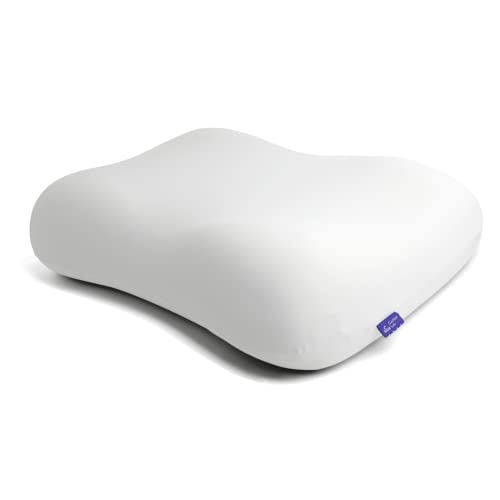
What We Like
- Patented contour design supports both back and side sleeping.
- Dual-density foam provides soft comfort over adaptive support.
- Anti-wrinkle cover aims to reduce skin crease and hair frizz.
Trade-offs
- The specific contour shape may not suit all stomach sleepers.
- Fixed ergonomic design lacks adjustable loft options.
A patented ergonomic contour defines this pillow, sculpted to cradle the head while its sweeping shoulder line aims to reduce pressure for back sleepers. It suits someone seeking a dedicated orthopedic shape that promises a close fit when switching between back and side positions. The dual-density memory foam attempts to balance immediate softness with foundational support, targeting neck and shoulder tension.
The fixed, narrow profile is the trade-off for that targeted support, meaning it won’t suit those who prefer a broad, flat sleeping surface. Compared to the wider Purple Harmony Pillow, which is 17 inches wide, the C Cushion Lab’s 7.1-inch width offers a more specialized fit. Its design is unapologetically specific, banking everything on its unique shape working for your anatomy.
Product photos
Core Products Tri-Core Cervical Pillow

What We Like
- Breathable, odor-free fill unlike many foam pillows
- Contoured design supports both side and back sleeping
- Specific size guide accommodates different body heights
Trade-offs
- Requires a multi-week adjustment period
- Firm feel may not suit all sleepers
For a back sleeper with neck and shoulder pain, that tunable firmness means you can dial in the exact spinal alignment promised by the contoured center. It suits someone who wants a breathable, non-foam option and is willing to follow the brand’s adjustment guidance over several weeks.
The trade-off is its firm, low-profile feel, which some may find too unforgiving compared to a plush memory foam. It also lacks the active cooling of a model like the Purple Harmony Pillow. This pillow works if you prioritize customizable, firm support over immediate plush comfort and don’t sleep hot.
Product photos
Purple DreamLayer Pillow
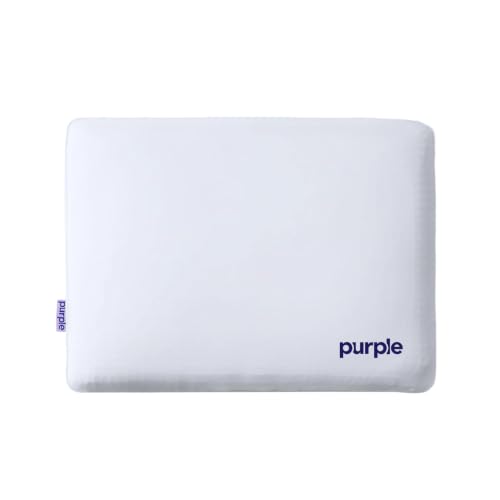
What We Like
- Removable boosters for three customizable heights
- GelFlex Grid and MicroAir Foam promote cooling airflow
- Conforms to head, neck, and shoulders for pressure relief
- Washable, flexible cover helps keep sleepers dry
Trade-offs
- At 8.4 pounds, it is heavier than most contour pillows
- Weighs 8.4 pounds, which is heavier than many standard pillows
The Purple DreamLayer Pillow adjusts to three heights, providing a customizable fit for stomach, back, side, and combination sleepers. Its GelFlex Grid and MicroAir Foam core conform to the head and neck for pressure relief, and the materials promote airflow to help sleepers stay cool. This design offers a contour-hugging feel similar to memory foam but aims to prevent heat retention.
That adaptable loft comes with a noticeable heft, however, at over eight pounds. It feels substantial, which contributes to its stable, non-shifting support, but it’s a different experience than a lightweight contour pillow like the C Cushion Lab Deep Sleep Pillow. The Purple DreamLayer is for the back sleeper who values a plush, conforming cradle and wants the freedom to dial in the exact pillow height their neck requires.
Mediflow Water Pillow
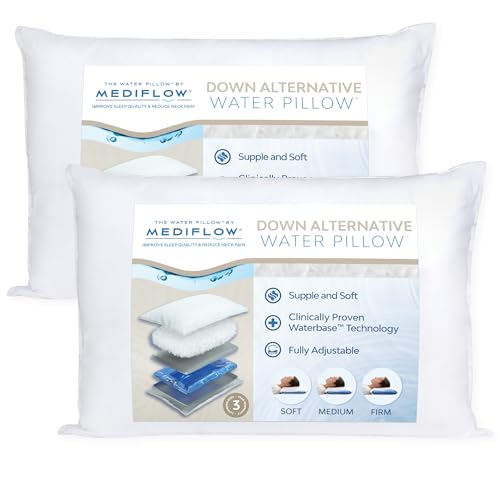
What We Like
- Waterbase adjusts firmness for personalized support
- Down-alternative fill is soft and hypoallergenic
- Adapts to back, side, and stomach sleeping positions
- Conforms to neck shape for targeted pain relief
Trade-offs
- Initial height depends on water fill, requiring setup
- At 3.1 lb, it is heavier than the Tri-Core Cervical Pillow
- A 20-inch width offers less shoulder cradle than contoured designs
The Mediflow Water Pillow’s firmness can be customized by adjusting its water level, allowing sleepers to tailor support for neck pain relief. Its design combines a soft down-alternative fill with an adjustable waterbase, which conforms to the neck for side, back, and stomach sleeping positions. This adjustability provides a personalized sleep experience.
Achieving that custom firmness requires filling and adjusting the water compartment, a process not needed with a standard memory foam pillow. The pillow’s broad surface measures 28 by 20 inches, offering a flat sleeping area. This differs from the contoured shape of a pillow like the C Cushion Lab Deep Sleep, resulting in adaptive support rather than a fixed ergonomic form.
Product photos
Purple Harmony Pillow
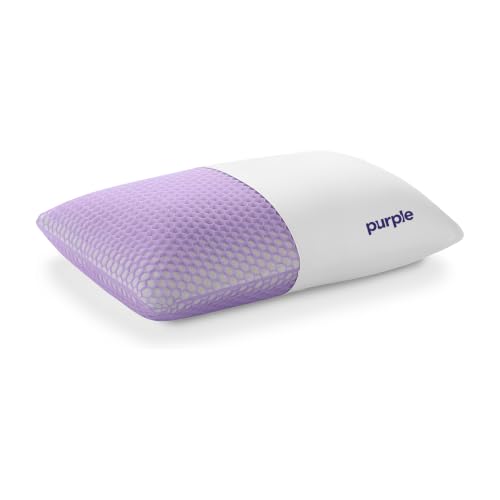
What We Like
- GelFlex Grid and latex core for pressure-relieving support.
- Temperature-balancing materials promote cooling all night.
- Machine-washable cover simplifies maintenance.
- Holds its shape without flattening or fluffing.
Trade-offs
- A single, tuned medium feel offers no internal adjustability.
Combining a cooling GelFlex Grid with Talalay latex, the Purple Harmony Pillow creates a distinct, medium feel that cradles the head and neck. This material pairing actively pulls heat away instead of trapping it, which targets a core need for hot sleepers. According to the manufacturer, the low 5.5-inch loft suits both stomach and back sleepers.
Its tuned, unchangeable medium feel means you cannot add or remove fill like with the adjustable Mediflow Water Pillow. This creates a premium, set-it-and-forget-it design for someone who wants a consistent, cool, and supportive platform. The medium and tall lofts are described as favorites for side sleepers who feel shoulder pressure, offering a different option than the deeply contoured shape of the C Cushion Lab Deep Sleep Pillow.
DONAMA Cooling Contour Pillow

What We Like
- Dual-height design accommodates back and side sleeping.
- Patented arm trench prevents shoulder numbness for side sleepers.
- Full ice silk cover provides 360-degree cooling.
Trade-offs
- 3.54-inch loft may be too low for some back sleepers.
- Spot-clean only care is less convenient than machine washing.
- Requires 48-hour expansion period before first use.
The DONAMA pillow’s dual-height design includes a 3.54-inch loft specifically for back and stomach sleepers, a lower profile that promotes spinal alignment without pushing the head too far forward. This contour works alongside the pillow’s full-coverage ice silk fabric to address both support and overheating. It is presented as a solution for those who sleep warm and seek neck pain relief.
The built-in arm trench is a genuine differentiator, solving the classic side-sleeper dilemma of where to put the bottom arm. That makes it versatile, but the fixed lofts mean it won’t suit someone who wants fine-tuned adjustability. For a customizable fit, the Mediflow Water Pillow allows you to add or remove water to find the precise height and firmness.
Product photos
Cozyplayer Ultra Pain Relief Pillow

What We Like
- Hollow concave design cradles head at a 15-degree angle
- Six contour zones target neck, shoulder, and arm pressure points
- Cooling pillowcase reduces skin temperature by 5℃
- Adjustable sleep height via rotation or insert removal
Trade-offs
- Memory foam may have a slight odor requiring 48-hour air-out
- Cooling effect varies by individual and ambient conditions
- Body requires an adjustment period for the unique contour
The hollow concave surface is tilted at a 15-degree angle to maintain the natural curve of your neck and align your spine. This makes the Cozyplayer pillow a strong candidate for back sleepers whose pain stems from misalignment. Its six contour zones and the ability to customize the loft by rotating the pillow or removing an insert mean you can fine-tune the support for your neck and shoulders. This adjustment happens without adding bulk under your head.
This pillow’s innovative design requires a break-in period, both for the memory foam to air out and for your body to adapt to its specific contours. Its cooling effect, which can lower skin temperature, depends on individual factors and ambient room conditions. The brand notes that the sleep experience varies from person to person, advising users to allow time for adjustment.
Osteo Cervical Memory Foam Pillow
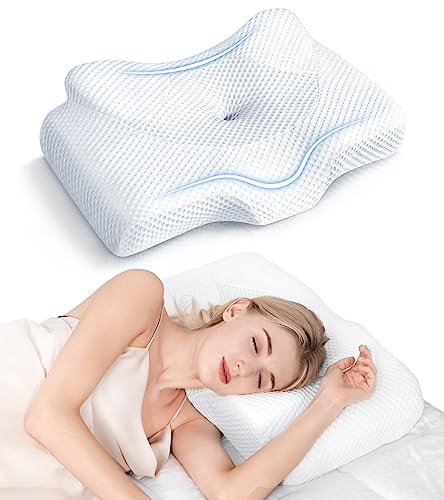
What We Like
- Hollow center design aims to maintain cervical curve
- Cooling 3D mesh case for temperature regulation
- Odorless, CertiPUR-US and Oeko-Tex certified materials
- Adjustable height via 180-degree rotation and removable insert
Trade-offs
- Requires a 48-hour airing period for full expansion before use
- Comfort can vary with individual body shape and neck curve
A hollow center is the defining feature of this pillow, designed to cradle the head and help maintain the natural cervical curve. This focus on spinal alignment aims to relieve pressure and muscle tension, which is the core promise for sleepers with neck pain. The pillow suits someone seeking a certified memory foam design with multiple adjustment options to dial in their comfort.
It requires a 48-hour airing period for full expansion and for any natural odor to dissipate, which demands some patience before first use. The pillow offers two different thicknesses and a removable insert for height adjustment, allowing users to customize the loft to their preference.
Product photos
Royal Therapy Contour Cervical Pillow

What We Like
- Three-layer design allows for customizable loft height
- CertiPUR-US memory foam conforms to body temperature
- Breathable, moisture-wicking bamboo rayon cover
- Contour shape supports natural cervical alignment
Trade-offs
- At 1.1 pounds, it is significantly lighter than most foam pillows
- A 5-inch height may be too low for some without the middle layer
- The 14-inch width is narrower than several other contour pillows
The three-layer removable design is the central fact here, letting you strip out the middle section to find the precise height your shoulders need. That adjustability makes it a strong candidate for back sleepers whose discomfort comes from a pillow that’s simply the wrong loft. The medium-firm memory foam and contoured shape aim to cradle the neck without pushing the head too far forward, which is the common pitfall for this sleeping position. It suits someone willing to experiment a little to find their perfect setup.
A weight of 1.1 pounds makes this one of the lightest pillows available, so it’s easy to move or reposition during the night. Its 14-inch width is narrower than the 16-inch Core Products Tri-Core pillow, which may provide less surface area for broader shoulders. The three-layer design allows for loft adjustment by removing the middle section, letting users customize the support level.
How We Evaluated Pillows For Back Sleepers With Neck And Shoulder Pain
Our evaluation began with a thorough review of manufacturer specifications and product documentation for each pillow, focusing on materials, construction, and design claims. We cross-referenced these details with expert round-ups from orthopedic and physical therapy resources and analyzed recurring themes in verified owner feedback. The key criteria were a pillow’s ability to maintain neutral spinal alignment, its adjustability for personalized loft and firmness, and the use of cooling or pressure-relieving materials.
Because this is a research-based assessment, we cannot verify individual comfort claims or the exact efficacy of pain relief, which varies by person.
What To Look For In Pillows For Back Sleepers With Neck And Shoulder Pain
For back sleepers, the primary goal is to cradle the neck’s natural curve without tilting the head forward or backward, which requires a careful balance of support and loft. Materials and adjustability are also crucial for addressing pressure points and regulating temperature throughout the night.
Look for a medium loft that keeps your head level, materials like memory foam or latex that conform without collapsing, and features like removable inserts or water chambers for fine-tuning your support.
Spinal Alignment & Contour
Proper spinal alignment means your ears should be aligned over your shoulders when lying on your back. Pillows designed for this often feature a contoured shape with a central dip or raised edges to cradle the neck and keep the head in a neutral position. A contoured cervical pillow is engineered specifically for this purpose, while a simple flat pillow may allow the head to sink and strain the neck.
Loft & Adjustability
Loft, or height, is critical. Most back sleepers need a medium loft, typically between 4 to 5 inches. This fills the space between the mattress and the neck without pushing the head upward. An adjustable loft allows you to personalize this height for your body type and preferred firmness. This can be done via removable inserts, a water chamber, or a flippable design, making it a key feature in a pillow selection guide.
Material & Pressure Relief
The pillow’s fill determines how it conforms and supports. Responsive memory foam molds to your shape for targeted pressure relief, while latex offers resilient support. For those who sleep hot, gel-infused foams, breathable covers, or phase-change materials help regulate temperature. A good orthopedic pillow will use these materials to distribute weight evenly and reduce pressure on the shoulders.
- Check if the pillow requires a break-in period or airing out before use.
- Verify the care instructions; machine-washable covers are more convenient.
- Consider the pillow’s weight, as heavier models can be more difficult to reposition.
The right pillow should keep your head level and your neck supported without creating new pressure points.
Pillows For Back Sleepers With Neck And Shoulder Pain Compared
To make comparing these key features easier, the table below summarizes the main differences between our top picks.
| Product | Material | Dimensions | Weight | Adjustable Feature |
|---|---|---|---|---|
| Mellow CloudAlign Memory Foam Pillow | Memory foam | 28.0 x 15.0 x 4.3 inches | 4.0 Pounds | Dual-height |
| C Cushion Lab Deep Sleep Pillow | Dual-density memory foam | 15.8 x 7.1 x 0.0 inches | 4.0 pounds | N/A |
| Core Products Tri-Core Cervical Pillow | Fiber fill | 24 x 16 x 3 inches | 2.5 pounds | Two firm neck rolls |
| Purple DreamLayer Pillow | GelFlex Grid, MicroAir Foam | 22.5 x 16.2 x 0.0 inches | 8.4 Pounds | 5", 6", or 7" loft |
| Mediflow Water Pillow | Down alternative | 28.0 x 20.0 inches | 3.1 pounds | Water level |
| Purple Harmony Pillow | GelFlex Grid, Talalay Latex | 26.0 x 17.0 x 0.0 inches | 1.0 Pounds | Low (5.5"), Medium (6.5"), Tall (7.5") |
| DONAMA Cooling Contour Pillow | CertiPUR-US memory foam | N/A | N/A | Dual Height: 3.54", 5.51" |
| Cozyplayer Ultra Pain Relief Pillow | 98% breathable memory foam | 23.2 × 13.4 × 5.1 inches | N/A | 180-degree rotation, removable insert |
| Osteo Cervical Memory Foam Pillow | CertiPUR-US memory foam | 25.5" L x 16.5" W x 5.2" H | 4.0 pounds | Two thicknesses via rotation |
| Royal Therapy Contour Cervical Pillow | CertiPUR-US memory foam | 24 x 14 x 5 inches | 1.1 pounds | 3-layer removable design |
Frequently Asked Questions
What type of pillow is best for back sleepers with shoulder pain?
A contoured memory foam or latex pillow with a medium loft is often best, as it supports the neck’s natural curve and prevents the shoulders from bearing too much pressure. Look for designs with a central dip or ergonomic shape that cradles the head without pushing it forward, like many pillows for shoulder pain.
How high should a pillow be for a back sleeper?
The ideal pillow height, or loft, for a back sleeper is generally between 4 to 5 inches. This medium loft fills the gap between your neck and the mattress, keeping your spine in a neutral alignment. An adjustable pillow is beneficial because it lets you fine-tune the pillow height for back sleepers to match your body and mattress firmness.
Can a pillow help with both neck and shoulder pain?
Yes, a well-designed pillow can address both. Pillows with contoured shapes or targeted support zones aim to align the cervical spine, relieving neck strain, while also preventing the shoulders from rounding or becoming compressed. Many pillows for neck and shoulder pain are engineered for this dual purpose.
What if I sleep on my back and my side?
If you shift between back and side sleeping, look for a pillow with a dual-height design or a contoured shape that accommodates both positions. These pillows for combination sleepers often have a lower side for back sleeping and a higher, firmer edge for side sleeping to maintain alignment.
Are firm or soft pillows better for back pain?
Medium-firm pillows are typically recommended for back sleepers with pain. A pillow that is too soft allows the head to sink, misaligning the neck, while one that is too firm can create pressure points. The goal is resilient support that conforms just enough to cradle the neck, a balance often found in quality pillows for neck pain.
The Bottom Line
The Mellow CloudAlign Memory Foam Pillow is our best overall pick for its effective dual-height contour and adaptive foam, making it an excellent choice for back sleepers seeking orthopedic support. If you need precise night-to-night control over firmness, choose the Mediflow Water Pillow; for a budget-friendly cervical option, consider the Osteo Cervical Memory Foam Pillow. Ultimately, maintaining neutral spinal alignment is the single most important factor in choosing a pillow to alleviate neck and shoulder pain.
