
10 Best Air Mattresses For Camping No Electricity in 2026
This post contains affiliate links. As an Amazon Associate, we earn from qualifying purchases.
For camping without electricity, the Therm-a-Rest Basecamp Self-Inflating Sleeping Pad is the best overall, thanks to its reliable self-inflating WingLock valve and year-round R-value insulation. The Exped MegaMat Max is ideal for couples, while the Therm-a-Rest MondoKing 3D offers extreme insulation for cold-weather trips.
The real challenge of no-electricity camping is finding a mattress that inflates easily, keeps you warm off the cold ground, and packs down small enough to fit in the car. A pad that relies on a wall outlet is useless when you’re miles from the nearest plug.
We evaluated these 10 models based on self-inflating or manual-pump mechanisms, insulation ratings, packed size, and owner feedback patterns to find the ones that actually work when there’s no power. This guide focuses on what matters most for a good night’s sleep under the stars.
Top 10 Air Mattresses For Camping No Electricity in the Market
Certain content that appears on this site comes from Amazon. This content is provided "as is" and is subject to change or removal at any time.
The Best Air Mattresses For Camping No Electricity, Reviewed
Therm-a-Rest Basecamp Self-Inflating Sleeping Pad

What We Like
- Self-inflating with WingLock valve
- Year-round 6 R-value insulation
- PFAS-free DWR coated stuff sack
- Made in the USA
Trade-offs
- Only 2 inches thick for ground comfort
- Requires 2-4 hours to fully inflate before first use
- Heavier than some camp pads at 3.4 pounds
A 6 R-value means this pad keeps you warm even when the ground is cold enough for frost, which is exactly what you want when there is no electricity to run a heated blanket. The self-inflating foam inside does the work for you, but for best performance you inflate it by breath or the included pump sack and leave it fully inflated for 2-4 hours before your first use. That convenience, paired with year-round insulation, makes it the pick for someone who wants to sleep well without fussing over gear.
A two-inch thickness means you’ll feel bumps and roots more than on the 4.2-inch MondoKing 3D from the same brand. But the Basecamp weighs a full pound less, making it easier to haul from car to tent. If your campsite has smooth ground and you want a quick, self-inflating setup, this pad gives you a stable, warm surface for the night.
Exped MegaMat Max Sleeping Pad

What We Like
- 6-inch thick open-cell foam
- 52-inch wide duo size
- 3D vertical sidewalls eliminate edge taper
- Two welded side handles for transport
Trade-offs
- Heavier and bulkier than single pads
- Self-inflation still needs pump for firmness
Six inches of open-cell foam makes this the thickest self-inflating pad in Exped’s lineup, and that depth translates directly into comfort for two people sharing a tent floor. At 52 inches wide, it gives couples a wide double sleep surface. The 3D vertical sidewalls eliminate edge tapering, so the sleeping area stays flat from side to side. For car camping where comfort is the priority, this pad provides a thick, stable base.
The trade-off is the bulk that comes with that foam. While the self-inflating core does most of the work, you still use the included Top-Up Pump to dial in firmness. Compared to the Therm-a-Rest MondoKing 3D, which offers 4.2 inches of foam in a 25-inch width, the Exped gives couples a much wider sleep surface. Best for partners who share a tent and won’t compromise on mattress feel.
Therm-a-Rest MondoKing 3D Sleeping Pad

What We Like
- 7.0 R-value for extreme cold insulation
- 4.25-inch thickness with stretch knit fabric
- 3D vertical sidewalls maximize sleep surface
- TwinLock valves for easy inflation and deflation
Trade-offs
- At 4.38 lb, heavy for backpacking
- Requires 2-4 hours pre-inflation before first use
- Rolled size 26 inches long, bulky for small packs
A 7.0 R-value insulates in the most extreme conditions, so you can count on warmth even when the ground is hard and the air is biting. The 4.25-inch thickness and stretch knit fabric layer work together to create a sleeping surface that feels substantially different from a typical thin pad. That combination makes it a strong fit for anyone who drives to camp and wants a restful night without worrying about the temperature.
At 4.38 pounds and 26 inches long when rolled, this is not something you want to carry miles into the backcountry. The Therm-a-Rest Basecamp (3.4 lb, 2 inches thick) is lighter, but the MondoKing gives you more than double the thickness for about a pound more, which makes sense for car camping but not for hiking. Reviewers note that the extra comfort and insulation are worth it when you don’t have to haul the pad far.
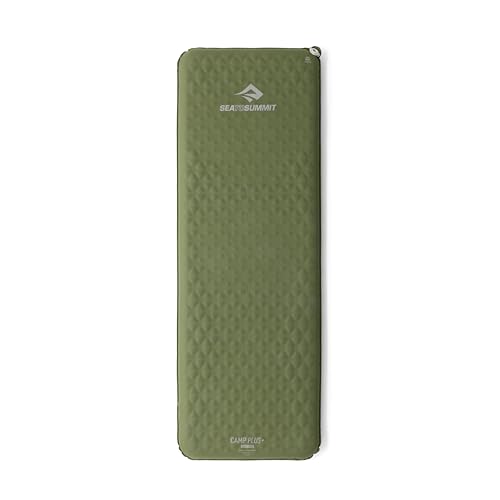
Sea to Summit Camp Plus SI Sleeping Mat
What We Like
- 4.3 R-value insulates against cold ground
- Reversible valve for easy inflation and deflation
- Durable 75D polyester face fabric
Trade-offs
- 2.6-inch thickness offers less cushion than thicker models
- At 3.2 pounds, heavier than ultralight pads
A 4.3 R-value means this pad keeps you warm on ground that would chill a lesser mat, making it a reliable choice for cold-weather campers who pack compact. The self-inflating foam core and reversible valve let you set up without a pump or electricity, so it fits naturally in a no-power camping trip. The rectangular shape gives extra room to stretch, and the 75D polyester fabric holds up to repeated use without wearing thin. For anyone who camps in shoulder seasons or wants one pad that works from fall through early spring without taking up half the car, this is the kind of gear that quietly does its job.
At 3.2 pounds and 2.6 inches thick, this pad gives you genuine insulation and durability without the deep-cushion feel of a six-inch mat or the featherweight carry of a backpacking air pad. If your nights are spent on cold dirt and you value warmth over pillow-top softness, it hits the right balance without demanding a pump or a power outlet.
Exped DeepSleep Mat Single

What We Like
- Self-inflating with included Top-Up Pump
- 3 inches of solid foam for insulation
- SUV-optimized 3D vertical sidewall design
- 100% recycled polyester fabric
Trade-offs
- At 4.5 lb, heavy for backpacking
- 25.6-inch width is narrower than some car mats
- 3-inch height limits cushioning on very uneven ground
This mat uses three inches of solid foam for support and insulation, with a self-inflating design and included Top-Up Pump to adjust firmness. The 72-inch length and 25.6-inch width fit many SUV cargo areas, and the 3D vertical sidewall construction maximizes usable sleeping space. It’s a practical choice for car campers who want a stable, insulated pad that sets up without manual inflation.
At 4.5 pounds and 3 inches thick, this pad is built for car camping, not backpacking. The Therm-a-Rest Basecamp Self-Inflating Sleeping Pad (2 inches thick, 3.4 pounds) is lighter, but the Exped offers an extra inch of foam and a design optimized for SUV use, though it weighs over a pound more. If you drive to camp and want a self-inflating foam mat with a pump, this model delivers.
Pretyw Ultralight Camping Sleeping Pad

What We Like
- Built-in foot pump inflates in 30-60 seconds
- One-second deflation for quick pack-up
- Only 1.8 pounds, packs to 10×4 inches
- Side buttons to connect multiple pads
Trade-offs
- 4-inch thickness less cushioned than 6-inch models
- No insulation R-value listed for cold weather
- Single size only, no wider option for sprawlers
At 1.8 pounds with a built-in foot pump that fills the pad in 30 to 60 seconds, this is the lightest way to avoid bending over a manual pump or huffing into a valve at the end of a hike. The built-in pump saves carrying extra gear, and the one-second deflation speeds pack-up. For backpackers who count every ounce and want a self-contained inflation system, the Pretyw delivers on weight and convenience.
The trade-off for that low weight is a 4-inch thickness, which is adequate for side sleepers on soft ground but noticeably less plush than the Exped MegaMat Max’s 6-inch profile. If you car camp and value mattress-like support over packability, the Exped offers a thicker option. But if your priority is a lightweight pad that packs small and inflates without extra gear, the Pretyw does exactly what it promises.
Product photos
Lost Horizon Option3 Self-Inflating Mattress

What We Like
- 440 lb weight capacity
- Adjustable firmness via air and foam
- Quiet sleeping surface
Trade-offs
- At 17.6 lb, not for backpacking
- Requires pump for deflation
- Queen size limits tent fit
A 440-pound weight capacity means this mattress supports sleepers of nearly any size without sagging or bottoming out, a rarity among self-inflating pads. This is the pad for anyone who prioritizes support and thermal protection over pack weight.
At 17.6 pounds and a queen footprint, this is strictly a car-camping or base-camp piece, not something you’d strap to a backpack. The Therm-a-Rest Basecamp at 3.4 pounds is much lighter, but you’re hauling serious heft for the extra width and capacity. The included pump helps with deflation, but you’ll still need to manage a large mattress in a tent. If your camping trips involve driving to a site and setting up for a few nights, the stability and quiet comfort justify the bulk.
Product photos
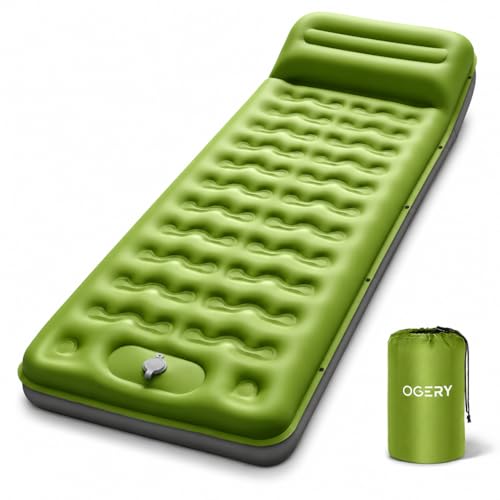
OGERY Inflatable Camping Pad
What We Like
- 6-inch thickness for ground insulation
- Built-in foot pump for no-electricity inflation
- Built-in pillow supports head and neck
- Connects two pads for a wider surface
Trade-offs
- No self-inflation; requires manual stepping to fill
- 50D polyester needs ground protection from sharp objects
Six inches of thickness keeps your hips and shoulders well above rocks and roots, and the built-in pillow supports your head so you don’t wake up with a stiff neck. At 2.4 pounds, this pad packs down to about the size of a small shoebox, making it easy to carry in a travel bag. Campers who want a thick sleeping surface without hauling a heavy mattress will find the OGERY offers a practical balance of comfort and portability.
Unlike self-inflating foam pads, the OGERY requires steady stepping on its built-in pump until the pad firms up. That is fine for a car-camp setup or a short hike to a site, but after a long day of hiking you might prefer a pad that inflates on its own. The 50D polyester skin also asks you to clear the ground of sticks and stones before laying it down, or bring a groundsheet. For the weight and packed size, you get a thick, comfortable sleep surface that fits easily in a travel bag.
Product photos
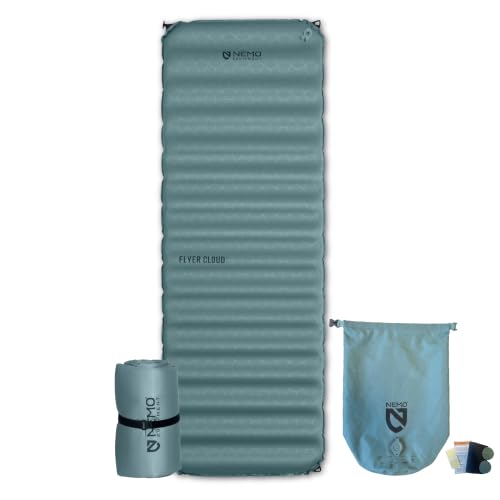
NEMO Flyer Cloud Sleeping Pad
What We Like
- Bluesign-approved recycled fabric
- 3-inch thickness smooths rough ground
- Open-cell foam adds puncture backup
- Horizontal coring saves weight for warmth
Trade-offs
- At 3.5 lb, heavier than some backpacking pads
- Too heavy for ultralight backpacking trips
A bluesign certification means the fabrics and accessories in this pad meet approved environmental and social standards, and the production process is designed to conserve resources. That matters if you want your camping gear to have a verified lower impact. The 3-inch thickness helps smooth out rough ground for a sounder sleep, and the open-cell foam offers a second level of security from punctures or leaks. Horizontal coring in the foam cuts weight without sacrificing warmth, so you’re not hauling extra bulk for insulation.
At 3.5 pounds, this is heavier than a pure air pad you’d carry miles into the backcountry. It’s better suited for car camping or short hikes where every ounce isn’t a battle. The Therm-a-Rest Basecamp is 3.4 pounds and 2 inches thick, while the NEMO Flyer Cloud offers an extra inch of thickness and a bluesign-certified recycled fabric. If you want a self-inflating pad with sustainable materials and a thicker profile, the NEMO Flyer Cloud fits that need.
Product photos
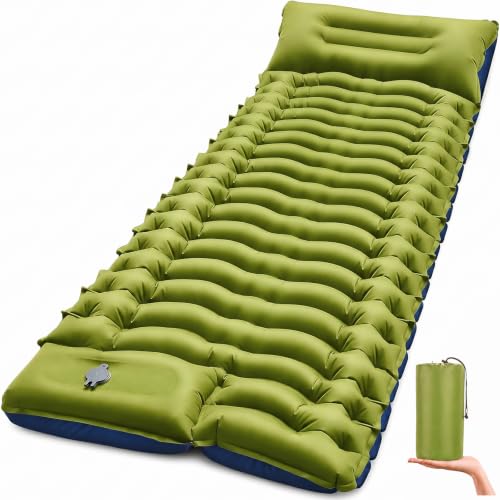
Overmont Ultralight Camping Sleeping Pad
What We Like
- Built-in foot pump inflates in 30-60 seconds
- Integrated pillow saves pack space
- 4.7-inch thickness isolates from rough ground
- Weighs only 1.98 lb for backpacking
Trade-offs
- No insulation R-value for cold-weather camping
- Thinner than some car-camping pads at 4.7 inches
- Air-only design lacks foam for puncture redundancy
A 1.98-pound sleeping pad that packs down to the size of a water bottle lets you carry thick comfort into the backcountry without a separate pump or using your lungs. The built-in foot pump fully inflates the pad in 30 to 60 seconds, and the integrated pillow means one less item to pack. Reviewers note that the wave-shaped cells and 300-pound weight limit provide support for side and stomach sleepers on uneven ground.
The trade-off for that ultralight weight is that you are sleeping on air alone, with no foam layer to buffer a slow leak or add insulation. This Overmont is the right choice when every ounce in your pack matters and you are sleeping on summer ground.
Product photos
How We Evaluated Air Mattresses For Camping No Electricity
Our research combined manufacturer specifications, expert round-ups from outdoor publications, and patterns in owner feedback across hundreds of user reports. We focused on three criteria that matter most for no-electricity camping: inflation method, insulation value, and packability.
The first filter was inflation mechanism. We excluded any pad requiring an electric pump and prioritized self-inflating foam models and those with built-in foot pumps. The second was R-value, a measure of thermal insulation, since cold ground is the most common cause of a miserable night. We also weighed packed size and weight, because a mattress that’s too bulky defeats the purpose of camping.
This is a research-led evaluation, not a hands-on test. We synthesized what the specifications say and what the community reports, so you can compare options without having to buy and return half a dozen pads yourself.
What To Look For In Air Mattresses For Camping No Electricity
Choosing the right air mattress for camping without power comes down to understanding how you’ll inflate it and how much warmth you need. Here’s what to check before you buy.
Prioritize self-inflating pads or those with built-in foot pumps. Check the R-value for insulation, aim for 4 or higher for three-season use. Consider packed size and weight against your vehicle space and how far you’ll carry it.
Inflation Method
Without electricity, your options are self-inflating foam, manual foot pumps, or your own lungs. Self-inflating pads like the Therm-a-Rest Basecamp use open-cell foam that expands when the valve opens, drawing in air on its own. These are the most convenient but need a few hours to fully expand before first use. Foot-pump models like the Pretyw Ultralight inflate in under a minute, but require you to stand there stepping. Many campers find that self-inflating mattresses offer the best balance of effort and comfort.
Insulation (R-Value)
The R-value measures how well the pad insulates you from the cold ground. For summer camping, an R-value of 2 or higher is fine. For spring and fall, look for 4 or above. For winter or high-altitude trips, you want 6 or more. The Therm-a-Rest MondoKing 3D has a 7.0 R-value, making it one of the warmest options available. If you camp in varied conditions, a pad with a mid-range R-value like the Sea to Summit Camp Plus SI‘s 4.3 is a versatile choice.
Thickness and Comfort
Thicker pads isolate you from rocks, roots, and uneven ground. A 2-inch pad like the Therm-a-Rest Basecamp is adequate for well-groomed campsites, but side sleepers will appreciate the 4.25-inch thickness of the MondoKing or the 6-inch cushion of the OGERY. The Exped MegaMat Max’s 6-inch open-cell foam with 3D vertical sidewalls creates a bed-like feel that eliminates that rolling-off-the-edge sensation.
- Check the packed size against your tent’s storage space and your car’s trunk.
- Verify the valve type, some self-inflating pads have two valves for faster inflation and deflation.
- Look for repair kits included or available; a patch kit is essential for foam-filled pads.
- Consider the weight if you’ll carry the pad more than 50 feet from the car.
As a rule of thumb, match the R-value to your coldest expected night, not your warmest.
Air Mattresses For Camping No Electricity Compared
The table below compares key specs across all 10 picks, so you can see at a glance which pad fits your camping style.
| Product | Thickness | Weight | Dimensions |
|---|---|---|---|
| Therm-a-Rest Basecamp Self-Inflating Sleeping Pad | 2 inches | 3.4 pounds | 77 x 25 inches |
| Exped MegaMat Max Sleeping Pad | 6 inches | N/A | 77.6 x 52.0 inches |
| Therm-a-Rest MondoKing 3D Sleeping Pad | 4.25 inches | 4.38 pounds | 77 x 25 inches |
| Sea to Summit Camp Plus SI Sleeping Mat | 2.6 inches | 3.0 pounds | 72 x 25.2 inches |
| Exped DeepSleep Mat Single | 3.0 in | 4.5 lb | 72 x 25.6 in |
| Pretyw Ultralight Camping Sleeping Pad | 4.0 inches | 1.8 pounds | 79 x 27.5 x 4 inches |
| Lost Horizon Option3 Self-Inflating Mattress | 4.5" | 17.6 pounds | 79.9 x 60.0 x 4.0 inches |
| OGERY Inflatable Camping Pad | 6.0 inches | 2.4 lbs | 79" x 27.5" |
| NEMO Flyer Cloud Sleeping Pad | 3.1 inches | 3.5 pounds | 72.0 x 25.2 inches |
| Overmont Ultralight Camping Sleeping Pad | 4.7 inches | 1.98 lb | 74.8 x 27.6 Inches |
Frequently Asked Questions
How do you inflate an air mattress without electricity?
You can use a self-inflating foam pad that expands on its own, a built-in foot pump that you step on repeatedly, or a manual hand pump. Some pads also come with a pump sack that you fill with air and roll closed to push air into the mattress. Avoid blowing into the valve with your mouth, as moisture can promote mold inside the pad.
What R-value do I need for camping in cold weather?
For cold-weather camping, look for an R-value of 5 or higher. The Therm-a-Rest MondoKing 3D offers a 7.0 R-value, which is suitable for below-freezing conditions. A pad with an R-value below 3 will let cold ground suck heat from your body all night, no matter how good your sleeping bag is.
Can two camping pads be connected together?
Some models have side buttons or straps that let you connect two identical pads into a larger sleeping surface. The Pretyw Ultralight and the OGERY Inflatable Camping Pad both include this feature. The Exped MegaMat Max is already a 52-inch wide duo size, so it doesn’t need connecting.
How thick should a camping air mattress be?
For car camping, 3 to 6 inches of thickness provides good comfort on uneven ground. Backpackers often accept thinner pads (2 to 3 inches) to save weight and pack space. Side sleepers generally need at least 3 inches to prevent their hip from pressing into the ground.
Are self-inflating pads better than air-only pads?
Self-inflating pads are more convenient because they inflate without a pump, and the foam interior provides insulation and some puncture redundancy. Air-only pads are lighter and pack smaller, but require a manual pump or lung power. For no-electricity camping, self-inflating pads are usually the better choice unless weight is your top priority.
The Bottom Line
The Therm-a-Rest Basecamp Self-Inflating Sleeping Pad earns the best overall spot because it combines reliable self-inflation, year-round insulation, and durable construction in a package that works for most car campers. It’s the pad we’d grab for a weekend trip where we want to set up camp and not think about gear.
If you’re camping as a couple, the Exped MegaMat Max gives you a true double-bed feel with 6 inches of foam and vertical sidewalls that keep you centered. For budget-minded campers who want maximum thickness, the OGERY Inflatable Camping Pad delivers a 6-inch pad with a built-in pillow for a fraction of the price of premium models.
The single most important factor for no-electricity camping is choosing an inflation method you’re willing to use every night. Whether that’s a self-inflating foam pad or a foot-pump air mattress, get the one you’ll actually set up after a long day of hiking or driving.
