
Linen Sheets Pros and Cons: Is It Worth It?
This post contains affiliate links. As an Amazon Associate, we earn from qualifying purchases.
Linen sheets outperform cotton in warm conditions (29–30°C), reducing awakenings and light sleep stages by allowing better heat dissipation through their loose weave. They last longer than cotton but start rough and wrinkle easily, the break-in period takes 6-7 washes.
That temperature threshold matters. The PMC study tested young adults sleeping under identical conditions with both fabrics, and the linen group had objectively better sleep metrics when the room hit 29°C. Cotton trapped heat; linen shed it. A discussion of linen sheets pros and cons must consider this thermal performance.
What follows: four performance factors that decide whether linen works for you, the wash-cycle reality check most reviews skip, and how to spot quality linen without relying on marketing terms when you compare a linen sheets pros and cons.
Key Takeaways
- Linen reduces awakenings versus cotton in warm conditions (29–30°C) per clinical sleep studies
- 170-190 GSM weight decides breathability, lighter for hot sleepers, heavier for cooler climates
- Multiple wash cycles are required to soften untreated linen; stonewashed linen starts softer.
- Avoid fabric softener, it coats linen fibers and reduces breathability over time
- While the Sleep Foundation states linen sheets are more durable over time than cotton sheets, Wirecutter reports fitted linen sheets can be prone to tearing within a year.
The Thermal Breakthrough in Warm Conditions
A 2013 PMC sleep study put the temperature question to bed. When young adults slept in 29–30°C rooms:
“Linen bedsheets promoted better sleep than cotton bedsheets, with significant reductions in awakenings and N1% (light sleep stages). The open weave structure facilitated faster sweat evaporation compared to cotton’s tighter weave.”
This explains why linen dominates Mediterranean climates, its moisture-wicking isn’t just marketing. The fibers swell slightly when damp, creating microscopic air channels that pull heat away from the body. Cotton absorbs sweat but holds it against the skin.
The catch? Below 24°C, the advantage fades. A Journal of Natural Fibers study found no thermal difference between linen and cotton in cooler lab conditions, a key point in the linen sheets pros and cons.
Durability: Where Linen Wins and Loses
Linen sheets are more durable over time than cotton sheets, which can last 5 to 10 years. But check the fitted sheets. Wirecutter’s long-term testing found some tore at the elastic corners within a year while others lasted four.
| Linen Sheets | Cotton Sheets |
|---|---|
| Flat sheets: 8-12 years | Flat sheets: 5-10 years |
| Fitted sheets: 1-4 years | Fitted sheets: 3-7 years |
| Weak point: Elastic edges | Weak point: Fiber pilling |
The difference comes down to flax’s long, sturdy fibers versus cotton’s shorter staples. Linen sheets are more durable over time than cotton sheets. That said, poorly sewn linen fitted sheets fail early, reinforced corners are a must.
Feel & Softness: The Wash-Cycle Reality
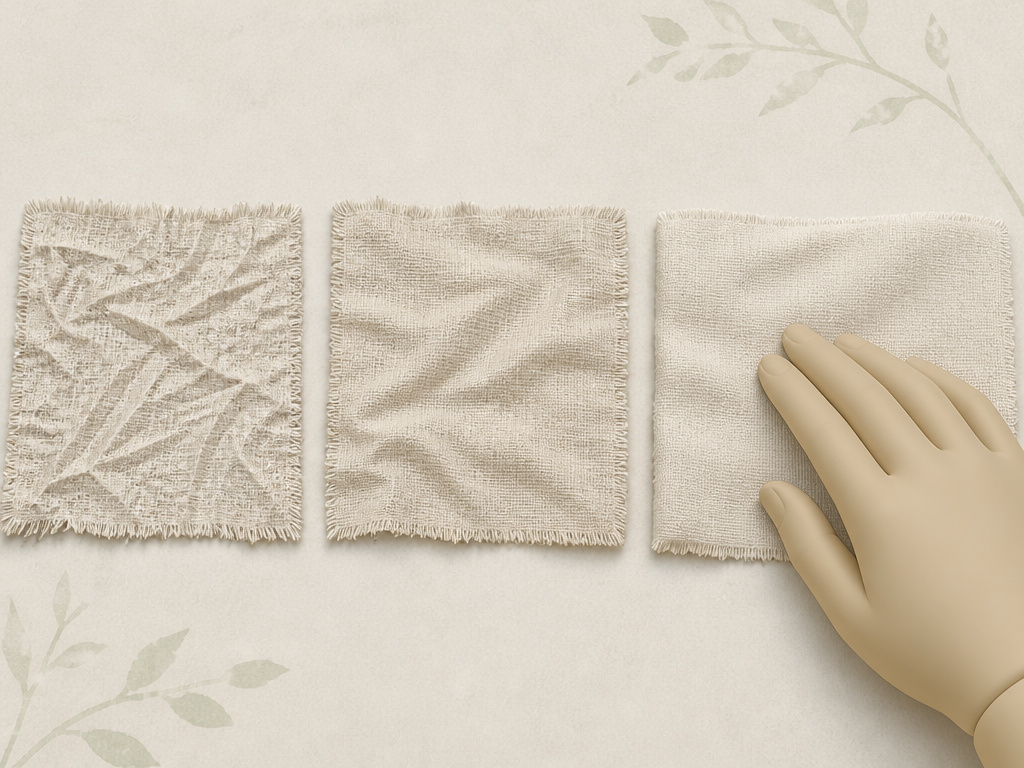
Where this goes sideways: Judging linen after one wash. New linen feels like a stiff tea towel; proper softening takes 6-7 washes as the fibers relax.
Here’s the progression:
- Wash 1: Scratchy, almost abrasive
- Wash 3: Noticeably softer but still crisp
- Wash 6-7: Full softness achieved while retaining structure
Stonewashed linen skips the worst scratchiness, it arrives 70% broken-in. Blends with 20-30% cotton soften faster but lose some breathability. For pure linen, the Quince European set (150 GSM) hits the sweet spot between drape and durability.
Care & Maintenance
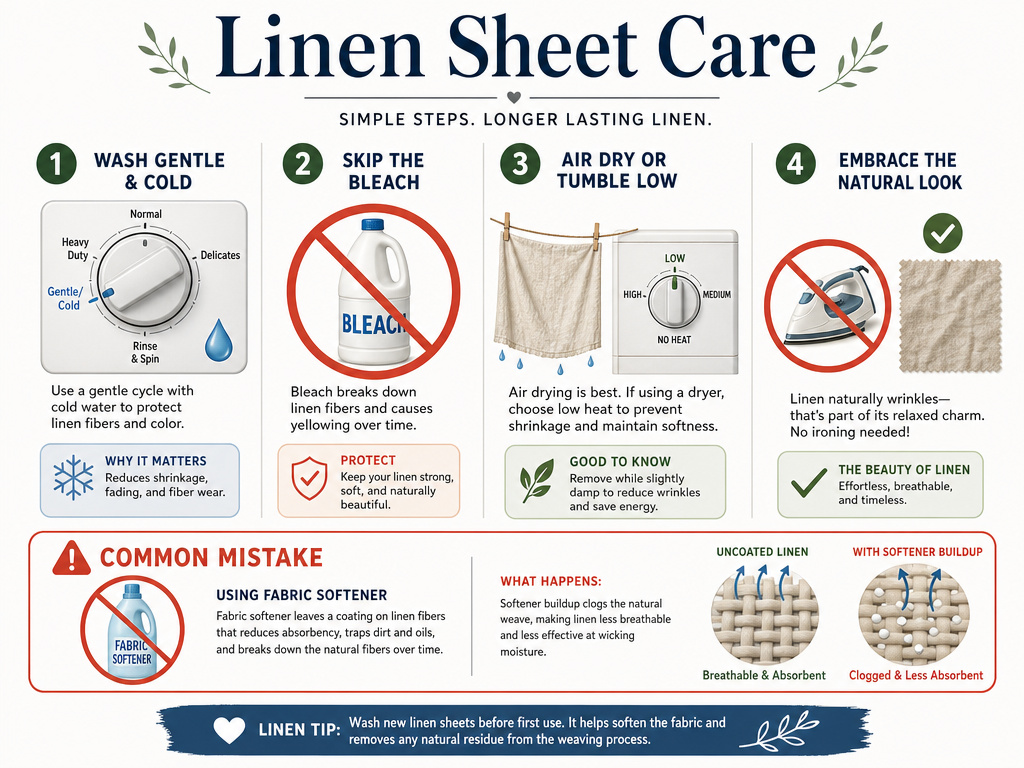
Cold water only, hot water can shrink linen. The Sleep Foundation’s laundering rules:
- Gentle cycle with mild detergent
- No chlorine bleach (weakens fibers)
- Tumble dry low or line dry while damp
- Iron only if you must (embrace the wrinkles)
Common mistake: Using fabric softener. It leaves a residue that clogs linen’s breathable weave over time, reducing its cooling effect over time.
For deep stains, oxygen bleach works safely. Store linen folded, hanging stretches the fibers.
Linen vs Specific Cotton Types
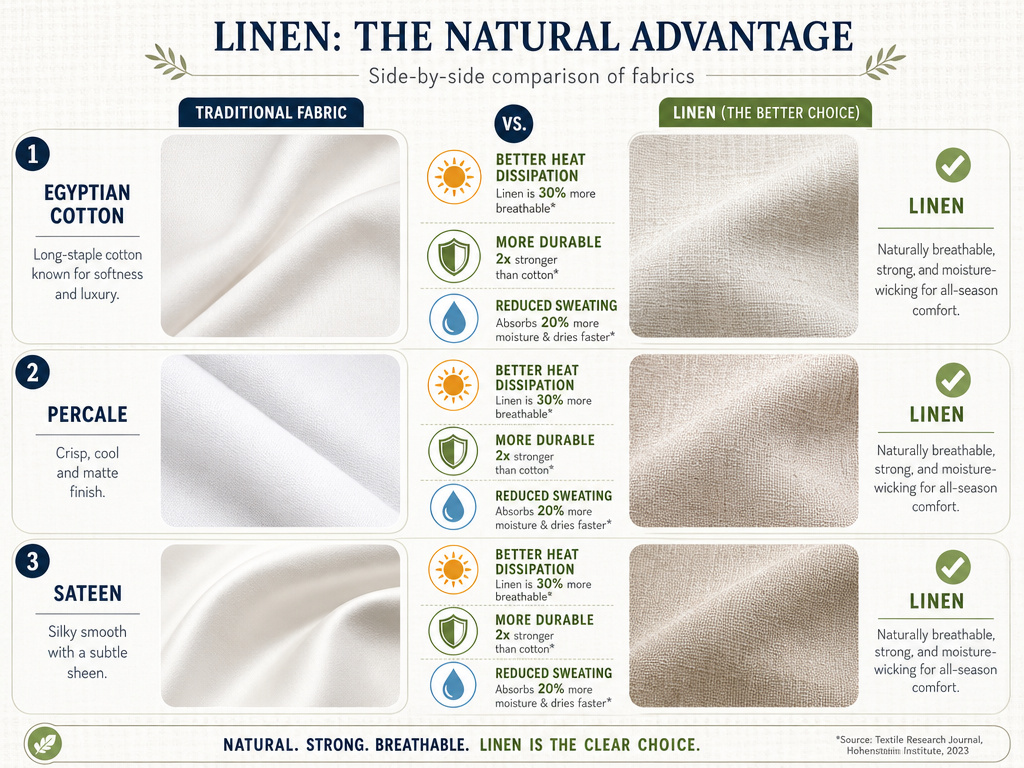
Not all cotton is equal. Here’s how linen stacks against premium varieties:
| Fabric | Best For | Linen’s Edge |
|---|---|---|
| Egyptian Cotton | Year-round softness | Better heat dissipation in warm conditions |
| Percale | Crisp feel lovers | More durable over time |
| Sateen | Cold climates | Reduced nighttime sweating in warm conditions |
The linen vs percale choice comes down to climate, percale’s tight weave suits cooler rooms, while linen’s open structure shines in humidity.
Are Linen Sheets Hypoallergenic?
Linen sheets are considered hypoallergenic. In warm conditions, research shows they can promote better sleep than cotton, with significantly reduced awakenings and less time spent in light sleep stages. For sleepers who run hot, lighter weight linen sheets weighing around 170 GSM are a good choice, while heavier versions weighing up to 190 GSM may suit cooler climates. Their natural properties may help create a more comfortable and health-supportive sleep environment, particularly in the heat.
What is Linen Made From?
Linen comes from the flax plant. The material’s performance is rooted in the characteristics of these long, sturdy fibers. This natural structure contributes to linen’s noted durability over time compared to cotton. The fabric’s behavior, from its breathability to its texture, is a direct result of its plant-based origin. When cared for properly, these inherent qualities allow linen sheets to maintain their integrity through many washes.
Frequently Asked Questions
What are the downsides of linen sheets?
Initial roughness (6-7 wash break-in), high wrinkling, and cost, quality linen typically costs $300–$600 for a queen set versus $150–$250 for high-quality cotton.
Is it healthier to sleep on linen sheets?
The PMC study found linen sheets promoted better sleep than cotton under warm conditions, with reduced awakenings.
Why did hospitals stop using linen sheets?
hospital linen clinical trial found no difference in pressure injuries between cotton and synthetic linens, prompting a shift to cheaper, easier-care synthetics.
Can linen sheets work year-round?
Yes, choose 190 GSM for winter or layer with a breathable wool blanket. Linen’s temperature regulation works both ways, trapping warmth in cool air while venting heat in humidity.
The Bottom Line
Buy linen if: You sleep hot, live in a warm climate (or sweat at night), and can commit to the 7-wash break-in period. Skip it if you prefer a crisp, smooth feel or hate wrinkles.
For most, the Quince European Linen set delivers the best balance of price ($129.90–$189.90), weight (150 GSM), and durability. Just remember, the magic starts at wash three. Before that, you’re sleeping on potential.
