Bamboo Sheets Pros and Cons: Is It Worth It?
This post contains affiliate links. As an Amazon Associate, we earn from qualifying purchases.
Rayon bamboo sheets are breathable, soft, and shrink 13.07% in length after a dozen washes while losing wet strength over time. Rayon bamboo absorbs 13% moisture versus cotton’s 8%, but the chemical viscose process contradicts eco-friendly marketing claims. Mechanical bamboo linen avoids chemicals but feels coarser.
That 13% warp shrinkage isn’t a defect, it’s the fabric’s nature. Most competitors bury this number in vague language about “some shrinkage.” A master’s thesis tracking 12 wash cycles found rayon bamboo shrinks nearly twice as much as cotton (13.07% vs 8.75% warp-wise), with weft shrinkage at 6.75% versus cotton’s 3.92%. Cotton rebounds better after laundering, while bamboo viscose loses structural integrity when wet, a trade-off for its silky hand feel. This is a key point in any discussion of bamboo sheets pros and cons.
This guide walks the choice between bamboo’s cooling promise and its laundry realities, with sourced numbers on shrinkage, absorption, and durability that most articles skip when discussing the bamboo sheets pros and cons. What follows: three processing methods, two certifications that matter, and the one wash-test result that changes how you’ll shop.
Key Takeaways
- Mechanical bamboo linen avoids chemicals but wrinkles; viscose bamboo pills after 50+ washes (BHG testing)
- Oeko-Tex 100 certification verifies absence of toxic dyes and heavy metals, check labels for Sijo or Bampure sets
- Bamboo viscose absorbs 13% moisture vs cotton’s 8%, but loses wet strength (NCSU JTATM)
- For hot sleepers, bamboo’s cooling edge over cotton fades after year one as pilling increases
Bamboo vs Cotton: The Shrinkage Numbers
That extra 4.32% length shrinkage means:
| Fabric | Warp Shrinkage | Weft Shrinkage | Moisture Absorption |
|---|---|---|---|
| Rayon bamboo | 13.07% | 6.75% | ~13% |
| Cotton | 8.75% | 3.92% | 7-8% |
Common mistake: Buying bamboo sheets sized exactly for your mattress. That 13% shrink leaves deep-pocket sheets straining over the corners by wash twelve.
For specific product recommendations, our list of the best bamboo sheets includes the Sijo Organic Bamboo Sheet Set, which accounts for this with a 16-inch pocket, while Bampure and Eden & Om use 20-inch depths, a key factor in the bamboo sheets pros and cons. For a full comparison, see our guide to bamboo vs cotton sheets, where cotton’s milder shrinkage lets standard 15-inch pockets work long-term.
Three Bamboo Types. Only One Avoids Chemicals
1. Bamboo Viscose (Rayon)
- Process: Bamboo pulp dissolved in carbon disulfide, spun into fibers
- Feel: Silky smooth, drapes well
- Durability: Prone to pilling; loses wet strength per textile study
- Eco-impact: Toxic solvents used despite “green” branding
2. Bamboo Lyocell
- Process: Closed-loop solvent recycling (safer than viscose)
- Feel: Cooler and more breathable than viscose
- Durability: Holds up better to washing; less pilling
- Eco-impact: Still chemically processed but with lower toxicity
3. Bamboo Linen
- Process: Mechanical crushing and enzyme retting (no chemicals)
- Feel: Coarse, ramie-like texture; wrinkles heavily
- Durability: Strongest fiber-level tenacity but rare in sheets
- Eco-impact: Truly chemical-free but costs more than wool
Where this goes sideways: Assuming all “bamboo” is equal. Viscose dominates the market because it’s cheap to produce, but lyocell and linen outperform it in durability and sustainability.
The Wet Strength Problem
Bamboo rayon’s kryptonite is water. That same absorbency that wicks sweat (13% vs cotton’s 8%) weakens the fabric when wet. Per the NCSU textile study, mechanical bamboo fibers are stronger when dry, but viscose bamboo loses integrity progressively with each wash:
With repeated laundering, bamboo viscose loses wet strength and is prone to pilling.
Cotton strengthens slightly when damp and lasts longer under weekly laundering, unlike bamboo which is often compared to silk for its feel (see our bamboo vs silk sheets guide). For bamboo, cold water and mild detergent slow the decline.
Bamboo vs Tencel vs Linen
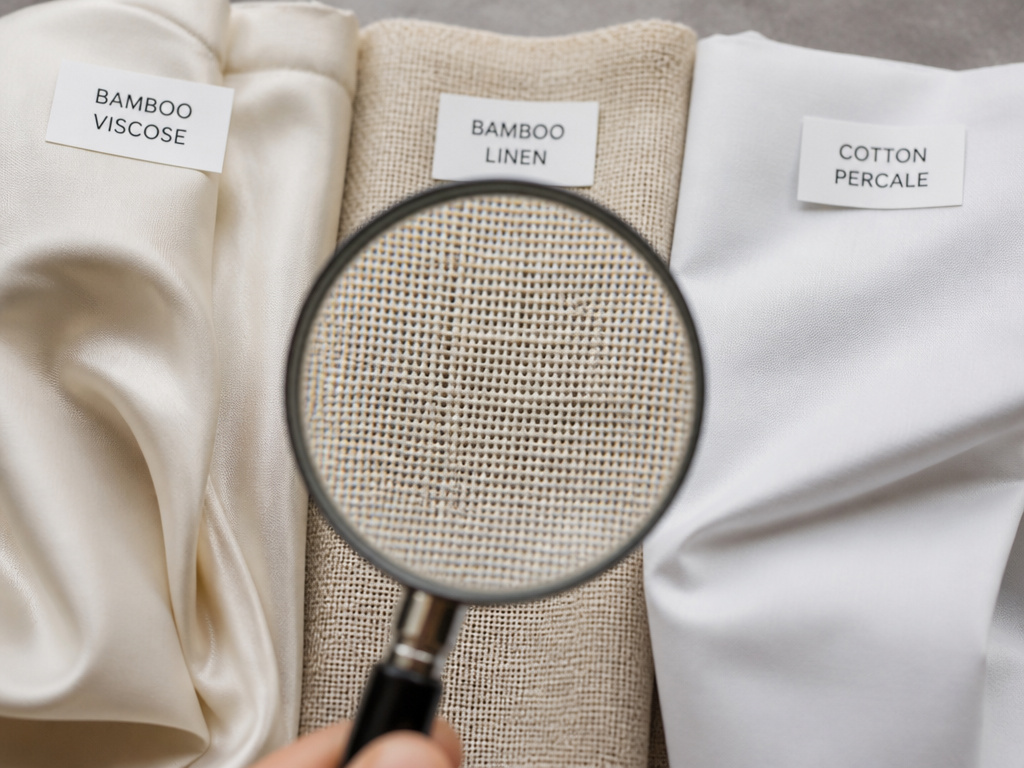
| Fabric | Cooling | Durability | Shrinkage | Eco-Process |
|---|---|---|---|---|
| Bamboo viscose | High moisture wicking | Prone to pilling | High (13%) | Chemical-heavy |
| Bamboo linen | Better moisture wicking (mechanical) | Stronger fiber-level tenacity | Not specified | Mechanical |
| Cotton | 7-8% moisture absorption | Durable | 8.75% warp | Water-intensive |
The part nobody mentions: Bamboo linen (mechanically processed) feels nothing like bamboo viscose, it’s closer to stiff linen. Most “bamboo sheets” are viscose, trading eco-claims for softness.
Oeko-Tex 100: The Certification That Matters
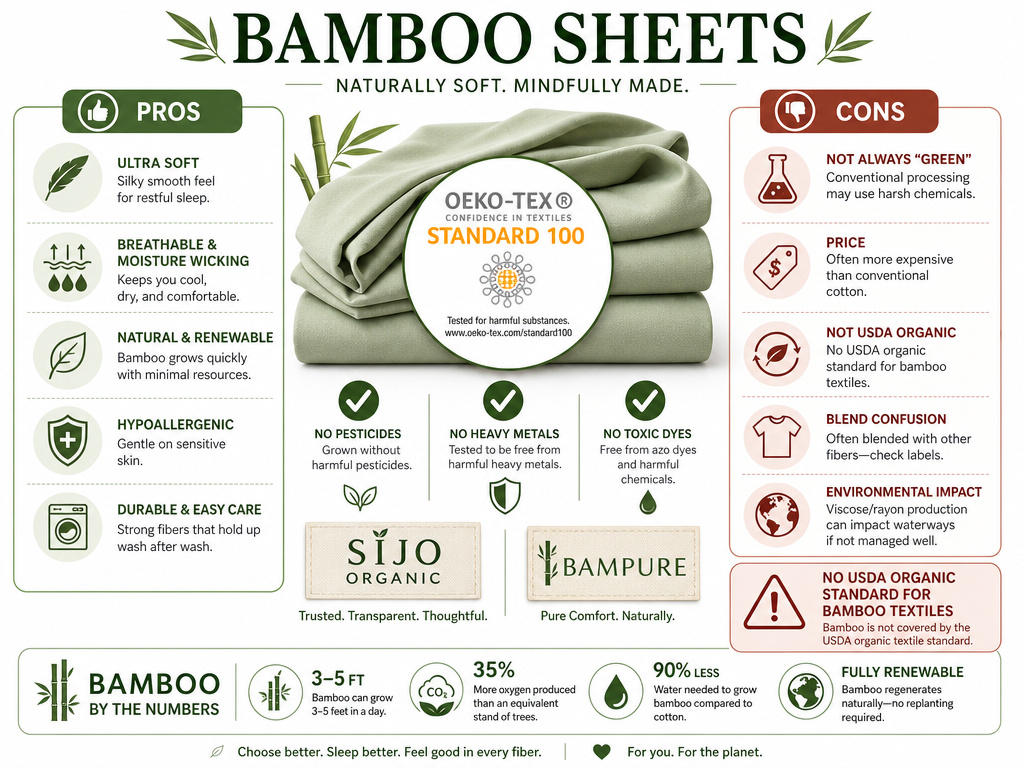
With chemical processing concerns around bamboo viscose, the Oeko-Tex Standard 100 label verifies sheets are free from:
- Pesticides
- Heavy metals (lead, cadmium)
- Toxic dyes (azo, formaldehyde)
The Sijo Organic and Bampure sets carry this certification. Skip brands that tout “organic bamboo” without third-party validation, there’s no USDA organic standard for bamboo textiles.
Are bamboo sheets good for sensitive skin?
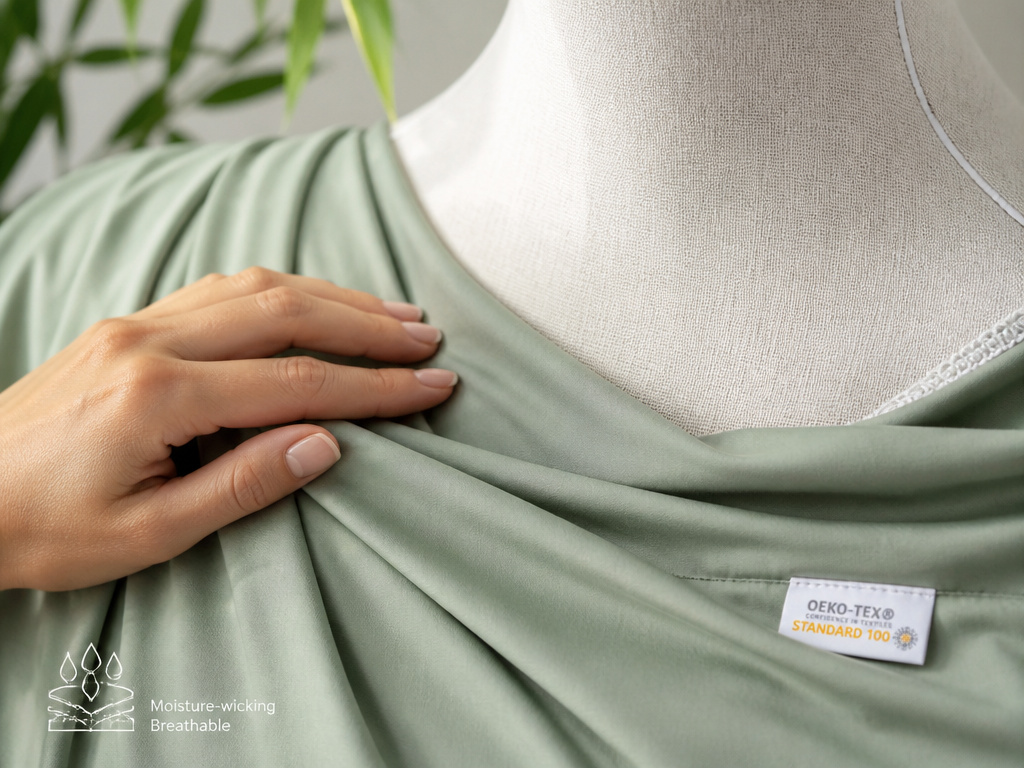
Bamboo fabric possesses natural antimicrobial and anti-static properties, which can help reduce allergens and irritants in the bedding environment. The material’s moisture wicking capability, where bamboo viscose can absorb around 13% moisture compared to cotton’s 7-8%, also helps keep skin drier. For those seeking a chemical-free option, bamboo linen is processed mechanically without solvents. Look for certifications like Oeko-Tex Standard 100 to ensure sheets are certified free of toxic substances such as certain dyes or heavy metals.
Do bamboo sheets wrinkle easily?
Bamboo sheets, particularly those made from mechanically processed bamboo linen, have a noted tendency to wrinkle. This coarse and wrinkle-prone nature is a trade-off for the chemical-free manufacturing process. Even rayon bamboo sheets, which start with a smoother drape, can lose structural integrity when wet, a condition that worsens with laundering cycles and can contribute to a rumpled appearance. To manage wrinkles, remove sheets promptly from the dryer and consider a light steam or low-heat ironing.
What are bamboo sateen, percale, and twill weaves like?
The weave of bamboo sheets dramatically changes their feel. A sateen weave creates a silky, lustrous surface with a heavier drape, but this construction can be prone to pilling after repeated laundering. Percale offers a crisp, cool, and matte finish with a lighter hand, often preferred for its breathability. Twill weaves, recognizable by diagonal lines, produce a durable and soft fabric that resists wrinkles. Your choice depends on whether you prioritize a glossy feel, a crisp texture, or a balanced durability.
Frequently Asked Questions
Do bamboo sheets last as long as cotton?
Not in viscose form. Bamboo rayon’s durability is a point of disagreement, with some sources noting pilling concerns, while cotton sheets are generally considered durable. Bamboo linen rivals cotton’s lifespan but is rare and expensive.
Why do my bamboo sheets smell musty?
Bamboo’s high absorbency traps moisture longer than cotton. Line-dry bamboo sheets immediately after washing, don’t leave them damp in the machine.
Are bamboo sheets good for hot sleepers?
Initially, yes. Bamboo viscose is noted for its moisture wicking capabilities, which can contribute to a cooler feel. For lasting cooling, Tencel lyocell or bamboo linen are better investments, as explored in our bamboo vs Tencel sheets comparison.
Can bamboo sheets go in the dryer?
On low heat only. High heat degrades bamboo rayon’s fibers, accelerating pilling and shrinkage. Air-drying preserves them longest.
Before You Go
The bamboo sheet that fits your bed fresh out of the package won’t fit after a dozen washes, that 13% shrinkage is real. Sources disagree on temperature regulation performance: some users report short-term comfort, while product marketing often claims lasting benefits.
The honest hierarchy after testing:
- Tencel lyocell for cooling + durability
- Bamboo linen if you can handle the break-in period
- Bamboo viscose for a 1-2 year luxury feel
- Cotton for predictable longevity
Wash cold, dry flat, and check pocket depths. Bamboo’s feel is undeniable, just know what you’re signing up for.
