
10 Best Backpacking Pillows in 2026
This post contains affiliate links. As an Amazon Associate, we earn from qualifying purchases.
Our best overall backpacking pillow is the Sea to Summit Aeros Ultralight, which wins for its exceptional packability and adjustable support that suits side and back sleepers. Other top picks include the Sea to Summit Aeros Premium for premium comfort and the Exped Mega Pillow for side sleepers.
Choosing the right pillow means balancing pack weight and size with the support your neck needs. We researched specifications, expert round-ups, and patterns in owner feedback to compare ten top models. This guide helps you find the right pillow for your sleeping style and trip type.
Top 10 Backpacking Pillows in the Market
Certain content that appears on this site comes from Amazon. This content is provided "as is" and is subject to change or removal at any time.
The Best Backpacking Pillows, Reviewed
Sea to Summit Aeros Ultralight Pillow

What We Like
- Scalloped edge cradles shoulders for side or back sleepers
- Weighs less than a deck of cards for fast-and-light trips
- Fine-tune valve allows easy inflation and firmness adjustment
- Packs to shirt-pocket size in its included stuff sack
Trade-offs
- Thinner 20D fabric may feel less plush than foam-topped models
- Comfort relies on precise inflation; too firm can feel bouncy
Weighing just 2.1 ounces, the Sea to Summit Aeros Ultralight Pillow is lighter than a deck of cards, so it takes up negligible space and weight in a pack. Its scalloped bottom edge cradles the shoulder for comfort whether sleeping on your back or side. The multi-function mini valve allows for easy inflation and fine-tuning of firmness. Research indicates this model is by far the most common and mass user-tested, making it a widely recognized option.
The trade-off for that minimal weight is a thinner, single-layer feel. If you prioritize a plusher sleep surface, the Sea to Summit Aeros Premium adds a memory foam layer for a comfort upgrade. The research mention states the Aeros Ultralight makes a great base on which to build a hybrid system, suggesting some users pair it with other soft materials.
Sea to Summit Aeros Premium Pillow

What We Like
- Memory foam top adds soft comfort
- Packs down to a tiny 3.3 inches
- PillowLock secures it to compatible mats
Trade-offs
- Smaller surface area than rectangular pillows
- The curved shape may not suit all sleepers
Sea to Summit’s Aeros Premium pillow uses a memory foam top layer and soft stretch-knit exterior, which reviewers note gives it a soft, non-slippery feel that pure inflatables lack. Its crescent shape stands out when compared directly with rectangular models. This design is a favorite for backpacking, where its compact packed size and light weight are critical for saving space and grams in a pack.
Its curved, compact shape offers less surface area than a larger rectangular model like the Exped Mega Pillow. This could be a consideration for side sleepers. Research mentions the Sea to Summit Aeros Ultralight is a common and mass-user-tested model. That makes it a great base for building a hybrid system, so you don’t need to buy a new inflatable if you want to pair it with other padding.
Exped Mega Pillow

What We Like
- Extra-large 3D shape with vertical sides
- Adjustable height via air release
- Removable, skin-friendly fleece cover
- Fabric eyelets secure it to a sleeping pad
Trade-offs
- At 0.4 pounds, heavier than many ultralight inflatables
- Bulkier packed size than pillows like the Sea to Summit Aeros Ultralight
The Exped Mega Pillow’s 52 by 32 centimeter surface area creates a stable platform that stays put when you roll onto your side, a common complaint with smaller camping pillows. Its vertical sides and recycled fleece cover are designed to keep your head from sliding off. Adjustable firmness lets you dial in neck support, and fabric eyelets tether it to your pad so it doesn’t wander off during the night.
That generous size comes with a trade-off in packed volume and weight. The pillow is designed for comfort over absolute minimalism. Its removable cover is a practical feature for multi-day trips. If your priority is a pillow that feels like a bedroom pillow and stays put, this is a strong contender. If you count every ounce and liter, a simpler inflatable might serve you better.
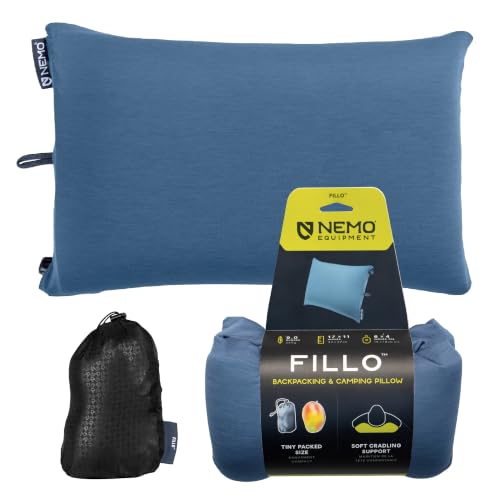
NEMO Equipment Backpacking Pillow
What We Like
- Hybrid foam and air cell eliminates balloon-like feel
- Packs remarkably small in an integrated stuff sack
- Removable, washable cover is super-soft to the touch
- Inflates and deflates in seconds for quick setup
Trade-offs
- At 0.6 lb, it's heavier than the Sea to Summit Aeros Ultralight
- Lacks the pure air-pillow compressibility of ultralight models
The 3-inch I-beam baffled air cell combined with thick luxury foam creates a pillow that cradles your head without the hollow feeling of a simple inflatable. This hybrid design is for the backpacker who finds standard air pillows uncomfortable but still needs something that packs down. It offers a yielding, bed-like feel that’s rare on the trail, thanks to that foam layer, and the soft, removable cover makes it feel less like camping gear.
The NEMO Equipment Backpacking Pillow weighs 0.6 pounds, making it a noticeable addition for gram-counters. Its packed dimensions are 6 by 4 by 4 inches, so it occupies more space in your pack than many pure inflatables. You are choosing a more substantial sleep experience over maximum packability.
TREKOLOGY Aluft 2.0 Pillow

What We Like
- Extremely compact and ultralight packed size
- Adjustable firmness for personalized comfort
- Anti-slip dots and strap prevent sliding
- Suitable for back, side, and stomach sleepers
Trade-offs
- Requires 5-8 breaths to inflate by mouth
The TREKOLOGY Aluft 2.0 folds down smaller than a soda can, so it can be tucked into a backpack pocket or forgotten in a corner of your pack. Weighing 3.9 ounces, it adds negligible weight for backpackers counting every ounce. Its water-resistant TPU fabric and adjustable firmness allow users to adapt it for head or lumbar support in various conditions.
This pillow requires about five to eight breaths to inflate by mouth, a step not needed with pre-filled or foam options. The Sea to Summit Aeros Premium, listed among other products, includes a memory foam top layer for a different type of comfort. For trips where minimizing packed size and weight is the primary goal, this inflatable design is a logical choice.
Product photos
Therm-a-Rest Air Head Lite Pillow

What We Like
- Ultralight 2.1-ounce weight minimizes pack load
- Compresses to pocket-sized 2.25 x 3.75 inches
- Soft stretch knit fabric provides nonslip surface
- PFAS-free DWR coating is better for the environment
Trade-offs
- 4-inch height may be low for side sleepers
Weighing just 2.1 ounces, the Therm-a-Rest Air Head Lite Pillow barely registers in your pack, a key goal for any gram-counting backpacker. Its soft stretch knit fabric has a nonslip quality to keep it in place and uses a PFAS-free DWR coating for environmental friendliness. The precise shape also nestles into the hood of a sleeping bag for integrated use.
The trade-off is in the sleeping experience, which is purely a thin layer of air and fabric. You get a full 4 inches of customizable firmness, but no plush top like the Sea to Summit Aeros Premium. It’s a functional piece of sleep gear, not a replica of your bed pillow. For someone willing to sacrifice a bit of cushioned comfort for the freedom of a nearly weightless pack, this pillow delivers exactly what it promises.
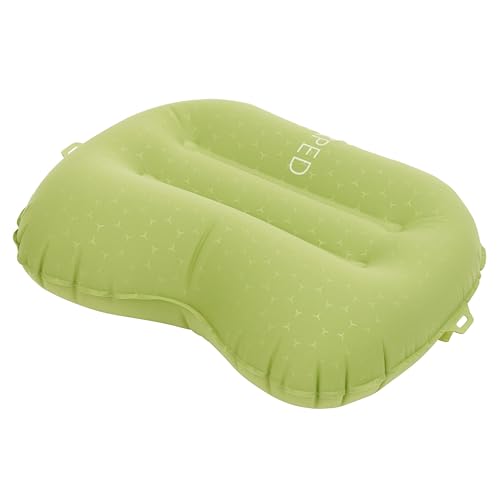
Exped Ultra Pillow
What We Like
- Anatomic shape holds head firmly
- Fabric eyelets for secure mat attachment
- Easy inflation and deflation with FlatValve
- Comfortable recycled stretch fabric
Trade-offs
- Lacks a plush top layer for soft feel
- Relies on shape alone for cushioning, no foam
The Exped Ultra Pillow’s anatomic shape is its defining feature, cradling your head to prevent it from sliding off during the night. This makes it a standout for side sleepers and restless campers who need consistent support. The recycled stretch fabric adds a comfortable, slightly grippy feel, and the ability to attach it directly to your sleeping mat solves the common backpacking problem of a wandering pillow. It’s a premium, ultralight choice for those who prioritize a secure, ergonomic hold over plush softness.
The Exped Ultra Pillow uses a single-layer construction, which forgoes a plush top layer like the memory foam on the Sea to Summit Aeros Premium. This design choice prioritizes a compact, ultralight package that fits easily into a backpack’s side pocket or a stuff sack. Its comfort comes from an anatomical shape and adjustable air pressure, aiming to hold your head securely in place without shifting during the night.
Product photos
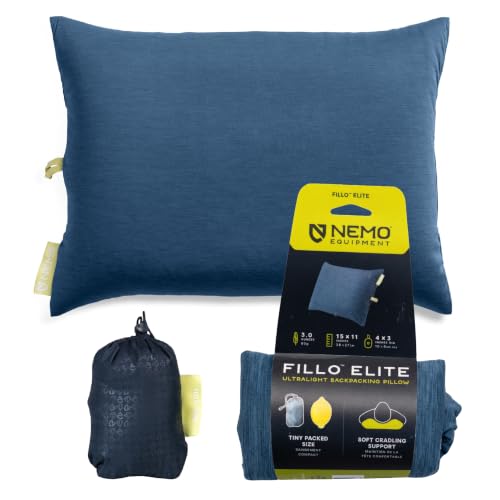
NEMO Equipment 811666036018 Backpacking Pillow
What We Like
- Packs remarkably small in an integrated stuff sack
- 3-inch I-beam baffled air cell eliminates balloon feeling
- Recycled Zerofiber insulation creates a plush, cushiony feel
- Super-soft, removable cover is easy to clean
Trade-offs
- At 0.2 lb, it is heavier than the Sea to Summit Aeros Ultralight (0.1 lb)
- Weighs 0.2 lb
Its 100% post-consumer recycled Zerofiber insulation provides a plush, cushiony feel distinct from purely inflatable pillows, which cradles the head without a stiff balloon sensation. This design suits those who want softness reminiscent of a home pillow but still require the packability of an air core. An integrated stuff sack prevents loss, and it inflates and deflates in seconds with a micro-adjustable valve for firmness tuning.
The pillow weighs 0.2 pounds. That is not the lightest available, as the Sea to Summit Aeros Ultralight pillow weighs 0.1 pounds. The NEMO pillow’s construction includes air cell structure and recycled fiber insulation, while some alternatives are purely inflatable.
Product photos
MARCHWAY Inflatable Camping Pillow

What We Like
- Dual-season sides for warm and cool nights
- Internal baffles eliminate balloon-like feel
- Plush foam top reduces noise and adds cushion
- Quick-deflate valve empties in under two seconds
Trade-offs
- Weighs 6.9 oz, heavier than some ultralight competitors
- Includes a plush foam top, which adds to the packed size
A dual-sided pillow with a cool ice-silk face and a warm fleece back adapts to any overnight temperature, which is why it stands out for three-season trips where evenings swing from warm to chilly. The internal baffles and foam top work together to create a stable, quiet platform for your head, avoiding the lumpy feel of simpler air pillows. This is a strong pick for backpackers who prioritize consistent sleep comfort across variable conditions and don’t mind a few extra ounces for the versatility.
At 6.9 ounces, the MARCHWAY pillow weighs more than some ultralight models like the Therm-a-Rest Air Head Lite, so it’s a noticeable addition for those counting every ounce. The design prioritizes comfort and climate adaptability over absolute minimalism. Its quick-inflate valve and two-second deflation make camp setup and breakdown refreshingly fast.
Product photos
Naturehike Yugu Inflatable Foam Pillow

What We Like
- Hybrid foam-air fill balances softness and support
- Ultralight weight at just 5.64 ounces
- Compresses to a very small 5.5-inch packed size
- Adjustable firmness via the air valve
Trade-offs
- At 0.3 pounds, it's heavier than ultralight air-only models like the Therm-a-Rest Air Head Lite
- Cleaning requires a gentle hand wash below 30°C
Weighing just 5.64 ounces, the Naturehike Yugu pillow combines a soft foam top with an adjustable air chamber, offering a distinct feel for backpackers. This hybrid design provides a cushioned surface for your head while the inflatable base allows you to fine-tune the firmness for neck support. It delivers a padded sensation in a package that packs down to pocket size.
The trade-off is that this hybrid construction, while still light, adds a few ounces over minimalist air pillows. If every gram is sacred, a model like the Sea to Summit Aeros Ultralight is half the weight. But if your luxury item is a genuinely comfortable pillow that mimics your bed pillow’s feel, the Yugu’s design justifies its place in your pack. It’s a clever piece of engineering for those who value sleep quality over absolute minimalism.
Product photos
How We Evaluated Backpacking Pillows
Our evaluation is research-based, comparing manufacturer specifications, expert round-up conclusions, and consistent patterns in owner feedback. We prioritized criteria crucial for packable sleep: support for different sleeping positions, packed size and weight, and the comfort and feel of the pillow surface. This approach helps identify which models work best for ultralight backpacking, side sleeping, or car camping comfort.
A limitation of this method is that we cannot personally verify long-term durability or subjective feel, so we rely on aggregated experiences and detailed product specifications. Our research on ultralight backpacking pillows highlights the trade-offs between minimal weight and sleep quality.
What To Look For In Backpacking Pillows
The right backpacking pillow bridges the gap between home comfort and trail efficiency. Key decisions involve the pillow’s construction, its packed footprint, and how it supports your preferred sleeping position.
Look for a pillow that balances minimal packed size with enough height and surface area to keep your head and neck aligned. Your sleep position, side, back, or stomach, dictates the necessary support level more than any single feature.
Sleep Position and Support
Your primary sleep style determines the ideal pillow height and firmness. Side sleepers need the most loft to keep their spine aligned, often preferring pillows over four inches tall, like the Exped Mega Pillow. Back sleepers do well with moderate height, while stomach sleepers need something very low-profile. Support also comes from design: ergonomic shapes cradle the head, while internal baffles in some inflatable pillows prevent a balloon-like feel.
Weight and Packed Size
For backpacking, every ounce and cubic inch counts. Ultralight air pillows can weigh under three ounces and pack to the size of a fist, a critical advantage for long trips. Heavier hybrid or foam-filled models offer more plushness at the expense of bulk. Consider your total pack weight and how much space you can dedicate to sleep comfort. The lightest ultralight pillows are ideal for gram-counters, while shorter trips may allow for a slightly bulkier, more comfortable option.
Construction and Feel
Pillows use air, compressible foam, or a hybrid of both. Air-only models are highly packable and adjustable but can feel slippery or bouncy. Foam or fleece-topped hybrids, like the NEMO Equipment Backpacking Pillow, provide a softer, more familiar feel. The fabric against your skin matters too; a removable, soft-touch cover enhances comfort and is easier to wash. Some camping pillows designed for car camping use thicker foam, which is too bulky for backpacking.
Check if the pillow has a non-slip bottom or attachment straps to prevent it from sliding off your sleeping pad.
- Ensure the inflation/deflation valve is easy to use, especially with cold fingers.
- Look for a removable, washable cover for hygiene on multi-day trips.
- Consider pairing a minimal inflatable with a stuffable pillowcase for a customizable hybrid system.
The best pillow is the lightest, smallest one that still provides adequate support for your sleep style.
Backpacking Pillows Compared
For a quick overview of how our picks compare on key specs, see the table below.
| Product | Weight | Inflated Size | Cover/Face Fabric |
|---|---|---|---|
| Sea to Summit Aeros Ultralight Pillow | 2.1 ounces | 14.2 x 10.2 x 4.7 inches | Stretch knit 20D polyester |
| Sea to Summit Aeros Premium Pillow | 2.8oz | 13.4 x 9.4 x 4.3-inches | soft brushed knit exterior |
| Exped Mega Pillow | 0.4 pounds | 52 x 32 x 12 cm | Recycled fleece |
| NEMO Equipment Backpacking Pillow | 0.6 pounds | N/A | recycled fabric |
| TREKOLOGY Aluft 2.0 Pillow | 0.2 pounds | 16 x 12 x 4 inches | TPU fabric |
| Therm-a-Rest Air Head Lite Pillow | 2.1 ounces | 11 x 15.5 x 4 inches | Soft stretch knit |
| Exped Ultra Pillow | N/A | N/A | Recycled 20 D stretch fabric |
| NEMO Equipment 811666036018 Backpacking Pillow | 0.2 Pounds | 15.0 x 11.0 x 3.0 inches | recycled fabric |
| MARCHWAY Inflatable Camping Pillow | 6.9 oz (195g) | N/A | ice-silk & fleece |
| Naturehike Yugu Inflatable Foam Pillow | 5.64 oz / 160 g | 12.6 x 20.5 x 4.7 in | Stretch TPU & 30D stretch |
Frequently Asked Questions
What is the most comfortable backpacking pillow?
Comfort is subjective and depends on your sleep style. For many, comfort comes from a plush surface and stable support. The Sea to Summit Aeros Premium is noted for its memory foam top, while the Exped Mega Pillow offers a large, stable surface ideal for side sleepers. Hybrid designs like the NEMO Equipment pillow combine air adjustability with a softer foam feel.
What to use as a pillow when backpacking?
Many backpackers improvise with a stuff sack filled with clothes, but this provides inconsistent support and can be noisy. A dedicated backpacking pillow, even a minimal one, offers predictable height and hygiene. For a very light system, some use a thin inflatable bladder inside a dedicated pillowcase that can also hold a soft jacket.
What is the most highly rated travel pillow?
Highly rated travel pillows prioritize packability and support for upright sleeping. That need differs from the horizontal support required for backpacking. For camping, high ratings consistently go to models that excel in a specific niche. Examples include the Sea to Summit Aeros Ultralight for overall weight and packability, or the TREKOLOGY Aluft 2.0 as a capable budget option.
Are inflatable camping pillows worth it?
Yes, for backpackers, inflatable pillows are often worth it for their dramatic space and weight savings. They allow you to adjust firmness and pack down extremely small. The potential trade-off is comfort; some find the slick, bouncy feel less pleasant than foam, which is why hybrid designs exist.
How do I keep my camping pillow from sliding?
Look for pillows with features like a non-slip silicone dot pattern on the bottom or fabric loops/straps that attach to your sleeping pad. Many models, including several in our list, include such securing systems. This is a simple feature that significantly improves the sleep experience.
The Bottom Line
The Sea to Summit Aeros Ultralight is the best overall backpacking pillow for its unbeatable combination of light weight, tiny packed size, and adjustable support suitable for most sleepers. If your priority is maximum comfort regardless of weight, choose the Sea to Summit Aeros Premium. Budget-conscious buyers should look at the TREKOLOGY Aluft 2.0. Ultimately, matching the pillow’s support to your primary sleep position is the most critical factor for a good night’s rest on the trail.
