
Silk vs Satin Sheets: Key Differences Explained
This post contains affiliate links. As an Amazon Associate, we earn from qualifying purchases.
Silk is a natural fiber measured by momme weight; common grades for bedding are 19–22 momme (mid-range) and 25+ momme (luxury/heavyweight)., while satin is a weave that can be made from silk, polyester, or other fibers. The American Academy of Dermatology recommends both for reducing sleep creases, but silk breathes better for hot sleepers and lasts longer with proper care. Check labels for “mulberry silk” or “silk charmeuse” to avoid synthetic satin marketed as silk.
The difference comes down to chemistry. Silk is protein; satin is structure. That split changes how they feel night after night, wash after wash, a key point in the debate over silk vs satin sheets.
Here’s what follows: a fabric decoder for shoppers, the real trade-offs in breathability and durability, care routines that preserve each type, and how to spot quality when the labels try to confuse you.
Key Takeaways
- 22 momme is a durable everyday sweet spot for silk, while 30 momme is a denser premium option; mid-range bedding is typically 19–22 momme.
- OEKO-TEX certification matters more for synthetic satin, it verifies chemical safety
- Cool water and pH-neutral detergent preserve silk’s sheen; polyester satin can typically be washed in warmer water than silk.
- For hot sleepers, silk’s natural temperature regulation beats most satin weaves
- Check fiber content labels, “satin” alone often means polyester, while silk must be labeled specifically
Silk vs Satin: The Core Difference
“Silk is fiber; satin is structure. A silk satin uses silk filaments in a satin weave, while polyester satin uses plastic-derived filaments in the same structure. Both can look shiny, but their chemistry differs completely.”. Promeed Silk OEM
This isn’t semantics. That first distinction, fiber versus weave, predicts everything from how the fabric sleeps to how long it lasts.
Silk comes from silkworm cocoons and is graded by momme weight (19–22 for mid-range sheets, 25+ for luxury), a fundamental factor in the silk vs satin sheets comparison. The FTC requires labels to specify “mulberry silk” or “silk charmeuse” when the fiber is genuine.
Satin, meanwhile, can be silk, polyester, rayon, or nylon woven in a specific way (4+ warp threads over 1 weft), which differs from the sateen vs satin sheets construction. Most affordable “satin sheets” are polyester satin, a fact many listings bury.
Feel and Comfort Comparison
Run your hand across both after three washes. Silk warms gradually and stays dry, while synthetic satin often feels cool and slick at first, then turns warm and clammy. Promeed notes that polyester satin often starts slick but can turn clammy as its chemical softeners wash out, while some sources suggest high-quality polyester satin weaves can mimic silk’s breathability.
Here’s how they compare for common sleep needs:
| Need | Silk | Polyester Satin |
|---|---|---|
| Hot sleepers | Breathable, wicks moisture | Traps heat, can feel sticky |
| Sensitive skin | Naturally hypoallergenic | Needs OEKO-TEX certification |
| Hair frizz reduction | Smooth surface reduces friction | Similar initially, degrades faster |
| Initial softness | Subtle sheen, matte over time | High shine, plastic-like at first |
The Sleep Foundation notes silk’s smooth surface causes less friction than rougher fabrics, a real benefit if you wake with creases, which is a key consideration when choosing a silk vs satin pillowcase. But that advantage assumes you’re comparing real silk to a standard cotton, not necessarily to a high-quality satin.
Common mistake: Assuming all satin feels the same. Bamboo-derived satin (rayon/viscose) processes with sodium hydroxide and can pill when wet, while filament polyester rarely pills but crackles with static.
Durability and Longevity
Momme weight tells you more about silk’s lifespan than thread count ever could. For reference:
- 19–22 momme: Everyday silk that balances durability and breathability
- 23–25 momme: Luxury tier that withstands regular use
- 30+ momme: Heavyweight for maximum durability (less breathable)
Polyester satin is generally durable and rarely pills, but can lose its initial softness as chemical softeners wash out, which is a common trade-off in the silk vs satin sheets discussion. One washed with towels in a regular load snagged badly, while silk pillowcases can maintain their sheen with proper care.
For pet owners: Neither is ideal. Cat claws snag silk; polyester satin collects hair. Consider a tight-weave cotton instead.
Care and Maintenance
“Wash mulberry silk in cool water with a pH-neutral detergent, keep bleach and fabric softeners away, and air dry in shade. Hand washing or a gentle machine cycle works, the fiber is more resilient than it looks when handled well.”. Promeed care guidelines
Here’s the breakdown by fabric:
| Step | Silk | Polyester Satin |
|---|---|---|
| Water temperature | Cold | Warm |
| Detergent | pH-neutral | Standard |
| Drying | Air dry | Low heat okay |
| Ironing | Low heat, steam | Medium heat |
| Biggest risk | Bleach damages fibers | Fabric softeners build up |
The chemical difference shows up here. Silk needs gentle care because it’s protein, like washing hair. Polyester satin may rely on fabric softeners to feel smooth and can accumulate residues from them.
How to Choose
For silk:
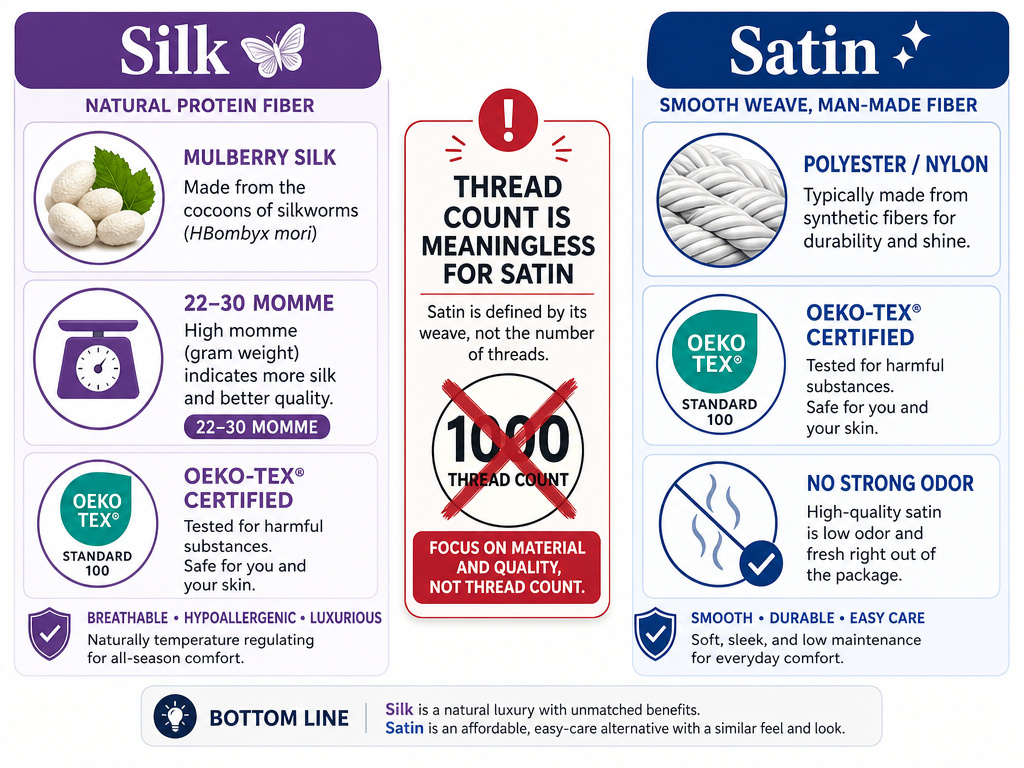
- Verify “mulberry silk” or “silk charmeuse” on the label
- Check momme weight; around 22 momme is a durable everyday sweet spot, and 30 momme is a denser premium option.
- Look for OEKO-TEX certification if concerned about dyes
For satin:
- Confirm fiber content, polyester, nylon, or silk?
- Seek OEKO-TEX certification for chemical safety
- Smell test: strong chemical odors signal cheap dyes
For hot sleepers, Lunelle suggests choosing 22 momme silk for breathability. Cold sleepers might prefer the denser substance of heavyweight silk (e.g., 30 momme).
What most people get wrong: Thread count claims on satin. The number is meaningless for synthetics, focus on fiber content and weave quality instead.
How much do silk and satin sheets cost?
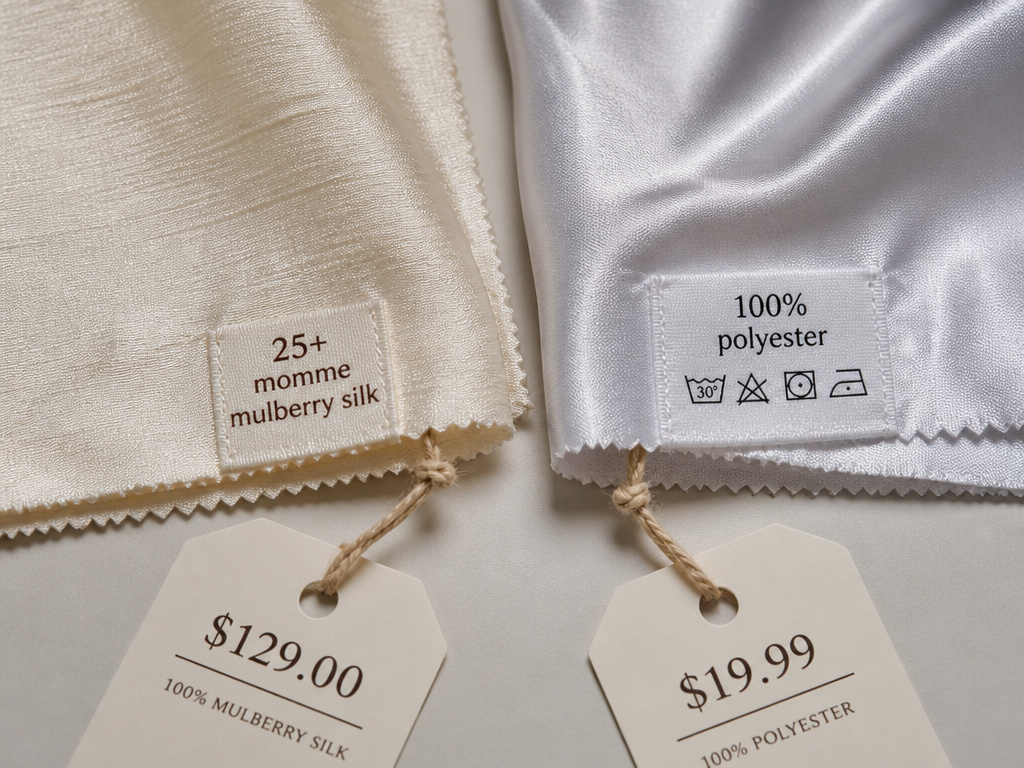
Silk sheets are a significant investment, with the price heavily influenced by the momme weight, which signals quality. Mid-range bedding typically uses 19 to 22 momme silk, while luxury heavyweight options are 25+ momme. Satin sheets, being a weave and not a fiber, have a much wider price range. They can be made from polyester, rayon, or silk itself. Polyester satin is generally the most affordable option upfront. However, the cost of ownership differs. Polyester satin may lose its chemical softeners after washing, potentially becoming rough, while high-quality mulberry silk is designed to last with proper care. When comparing prices, always check the fiber content on the label, as a satin sheet made from silk will cost closer to other silk products.
Frequently Asked Questions
Is satin or silk better for sheets?
Silk excels for temperature regulation and durability with proper care (see the silk sheets pros and cons), while polyester satin offers affordable smoothness. For hot sleepers or sensitive skin, silk is worth the investment.
What are the downsides of satin sheets?
Promeed and Ode Sleep note that polyester satin can trap heat and lose softness, and may contain chemical finishes (explored in our satin sheets pros and cons), while other sources suggest OEKO-TEX certified polyester satin can be safe and some weaves rival silk’s breathability. Filament polyester satin rarely pills but can develop static, while rayon satin may pill. Always check fiber content, “satin” alone rarely means silk.
What is the healthiest sheet to sleep on?
The American Academy of Dermatology recommends silk or satin for reducing sleep creases. Silk is a natural protein fiber and is often recommended for sensitive skin.; OEKO-TEX certified satin verifies low chemical risks.
Do bed bugs like silk sheets?
No fabric repels bed bugs, but silk’s tight weave makes spotting them easier than on thicker fabrics. Both silk and satin sheets should be washed regularly if bed bugs are a concern, following care instructions for each fabric.
The Bottom Line
Choose silk if you:
- Sleep hot
- Want long-term durability
- Don’t mind delicate care
Choose satin if you:
- Need budget-friendly smoothness
- Prefer easy machine washing
- Don’t run warm at night
The label test never fails: Real silk says “mulberry silk” or “silk charmeuse.” Anything else is satin weave with another fiber doing the work.
