
10 Best Alternating Pressure Mattresses For Bedsores in 2026
This post contains affiliate links. As an Amazon Associate, we earn from qualifying purchases.
Our best overall alternating pressure mattress is the Drive Medical Med-Aire Low Air Loss Mattress System for its comprehensive medical-grade features. We also recommend the Invacare MA500 for dedicated heel pressure relief and the Vive Alternating Air Pressure Mattress Pad as a budget-friendly overlay. Selecting the wrong system can lead to inadequate pressure redistribution, risking further skin breakdown. We built this guide by analyzing manufacturer specifications, expert round-ups, and patterns in owner feedback, so you can find a system that fits your specific care scenario.
Top 10 Alternating Pressure Mattresses For Bedsores in the Market
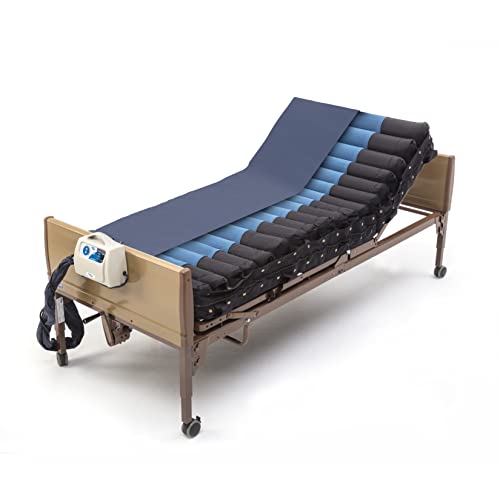
Certain content that appears on this site comes from Amazon. This content is provided "as is" and is subject to change or removal at any time.
The Best Alternating Pressure Mattresses For Bedsores, Reviewed
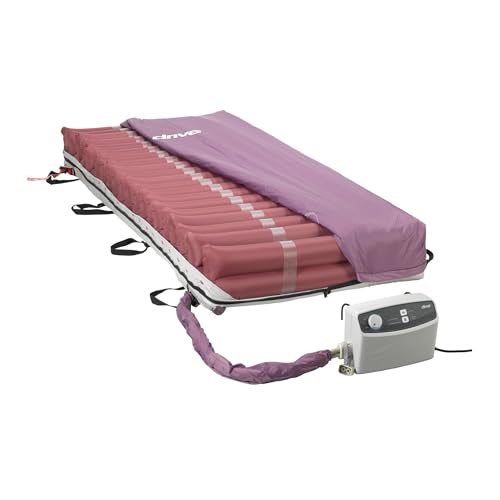
Drive Medical Med-Aire Low Air Loss Mattress System
What We Like
- Built-in pillow for head stability
- Replaceable air bladders for easy maintenance
- Automatic pressure monitoring for consistent support
- Cover reduces moisture, friction, and heat
Trade-offs
- At 14.6 inches tall, it requires compatible bed rails
- System relies on constant power for alternating pressure
The combination of alternating pressure and a moisture-wicking, low-air-loss cover directly targets the core challenges of bedsore care: pressure, moisture, and heat. This makes the Med-Aire System a comprehensive solution for patients at significant risk, particularly in home or facility settings where reliable, monitored support is the priority. Its replaceable bladders and built-in pillow add practical, long-term value to the core clinical function.
At 14.6 inches high, this mattress system requires a bed frame or rails tall enough to accommodate it, which is a key fit consideration for home use. A lower-profile alternative like the Invacare MA500 microAIR measures 8.0 inches in height. The Drive Medical system’s greater depth comes from its 8-inch individual air cells and built-in pillow feature, designed for head stability.
Invacare MA500 microAIR Alternating Pressure Mattress System
What We Like
- Natural heel slope design reduces heel pressure
- Cell-in-cell safety design prevents bottoming out
- Oversized quilted cover provides low shear and friction
- Pliable nylon cover is easy for caregivers to clean
Trade-offs
- 8-inch height may require a low-profile bed frame
- Two-cell cycle is less frequent than multi-cell systems
- Intended only for low to medium risk, not stage IV sores
With a 350-pound capacity and a specific heel slope design, the Invacare MA500 is a focused choice for someone whose primary concern is safeguarding vulnerable heels. Its alternating pressure cycle is intended for individuals at low to medium risk of pressure sores, or stages I-III. The quilted, vapor-permeable cover addresses moisture while being easy to wipe down, a practical feature for home caregivers managing daily routines.
The MA500 uses a two-cell cycle mattress, where alternating function inflates and deflates cells in a 2:1 ratio. This makes it intended for individuals from low-medium risk of pressure sores, especially when heel protection is the goal. Its cell-in-cell design helps prevent bottoming out in the event of a power failure, adding a layer of safety.
ProHeal Low Air Loss Alternating Pressure Mattress
What We Like
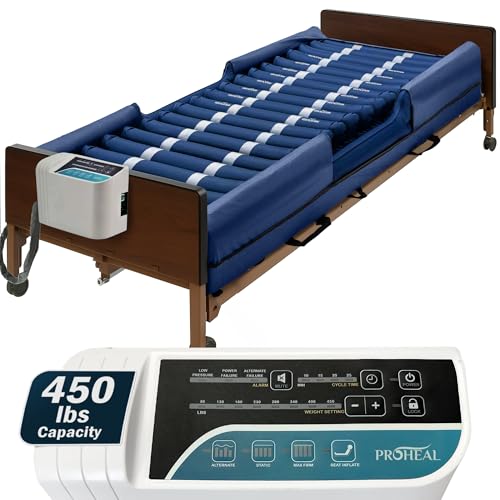
- Cell-on-cell design retains 4 inches of air during power failure
- Low air loss feature wicks moisture for skin maceration
- Seat-inflate and head features secure patient in Fowler position
- Comprehensive digital alarm system monitors three failure points
Trade-offs
- 30-pound weight is substantial for one-person setup
- 8-inch height may require low-profile bed rails
The ProHeal mattress combines alternating pressure with a dedicated low air loss system, a feature not universal in this category. Its 18 laser-perforated holes actively pull moisture away from the skin, which directly addresses a core cause of wound breakdown and maceration. This makes it a strong candidate for managing patients who are both immobile and prone to excess sweating. The four adjustable cycle times and static mode offer the clinical flexibility often needed for tailoring pressure relief as a patient’s condition changes.
You pay for that focused capability with a unit that, at 30 pounds, is on the heavier side for its class, the similar Invacare MA500 system is less than half that weight. The comprehensive alarm suite and built-in CPR valve speak to a design meant for higher-acuity home care, where monitoring is as important as therapy. If low air loss is your primary clinical goal, this mattress builds a solid case. For situations where sheer pressure redistribution is the sole need, a simpler alternating-only model like the Drive Medical Med-Aire overlay might suffice.
Product photos
Drive Medical Med-Aire 5" Overlay System
What We Like
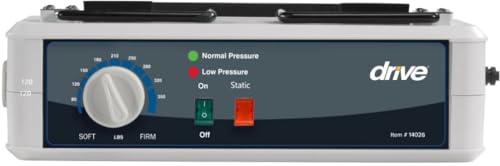
- Combines alternating pressure with low air loss therapy
- Adjustable weight settings for optimal immersion
- Static pillow feature for head stability
- Visual low-pressure alarm for safety
Trade-offs
- An overlay requires a compatible base mattress
The Drive Medical Med-Aire’s dual alternating pressure and low air loss therapy makes it a focused choice for managing the microclimate around a pressure injury. Its five-inch deep cells and adjustable weight settings aim to provide proper immersion and envelopment right on top of an existing mattress, which suits home or long-term care settings where a full mattress replacement isn’t practical. The static pillow feature and visual alarm add thoughtful touches for patient comfort and caregiver oversight.
The trade-off for this overlay convenience is that its seventeen air cells offer a broader support pattern compared to systems with dozens of smaller cells, like the KEKOY 130-Cell Pad. That makes the Med-Aire better for overall pressure redistribution rather than ultra-fine contouring. It sits conceptually between a basic mattress topper and a full replacement system, offering active therapy without requiring you to swap out the entire bed.
Product photos
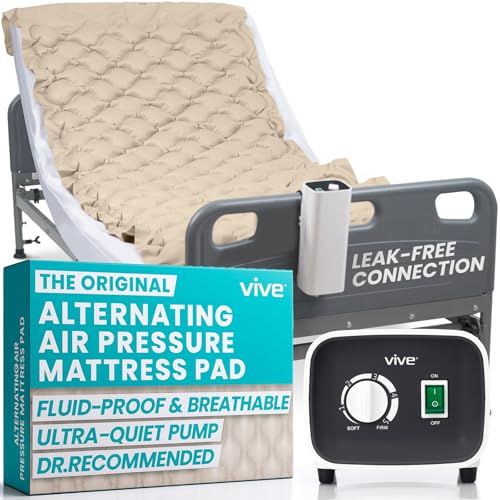
Vive Alternating Air Pressure Mattress Pad
What We Like
- Whisper-quiet 22 dBA pump for undisturbed sleep
- 130 air cells for thorough pressure redistribution
- Waterproof vinyl construction supports 300 lb
- One-year guarantee indicates manufacturer confidence
Trade-offs
- 3-inch thickness offers less immersion than 8-inch models
- Lacks low air loss feature for moisture management
A pump operating at 22 dBA, which is quieter than a whisper, positions this pad well for shared rooms where noise disruption is a concern. Its 130 air cells are alternately inflated and deflated by a proprietary algorithm to distribute weight and eliminate pressure spots. Each pressure cycle lasts approximately six minutes, providing the methodical shifting crucial for preventing and managing bed sores in bedridden individuals. This makes it a straightforward system for caregivers prioritizing quiet operation and fundamental pressure relief.
The trade-off for its simplicity and quiet pump is a thinner, 3-inch profile. This provides less cushioning depth than the 8-inch Invacare MA500 system, for example, which may be a consideration for higher-risk patients needing more immersion. It also lacks a low air loss function, so you’ll need to be diligent with separate moisture-wicking sheets if skin maceration is a primary concern. For basic, quiet pressure relief on a standard mattress, however, it covers the essentials.
Product photos
MedVance Medical Alternating Air Mattress

What We Like
- Ultra-quiet dual-core pump for minimal disruption
- Cell-on-cell design prevents bottoming out
- Removable, water-resistant quilted cover
Trade-offs
- At 28 pounds, it is heavier than the 13.5-pound Invacare model
- No side air perimeter mentioned for edge support
- Static mode only maintains air in three head cells
An operating volume of less than 20 dB makes the MedVance system notably discreet, a critical feature for bedrooms where pump noise can disturb sleep. This, combined with its 450-pound capacity and digital pressure adjustment, suits caregivers managing long-term immobility at home who need a reliable, hospital-grade system that won’t add acoustic clutter to the care environment. The diagnostic alarms and quick-inflate design further cater to those who prioritize straightforward operation and patient safety.
This mattress provides a sturdy, quiet pump and substantial weight capacity. At 28 pounds, however, it demands more effort to move and position than lighter alternatives like the Invacare MA500. While its cell-on-cell construction offers good power failure protection, it lacks the explicit side air perimeter feature found on some competitors. This can be a consideration for patients at risk of rolling near the bed edge. For situations where the absolute quietest operation is the non-negotiable priority, this MedVance system delivers. For those needing easier portability, the lighter Invacare model might warrant a look.
Product photos
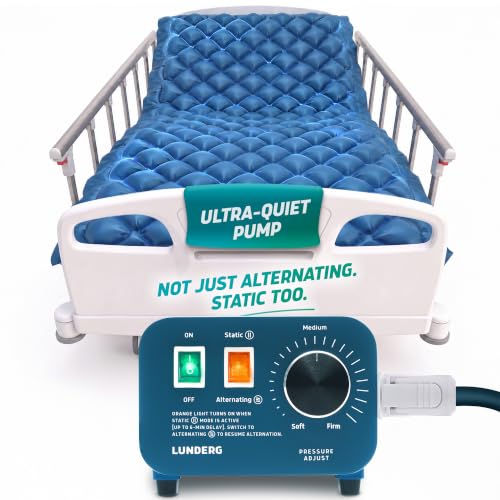
Lunderg Alternating Air Pressure Mattress Pad
What We Like
- Static Mode for a stable, non-alternating surface
- Exceptionally quiet pump operation at 23 dBA
- Includes a waterproof mattress topper
- Simple setup with quick-connect hoses
Trade-offs
- Lacks digital controls or programmable cycles
A whisper-quiet 23 dBA pump makes this pad a considerate choice for shared bedrooms, where noise from medical equipment can disrupt rest. Its standout Static Mode lets you lock all cells at a firm, stable pressure. This is useful for patients who find the constant motion unsettling or for times when a solid surface is preferred for caregiving tasks. This combination suits someone who needs reliable pressure relief but values a peaceful environment and the option for a conventional mattress feel.
Developed by medical experts to prevent and heal bedsores, the Lunderg pad relieves pressure on skin and bony areas, boosts circulation, and reduces the need for manual turning. Its alternating pressure system is a straightforward, focused tool for pressure management, making it a solid choice for home use where the primary concern is preventing sores. The system offers a quiet alternation cycle plus a static mode fallback, where all cells remain fully inflated to provide a stable surface for rest.
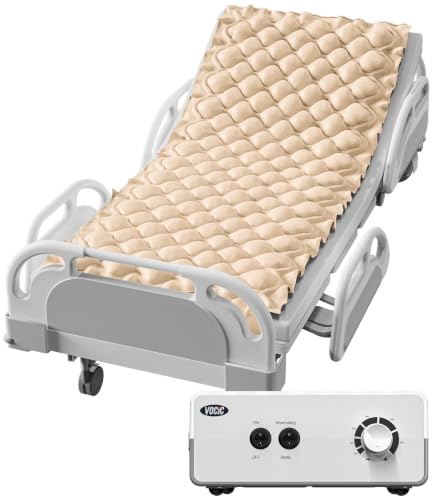
VOCIC Alternating Pressure Air Mattress Pad
What We Like
- Extra-long 15-inch flaps for a secure, non-slip fit.
- Upgraded ceramic pump operates at a whisper-quiet 45dB.
- One-piece bubble cell design prevents shifting and eases cleaning.
- Six pressure levels allow fine-tuned firmness adjustment.
Trade-offs
- At 33.5 inches wide, it is narrower than some 36-inch medical mattresses.
- Repairs for punctures rely on a user-applied patch kit.
The 15-inch securing flaps are the defining feature, locking the pad firmly under the mattress. That makes the VOCIC S21-A a practical choice for active sleepers or caregivers who need a topper that won’t bunch or slide during transfers. Its quiet ceramic pump and straightforward dual-mode operation cater well to home environments where ease of use and minimal nighttime disturbance are priorities.
The trade-off is in its dimensions; at 33.5 inches wide, it provides less sleeping surface than the 36-inch-wide Invacare MA500 system. You’re choosing a secure-fitting overlay over the broader, more integrated support of a full-system mattress. For a user who primarily needs a stable, stay-put topper for a standard home bed, the VOCIC’s design delivers that specific reliability.
Product photos
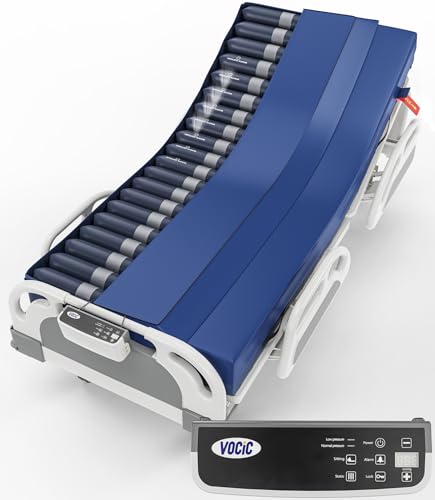
VOCIC Dual-Layer Smart Mattress System
What We Like
- Smart pump with low air and power failure alarm
- Dual-layer, 20-tube design prevents bottoming out
- Built-in back ventilation for cooling and moisture control
- Machine-washable, waterproof cover for easy cleaning
Trade-offs
- At 33 inches wide, it's narrower than many 36-inch medical mattresses.
- No low air loss feature for active moisture management.
The VOCIC system’s 507 lb capacity on an 8-inch dual-layer base means it can handle extended, around-the-clock care for larger individuals without the mattress bottoming out. That solid foundation is paired with a notably smart pump. It doesn’t just alternate pressure but offers a one-touch static mode for repositioning and a sitting support mode, all while monitoring itself for leaks or power issues. This makes it a strong candidate for home caregivers who need a reliable, multi-function system that manages itself and reduces the need for constant manual checks.
This system focuses on a high-capacity, self-monitoring alternator that simplifies care routines. While its breathable back vents help, it lacks a true low air loss feature. Some specialized systems like the ProHeal offer that for actively wicking moisture away from the skin. It’s also a few inches narrower than standard hospital bed width options like the Invacare MA500. For someone whose primary concern is managing perspiration and heat, that’s a point to consider. But if you need consolidated critical functions in one quiet unit, this VOCIC system delivers.
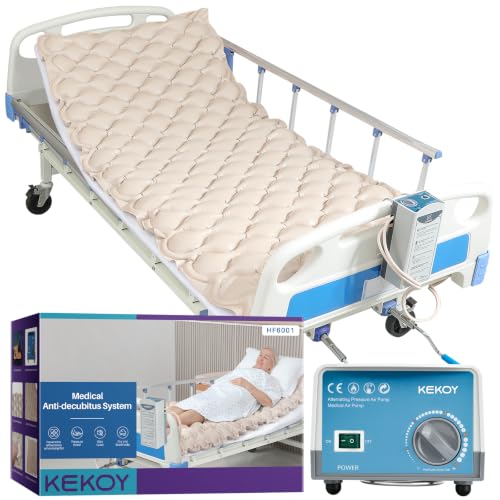
KEKOY 130-Cell Pressure Mattress Pad
What We Like
- FSA/HSA eligible for flexible payment
- Ultra-quiet pump for minimal sleep disruption
- Waterproof surface simplifies cleanup and care
- Adjustable pressure customizes support for comfort
Trade-offs
- 35-inch width may not fully cover wider beds
- Pump must remain plugged in continuously for operation
- Designed for Stage 0-1 prevention, not advanced sores
FSA and HSA eligibility helps manage the cost of long-term home care, making this a practical financial choice for eligible buyers. The system uses 130 air cells in a cycle that runs approximately every 10 to 12 minutes, a straightforward method to redistribute body weight for users at risk of early-stage pressure sores. This setup is for the home caregiver seeking to reduce manual repositioning, aided by a pump that operates below 28 dBA to minimize nightly disturbance.
This system focuses on prevention rather than treatment, positioning it differently than a system like the Invacare MA500, which supports a higher weight capacity. Its 35-inch width fits standard hospital beds neatly, but it’s a dedicated piece of equipment. The pump must stay on and plugged in. For someone seeking an affordable, quiet entry into pressure care for a loved one at home, it covers the basics without complexity.
Product photos
How We Evaluated Alternating Pressure Mattresses
This guide is based on a review of product specifications, manufacturer documentation, and expert summaries. The focus is on criteria known to impact pressure injury prevention, such as the type of pressure therapy, the inclusion of low air loss for moisture management, and features like heel-specific designs and safety alarms. This approach identifies systems suited for different risk levels and care environments.
What To Look For In Alternating Pressure Mattresses
Choosing the right system depends on the patient’s risk level, existing skin condition, and your care environment. Key factors include the type of pressure therapy, moisture management features, and the system’s physical compatibility with your bed.
An alternating pressure system uses inflating and deflating air cells to redistribute pressure. Look for low air loss to manage moisture, a high cell count for better immersion, and safety features like automatic pressure monitoring and alarms.
Pressure Therapy Type
The core function is alternating pressure, where air cells inflate and deflate in a timed cycle to shift pressure points. Systems differ in cell count and cycle frequency; higher cell counts, like the 130-cell Vive pad, provide more thorough pressure redistribution. Some models, like the Lunderg pad, offer a static mode, which holds air constant for times when a stable surface is preferred, such as during patient repositioning or feeding.
Moisture & Temperature Management
For patients prone to skin maceration, a low air loss feature is critical. This function gently circulates air across the surface to wick away moisture and reduce heat buildup. The ProHeal Low Air Loss Alternating Pressure Mattress and the Drive Medical Med-Aire systems include this therapy. Without it, as in basic alternating air pads, caregivers must be extra vigilant about keeping skin dry through frequent checks and changes.
Fit, Safety & Controls
A system must physically fit the bed frame. Overlays like the Drive Medical Med-Aire 5″ Overlay need a compatible base mattress, while full replacement mattresses have specific height requirements. Safety features are non-negotiable: look for visual or audible low-pressure alarms and cell designs that prevent “bottoming out.” Digital controls allow for fine-tuning pressure settings, while simpler pumps offer ease of use at the potential cost of customization.
- Check the mattress width against your bed frame; a 33-inch pad may not cover a standard 36-inch hospital mattress.
- Verify the pump’s noise level if a quiet environment is essential for sleep.
- Ensure the system has a backup air retention feature in case of power failure.
The most important factor is matching the system’s capabilities to the patient’s specific risk level and skin condition.
Alternating Pressure Mattresses For Bedsores Compared
The comparison table below details key specifications like cell count, special features, and dimensions to help you quickly evaluate your options.
| Product | Mattress Height | Weight Capacity | Cover Material |
|---|---|---|---|
| Drive Medical Med-Aire Low Air Loss Mattress System | 14.6 inches | N/A | Vapor permeable, moisture-wicking |
| Invacare MA500 microAIR Alternating Pressure Mattress System | 8 inches | 350 lb | Quilted nylon, vapor permeable |
| ProHeal Low Air Loss Alternating Pressure Mattress | 8.0 inches | N/A | Removable, fluid-resistant nylon |
| Drive Medical Med-Aire 5" Overlay System | N/A | N/A | N/A |
| Vive Alternating Air Pressure Mattress Pad | 3 inches | 300 lb | N/A |
| MedVance Medical Alternating Air Mattress | 8 inches | 450 pounds | quilted poly PU |
| Lunderg Alternating Air Pressure Mattress Pad | N/A | 300 lbs | N/A |
| VOCIC Alternating Pressure Air Mattress Pad | 8.3 inches | 300 lbs | N/A |
| VOCIC Dual-Layer Smart Mattress System | 8 inches | 507 lbs | Machine Washable Cover |
| KEKOY 130-Cell Pressure Mattress Pad | N/A | Supports up to 300 lbs | Waterproof medical-grade PVC |
Frequently Asked Questions
Is an alternating pressure mattress covered by Medicare?
Coverage varies and depends on medical necessity, the patient’s condition, and specific Medicare guidelines. A doctor’s prescription and documentation of medical need are typically required. It’s best to consult directly with Medicare or your insurance provider to understand your plan’s eligibility criteria for durable medical equipment like these mattresses.
What is the best mattress for elderly people to prevent bed sores?
The best mattress depends on the individual’s mobility and risk level. For high-risk or bedridden elderly patients, a full alternating pressure mattress system with low air loss, like our top overall pick, offers the most protection. For lower-risk scenarios focused on prevention, a well-reviewed alternating pressure mattress pad can be an effective and more affordable option.
Do alternating pressure mattresses work?
Research indicates they can be effective. A Cochrane review found that alternating pressure air surfaces may reduce pressure ulcer risk compared to standard foam mattresses. Their design continuously shifts pressure points, which promotes blood flow and helps prevent skin breakdown, making them a valuable tool in pressure ulcer prevention protocols.
Which bedsore mattress is best for advanced wounds?
For advanced wounds (Stage III or IV), a medical-grade system combining alternating pressure with active low air loss therapy is often recommended. These systems, like the Drive Medical Med-Aire Low Air Loss, are designed to treat through later stages by managing both pressure and moisture. Always consult a healthcare professional for treatment of active, advanced pressure injuries.
What is the difference between an overlay and a full mattress system?
An overlay is a pad that sits on top of an existing mattress, like the Vive Alternating Air Pressure Mattress Pad, while a full system replaces the standard mattress entirely. Overlays are generally more affordable and easier to set up but offer less immersion. Full systems provide deeper contouring and are often integrated with advanced features, making them suitable for higher-risk patients in long-term care settings.
The Bottom Line
The Drive Medical Med-Aire Low Air Loss Mattress System is our best overall pick for caregivers needing a comprehensive, medical-grade solution for high-risk patients at home or in a facility. For those on a tighter budget or with lower-risk needs, the Vive Alternating Air Pressure Mattress Pad offers reliable basic prevention. Ultimately, the single most important step is selecting a system whose pressure redistribution and moisture management features directly address your loved one’s specific stage of risk.
