
10 Best Anti Snore Pillows For Side Sleepers in 2026
This post contains affiliate links. As an Amazon Associate, we earn from qualifying purchases.
The best anti-snore pillow for side sleepers is the Pyramid Pillow Original, which uses a gentle incline to promote airway alignment. For those managing sleep apnea, the corrective BDEUS Sleep Apnea Cervical Pillow is a top choice, while the WeiTrust Ergo Cervical Neck Pillow offers the best dual firmness for customizable support.
Side sleeping is often recommended to reduce snoring, but only if your pillow correctly fills the space between your neck and shoulder to keep the airway open. We researched specifications, expert round-ups, and patterns in owner feedback to identify the ten pillows that deliver on this promise for different needs.
Top 10 Anti-Snore Pillows For Side Sleepers in the Market
Certain content that appears on this site comes from Amazon. This content is provided "as is" and is subject to change or removal at any time.
The Best Anti-Snore Pillows For Side Sleepers, Reviewed
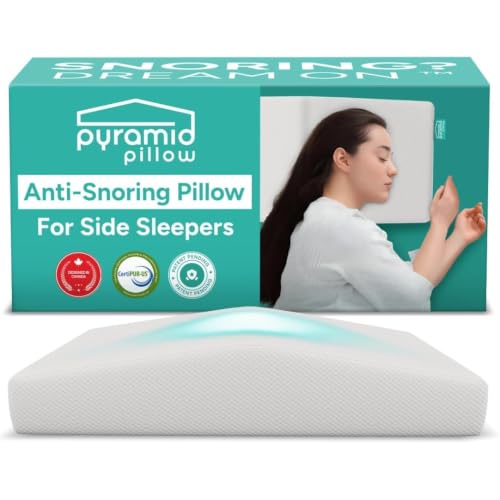
Pyramid Pillow Original Anti Snoring Pillow
What We Like
- 9.5-degree incline promotes airway alignment for side sleepers.
- Medium-firm memory foam balances support and contouring comfort.
- Removable, washable cover simplifies long-term hygiene.
- Sleep position on the pillow can be adjusted for thickness preference.
Trade-offs
- Simple inclined design lacks the pronounced cervical contours of other models.
- Inclined design lacks the pronounced cervical contours of other models.
Its 9.5-degree incline gently tips your head to encourage clearer breathing channels for side sleepers, forming the core of this pillow-based snoring solution. Designed without complex shapes, the Pyramid Pillow uses medium-firm memory foam for a familiar, supportive feel. You can also customize the height slightly by sleeping nearer the edge for a lower profile, an option many single-height pillows lack.
The trade-off is its notably low and uniform profile compared to a pillow like the BDEUS Sleep Apnea Cervical Pillow, which has a 5.1-inch height and distinct contours for neck cradling. If your snoring is tied to needing significant cervical lift or specific pressure point relief, the Pyramid’s simple wedge may feel insufficient. Its strength is in its singular, focused approach: it changes the angle of your head, not the shape supporting your neck.
BDEUS Sleep Apnea Cervical Pillow

What We Like
- Butterfly contour designed to promote open airways
- Generous side zone with arm groove for side sleepers
- Dual-height design for side and back sleep alignment
- Includes a 100-night trial period for adjustment
Trade-offs
- Corrective design may limit free turning at night
- Body may need a brief break-in period for adaptation
The BDEUS pillow’s 5.1-inch firm side and butterfly contour are built to cradle the neck and align the spine, a design aimed directly at reducing airway restriction. For a side sleeper dealing with sleep apnea, this focus on maintaining an open airway through posture makes it a serious contender. It suits someone ready for a corrective pillow and willing to adapt to its specific support zones for the potential benefit of quieter sleep.
The BDEUS pillow’s corrective design may limit free turning at night, a trade-off for its posture alignment. This means sleepers must commit to its fixed contour shape to receive the targeted support, rather than enjoying unrestricted movement. It is engineered primarily for side sleepers, with a secondary lower side for back sleeping.
Product photos
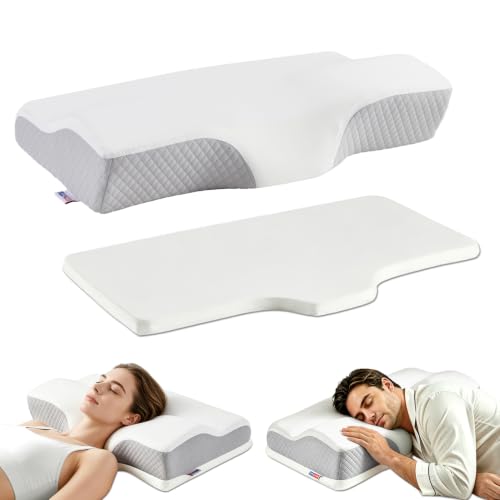
WeiTrust Ergo Cervical Neck Pillow
What We Like
- Dual-height design for spine alignment
- Two firmness options in one model
- Adjustable loft with included booster pad
- Easy-care, breathable cooling cover
Trade-offs
- No built-in incline like the Pyramid Pillow
- Requires 24-48 hour air-out period
The option for both Soft and Firm support in the same model is its defining feature, letting side sleepers choose between cloud-like cradling and shape-holding support without guessing. This dual-firmness approach, combined with a contour that fills the shoulder-to-head gap, directly targets spinal alignment and pressure relief, which are key for reducing snoring. It suits someone who isn’t sure if they prefer a plush or a solid feel, or whose preference changes night to night.
The trade-off is that its core design is a traditional cervical contour, not an inclined plane like the Pyramid Pillow. It works by supporting the neck rather than physically tipping the head forward to open airways. That makes it a more versatile, general-use orthopedic pillow that also addresses snoring, rather than a dedicated anti-snore device. The included booster pad adds a layer of fine-tuning for reading or sleeping, which is a thoughtful touch missing from many single-loft competitors.
Product photos
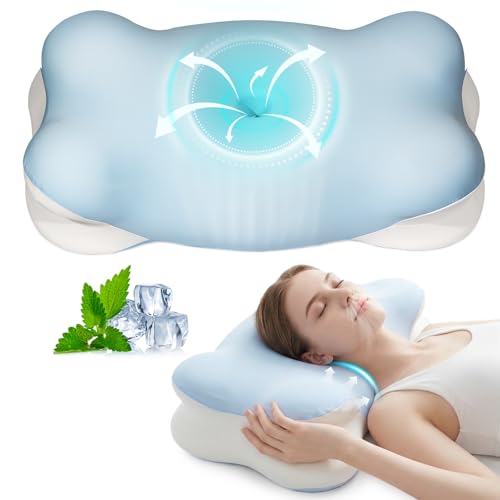
KAUWTYP Sleep Apnea Cervical Pillow
What We Like
- Dual adjustable heights fit diverse side-sleeping needs.
- Zoned contour design targets neck and shoulder alignment.
- Certified cooling fabric and breathable foam for hot sleepers.
- Firmer, slow-rebound foam maintains stable support overnight.
Trade-offs
- Firmer support requires a short adaptation period for new users.
- The contour shape limits head repositioning for strict stomach sleepers.
The KAUWTYP pillow’s dual-height sides let side sleepers dial in the exact shoulder-to-neck clearance they need, which is the core of its zoned support. It suits anyone whose main goal is to lock their cervical spine into a neutral position all night, using a firmer memory foam that won’t collapse under the weight of a shoulder. This is a pillow for the side sleeper who wakes up with a stiff neck and wants a structured, unchanging foundation to correct it.
The KAUWTYP pillow’s firm, contoured design requires an adaptation period, making it less forgiving than a soft traditional pillow for those who move around at night. It features a zoned contour with dual adjustable heights, providing targeted cervical support rather than a single, uniform slope. This design prioritizes precise neck cradling over a general incline, so your preference should guide the choice between these types of support.
Product photos
ROOWANA Anti-Snore Memory Foam Pillow

What We Like
- Science-backed contour aligns spine to open airways.
- Specifically shaped to cradle the head for side sleepers.
- Pressure-relieving memory foam conforms to reduce tossing.
- Breathable, removable cover is easy to clean.
Trade-offs
- The contoured design is fixed, unlike adjustable pillows like the WeiTrust.
- Manufacturer notes it is only for auxiliary use, not severe snoring.
A 3.0-pound memory foam core with a specific contoured profile means your head and shoulders are held in a gentle incline all night, which is the entire point for a side sleeper needing to keep airways open. This pillow is built for someone who wants a set-it-and-forget-it solution, where the medium-firm foam does the work of maintaining alignment so you don’t have to. It suits anyone whose snoring is linked to rolling into a poor sleeping posture.
Unlike adjustable pillows such as the WeiTrust Ergo Cervical Neck Pillow, this pillow has a fixed, one-piece memory foam design, so you cannot modify its firmness or height. It is engineered for a single, consistent purpose: to provide a traditional pillow experience with a specific, science-backed contour. This straightforward approach makes it a maintenance-friendly piece of bedding designed to do one job reliably.
Product photos
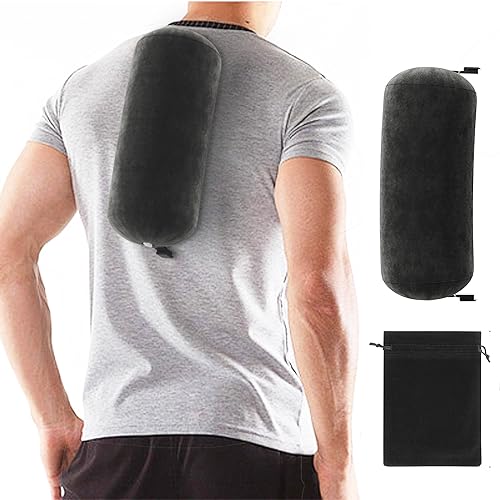
Whole Nights Calma Air V3 Backpack
What We Like
- Extremely lightweight at 0.1 pounds
- Clips directly to clothing for secure fit
- Promotes side sleeping to reduce snoring
Trade-offs
- Only effective for backsnorers, not side or stomach snorers
- Requires a snug-fitting shirt to function correctly
- No integrated cushioning or head support
This product attaches to the upper back of a shirt to keep a sleeper in the side position, a method recommended by snore therapy experts. Weighing only 0.1 pounds, it adds negligible bulk for minimal nighttime distraction. Its design is specifically for backsnorers who need a simple physical cue to maintain a side-sleeping posture without altering their primary pillow.
Its function is strictly positional, offering no inherent neck support or cushioning comfort. Unlike many other snoring aids listed, which are full-sized pillows with memory foam, this is a clipped-on accessory. It suits someone committed to their existing pillow but who requires a dedicated reminder to avoid sleeping on their back.
Product photos
AOSSA Snoring Pillow Positioner

What We Like
- Extremely lightweight for travel and multiple locations.
- Mesh belt is breathable to help prevent heat rash.
- Adjustable fit accommodates a wide range of body sizes.
- Multi-functional design works as headrest, neck, or leg pillow.
Trade-offs
- Relies on user compliance and a snug belt fit over clothing.
- Minimal head and neck support compared to full-size pillows.
- Zero-inch height offers no cushioning for the head alone.
Weighing just over half a pound, the AOSSA Pillow Positioner is a tool you can realistically toss in a carry-on or keep in the car, which defines its core use. It suits side sleepers who need a physical reminder to stay off their back but whose priority is portability over plush comfort. The two-piece system and adjustable mesh belt are designed for versatility, letting you use the cylinder as a lumbar support on a flight or a knee pillow in bed, anchored by the same soft belt.
The AOSSA Snoring Pillow Positioner is primarily a posture guidance system, designed to remind a sleeper to stay on their side. It uses a separate cylindrical pillow and an adjustable belt rather than providing full head and neck cushioning. This design makes it suitable for someone seeking a portable, multi-setting snoring aid that focuses on positional reminders over traditional pillow support.
Product photos
SAHEYER Anti-Snoring Memory Foam Pillow

What We Like
- High-density 55D foam retains shape long-term
- Ergonomic design aims to align neck airway
- Breathable, washable pillowcase for easy care
- Standard size fits most pillowcases and beds
Trade-offs
- Requires days of airing out for foam odor
- Fixed height may not suit all side sleepers
A 55D memory foam core is the main event here, offering a firmer, more substantial support that doesn’t quickly collapse under the head and shoulder of a side sleeper. This density is what the design leans on to keep the neck and airway in a neutral position, which is the stated goal for reducing snoring. This pillow is a good match for someone who finds typical pillows too soft and wants a pillow that decisively holds its shape through the night.
This pillow requires planning ahead, as its memory foam core needs to air out in a ventilated space for a few days before first use to dissipate its manufacturing odor. At 3.2 pounds, it is heavier than some other anti-snoring pillows like the 2.4-pound Pyramid Pillow, which can make it feel substantial and less likely to shift around on the bed.
Product photos
BONTEBIAN Pillow Haven Cervical Pillow
What We Like
- Two-sided design offers two distinct height options
- Ergonomic contour for neck and spinal alignment
- Breathable mesh cover for temperature regulation
- Supports all three main sleeping positions
Trade-offs
- No specific height or thickness dimensions provided
- Fixed contour shape lacks adjustable inserts
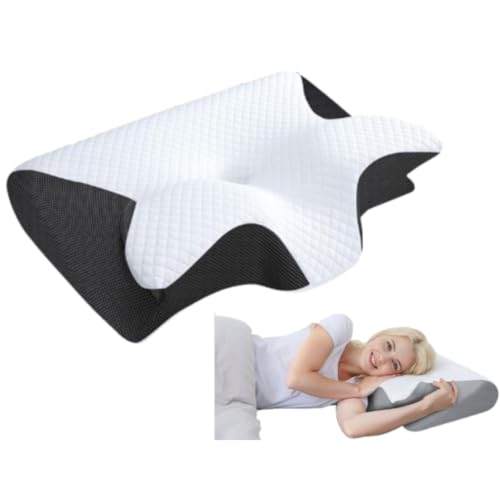
The two-sided design is the core feature, providing a choice between a horn side for neutral alignment and a roll side with a natural curve. This makes it a strong candidate for side sleepers who haven’t dialed in their perfect pillow height or who shift positions at night. The ergonomic memory foam contour aims to cradle the neck and maintain spinal alignment, which is the primary mechanism suggested for reducing snoring. This design is ideal for someone looking for a dedicated cervical support pillow that offers a bit of built-in experimentation.
Its two-sided design provides personalized support with a horn side for neutral alignment and a roll side with a natural curve, so users can choose the height that best suits them. The ergonomic contour is intended to support side, back, and stomach sleepers by gently cradling the neck and keeping the spine straight. For an alternative single-contour shape, the BDEUS Sleep Apnea Cervical Pillow also offers an ergonomic design for side sleepers.
Product photos
WENGTY Ergo Pillow for Sleep Apnea

What We Like
- Dual-height design for multiple sleep positions
- Breathable ice silk cooling cover
- High-resiliency foam that doesn't sag
- Machine-washable cover for hygiene
Trade-offs
- Requires 48-hour expansion period after unpacking
- Memory foam may have an initial odor
The dual-height loft is the defining feature here, letting you switch between a lower profile for back sleeping and a higher one for side sleeping. That flexibility makes it a strong candidate for anyone who shifts positions at night but still needs the cervical alignment to keep airways open. Its contoured shape is engineered to fill the shoulder gap for side sleepers specifically, which is the core mechanism for its snoring relief claims. The high-resiliency memory foam aims to provide that structured support without collapsing, so you get pressure relief that lasts.
You do trade some immediacy for that support, as the pillow needs a day or two to fully expand and off-gas after being unpacked from its compressed shipping state. Compared to a simpler wedge like the Pyramid Pillow, the WENGTY offers a more traditional pillow shape with positional versatility, rather than a single inclined plane. The included cooling cover and easy-care design round out a package aimed at side sleepers who want a customizable, orthopedic-grade option without a complex adjustment system.
Product photos
How We Evaluated Anti-Snore Pillows For Side Sleepers
Our evaluation was research-based, focusing on manufacturer specifications, clinical insights from expert round-ups, and consistent patterns found in owner feedback. We prioritized three criteria: design features that mechanically open the airway (like incline or contour), materials that maintain supportive loft for side sleeping, and practical hygiene through removable covers. This approach identifies which pillows are engineered to address the root causes of snoring for side sleepers. The limitation of this method is that we cannot account for individual comfort preferences, which always play a decisive role.
What To Look For In Anti-Snore Pillows For Side Sleepers
Choosing the right pillow involves more than just comfort; it’s about finding a design that supports your anatomy to keep breathing passages clear. For side sleepers, the right loft and firmness are critical to prevent the neck from kinking or the head from sinking, both of which can worsen snoring.
Look for a design that promotes an open airway, either through an incline or a contour. The pillow must fill the space from shoulder to ear to keep the spine neutral, and it should use a material that retains its supportive shape over many nights of use.
Design & Airway Alignment
Anti-snore pillows use specific shapes to address snoring. An inclined design, like a wedge, raises the head to use gravity and prevent airway collapse, which can be effective even if you roll onto your back. Contoured or zoned designs cradle the head and neck to maintain a neutral spine alignment, which is crucial for side sleepers. Some pillows for snoring combine these approaches, while others, like positional trainers, physically discourage back sleeping.
Loft & Firmness
Side sleepers generally need more loft (height) than back sleepers to bridge the gap between the shoulder and head. A pillow that is too low lets the neck sag, potentially narrowing the airway. Firmness is equally important; a pillow must resist collapsing under the weight of the head to provide consistent support. Many of the best pillows for side sleepers offer adjustable heights or dual-sided designs so you can fine-tune the loft to your body.
Materials & Care
The core material determines how well a pillow maintains its supportive shape. High-density memory foams are common for their slow rebound and contouring, but they may require an airing-out period. Breathable, cooling covers are a valuable feature for hot sleepers. Since hygiene is a long-term concern, a removable, machine-washable cover is a practical necessity for any pillow intended for nightly use.
- Check if the pillow’s height matches the distance from your shoulder to your ear when lying on your side.
- Feel whether the firmness is sufficient to prevent your head from sinking deeply into the pillow overnight.
- Look for a removable, washable cover to manage allergens and maintain cleanliness over time.
- Consider if you need a break-in period for materials like memory foam to fully expand and off-gas.
- Verify the pillow’s intended sleep position aligns with your habits, especially if you shift between side and back sleeping.
The most important factor is a design that actively works to keep your airway open, whether through elevation, contouring, or positional training.
Anti-Snore Pillows For Side Sleepers Compared
The following table compares the key features of our top picks at a glance.
| Product | Core Material | Cover | Design/Features |
|---|---|---|---|
| Pyramid Pillow Original Anti Snoring Pillow | Medium-firm memory foam | Removable, machine-washable polyester | 9.5° incline for side |
| BDEUS Sleep Apnea Cervical Pillow | High-density memory foam | Removable cooling cover | Dual height, contour for side |
| WeiTrust Ergo Cervical Neck Pillow | CertiPUR-US certified memory foam | Removable, machine-washable cooling cover | Adjustable with booster pad |
| KAUWTYP Sleep Apnea Cervical Pillow | CertiPUR-US, Oeko-Tex memory foam | Removable, cooling fabric | Zoned contour, dual heights |
| ROOWANA Anti-Snore Memory Foam Pillow | High-density memory foam | Removable, machine-washable | Contoured, ergonomic shape |
| Whole Nights Calma Air V3 Backpack | N/A | N/A | Inflatable, clips to shirt |
| AOSSA Snoring Pillow Positioner | N/A | N/A | 2-piece with belt |
| SAHEYER Anti-Snoring Memory Foam Pillow | 55D slow-rebound memory foam | Removable, machine-washable | Ergonomic snoring pillow |
| BONTEBIAN Pillow Haven Cervical Pillow | 100% memory foam | Breathable mesh with hidden zipper | Two-sided (horn and roll) |
| WENGTY Ergo Pillow for Sleep Apnea | Memory foam | Removable ice silk | Dual-height ergonomic support |
Frequently Asked Questions
Do anti-snore pillows work for side sleepers?
Yes, they can be effective when the pillow correctly supports the side-sleeping position. The goal is to keep the head, neck, and spine in a neutral alignment to prevent the soft tissues in the throat from collapsing and obstructing airflow, which is a primary cause of snoring.
Is there a pillow that actually stops snoring?
While no pillow can guarantee to stop all snoring, many are designed to significantly reduce it by addressing the physical causes. Designs like wedges, contours, and positional trainers have shown promise in clinical settings and owner reports for reducing snoring frequency and severity.
Do anti-snoring pillows really work?
They work for many people, particularly when snoring is related to sleep position or mild airway obstruction. Their effectiveness depends on matching the pillow’s design to your specific snoring cause and sleeping habits. They are generally considered an auxiliary solution and are not a substitute for medical treatment for conditions like severe sleep apnea.
How do I stop snoring while sleeping on my side?
Ensure your pillow provides adequate loft and firmness to keep your head level with your spine. You can also try to prevent rolling by placing a body pillow behind your back. Another option is a pillow with a specific contour designed for side sleepers to maintain open airways.
What is the best pillow height for a side sleeper?
The ideal height, or loft, is the distance from the side of your neck to the tip of your shoulder. A pillow that fills this gap without pushing your head upward is key. Many ergonomic pillows for side sleepers offer adjustable heights to help you find this perfect fit.
The Bottom Line
For most side sleepers, the Pyramid Pillow Original is the best overall choice due to its straightforward inclined design that helps align the airway. If your primary concern is managing sleep apnea symptoms, the corrective BDEUS model is specifically designed for that purpose. Budget-conscious shoppers or those wanting firm, unchanging support should look at the SAHEYER Anti-Snoring Memory Foam Pillow. Ultimately, selecting a pillow with a design that actively works to maintain an open airway is the single most important factor in finding relief.
