
10 Best Bedding For Tent Camping in 2026
This post contains affiliate links. As an Amazon Associate, we earn from qualifying purchases.
For a warm, compact pad perfect for backpackers, we chose the Therm-a-Rest NeoAir Xlite NXT as the best overall. The Exped MegaMat is our pick for car camping comfort, and the NEMO Tensor Extreme stands out for extreme cold. Good bedding turns a hard tent floor into a restful haven. It prevents a cold, sleepless night from ruining your trip. We researched specifications, expert evaluations, and owner feedback to identify the key differences. This guide will help you match a sleeping pad to your camping style.
Top 10 Bedding For Tent Camping in the Market
Certain content that appears on this site comes from Amazon. This content is provided "as is" and is subject to change or removal at any time.
The Best Bedding For Tent Camping, Reviewed
Therm-a-Rest NeoAir Xlite NXT Sleeping Pad

What We Like
- 4.5 R-Value for year-round warmth
- Lightweight at 16 ounces for backpacking
- Stable, 3-inch thick baffled support
- Fast inflation/deflation with WingLock valve
Trade-offs
- Thinner 3-inch profile lacks plush feel of 4+ inch pads
- Regular Wide width is 25 inches, narrower than some car-camping mats
Weighing just one pound and rolling up as small as a one-liter water bottle, the Therm-a-Rest NeoAir Xlite NXT makes it possible to carry reliable camp comfort without a significant burden in your pack. Its 4.5 R-value, achieved with reflective ThermaCapture and Triangular Core Matrix construction, provides warmth suitable for year-round use. A 3-inch thick profile with a baffled internal structure offers stable support on the trail.
The pad’s ultralight design prioritizes packability over the deep cushioning of thicker, heavier mats like the self-inflating Therm-a-Rest Basecamp. Reviewers of the Therm-a-Rest MondoKing 3D note that thick foam mats can take some effort to deflate and roll, a process the Xlite NXT aims to streamline with its WingLock valve for lightning-fast deflation. This makes the Xlite NXT a focused choice for weight-conscious trips where every ounce saved is a priority.
Exped MegaMat Sleeping Pad

What We Like
- Four-inch foam core prevents bottoming out
- Stretch fabric provides a cradling sleep surface
- Includes mini pump for adjustable firmness
- Welded side handle for easier transport
Trade-offs
- Deflation and rolling require notable effort
- At 4.6 pounds, it's heavy for backpacking
A four-inch thickness of open-cell foam creates a sleep surface that genuinely isolates you from the ground. This makes the MegaMat suited for campers who prioritize a bed-like feel over all else, particularly if you’re driving to your site. The stretchy, soft fabric top adds to that civilized sensation, and the ability to tweak the firmness with the included pump lets you dial in your preferred support. It’s a premium choice for turning a tent floor into a proper sleeping platform.
The Exped MegaMat’s 4-inch thickness and open-cell foam create a deeply cushioned, insulated sleep surface that prevents bottoming out, making it suitable for both tent and car camping. This comfort comes with practical trade-offs, as reviewers note deflation and rolling require effort. Its included mini pump is described as tiny compared to the large pump sack of a competitor, which can make final adjustments less convenient.
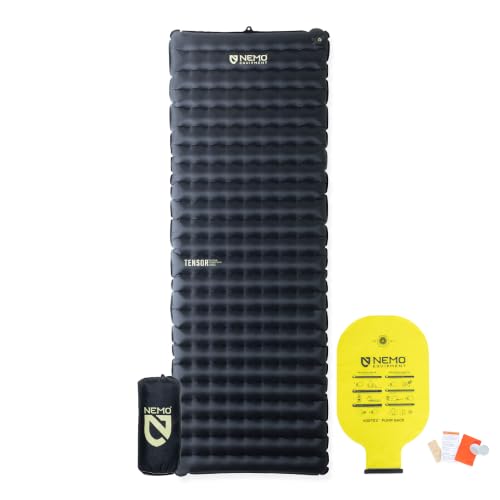
NEMO Equipment Tensor Extreme Sleeping Pad
What We Like
- Exceptionally high 8.5 R-value for deep cold
- Quiet, stable 3.5-inch cushioned loft
- Ultralight 1.4-pound pack weight
- Durable, puncture-resistant nylon fabric
Trade-offs
- Weighs 1.4 pounds, heavier than some ultralight pads.
- 3.5-inch thickness is less than many comfort-focused pads.
An R-value of 8.5 means this pad is built to handle temperatures where other insulated pads fall short. It achieves this through a specific design that suspends more insulating layers and uses four sheets of metallized film, a combination aimed squarely at mountaineering and winter camping. For someone whose trips extend into shoulder seasons or true alpine conditions, that number is the entire point, it’s the difference between sleeping and shivering. The 3.5 inches of loft adds stable comfort on uneven ground, and the fabric’s quietness is a genuine relief when every rustle echoes in a silent tent.
You pay for that warmth in grams, not ounces, but it’s still a premium ultralight product. At 1.4 pounds, it sits between the featherweight Therm-a-Rest NeoAir Xlite NXT and more comfort-oriented pads like the Exped MegaMat. That makes it a specialist. If your primary concern is brutal cold and every ounce in your pack, it’s a compelling choice. If you mostly camp in moderate temperatures, a pad with a lower R-value will save you weight and likely cost.
Hikenture R6.2 Insulated Sleeping Pad

What We Like
- High 6.2 R-value for cold-weather insulation
- Integrated pump sack for easy inflation
- Lightweight at 1.6 pounds for its warmth
- 3.2-inch thickness for pressure-free comfort
Trade-offs
- Less thick than the Exped MegaMat
An R-value of 6.2 provides serious insulation for genuine cold, not just a crisp autumn evening. The included pump sack turns inflation into a three-pump affair, a thoughtful touch for anyone who values their lung capacity after a long hike. It lands in a comfortable mid-range for weight, offering substantial warmth without going ultralight. This makes it a logical pick for campers who prioritize insulation and convenience over shaving every last ounce.
With an ASTM-tested R-value of 6.2, this pad delivers reliable insulation for cold-weather camping, so you can sleep warmly in three-season conditions. The trade-off for that warmth and the included inflation sack is a bit more packed bulk and weight than the most minimalist options. It suits the camper who prioritizes warmth and convenient setup over absolute packability.
Therm-a-Rest Basecamp Self-Inflating Sleeping Pad

What We Like
- High 6 R-value for all-season warmth
- WingLock valve inflates three times faster
- Thick thermal foam for comfort
- PFAS-free DWR coating on stuff sack
Trade-offs
- At 3.4 pounds, it is heavy for backpacking
- Requires 2-4 hours pre-inflation for best performance
A 6 R-value means this pad provides dependable insulation for cold-weather tent camping, turning a basic tent floor into a warm, insulated platform. It suits car campers who prioritize comfort and convenience over packability, thanks to its self-inflating design and substantial thermal foam. The WingLock valve makes setup notably quicker, a genuine luxury when you’d rather be sitting by the fire than huffing into a valve.
The trade-off is bulk and weight; this is a basecamp mat, not a backpacking one. It rolls up to a size comparable to a hefty sleeping bag, which will dominate a pack. For a more portable self-inflating option, the Exped MegaMat offers greater thickness in a slightly more compact package, though it uses a smaller pump sack.
Big Agnes Rapide SL Sleeping Pad

What We Like
- High 4.8 R-value for three-season warmth
- Ultralight double ripstop nylon and TPU construction
- Includes high-volume inflation sack for moisture-free setup
Trade-offs
- A 20-inch width is narrower than many comfort-focused pads.
- The regular size may be too short for campers over six feet tall.
An R-value of 4.8 means you can chase shoulder-season trips without sacrificing warmth for weight. It delivers substantial comfort in a package that barely tips the scale.
That comfort comes with a trade-off in packed size and setup time, the 4.2-inch height needs a fair bit of air. Compared to something like the Therm-a-Rest NeoAir Xlite NXT, you’re carrying a few more ounces for a significantly plusher feel. It’s a clear choice when you want to upgrade from a basic pad but aren’t willing to haul a heavier, bulkier mat like the Exped MegaMat.
Product photos
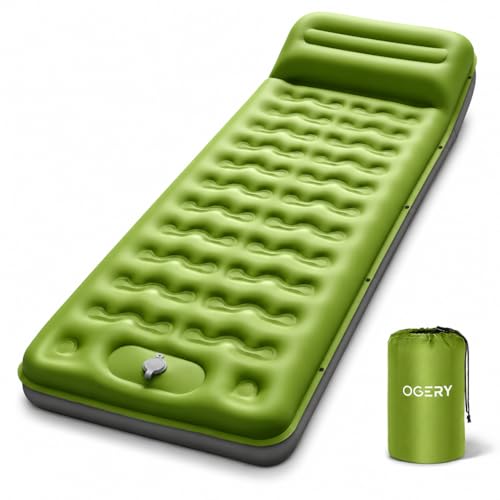
OGERY 6-Inch Extra-Thick Sleeping Pad
What We Like
- Six-inch thickness for elevated support
- Built-in foot pump for easy inflation
- Lightweight and packs down compactly
- Side buttons to connect two pads together
Trade-offs
- No R-value or insulation level is specified
- Requires careful ground protection against punctures
A six-inch thickness is the main event here, providing a notably elevated sleeping surface compared to most standard camping pads. This makes it a strong candidate for side sleepers or anyone whose comfort hinges on distance from the ground. The integrated foot pump is a clever solution that sidesteps the need for extra gear or lung power, and the whole package manages to stay surprisingly light and packable for its substantial loft. For the camper prioritizing a plush, bed-like feel on a budget, the specifications point directly to this pad.
This pad prioritizes thickness and ease of use, delivering a notably high sleeping surface that can cushion against uneven ground. Its design trades certain technical features common in specialized pads for this straightforward comfort. For instance, it provides no insulation rating, so its suitability for cold weather is undefined compared to pads like the Hikenture R6.2 which lists an R-value. Inflation depends entirely on the built-in foot pump, offering no alternative inflation method. It’s a comfort-first design that excels at its core promise of a thick, elevated sleep surface.
Product photos
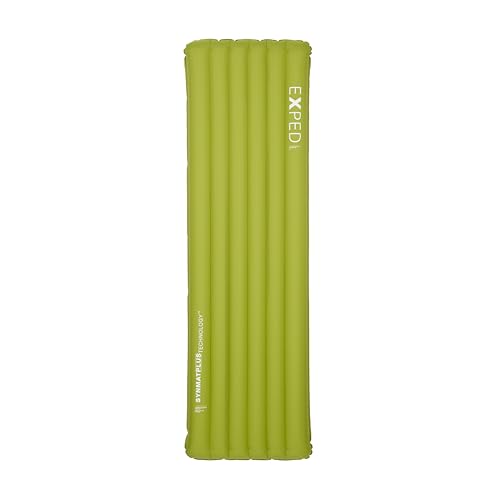
Exped Ultra 6.5R Lightweight Sleeping Pad
What We Like
- High 6.9 R-value for below-freezing warmth
- Uses recycled synthetic insulation and face fabric
- 3.5-inch depth with stability rails for comfort
- Complete kit includes moisture-free inflation system
Trade-offs
- At 20.5 inches wide, it's narrower than many car-camping mats
- Weighs 1.4 pounds, which is heavier than some ultralight air pads
- Synthetic insulation adds bulk compared to down-alternative fills
A 6.9 R-value delivers the warmth needed for frozen ground, making this a serious choice for backpackers in shoulder seasons or high elevations. The heat retention comes from Exped’s SYNMAT PLUS technology, which layers recycled synthetic insulation with reflective foil. That combination, paired with the recycled ripstop fabric, provides reliable warmth with a lower production footprint. It suits the backpacker who prioritizes ethical sourcing and all-season readiness without moving into expedition-grade gear.
With a 6.9 R-value rated for temperatures below freezing, the Exped Ultra 6.5R provides reliable warmth for all-season backpacking without a heavy pack penalty. Its 3.5-inch thickness and tapered comfort cradle rails offer deep cushioning that keeps sleepers centered on uneven ground. The pad uses recycled 20D ripstop face fabric, which reduces water, energy, and carbon use during production. For the ultralight hiker needing dependable insulation from summer highlands to frozen winter terrain, this pad delivers substantial warmth from its synthetic and foil layers in a manageable package.
Product photos
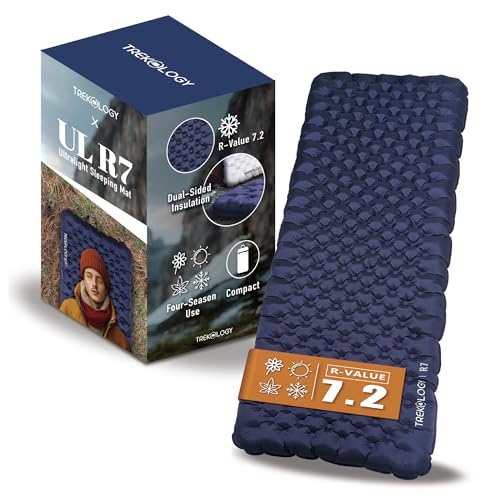
TREKOLOGY All-Season Sleeping Pad
What We Like
- High 7.2 R-value for all-season insulation
- Lightweight, compact packability for backpacking
- 330 lb weight capacity from durable 40D ripstop
Trade-offs
- No built-in pump or included inflation accessory
- Best suited for sleepers up to 5'11" in height
- 2.0 lb weight is not the lightest among ultralight pads
With a certified 7.2 R-value, this sleeping pad provides excellent insulation against ground chill for year-round comfort, a notable feature for a two-pound mat. It suits backpackers who want a single pad for various climates without the bulk of a dedicated winter model. The four-inch thickness offers superior support, which the brand notes is best suited for side and back sleepers.
Inflation requires your lungs or a separate pump bag, as no built-in pump is included. For a more streamlined ultralight experience, the Therm-a-Rest NeoAir Xlite NXT weighs one pound, but the Trekology pad maintains a higher thickness and a stated 330-pound weight capacity.
Product photos
Wevelel Memory Foam Sleeping Pad

What We Like
- 9.5 R-value provides superb all-season insulation
- Self-inflates rapidly with an upgraded dual-use valve
- Supportive 800 lb capacity and 3.1-inch thickness
Trade-offs
- At 6.5 pounds, it is heavier than most backpacking mats.
- Self-inflation still requires 20 seconds of manual effort.
The Wevelel pad’s 50D memory foam provides a higher density than the 19D foam in many other camping pads, which translates to a sleep surface with more resilience and even weight distribution. This design aims to reduce pressure points for a supportive feel. Its 9.5 R-value offers substantial insulation from cold ground, making the pad suitable for car campers or anyone who values a comfortable, insulated sleep platform.
A trade-off is its 6.5-pound weight, which is heavier than many pack-focused pads like the 1-pound Therm-a-Rest NeoAir Xlite NXT. This bulk comes from its 3.1-inch foam core and the wear-resistant, 50D stretch knit fabric surface, which is designed to be quiet during sleep. For drive-in camping or situations where pack weight is less critical, the pad’s construction prioritizes thickness and a claimed 800-pound support capacity over portability.
Product photos
How We Evaluated Bedding For Tent Camping
This evaluation is based on manufacturer specifications, expert comparisons, and patterns in owner feedback. Three criteria were prioritized: insulation (R-value) for warmth, thickness and support for comfort, and weight along with packability for transport. Ease of setup, including inflation methods and valve design, was also considered. This is a research-based evaluation that relies on documented specifications and consistent user reports.
What To Look For In Bedding For Tent Camping
The right bedding balances ground insulation, cushioning support, and practical transport. Your choice depends on if you are carrying it on your back or loading it into a car.
Focus on the R-value for warmth, the thickness and support for comfort, and the weight and packed size for portability. Your camping style dictates which factor matters most.
Insulation (R-Value)
The R-value measures a pad’s resistance to heat loss. A higher number means better insulation from the cold ground. For summer camping, an R-value of 2 to 4 may suffice. For three-season use, look for pads rated between 4 and 6. For winter or mountaineering, you’ll need a pad with an R-value of 6 or higher, like those designed for extreme cold camping. This spec is critical for warmth and is always listed by reputable brands.
Comfort & Support
Comfort is determined by thickness and internal design. A 2-inch pad may be sufficient for some, but side sleepers often prefer 3 inches or more to prevent hips and shoulders from bottoming out. Air pads with internal baffles or foam cores, like many top-rated models, provide stable support. Pure air pads without structure can feel bouncy and less supportive. Thickness also affects how high you sleep off the ground, which can be a factor for ease of getting up.
Weight & Packability
For backpacking, every ounce counts. Ultralight air pads can weigh under a pound and pack down to the size of a water bottle. Car camping pads prioritize comfort and can weigh several pounds, as pack size is less critical. Consider the packed dimensions; a bulky pad can consume too much space in a backpack. A lightweight camping mattress is essential for long hikes, while a heavier, thicker pad is a luxury for drive-up sites.
Check the included inflation system, some come with a pump sack for easy, moisture-free setup.
Look for a durable denier rating (like 30D or 75D) on the fabric to resist punctures.
Consider the valve design; some allow for faster inflation and deflation than others.
Verify the pad’s dimensions (length and width) to ensure it fits your sleeping style and tent footprint.
Read owner feedback on long-term durability and repair experiences.
Match the pad’s primary strengths, warmth, cushion, or low weight, to your most common camping scenario.
Bedding For Tent Camping Compared
The following table compares the key specifications of our top picks to help you see the differences at a glance.
| Product | Weight | R-Value | Thickness |
|---|---|---|---|
| Therm-a-Rest NeoAir Xlite NXT Sleeping Pad | 1.0 Pounds | 4.5 | 3 inches |
| Exped MegaMat Sleeping Pad | 4.6 Pounds | N/A | 4.0 inches |
| NEMO Equipment Tensor Extreme Sleeping Pad | 1.4 Pounds | 8.5 | 3.5 inches |
| Hikenture R6.2 Insulated Sleeping Pad | 1.6 Pounds | 6.2 | 3.2 inches |
| Therm-a-Rest Basecamp Self-Inflating Sleeping Pad | 3.4 pounds | 6 | 2 inches |
| Big Agnes Rapide SL Sleeping Pad | 1.1 Pounds | 4.8 | 4.2 inches |
| OGERY 6-Inch Extra-Thick Sleeping Pad | 2.4 pounds | N/A | 6 inches |
| Exped Ultra 6.5R Lightweight Sleeping Pad | 1.4 pounds | 6.9 | 3.5 inches |
| TREKOLOGY All-Season Sleeping Pad | 2.0 pounds | 7.2 | 3.9 inches |
| Wevelel Memory Foam Sleeping Pad | 6.5 Pounds | 9.5 | 3.1 inches |
Frequently Asked Questions
What is the best thing to sleep on when camping in a tent?
The best thing is an insulated sleeping pad or mattress. It provides essential cushioning from the hard ground and a critical thermal barrier. Options range from ultralight air pads for backpacking to thick, self-inflating mats for car camping. The choice depends entirely on whether you prioritize pack weight or sleep comfort.
What is the best bedding for camping?
The best bedding is a complete sleep system: a sleeping pad for insulation and cushioning, a camping quilt or sleeping bag for top warmth, and a camping pillow for head support. For the pad, focus on the R-value for your expected temperatures and the thickness that supports your sleeping position comfortably.
What is the most comfortable type of mattress to use in a tent?
The most comfortable type is typically a thick, self-inflating mat or a high-volume air pad with internal baffles. These designs, like many recommended for tent camping, offer stable, cradle-like support. Thicknesses of 4 inches or more prevent pressure points and mimic a bed-like feel, though they are often too heavy for backpacking.
What are some good camping bedding options?
Good options include insulated air pads, self-inflating mats, closed-cell foam pads, and even specialized air mattresses for camping. For top covers, consider camping blankets or quilts for adjustable warmth. Always pair your bedding with a groundsheet or footprint to protect the pad from punctures and moisture.
How important is a pad’s R-value for summer camping?
It remains important, but the required value is lower. In warm summer conditions, an R-value between 2 and 4 is usually sufficient. The primary role of the pad shifts from preventing heat loss to providing basic cushioning and a slight barrier against ground moisture. You can prioritize lower weight and pack size over maximum insulation.
The Bottom Line
The Therm-a-Rest NeoAir Xlite NXT is the best overall pick for backpackers who need reliable warmth without the weight. If you drive to your site and refuse to compromise on comfort, the Exped MegaMat is the clear choice. For campers on a budget who want maximum cushioning, the OGERY 6-Inch pad offers significant thickness at an affordable price. Your decision should start with the R-value you need for the climates you camp in, as this is the most critical factor for a warm night’s sleep.
