
10 Best Camping Bed Rolls in 2026
This post contains affiliate links. As an Amazon Associate, we earn from qualifying purchases.
For the best overall camping bed roll, we recommend the Therm-a-Rest MondoKing 3D Sleeping Pad for its exceptional cold-weather insulation and plush comfort. Our list also highlights the Exped MegaMat Max Sleeping Pad for luxury and the Therm-a-Rest Z Lite Sol Sleeping Pad for budget-minded backpackers. Choosing the right pad means balancing warmth, cushion, and pack size for your specific trip.
Top 10 Camping Bed Rolls in the Market
Certain content that appears on this site comes from Amazon. This content is provided "as is" and is subject to change or removal at any time.
The Best Camping Bed Rolls, Reviewed
Therm-a-Rest MondoKing 3D Sleeping Pad

What We Like
- Extremely high 7.0 R-value for severe cold.
- Thick 4.25-inch foam and air construction for plush comfort.
- Vertical sidewalls maximize the usable sleep surface.
Trade-offs
- At 4.38 pounds, it's heavy for backpacking.
- Packs to 26 inches long, requiring a sizable pack.
With a 7.0 R-value and 4.25-inch thickness, the Therm-a-Rest MondoKing 3D provides significant insulation for cold conditions and a substantial cushion against hard ground. Its StrataCore foam construction and stretch-knit top are designed to create a stable sleep surface. This makes the pad suitable for car or base campers who prioritize sleep quality over pack size.
The trade-off for that comfort is bulk and weight; at over four pounds and packing to nearly two feet long, it’s a commitment for your gear haul. If you need similar comfort but more sleeping width, the Exped MegaMat Max is a heavier alternative with a six-inch thickness. For anyone needing to cut weight drastically, the NEMO Tensor pads show how much lighter an insulated pad can be, though they sacrifice several inches of cushion.
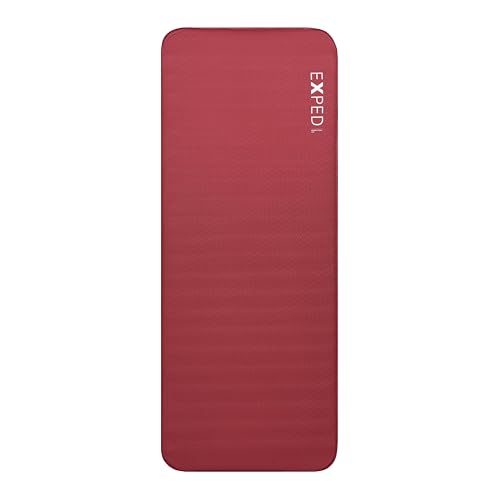
Exped MegaMat Max Sleeping Pad
What We Like
- Vertical sidewalls eliminate edge tapering
- Includes pump for personalized firmness adjustment
- Welded handles for easier transport
Trade-offs
- At 7.4 lb, it's heavy for backpacking
- Its bulk may not fit in small cars packed with gear
Open-cell foam coring and vertical sidewalls give this pad a flat, expansive surface that reviewers report feels like a guest bed. Its width provides plenty of space for two campers, and the design has enough structure to keep one person’s shifting from affecting the other. For car campers or anyone using an SUV as a sleeping area, this delivers a level of pressure relief and plushness that makes long nights outdoors comfortable.
The trade-off for that comfort is significant bulk and weight, which rules it out for any trip where you carry your gear. If your priority is maximum cushion and you have the vehicle space, the MegaMat Max is a clear choice. Reviewers note its bulk might not fit in a smaller car already crammed with camping gear.
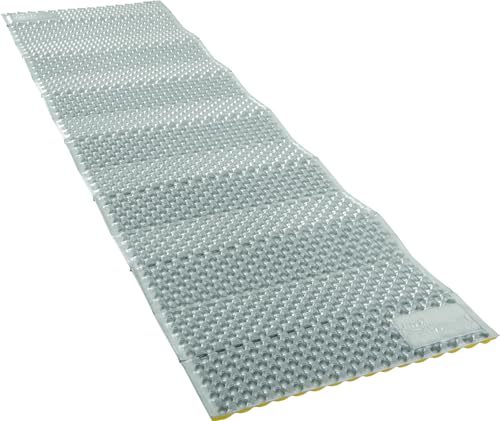
Therm-a-Rest Z Lite Sol Sleeping Pad
What We Like
- ThermaCapture coating increases warmth
- Folding accordion-style for easy packing
- Durable, denser foam on bottom
Trade-offs
- 0.8-inch thickness offers minimal cushion
- 20-inch width is narrower than most pads
- R-Value of 2.6 limits use to mild seasons
It’s a durable, closed-cell foam pad that needs no inflation and won’t spring a leak, which makes it a dependable, economical choice for minimalist backpackers or anyone who wants a reliable, fuss-free ground layer. The reflective ThermaCapture coating adds meaningful warmth for its category, bumping the R-value to 2.6, so it handles cool nights better than a basic mat.
The trade-off is in comfort, as the 0.8-inch profile feels firm, and the 20-inch width leaves little room to move. It’s a purpose-built tool for saving weight and avoiding complexity. If you want more cushion, the NEMO Tensor All-Season pad offers 3.5 inches of inflatable comfort, though it requires care to avoid punctures.
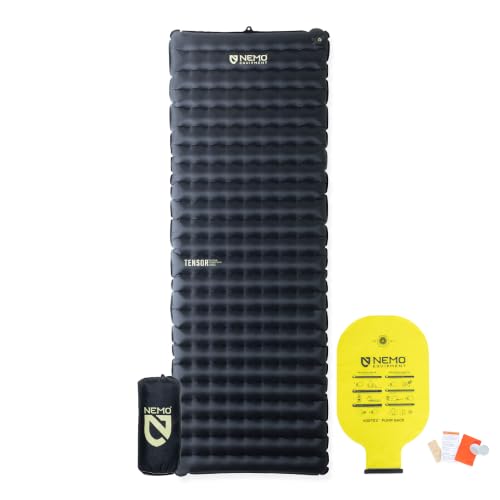
NEMO Equipment Tensor Extreme Sleeping Pad
What We Like
- 8.5 R-value for extreme cold
- Lightweight at 1.4 pounds
- 3.5-inch cushioned loft for comfort
- Quiet, bluesign-approved fabric
Trade-offs
- Thinner than the Big Agnes Captain Comfort Deluxe
- Shorter than the Therm-a-Rest MondoKing
An R-value of 8.5 means this pad is built to isolate you from frozen ground on serious winter expeditions. Its Apex baffle design suspends insulating layers, and four layers of floating Thermal Mirror film provide quiet insulation. At 1.4 pounds, the warmth-to-weight ratio suits backpackers and mountaineers who need guaranteed warmth without bulk.
That focus on warmth-to-weight involves trade-offs. The 3.5 inches of loft provides stable, cushioned comfort, but it is not as thick as the 6-inch Exped MegaMat Max. According to its Amazon listing, this pad is made for extreme cold, mountaineering, and trekking.
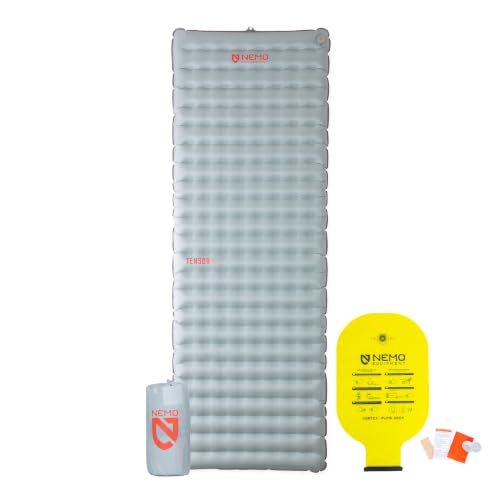
NEMO Equipment Tensor All-Season Sleeping Pad
What We Like
- Spaceframe baffles for unparalleled stability
- Quiet, insulated layers for warmth without weight
- 3.5 inches of cushioned, stable loft
- Lightweight, puncture-resistant nylon construction
Trade-offs
- 3.5-inch thickness is modest next to 6-inch pads
- 25.2-inch width is narrower than true double-wide mats
The Tensor’s 3.5 inches of loft is supported by a Spaceframe baffle system, which eliminates the springy bounce of simpler air pads and creates a stable, flat sleeping surface. That makes it a standout for side sleepers and restless campers who want cushion without the sway. Its quiet, thermally efficient insulation and minimal weight suit backpackers who prioritize warmth and pack size but refuse to sacrifice a solid night’s sleep.
You trade some plushness for that stability and low weight. The Therm-a-Rest MondoKing 3D, for example, offers a thicker, self-inflating foam core that feels more like a home mattress, but it weighs over three times as much. Choose the Tensor All-Season when your priority is a steady, supportive sleep platform that won’t drag down a pack, and look elsewhere if your car-camping luxury demands maximum sink-in thickness.
Product photos
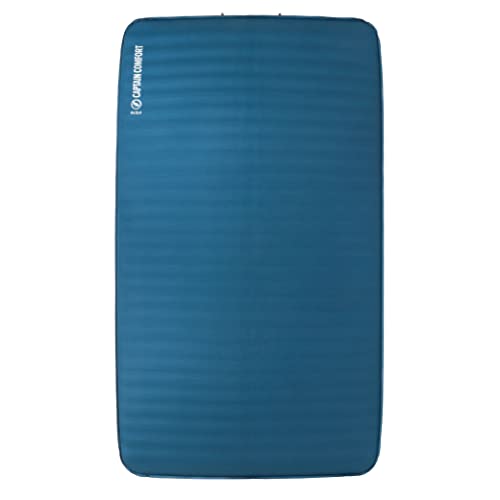
Big Agnes Captain Comfort Deluxe Pad
What We Like
- Exceptionally wide 41-inch sleeping surface
- High R-value of 8.9 for all-weather warmth
- Plush 5-inch cushion with vertical side walls
- Dual valves for quick inflation and firmness adjustment
Trade-offs
- At 7.5 pounds, it is heavier than most camping pads
- Requires a specific halving and rolling technique for best pack size
At 41 inches wide, this pad offers a sleeping area larger than many standard camping mats, so you have more room to move. Its 5-inch vertical side walls create a stable, generous sleeping surface. An R-value of 8.9 provides high insulation for warmth in cold conditions, and the stretch top is designed for a quiet, soft sleeping surface.
That comfort results in a packed size of 9 by 21.5 inches and a weight of 7.5 pounds, so it’s best for car camping where bulk is less critical. Compared to the NEMO Tensor All-Season pad, which weighs 1.3 pounds, this model is heavier but provides more thickness and width. The design prioritizes maximum warmth and comfort with high-density foam and a self-inflating core.
Product photos
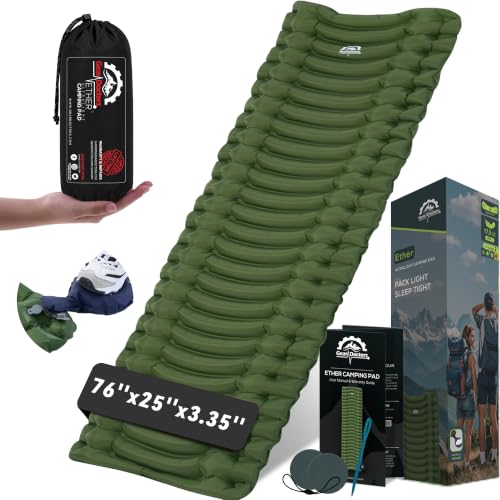
Gear Doctors Ether Ultralight Sleeping Pad
What We Like
- Packs to the size of a water bottle
- Includes a foot pump for lung-free inflation
- Lifetime replacement guarantee
- Ergonomic U-shape design prevents slipping
Trade-offs
- R-Value of 2 limits use to spring and summer
- At 3.35" max thickness, it's thinner than many car-camping pads
A 17.5-ounce sleeping pad that packs to the size of a water bottle makes a compelling case for any backpacker counting grams. The included foot pump lets you set it up in under ninety seconds without any breathless huffing, and its contoured U-shape design provides enough stability for side sleepers. This is a clear choice for warm-season backpackers who prioritize saving space in their pack over plush thickness.
With an R-value of 2, this pad is designed for spring and summer use, not for colder conditions. Compared to pads like the 7.4-pound Exped MegaMat Max, the Gear Doctors Ether prioritizes a 17.5-ounce weight and bottle-sized packability for backpackers. Its construction from 20D nylon and TPU fabric supports a lifetime replacement guarantee, aiming to balance durability with its ultralight design.
Product photos
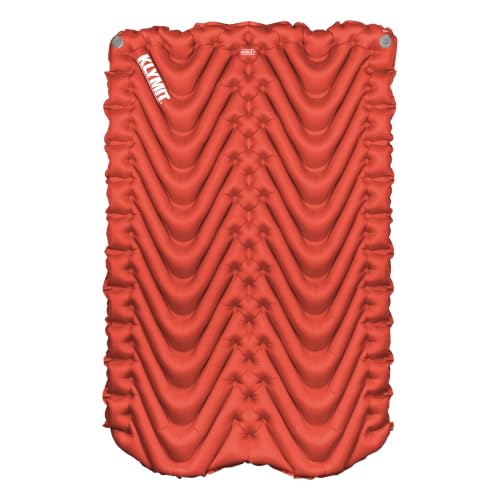
Klymit Insulated Double V Sleeping Pad
What We Like
- Very wide 47-inch surface for two sleepers
- Body-mapped V design supports all sleep positions
- Centering side rails help prevent rolling off
- Loft-enhancing welds improve sleeping bag insulation
Trade-offs
- At 47 inches wide, it requires a large tent footprint
- Requires manual inflation with 30-40 breaths
At 47 inches wide, this pad creates a true double sleeping surface, eliminating the gap that can separate two campers. Its body-mapped V chambers and integrated side rails aim to provide consistent support and keep sleepers centered on the pad. The design is intended for dedicated adventurers seeking refined comfort and dependable performance on demanding trips.
Its ASTM R-value is 2.4. For a much thicker, more substantial car-camping bed, the Exped MegaMat Max is 6 inches thick and weighs 7.4 pounds. The Klymit pad offers shared space without that level of bulk, but research mentions that bedding must still match the forecasted temperatures to prevent feeling cold.
Product photos
Stansport Pack Lite Foam Pad

What We Like
- Extremely lightweight at half a pound
- Includes straps for easy roll-up and transit
- One-year warranty against defects
Trade-offs
- Thin 3/8-inch pad offers minimal cushioning
- Narrow 19-inch width suits minimalist sleepers
At half a pound, the Stansport Pack Lite is for the backpacker who measures comfort in ounces carried, not inches of padding. Its closed-cell foam construction is a simple, reliable barrier against ground dampness and punctures, making it a set-and-forget foundation for a minimalist sleep system. This is the pad you choose when every item in your pack must justify its weight, and a bare-bones bed roll does.
At just half a pound, the Stansport Pack Lite is among the lightest pads available, making it a clear choice for ultralight backpackers counting every ounce. Its 3/8-inch closed-cell foam provides a basic barrier against ground dampness and cold, not plush comfort. The Therm-a-Rest Z Lite Sol is a comparable foldable foam pad with a slightly thicker 0.8-inch profile and higher 0.9-pound weight, offering a different balance of cushion and load.
Product photos
Coleman Silver Springs Self-Inflating Pad

What We Like
- High R-Value 5+ foam for warmth
- Durable PVC-coated, abrasion-resistant shell
- Intuitive valve enables quick inflation
- Weighs under four pounds for portability
Trade-offs
- 20-inch width is narrower than most standard pads
- At 4 pounds, it's heavier than many insulated air pads
An R-Value of 5+ is the standout feature here, providing a quantified measure of insulation that helps retain body warmth. This pad weighs under four pounds, a weight that facilitates transport from a vehicle to a campsite. Its self-inflating design with an intuitive valve allows the pad to inflate in seconds, and the durable PVC coating offers higher abrasion resistance for use on rough ground.
The trade-off is in the proportions. At 20 inches wide and 3 inches thick, it offers a narrower, firmer sleeping platform compared to a plush option like the Big Agnes Captain Comfort Deluxe Pad. For a dedicated backpacker, the 4-pound weight is also a significant load when ultralight pads like the NEMO Tensor All-Season exist. But if your main concern is staying warm without breaking the bank, this pad’s specs deliver where it counts.
How We Evaluated Camping Bed Rolls
Our evaluation is based on manufacturer specifications, expert round-up reviews, and patterns in owner feedback across major retailers. We focused on criteria most critical for a good night’s sleep outdoors: insulation measured by R-value, thickness and construction for comfort, and packed size and weight for portability. A key limit of this research-led approach is that we cannot verify long-term durability claims or personal comfort preferences, which can vary by sleeper.
What To Look For In Camping Bed Rolls
Selecting a camping bed roll involves matching its features to your primary activity, whether that’s backpacking or car camping. The right choice balances insulation, comfort, and portability.
Prioritize insulation (R-value) for cold weather, thickness for comfort, and packed size for backpacking. Your camping style, car camping versus backpacking, determines which trade-offs you can accept.
Insulation (R-Value)
An R-value quantifies a pad’s resistance to heat loss; a higher number means better insulation. For summer camping, an R-value around 2 is sufficient, while three-season use typically requires an R-value of 4 or higher. For extreme cold or winter camping, look for pads with an R-value of 7 or more, like our top picks for severe conditions. Your sleeping bag and the ground temperature also factor into your overall warmth.
Comfort & Thickness
Comfort is largely determined by a pad’s thickness and internal construction. Thicker pads, often 3 inches or more, provide better cushioning for side sleepers and prevent hips and shoulders from touching the ground. Construction matters too: vertical sidewalls maximize the usable sleep surface, while baffle designs like spaceframes can improve stability and reduce the feeling of rolling off.
Portability & Packed Size
For backpackers, weight and packed size are paramount. Ultralight foam pads can weigh under a pound and pack flat, while thicker self-inflating or air pads offer more comfort at the cost of more bulk. Car campers can prioritize comfort and size over portability, opting for heavier, plusher pads that may pack down to a larger volume.
- Check the packed dimensions to ensure it fits in your backpack or vehicle.
- Consider if the pad includes a pump, repair kit, or storage sack.
- Evaluate the inflation method: self-inflating valves, manual breath, or a separate pump.
- For couples, measure your tent’s floor space to ensure a double-wide pad will fit.
- Verify the fabric’s durability and any included warranty against defects.
Your primary activity, backpacking or car camping, should guide your first decision, as it dictates the acceptable trade-offs between comfort and portability.
Camping Bed Rolls Compared
The table below summarizes key specifications to help you compare these ten camping bed rolls at a glance.
| Product | Weight | Dimensions (LxW) | Thickness |
|---|---|---|---|
| Therm-a-Rest MondoKing 3D Sleeping Pad | 4.4 Pounds | 77.0 x 25.0 inches | 4.2 inches |
| Exped MegaMat Max Sleeping Pad | 7.4 Pounds | 77.6 x 30.3 inches | 6.0 inches |
| Therm-a-Rest Z Lite Sol Sleeping Pad | 0.9 Pounds | 72.0 x 20.0 inches | 0.8 inches |
| NEMO Equipment Tensor Extreme Sleeping Pad | 1.4 Pounds | 72.0 x 25.2 inches | 3.5 Inches |
| NEMO Equipment Tensor All-Season Sleeping Pad | 1.3 Pounds | 72.0 x 25.2 Inches | 3.5 Inches |
| Big Agnes Captain Comfort Deluxe Pad | 7.5 Pounds | 72.0 x 41.0 inches | 5.0 inches |
| Gear Doctors Ether Ultralight Sleeping Pad | 1.0 pounds | 72.0 x 22.0 inches | 3.2 Inches |
| Klymit Insulated Double V Sleeping Pad | 3.3 pounds | 74.0 x 47.0 inches | 3.0 inches |
| Stansport Pack Lite Foam Pad | 0.5 Pounds | 72.0 x 19.0 inches | 0.5 inches |
| Coleman Silver Springs Self-Inflating Pad | 4.0 Pounds | 72 x 20 in | 3 in |
Frequently Asked Questions
What is the warmest camping sleeping pad?
The warmest pads have the highest R-values, designed for severe cold. Our research highlights models like the NEMO Tensor Extreme with an R-value of 8.5 and the Big Agnes Captain Comfort Deluxe with an R-value of 8.9. These are engineered for winter conditions and mountaineering, where ground heat loss is a major concern.
Can I use a camping pad for side sleepers?
Yes, but you need sufficient thickness to cushion pressure points. Side sleepers generally need a pad at least 3 inches thick to prevent hips and shoulders from bottoming out. Pads with vertical sidewalls and stable baffle designs, like the NEMO Tensor All-Season, are often recommended for their supportive, even surface.
What is the difference between a foam pad and an air pad?
Foam pads are simple, durable, and provide consistent insulation but are less compact and offer minimal cushioning. Air pads are inflatable, offering greater thickness and comfort in a smaller packed size, but they can be prone to punctures and may require manual inflation. Some hybrid models combine foam and air for a balance of warmth and comfort.
How do I choose between a single and double camping pad?
Choose a single pad for solo trips to save weight and space. A double pad is ideal for couples car camping, offering a shared, stable sleep surface. Be sure to check that a double pad’s width, which can exceed 40 inches, will fit within your tent’s floor dimensions.
Are self-inflating pads worth it?
Self-inflating pads, which use open-cell foam to expand and draw in air, offer a good balance of comfort and convenience for car camping and base camping. They are typically warmer and more supportive than basic air pads but are heavier and bulkier when packed, making them less ideal for ultralight backpacking.
The Bottom Line
The Therm-a-Rest MondoKing 3D Sleeping Pad is our best overall pick, ideal for car campers and base campers who prioritize maximum insulation and mattress-like comfort above packability. Budget-conscious backpackers should look at the Therm-a-Rest Z Lite Sol, while couples seeking a spacious sleep surface will find the Klymit Insulated Double V a strong contender. Ultimately, matching the pad’s R-value and packed size to your specific camping style is the single most important factor for a restful night outdoors.
