10 Best Pillows For Sleep Apnea Without Cpap in 2026
This post contains affiliate links. As an Amazon Associate, we earn from qualifying purchases.
Our best overall pillow for sleep apnea without CPAP is the Bekweim Adjustable Wedge Pillow for its firm, full-torso elevation. For dedicated side sleepers, we recommend the BDEUS Cervical Sleep Apnea Pillow, while the Bedluxe Adjustable Wedge Pillow Set is ideal for customizable, multi-position support.
These pillows aim to improve breathing by encouraging better sleep postures. Many people with snoring or mild positional sleep apnea find relief by changing their head and neck position at night. This guide was compiled from manufacturer specifications, expert analysis, and patterns in owner feedback to help you select a supportive pillow that fits your sleeping habits.
Top 10 Pillows For Sleep Apnea Without CPAP in the Market
Certain content that appears on this site comes from Amazon. This content is provided "as is" and is subject to change or removal at any time.
The Best Pillows For Sleep Apnea Without CPAP, Reviewed
Bekweim Adjustable Wedge Pillow
What We Like
- Adjustable height offers two distinct incline options
- Full torso elevation for better airway alignment
- Supportive foam structure resists flattening overnight
- Cooling, washable cover simplifies maintenance
Trade-offs
- At 7.3 pounds, it is heavier than many wedge pillows
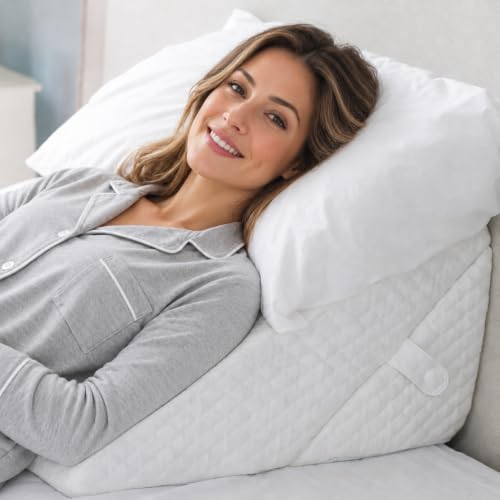
The adjustable height from 12 to 9 inches provides a concrete, customizable incline, which is the central mechanism for managing sleep apnea symptoms without a CPAP. This pillow suits someone who needs a firm, structured elevation for their entire upper body to promote better airflow, not just a head lift. Its dual-layer foam construction is designed to hold that incline steady through the night, which is critical for the positional therapy approach.
The trade-off for that stability is a substantial footprint and a fixed wedge shape that doesn’t cater to side sleeping or frequent repositioning. Compared to a more compact cervical pillow like the BDEUS, which cradles the neck in specific sleeping postures, the Bekweim is a dedicated incline platform. It makes its case through sheer, adjustable elevation rather than nuanced ergonomics.
BDEUS Cervical Sleep Apnea Pillow

What We Like
- Butterfly contour promotes open airway alignment.
- Generous side zone accommodates shoulder and arm.
- Dual-height design offers precise spinal alignment.
- Cooling cover reduces heat buildup during sleep.
Trade-offs
- Corrective design may limit free turning at night.
- Requires a brief break-in period for body adaptation.
- Specifically engineered for side sleeping posture.
A 5.1-inch firm side and a dedicated shoulder zone put this pillow’s design firmly in the corner of side sleepers. The butterfly contour cradles the neck to maintain an open airway, which is the core mechanical principle for reducing snoring and apnea events without a machine. It’s built for someone who sleeps predominantly on their side and needs that targeted lift to keep their spine in a neutral line from head to hips.
The manufacturer notes this posture-correcting design may limit free turning at night. For a dedicated side sleeper, the trade-off is alignment support for reduced movement. Compared to a wedge pillow like the Bekweim Adjustable Wedge Pillow, which raises your entire upper body, the BDEUS pillow focuses its support specifically on the head and neck.
Product photos
Kölbs Bed Wedge Pillow

What We Like
- Memory foam top layer for plush comfort
- Medical-grade foam core for firm support
- Stylish jacquard cover avoids clinical look
- Designed for full upper body alignment
Trade-offs
- Fixed 7.5-inch height lacks adjustability
- Medical focus may be firmer than some prefer
A 1.5-inch memory foam top layered over a medical-grade foam wedge gives this pillow a distinct feel, where the soft top conforms while the firm core maintains a precise incline. According to the manufacturer, this design is intended for chronic care positioning, providing structured elevation and anatomical support for long-term conditions like COPD, asthma, and heart failure. The focus is on full upper body alignment, unlike standard bed wedges designed primarily for basic head incline.
The trade-off for that medical-grade support is a fixed 7.5-inch slope, which is a commitment. If you need to fine-tune your angle night-to-night, an adjustable model like the Bekweim Wedge Pillow offers more flexibility. However, the Kölbs design prioritizes consistent torso elevation and alignment for chronic care, as described by the manufacturer, which differs from the purpose of a basic wedge.
Product photos
Pyramid Pillow Anti Snoring Pillow
What We Like
- 9.5° incline promotes airway alignment
- Medium-firm memory foam balances support and comfort
- Removable, machine-washable cover for easy maintenance
- Adjustable height based on sleeping position
Trade-offs
- Narrow 11.8-inch width limits head movement for side sleepers
- Specific incline angle may not suit all sleep postures
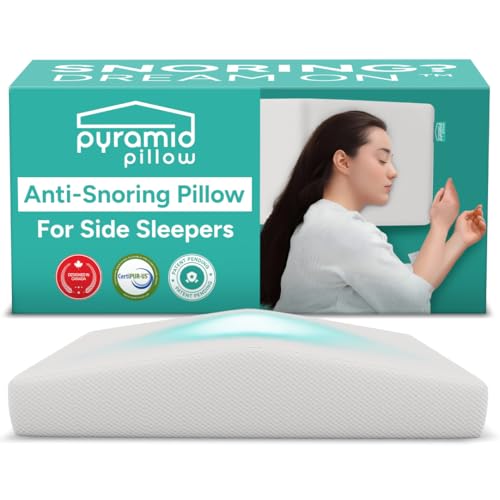
A 9.5-degree incline is the core of this design, gently tipping the head to encourage a more open airway without the bulk of a full wedge. It’s built for side sleepers who want a subtle, pillow-based intervention, using medium-firm memory foam to cradle the neck while maintaining that critical angle. This approach suits someone seeking a snoring remedy that feels closer to a traditional pillow, where the support comes from the shape rather than dramatic elevation.
The design’s narrow width requires you to stay fairly centered to benefit from the incline, which can feel restrictive if you shift around a lot. Compared to a broader wedge like the Kölbs Bed Wedge Pillow, which measures 24 inches wide, the Pyramid Pillow provides a more localized form of support. It is designed specifically for side sleepers to encourage comfortable airflow through head and neck positioning.
Bedluxe Adjustable Wedge Pillow Set

What We Like
- Dual-layer memory foam for contouring and stable support
- Flippable base provides lumbar, knee, or ankle support
- Removable cover and side pockets add daily convenience
Trade-offs
- Connected base cushions are not detachable
- Requires 24-48 hours for full foam expansion
- Needs placement against a wall or headboard for stability
Its adjustable 10-in-1 design primarily eases flat-lying discomfort after surgery and delivers elevated support for sleeping, reading, or working in bed. The set includes one independent head bolster and one connected base cushion that can be flipped for lumbar or knee support, allowing customized positioning without shifting. A dual-layer memory foam construction uses a firm high-density base for stable incline support that maintains its shape with long-term use.
The triangle base cushions are non-detachable, which prevents spacing them independently across a bed. For stability during use, the wedge should be placed against a wall, headboard, or sofa back, a requirement that can limit placement flexibility on some sleeping surfaces.
Product photos
Sasttie Adjustable Wedge Pillow Set

What We Like
- Dual-layer certified memory foam for contour and support
- Adjustable height with detachable neck bolster
- Machine-washable cover with L-shaped zip
- Designed to reduce snoring and acid reflux
Trade-offs
- At 22 x 22 inches, surface area is smaller than some wedges
- Requires 24-48 hours to expand fully from packaging
- Light 'new-foam' scent may require ventilation
Its dual-layer construction with certified foams creates a defined, supportive incline that holds its shape through the night. This set suits someone who values material safety and wants targeted, adjustable support for both the torso and neck from a single system, not just a basic wedge.
The trade-off is its compact 22-inch square footprint, which is both narrower and shorter than the broader Bekweim Adjustable Wedge Pillow. That makes the Sasttie a better fit for someone who doesn’t need the extra real estate, prioritizing certified materials and a versatile two-piece design over maximum surface area.
Product photos
Sleepnitez Memory Foam Wedge Pillow

What We Like
- Extra-wide surface for turning without slipping
- Thick memory foam layer molds to body contours
- Ultra-thin tapered edge prevents a harsh drop-off
- Breathable Tencel cover promotes cooling air circulation
Trade-offs
- Fixed 8-inch height offers no adjustability
- Larger footprint requires significant bed space
- Single foam density may not suit all firmness preferences
The 3.25-inch memory foam top layer is what separates this wedge from a basic foam ramp. That depth allows it to properly cradle your shoulders and neck, which is critical for keeping your spine aligned when elevated. If you need a wedge primarily for comfort and pressure relief alongside elevation, say, for managing acid reflux alongside neck pain, this design makes sense. The generous width and length mean you’re less likely to roll off, a common complaint with narrower models.
The incline is a fixed 8 inches, unlike adjustable models like the Bekweim. This single-height design offers a consistent slope. The thin edge of the wedge measures 0.2 inches and is described as super soft, so it blends into the mattress instead of creating a harsh drop-off.
Product photos
Cozymaker Cooling Wedge Pillow

What We Like
- Certified foams ensure material safety and quality
- Cooling cover reduces skin temperature by 2-5°C
- Removable, washable cover with side storage pockets
- Moderate 7.5-inch incline for full-body elevation
Trade-offs
- Fixed height lacks the adjustability of some wedge sets
- Foam insert cannot be washed, only the cover
- Requires 48-hour off-gassing period after unboxing
The Cozymaker pillow has a 7.5-inch height, which provides a moderate incline suitable for the head and upper body. Its CertiPUR-US and Oeko-Tex certifications indicate verified material safety. The product description lists it as applicable for snoring and acid reflux, offering a certified option for those conditions.
The trade-off is the fixed height. While the 7.5 inches is a sensible middle ground, it won’t suit someone who needs a steeper angle, like the adjustable 9-12 inch Bekweim Wedge Pillow. Its square 24-inch width is versatile for sleeping or propping up to read, but it’s narrower than some full-torso support wedges. For a person who wants a certified, cooling incline pillow that’s ready to use out of the box, after the 48-hour airing period, this one covers the essentials without fuss.
WENGTY Ergo Cervical Pillow
What We Like
- Dual-height design accommodates back and side sleeping
- Breathable ice silk cover for cooling sleep surface
- Contoured shape fills shoulder gap for spinal alignment
- Removable, machine-washable cover simplifies hygiene
Trade-offs
- Requires 24-48 hour expansion period after unpacking
- Memory foam may retain a slight initial odor
- Focused cervical design may not suit all stomach sleepers
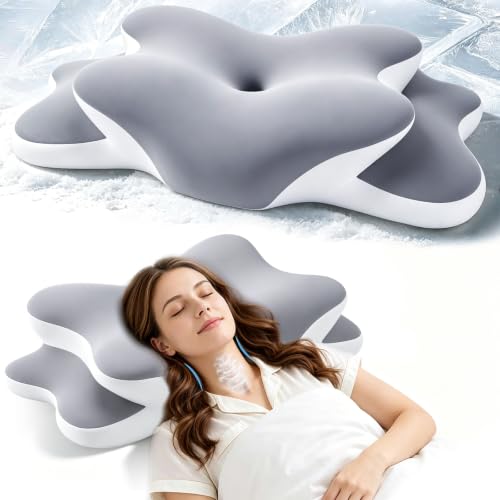
The dual-height ergonomic support is the core feature here, letting you switch between a lower profile for back sleeping and a higher loft for side sleeping. This makes it a versatile choice for someone whose sleep position varies, as it aims to maintain neutral spine alignment in either case. The contoured shape is engineered to support open airways and fill the shoulder gap, which is the primary mechanism suggested for reducing snoring. It’s a mid-range option built for those who need structured, pressure-relieving support but still want the adaptive feel of memory foam.
A key consideration is the initial setup and material behavior. Since it arrives compressed for shipping, the pillow needs 24 to 48 hours to fully expand, so you must plan ahead. The memory foam may also have a slight initial smell, though the manufacturer states this fades quickly with airing. Unlike wedge pillows designed for full-torso elevation, such as the Bekweim model, this pillow uses a contoured, cervical shape to cradle the head and neck.
Product photos
Rioicy Ergonomic Cervical Pillow
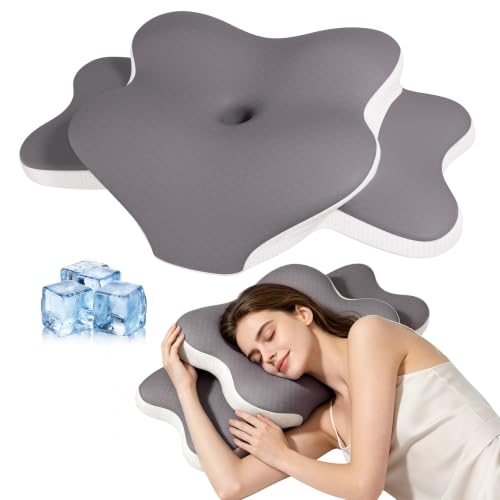
What We Like
- Dual-height design suits side and back sleepers
- Contour shape supports spine alignment
- Cooling cover helps regulate temperature
- Built-in armrest grooves for shoulder relaxation
Trade-offs
- Spot-clean only foam core complicates long-term maintenance
- Specific contour shape may not suit all sleeping positions
A dual-height contour is the decisive feature here. You can flip between a higher side for sleeping on your side and a lower side for your back, which directly addresses the positional needs common with sleep apnea. The Rioicy pillow suits someone seeking a traditional pillow shape with integrated cervical support, using its memory foam to cradle the head and neck in an attempt to keep the airway open. Its cooling cover and armrest grooves add thoughtful touches for overnight comfort.
With a height of just 0.1 inches, the Rioicy pillow provides a minimal cervical lift instead of a significant incline. This makes it unsuitable as a wedge pillow for raising the head to address sleep apnea symptoms. It is designed for users who want structured neck support without the steep angle of a dedicated wedge.
Product photos
How We Evaluated Pillows For Sleep Apnea Without CPAP
This guide is based on a review of product specifications, manufacturer details, and expert recommendations from medical and sleep publications. We examined patterns in user feedback concerning long-term support, comfort, and ease of use. The key criteria were a pillow’s ability to maintain airway alignment through its shape or angle, its suitability for specific sleeping positions, and the quality and maintenance of its materials. Our findings rely on documented features and the reported experiences of users and experts.
What To Look For In Pillows For Sleep Apnea Without CPAP
The goal is to find a pillow that encourages a sleeping position where gravity helps keep your airway open. This often means elevation for back sleepers or precise alignment for side sleepers.
Look for a pillow that raises your upper body or contours to your neck to prevent chin-to-chest positioning, a common cause of airway narrowing. Side sleeping is clinically supported for reducing apnea events, so consider pillows designed to maintain that posture.
Elevation And Incline
For back sleepers, elevation is key. A wedge pillow lifts your entire upper torso, using gravity to keep the tongue and soft palate from collapsing backward. Research shows this is also the standard non-medication strategy for managing acid reflux, which often co-occurs with sleep apnea. The incline angle matters; a steeper wedge provides more lift, while a gentler slope may feel more natural. Some of the best wedge pillows for sleep apnea relief offer adjustable heights, letting you fine-tune the elevation.
Support For Side Sleeping
Side sleeping is the most recommended position for reducing obstructive sleep apnea severity. When you’re on your side, the tongue falls sideways instead of backward. A good pillow for this position fills the gap between your ear and shoulder to keep your neck straight and prevent downward bending. Contoured cervical pillows or designs with a higher ridge on one side provide this targeted support. Our guide on the best sleep apnea pillows for side sleepers explores this further. It’s crucial that the pillow accommodates your shoulder to avoid misalignment.
Adjustability And Firmness
Your needs may change, so adjustability is a valuable feature. Some pillows let you add or remove foam layers to change the height, while others have a flippable design offering two distinct firmness levels. A pillow that is too soft will allow your head to sink, potentially pushing your chin toward your chest and narrowing the airway.
Conversely, a pillow that is too firm might create pressure points. Memory foam often provides a balance, contouring to your shape while offering consistent support. Many of the top pillows for snoring and apnea include adjustable elements.
Practical Checks
- Ensure the cover is removable and machine-washable for easy hygiene.
- Check the pillow’s dimensions against your bed size, as some wedges have a large footprint.
- Allow for a break-in period if the pillow uses memory foam, which may need 24-48 hours to fully expand.
- Consider a cooling cover or breathable materials if you tend to sleep hot.
- Verify the foam certifications if you have material sensitivities or prefer eco-friendly options.
The most effective pillow is one you’ll use consistently, so prioritize comfort alongside therapeutic design.
Pillows For Sleep Apnea Without CPAP Compared
The following table compares key features of our top picks to help you see the differences at a glance.
| Product | Height/Incline | Core Material | Cover Feature | Dimensions (LxW) |
|---|---|---|---|---|
| Bekweim Adjustable Wedge Pillow | 12" and 9" | Foam base, memory foam top | Removable, washable polyester | 24" x 32" |
| BDEUS Cervical Sleep Apnea Pillow | 5.1" (side) / 4.7" (back) | High-density memory foam | Removable cooling cover | 23.6" x 14.5" |
| Kölbs Bed Wedge Pillow | 7.5" | High-density medical-grade foam | Removable jacquard | 24" x 24" |
| Pyramid Pillow Anti Snoring Pillow | 9.5° incline | Medium-firm memory foam | Removable polyester | 23.6" x 11.8" |
| Bedluxe Adjustable Wedge Pillow Set | 9&12 Inch | Dual-layer memory foam | Removable, machine-washable | 22" x 22" |
| Sasttie Adjustable Wedge Pillow Set | 9'' and 12'' | 40D & 25D memory foam | Breathable air layer | 22" x 22" |
| Sleepnitez Memory Foam Wedge Pillow | 8" | N/A | Tencel with zip | 27.2" x 25.2" |
| Cozymaker Cooling Wedge Pillow | 7.5-inch | 1.2" memory foam top, 6.3" foam core | Removable, washable, cooling fabric | 24" x 24" |
| WENGTY Ergo Cervical Pillow | Dual-loft design | Slow-rebound memory foam | Removable ice silk | 25.6" x 15.7" |
| Rioicy Ergonomic Cervical Pillow | Dual-height contour | High-density memory foam | Removable cooling ice-silk | 10" x 5" |
Frequently Asked Questions
What is the best pillow for sleep apnea without using a CPAP machine?
The best pillow depends on your primary sleep position. For back sleepers needing full upper-body elevation, a firm wedge pillow like our best overall, the Bekweim Adjustable Wedge Pillow, is often most effective. For strict side sleepers, a contoured cervical pillow like the BDEUS Cervical Sleep Apnea Pillow is designed to maintain spinal alignment and keep the airway open.
Do sleep apnea pillows work without a CPAP machine?
They can help reduce symptoms for some people, particularly those with positional obstructive sleep apnea or habitual snoring. These pillows work by encouraging a sleep posture that minimizes airway obstruction, such as side sleeping or elevated back sleeping. They are not a cure for moderate to severe sleep apnea and should not replace a doctor’s prescribed treatment plan.
Is there a sleep apnea pillow that really works?
Certain pillow designs have been shown to help. Wedge pillows that raise the upper body can reduce snoring and acid reflux. Contoured pillows that support side sleeping can prevent neck bending and airway narrowing. Effectiveness varies by individual; success often depends on consistently maintaining the improved sleep position the pillow encourages throughout the night.
What is the pillow trick against sleep apnea?
A common “trick” is using a pillow to encourage side sleeping, which is beneficial for airway management. For back sleepers who roll onto their back unconsciously, placing a pillow lengthwise behind your back can act as a barrier. Another method is hugging a body pillow or placing one between your knees to make side sleeping more comfortable and stable.
Can a regular pillow help with sleep apnea?
A standard pillow is unlikely to provide the targeted support or elevation needed. In fact, a pillow that is too soft or thick can worsen airway obstruction by pushing your chin toward your chest. Therapeutic pillows for this purpose are specifically engineered with contours, inclines, or adjustable firmness to address the biomechanics of breathing during sleep, unlike many general pillows.
The Bottom Line
The Bekweim Adjustable Wedge Pillow is our best overall pick for its versatile, firm elevation that benefits back sleepers managing apnea or reflux. If you sleep strictly on your side, the BDEUS Cervical Sleep Apnea Pillow offers the precise contouring needed for that position. For those on a budget or who want a simpler setup, the Pyramid Pillow Anti Snoring Pillow provides a subtle incline in a traditional pillow form.
Ultimately, the most important factor is choosing a pillow that supports a sleep position, typically side sleeping or elevated back sleeping, that helps keep your airway open throughout the night.
