
Do You Need a Mattress Protector? Key Takeaways Explained
This post contains affiliate links. As an Amazon Associate, we earn from qualifying purchases.
A mattress protector is a waterproof or water-resistant layer designed to prevent spills, stains, and allergens from reaching your mattress, though the Sleep Foundation notes they are not necessary for a good night’s sleep. Most warranties like IKEA’s explicitly void coverage for stained mattresses, while brands like Stearns & Foster strongly recommend protectors to avoid damage. Do you need a mattress protector? Breathable options like cotton-terry with a thin membrane block liquids without trapping heat.
That warranty clause is the hinge of the do you need a mattress protector question. Stains from coffee, sweat, or pet accidents aren’t just cosmetic, they’re the fastest way to lose coverage on a $1,000+ investment. The right protector works like an insurance policy: thin, quiet, and forgettable until something spills.
What follows: the warranty fine print you might have missed, how protectors differ by mattress type, and the one feature that matters more than waterproofing.
Key Takeaways
- Stains void most mattress warranties. IKEA and others explicitly exclude them from coverage.
- Waterproof doesn’t mean sweaty, choose a protector with a breathable top layer (cotton or lyocell) over the waterproof barrier.
- Allergy relief requires a seal, dust mites and pet dander need fully enclosed protectors, not just spill-resistant tops.
- Memory foam needs airflow, a non-breathable protector makes temperature regulation worse on foam beds.
- Replace protectors periodically, as the FDA found hospital-grade covers can degrade and fail.
How a Protector Guards Your Warranty
IKEA’s 10-year limited warranty spells it out: “This limited warranty does not cover… Stains.” No asterisk, no exceptions. Their warranty PDF shows a stained mattress beside the voided-coverage clause, a visual even the Sleep Foundation’s protector guide highlights.
Warranty Tip: Manufacturers don’t advertise this, but stains are the easiest damage to spot during a warranty claim. An affordable protector can keep a spill from becoming a costly mistake.
Stearns & Foster stops short of requiring protectors but calls them “highly recommended.” The gap matters for the do you need a mattress protector decision: one coffee spill can void the warranty on an IKEA mattress, while other manufacturers may have different policies.
The Hospital-Grade Reality Check
The FDA’s hospital mattress cover warnings reveal how quickly protectors degrade. Over 700 reports from 2011–2016 documented fluid leaks through worn covers. Home versions aren’t held to medical standards, but the principle holds:
The fix: Regularly check your protector for stains or dampness underneath, as the FDA recommends detailed inspection for hospital covers. Dark fabrics hide leaks, a trick the FDA caught with hospital covers.
Types of Mattress Protectors
Not all shields work equally. The Sleep Foundation notes protectors fall into three camps, each with trade-offs:
- Fitted-Sheet Style
- Pros: Easy to install, affordable ($20–$50)
-
Cons: Leaves sides exposed; allergens slip past
-
Full Encasement
- Pros: Blocks bed bugs and dust mites completely
-
Cons: Bulkier, harder to wash (check your mattress protector versus encasement guide first)
-
Padded Topper-Protectors
- Pros: Adds cushioning
- Cons: Traps heat; not ideal for memory foam
For most: A fitted protector with a breathable top layer over a waterproof bottom can balance breathability and spill defense. Hot sleepers may find padded versions trap more heat.
Who Really Needs One?
The Sleep Foundation’s mattress protector necessity overview splits the difference: protectors aren’t mandatory for sleep quality, but they’re “a good idea” for:
- Pet owners (claws puncture fabrics; accidents happen)
- Parents (the FDA’s hospital data applies to juice boxes too)
- Allergy sufferers (encasements beat antihistamines for dust mites)
- Hot sleepers (a breathable protector wicks sweat better than bare foam)
Memory foam owners face a unique catch: non-breathable protectors amplify heat retention. Look for terms like “airflow” or “cooling” in the product specs if heat retention is a concern.
The Feel Factor
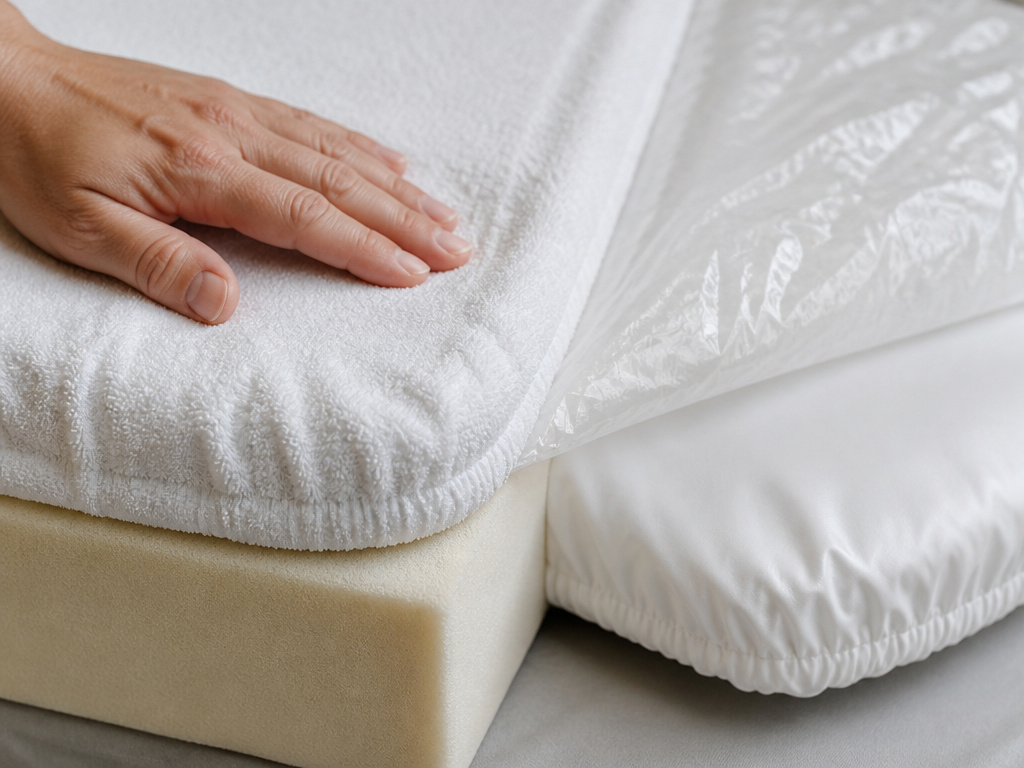
A crinkly vinyl protector ruins a $2,000 mattress’s feel. Here’s how materials compare:
| Material | Noise | Breathability | Best For |
|---|---|---|---|
| Vinyl | Loud | Poor | Guest beds, short-term use |
| Polyurethane | Quiet | Moderate | Most home mattresses |
| Cotton-terry | Silent | High | Hot sleepers, foam beds |
The quiet test: Check the protector material for noise before buying if that is a concern.
What’s the difference between a mattress protector and a mattress topper?
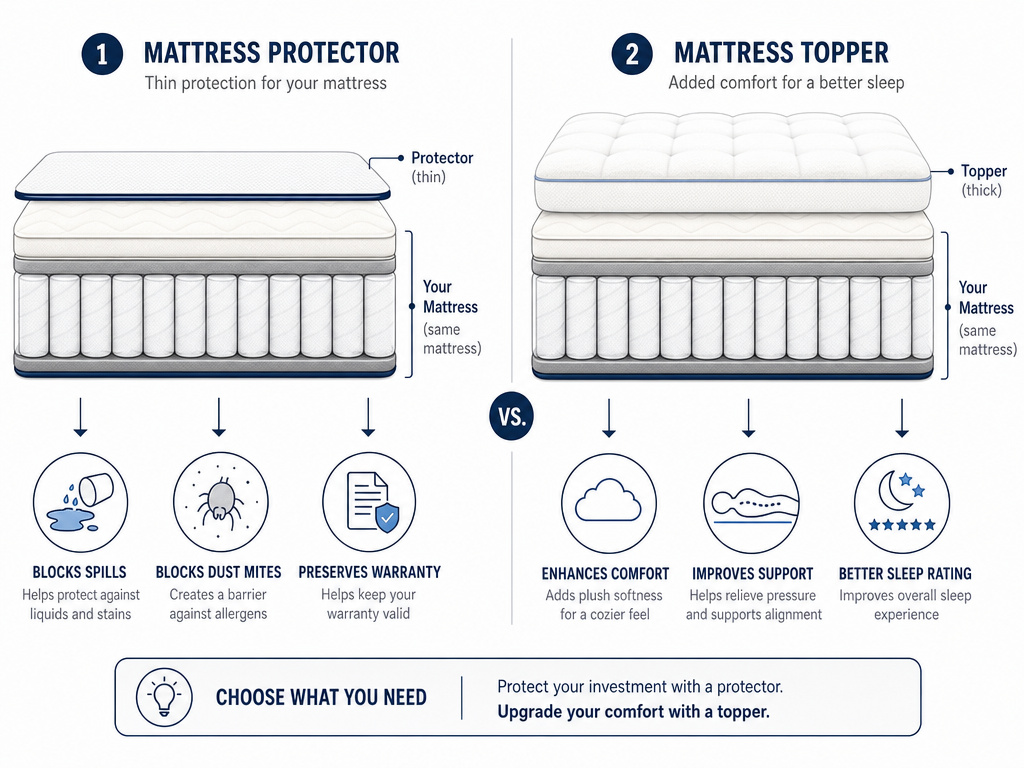
A mattress protector is designed for protection. It safeguards your mattress from spills, dirt, debris, allergens, and bacteria. These protectors usually have a breathable top layer over a waterproof bottom to keep your mattress dry and clean. Their job is to prevent stains and extend your mattress’s lifespan, which is crucial since stains can void a mattress warranty. A mattress topper or pad, on the other hand, is primarily for comfort and altering the feel of your sleep surface. While a topper sits on top, it doesn’t typically offer the same liquid barrier or warranty-protecting function as a protector designed for that purpose.
Mattress protector vs. Mattress encasement: which do I need?
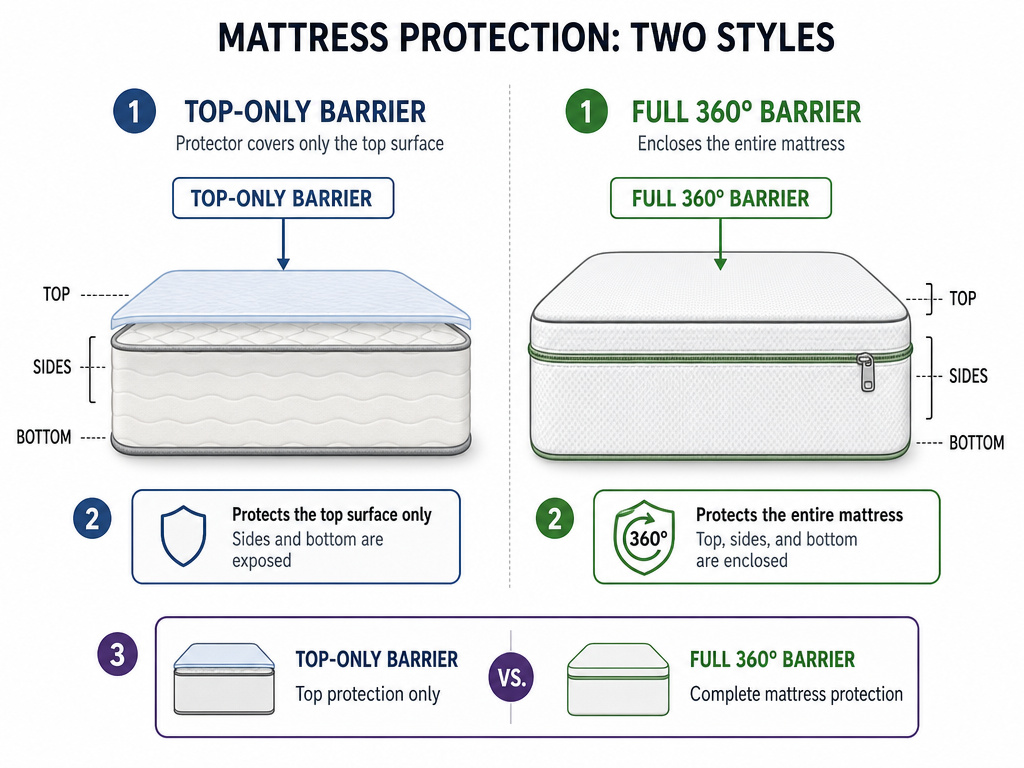
A standard mattress protector sits on top of your mattress like a fitted sheet, shielding the sleeping surface from spills, moisture, and allergens. A mattress encasement is a different product; it fully encloses the entire mattress, often with a zipper, providing a more complete barrier. This is similar to the concept behind hospital bed mattress covers, which are designed to prevent fluids from entering the inner core. Encasements are often used for severe allergy protection or bed bug prevention. For general home use, a protector is typically sufficient to guard against everyday accidents and help keep your mattress clean.
Frequently Asked Questions
Is it okay to not use a mattress protector?
Technically yes, but stains can void warranties like IKEA’s. Stearns & Foster highly recommends a protector but does not require it for warranty coverage.
Does a protector change the feel of a mattress?
Cheap vinyl ones do (noisy, sticky). Modern cotton-terry options can feel like a slightly crisper sheet.
How often should you replace a protector?
Every 2–3 years for home use, half the lifespan of hospital covers per the FDA medical device covers report.
Can you wash a mattress protector?
Yes, but follow care instructions. For cleaning stains, Stearns & Foster recommends gently applying a mild soap with cold or warm water and avoiding soaking.
The Bottom Line
Buy a protector when you buy the mattress, not after the first spill. For under $50, a breathable mattress protector can be silent, cool, and help keep your mattress warranty-safe. Skip the upsell on “luxury” versions, the thin, no-frills ones work best.
One rule most miss: If your protector shows visible signs of wear, replace it before a leak can happen, as worn covers can fail. Hospital data proves hindsight is 20/20.
