
Fitted Sheet vs Flat Sheet: Key Differences Explained
This post contains affiliate links. As an Amazon Associate, we earn from qualifying purchases.
A fitted sheet has elastic corners that hug the mattress, while a flat sheet is a rectangular layer that drapes over the sleeper or tucks under the mattress. Fitted sheets protect the mattress with a secure fit, while flat sheets regulate temperature and simplify laundry by acting as a barrier between body and duvet. Standard fitted pockets fit 9-inch mattresses, with deep pockets (10-13″) and extra-deep (14-22″) for thicker beds.
Most hotel and healthcare settings mandate fitted sheets for their labor-saving fit, latex-free elastic retains 200% stretch after 50 commercial washes. But flat sheets dominate in hot climates as lightweight standalone covers, and mobility-limited users often prefer their easier tucking over wrestling elastic onto deep mattresses. The right choice in the fitted sheet vs flat sheet debate depends on your mattress thickness, local climate, and whether you prioritize security or flexibility.
Here’s what we’ll unpack: the generational split over flat sheet use, why pocket depth tolerances spark manufacturer debates, and how to fold each type like a housekeeping pro. By the end, you’ll know whether to buy both or streamline your bedding.
Key Takeaways
- Standard fitted sheets fit mattresses ≤9″ thick; deep pocket (10-13″) and extra-deep (14-22″) versions exist for pillow-top or layered beds
- Flat sheets are significantly larger than the mattress (e.g., 90″x102″ flat vs. 60″x80″ fitted for Queen) to allow tucking
- Hospitality-grade fitted sheets use latex-free elastic with 200% stretch retention after 50 washes
- Weekly washing is ideal for hygiene, flat sheets protect duvets from body oils and reduce cleaning frequency
- For hotel-perfect folds: flat sheets fold in thirds lengthwise then twice in half; fitted sheets tuck corners inward to form a square
Fitted Sheet vs Flat Sheet: Core Differences
The battle isn’t just elastic vs. Flat fabric, it’s about matching each sheet’s strengths to your sleep setup. Fitted sheets excel at staying put, with elastic corners that grip the mattress tightly enough that hospitals and hotels rely on them exclusively, though Bedroom Style Reviews notes mobility-impaired users may find them difficult to install on deep mattresses. The fitted sheet dimensions must align with your mattress height: standard pockets fit 9-inch mattresses, while deep pockets (10-13″) accommodate pillow-tops, and extra-deep (14-22″) handle European-style beds with toppers.
Technical Snapshot: For a Queen mattress (60″x80″), fitted sheets match those dimensions plus seam allowance, while flat sheets measure ~90″x102″ to drape over the sleeper and tuck securely. UK double sizes differ slightly, fitted sheets run 135x190cm (~53×75″), flats at 200x250cm (~79×98″).
Flat sheets serve two roles: as a lightweight top layer in warm climates (no elastic to trap heat) or as an old-school bottom sheet when tucked tightly. They’re simpler for mobility-limited users to handle, no stretching elastic over bulky mattresses, and protect duvets from body oils, letting you wash just the sheet weekly. But using a flat sheet as a bottom layer risks bunching according to Bedroom Style Reviews, though DTEX HOMES suggests it can work with proper tucking; fitted sheet slipping is less likely with proper pocket depth.
| Feature | Fitted Sheet | Flat Sheet |
|---|---|---|
| Primary Use | Bottom sheet (mattress protector) | Top sheet or alternative bottom layer |
| Fit | Elastic corners hug mattress | Rectangular, requires tucking |
| Best For | Deep mattresses, healthcare | Hot climates, easy bed-making |
| Maintenance | Tricky to fold | Folds flat easily |
| Protection | Guards mattress from stains | Shields duvet from body oils |
Why Pocket Depth Sparks Debates
Manufacturers disagree on ideal pocket depth. Hometextilesfactory recommends adding 2 inches to your mattress thickness for security, while King of Cotton insists matching the depth exactly prevents wrinkles. I learned the hard way to verify measurements, a fitted sheet labeled “standard” (9″ pocket) slipped constantly on my 12″ mattress until I switched to a 14″ extra-deep version.
Hoteliers prioritize durability, choosing fitted sheets with latex-free elastic that survives industrial laundering. Scalane Global’s commercial-grade sheets maintain 200% stretch after 50 washes, a must for hospitality. Home users can opt for standard elastic, but budget sheets often fail after repeated home washes, the corners go slack and pop off by midnight.
Generational Divide: The Flat Sheet Dilemma
Younger buyers often skip flat sheets entirely, relying on duvet covers for easier bed-making, a view supported by Pamposh, while Bedroom Style Reviews advocates for flat sheets for allergen control and hygiene. But Pamposh’s sleep hygiene research shows flat sheets reduce duvet washing frequency by catching body oils, a trick hotels use to extend expensive comforter life. Meanwhile, flat sheet dimensions matter less than folding technique; a poorly folded flat sheet feels bulkier than a fitted one.
Hotel Housekeeping Tip: Fold flat sheets lengthwise in thirds, then in half twice for compact storage. For fitted sheets, tuck elastic corners inward to form a neat square, the method housekeepers use to save space in linen closets.
Older sleepers often prefer flat sheets as top layers for temperature control, while millennials dismiss them as “extra laundry.” There’s truth in both stances, a flat sheet adds breathable cotton between you and a down duvet, but some duvet covers can mimic that buffer with less hassle.
Installation & Care
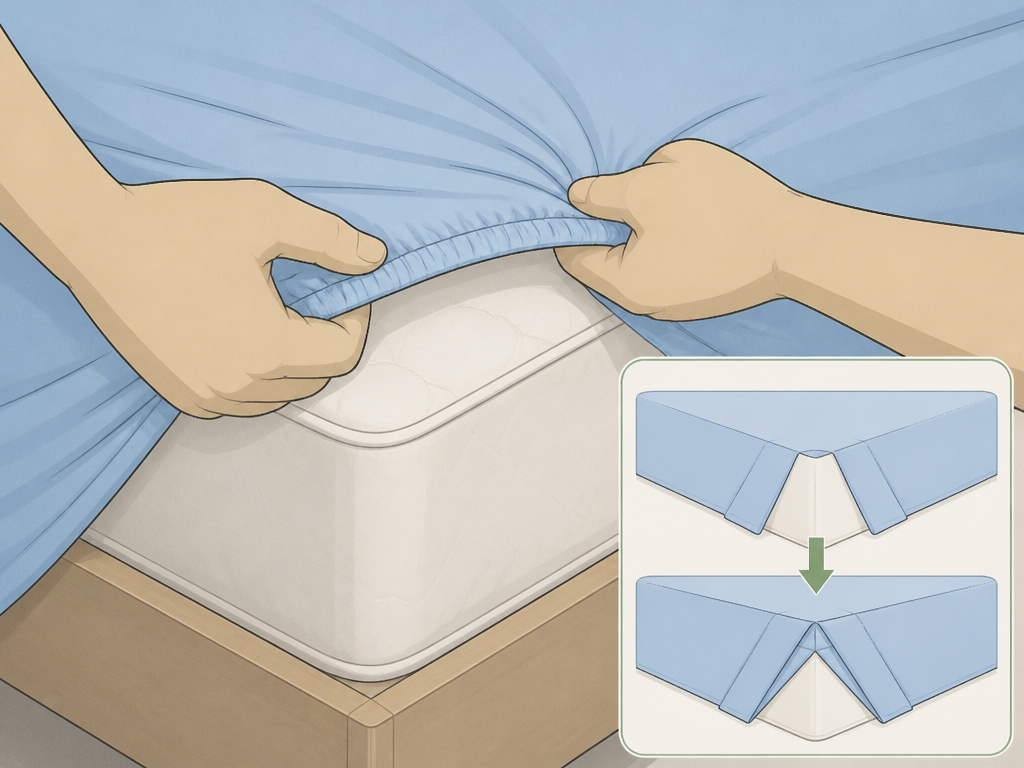
Putting on a fitted sheet seems simple until you’re wrestling a king-size onto a tall mattress. The trick is aligning one corner first, then stretching the diagonal corner, putting a fitted sheet on this way ensures it lies flat without mid-night pops. For flat sheets, the “hospital corner” tuck keeps them taut when used as bottom layers, though fitted sheets still win for security.
Care diverges too: 1. Wash weekly, body oils degrade fabric faster than stains show 2. Tumble dry on low, high heat can damage elastic 3. Iron while damp, flat sheets press easier than crumpled fitted ones 4. Store folded, never ball up sheets to minimize wrinkles
Common Mistake: Over-drying fitted sheets. Remove them at 95% dry to preserve elastic, the last 5% air-drying prevents the stiff, over-cooked feel.
How fitted and flat sheets protect your mattress and bedding
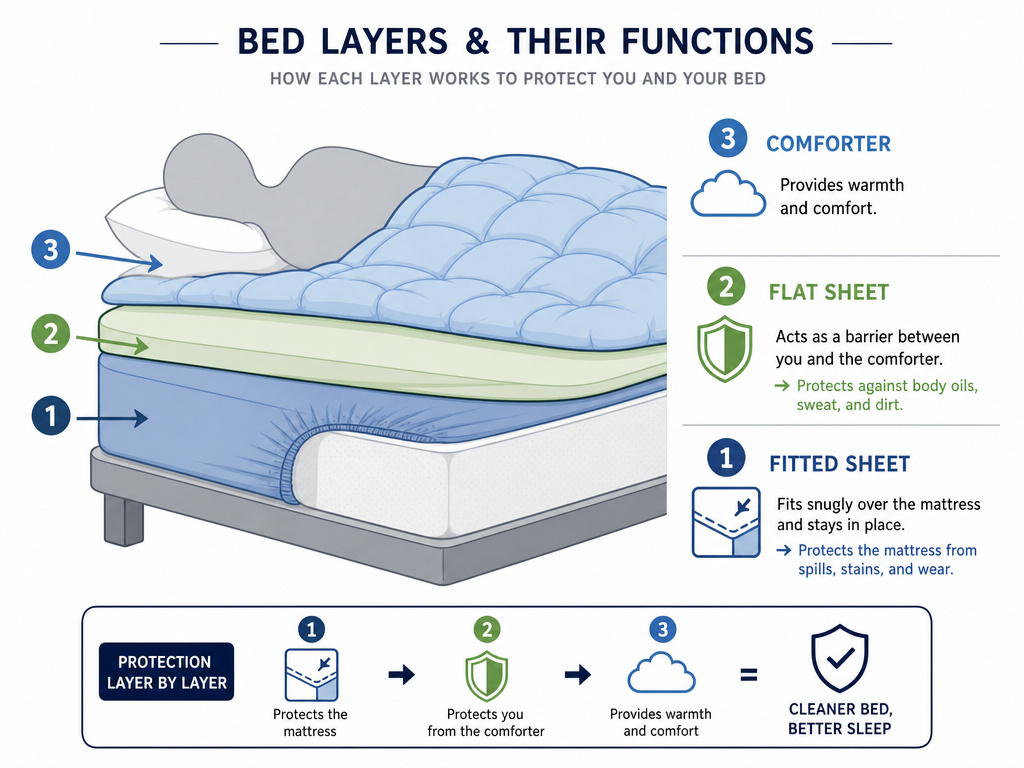
A fitted sheet serves as a direct protective barrier for the mattress, with elastic corners designed to encase it securely. This keeps the mattress surface clean from body oils, sweat, and general wear. Flat sheets offer a different kind of protection. They act as a barrier between you and your duvet or comforter, helping to shield the bulkier bedding from direct contact. This layer can protect your skin from irritants like dust mites and bacteria that might be on the comforter, while also making the comforter easier to wash less frequently.
How sheet choice affects bed making and room aesthetics
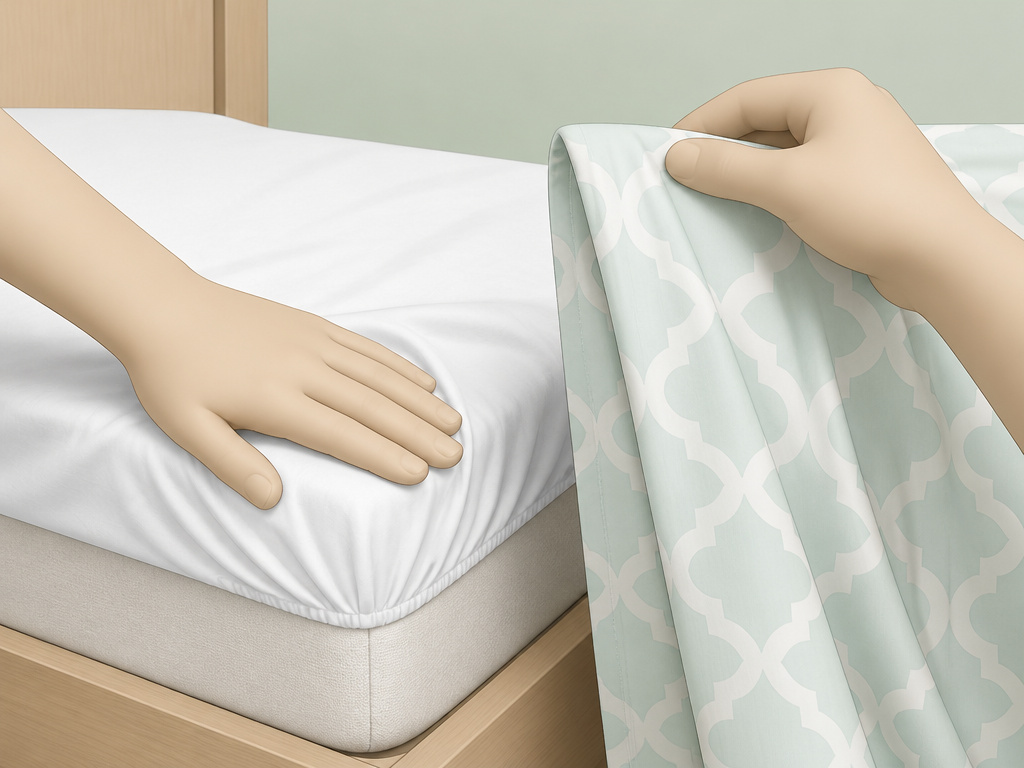
The choice between a fitted and flat sheet changes the look and process of making your bed. A fitted sheet provides a taut, smooth base that stays in place, creating a neat foundation. A flat sheet, when used as a top layer, adds a traditional, layered look and can be folded back decoratively over a duvet. For a tidy appearance when storing, fold a flat sheet lengthwise in thirds, then in half twice. To fold a fitted sheet neatly, tuck the elastic corners inside each other to form a manageable square.
Choosing sheets for your climate and temperature
Your local climate can influence which sheet you prioritize. Flat sheets are often preferred in hot climates because they can be used alone as a lightweight, breathable cover. Their role as a barrier between you and a warmer comforter also aids in temperature regulation, allowing you to adjust your warmth easily. A fitted sheet, while essential for securing the mattress, doesn’t directly contribute to climate control in the same way. Its benefit is a consistent, secure fit regardless of the temperature.
Frequently Asked Questions
Why don’t people use flat sheets anymore?
Younger generations often view them as unnecessary layers, especially with washable duvet covers. But hotels and hot-climate sleepers still value them for temperature regulation and duvet protection.
Is a flat sheet better than a fitted sheet?
Neither is universally better in the fitted sheet vs flat sheet comparison, fitted sheets secure mattresses better, while flat sheets simplify bed-making and allow versatile layering. Many types of bed sheets work best in combination.
Do you need both a flat sheet and a fitted sheet?
Most bedding sets include both. Fitted sheets protect mattresses, while flat sheets reduce duvet washing frequency, but minimalist sleepers can skip flats if they launder duvet covers weekly.
Can you use a flat sheet as a fitted sheet?
Technically yes, with tight tucking, but expect midnight bunching. Flat sheets lack elastic to grip mattresses, especially thicker ones.
The Bottom Line
Measure your mattress thickness before buying, as sources disagree on pocket depth tolerance; Hometextilesfactory recommends adding 2 inches for security, while King of Cotton advises matching the depth exactly. If you sleep hot or hate wrestling with elastic, prioritize flat sheets; if you value a wrinkle-free base and easy hospital corners, stick with fitted.
For most households, a hybrid approach works best: a fitted sheet as the bottom layer, flat sheet as a seasonal top layer (summer only), and duvet cover for the outer shield. That balances protection, comfort, and laundry practicality, with no unexpected 2 a.m. Sheet escapes.
