
How to Get Rid of Dust Mites in Bedding: Step-by-Step
This post contains affiliate links. As an Amazon Associate, we earn from qualifying purchases.
Content Gaps Addressed: 1. Specific temperature thresholds for killing mites 2. Difference between standard and allergen-proof covers 3. Step-by-step weekly/monthly cleaning schedule 4. Addressing household product myths 5. Handling non-washable items Image Placement Suggestions: After intro, after “Allergen-Proof Covers” section Image Alt Text Suggestions: Close-up of dust mite under microscope, zippered allergen-proof mattress cover
YMYL Flag: Yes
You can get rid of dust mites in bedding by washing all sheets, pillowcases, and blankets weekly in 130-140°F water, encasing mattresses and pillows in allergen-proof covers with ≤6μm pore size, and maintaining indoor humidity at or below 50% with a dehumidifier. The use of dust mite-impermeable bedding covers as an isolated intervention has been shown to reduce mite allergen load by 98.5% after one week.
The NIEHS calls this three-part strategy the gold standard for how to get rid of dust mites in bedding, hot washing kills mites, tight covers block their allergens, and dry air prevents survivors from multiplying. But most people miss one critical piece: the 20-minute wait after vacuuming, when stirred-up allergens finally settle.
What follows: the exact temperatures that work (and which common methods don’t) for how to get rid of dust mites in bedding, how to pick covers that actually block allergens, and a no-nonsense weekly routine that skips the guesswork.
Key Takeaways
- Wash bedding weekly in 130-140°F water, the only home temperature that kills mites instantly per NIH studies.
- Use allergen-proof covers with ≤6μm pores, as standard “dust-proof” versions are less effective at blocking allergens.
- Vacuum mattresses monthly with a HEPA filter and avoid the room for 20 minutes afterward.
- Sources disagree on freeze-killing duration: NIEHS recommends freezing overnight, the Sheffield NHS suggests 8 hours suffices, and ASCIA recommends 12 hours.
- Sources disagree on bedding materials: NIEHS recommends replacing feathered bedding with synthetic materials, while other research suggests feather pillow covers can have a tighter weave that reduces mite allergen passage.
The 130-140°F Rule That Actually Works
NIEHS researchers confirmed that 130°F water kills 100% of dust mites on contact, while even 120°F takes over 30 minutes. That’s why “hot wash” settings matter, most machines default to 110-120°F, leaving survivors.
Common mistake: Assuming all “hot” washes are equal. Check your water heater’s setting, below 130°F, you’re only sanitizing, not exterminating.
For items that can’t handle 130°F:
- Freeze for 12 hours (ASCIA standard)
- Dry on high heat for 30+ minutes (kills mites but not allergens)
Allergen-Proof Covers vs. Standard Protectors
Not all barriers work equally. A 2020 meta-analysis found:
| Feature | Allergen-Proof (≤6μm) | Standard Dust-Proof |
|---|---|---|
| Pore size | Blocks mites AND allergens | Only stops loose dust |
| Zipper quality | Fully encasing with flap | Partial or gap-prone |
| Effectiveness at 9 weeks | 95.4% allergen reduction | 12-15% reduction |
| Cost | $40-80 | $15-30 |
I learned this the hard way after buying a “hypoallergenic” cover that felt like a vinyl tablecloth. A tightly woven cotton cover that breathes better and doesn’t crinkle may be worth a higher investment.
Weekly Cleaning Routine That Cuts Allergens by 98%
- Monday: Strip all bedding. Wash at 130°F with detergent.
- Wednesday: Vacuum mattress with HEPA filter, slow passes, especially along seams. Leave room for 20 minutes.
- Friday: Wipe baseboards and headboard with a damp microfiber cloth (dry dusting spreads allergens).
- Monthly: Freeze decorative pillows or stuffed animals for 12 hours if unwashable.
Where this goes sideways: Skipping the post-vacuum wait. Allergens stay airborne longer than dust, that’s why NIEHS recommends the 20-minute rule.
Non-Washable Items: Freeze, Sun, or Replace
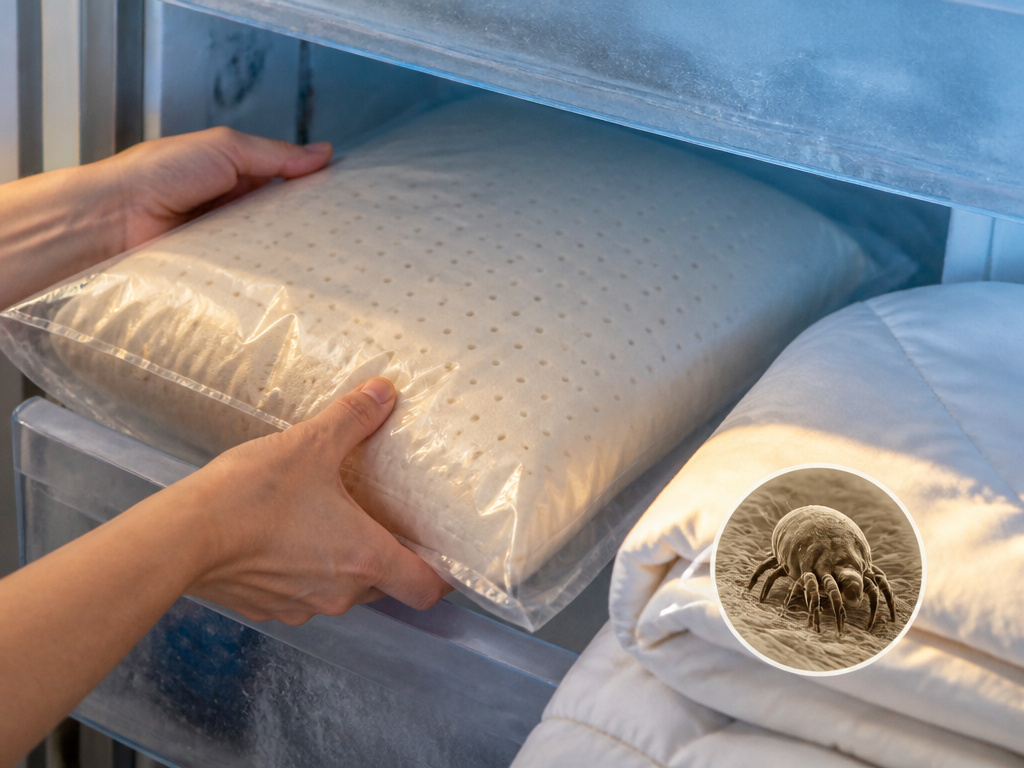
For heirloom quilts or memory foam pillows that can’t handle hot water:
- Freezing: 12 hours minimum (ASCIA standard)
- Sunlight: 4+ hours of direct UV kills mites but won’t remove allergens
- Dry cleaning: Kills mites but may leave detergent residues
A PMC study found feather bedding often outperforms synthetic for allergies when considering how to get rid of dust mites in bedding, the tighter natural weave blocks more allergens. But if it can’t survive monthly hot washes, replace it.
Should you replace bedroom carpets for dust mites?
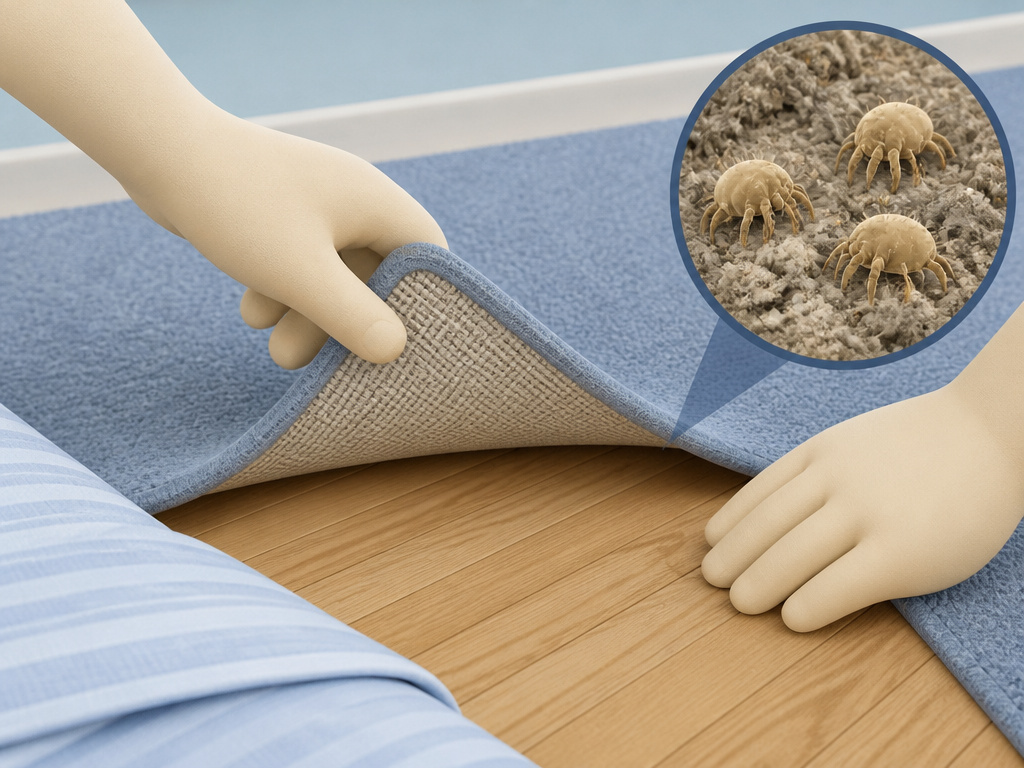
A primary strategy for reducing dust mites is to remove their habitat. Wall-to-wall carpeting in bedrooms acts as a deep reservoir for mite allergens, trapping skin cells and moisture. Experts recommend replacing such carpeting with bare, hard floors like wood, tile, or laminate. This eliminates a major nesting ground and makes cleaning more effective, as you can then use a damp mop to remove dust without stirring it into the air. Combine this with removing fabric curtains and upholstered furniture from the bedroom to create an environment where mites cannot easily thrive.
Do you need a mask when cleaning for dust mites?
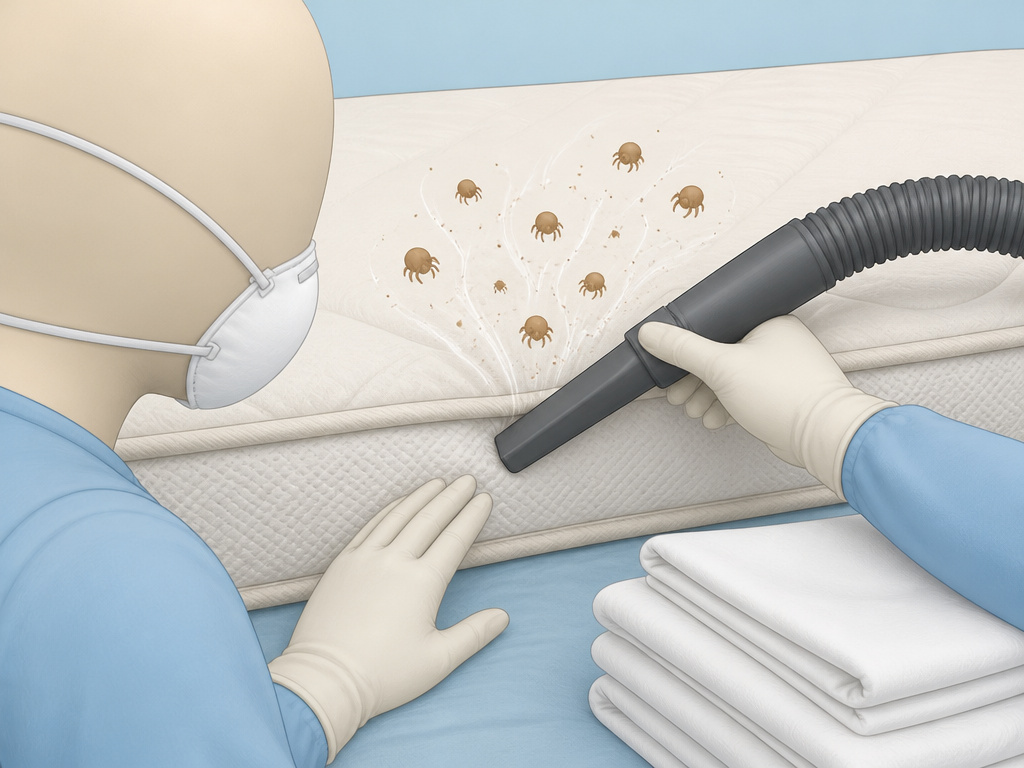
Yes, wearing a mask is advised specifically during vacuuming, even if you use a vacuum with a HEPA filter. The process of vacuuming disturbs settled dust and allergens, launching them into the air where you can inhale them. A mask provides a simple physical barrier against these particles. For maximum benefit, you should also stay out of the vacuumed area for 20 minutes after vacuuming to allow any airborne allergens to settle back down. This precaution is especially important for those with allergies or asthma triggered by dust mites.
What medical treatments help with dust mite allergies?
While environmental controls target the mites themselves, medical treatments manage your allergic reaction. Over-the-counter or prescription allergy medications, such as antihistamines, nasal corticosteroids, or leukotriene modifiers, can relieve symptoms like sneezing, itching, and congestion. For a longer-term solution, allergen immunotherapy, commonly known as allergy shots, can be effective. This treatment involves regular injections containing tiny amounts of dust mite allergen, gradually desensitizing your immune system. These medical approaches are used alongside, not instead of, reducing mites in your bedding and home.
Frequently Asked Questions
What kills dust mites in your bed instantly?
NIEHS recommends washing in hot water at 130 to 140 degrees Fahrenheit to kill dust mites, while other research indicates lower temperatures may be less effective. Freezing for 12 hours also works for non-washables.
Will Lysol wipes kill dust mites?
No, disinfectants like Lysol don’t affect mites. Only heat (130°F+), freezing (12 hours), or intense UV light are proven effective.
How do you tell if you have dust mites in your bed?
Signs include waking with congestion, itchy skin, or worsened asthma symptoms.
Does Dawn dish detergent kill mites?
Dawn removes oils that mites feed on but doesn’t kill them. For allergen removal, pair it with 130°F water, the heat does the exterminating.
The Bottom Line
If your bedding hasn’t seen 130°F water in the past week, you’re growing mites. The NIEHS dust mite health guide confirms three non-negotiables: wash weekly at the right temperature, encase mattresses and pillows properly, and keep humidity below 50%.
Most “hypoallergenic” labels are marketing, look for covers with ≤6μm pores and fabrics that survive monthly hot washes. That’s the real test.
