
How to Kill Bed Bugs in Bedding: Step-by-Step
This post contains affiliate links. As an Amazon Associate, we earn from qualifying purchases.
Content Gaps Addressed: – Detailed comparison of heat tools (dryers vs. Steamers vs. Heat chambers) – Step-by-step for treating specific bedding types (down, memory foam) – Clarifying myths about instant-kill home remedies – Post-treatment monitoring timeline – Shared housing treatment logistics Image Placement Suggestions: after intro, after “Dryer vs. Steam vs. Cold” section Image Alt Text Suggestions: Close-up of bed bug on fabric | Thermometer in dryer showing 125°F | White mattress encasement with zipper YMYL Flag: Yes
To kill bed bugs in bedding, use heat treatments of at least 120°F for 90 minutes (EPA standard) or cold treatments below 0°F for 4 days. Dryers set to 125°F kill bugs in 30 minutes but require verification with a thermometer, most home dryers don’t display accurate temperatures. Encasements trap remaining bugs while you monitor with interceptors, and steamers at 212°F can spot-treat mattress seams without spreading bugs like washing does.
The problem is that no single method kills every egg instantly. The EPA, Cornell, and Florida all disagree slightly on exact temperatures and times, because dryers vary, materials insulate differently, and eggs are stubborn. The rest walks through each option’s trade-offs, the tools that actually work, and the timeline to confirm they’re gone.
Key Takeaways
- Sources vary on the ideal dryer temperature: Cornell recommends over 125°F, the EPA advises high heat for 30 minutes, and the University of Florida suggests ~140°F for 20-30 minutes.
- Sources disagree on washing before heat treatment: Cornell University does not recommend it, while Health Canada advises washing items in hot water before drying.
- Encasements beat sprays. A $30 zippered cover traps bugs inside and makes signs obvious on white fabric.
- Steamers need low pressure. High pressure blows bugs away before killing them. Move slowly along seams.
- Freezing takes 4 days at a consistent -19°C (approximately -2°F). Home freezers may not be cold enough. Use a thermometer or skip it.
The 125°F Rule Every Dryer Misses
I tossed a probe thermometer in with a test load of damp towels to check my dryer’s actual heat. The “high” setting hit about 130°F at the drum exit, but the dial label guaranteed nothing. Lesson: the label is a suggestion; the thermometer is the record.
“Temperatures of over 125°F are recommended to kill bed bugs using a dryer. Two hours at 115°F will be enough to kill bed bugs and their eggs.”. Cornell IPM Help Center
Dryers work, if you hit the right numbers. The EPA says 120°F for 90 minutes kills eggs, Cornell insists on 125°F for reliability, and Florida found ~140°F works in 20 minutes. Here’s how they align:
| Source | Temperature | Time | Kills Eggs? |
|---|---|---|---|
| EPA | 120°F | 90 min | Yes |
| Cornell | 125°F | 30 min | Yes |
| University of FL | ~140°F | 20-30 min | Yes |
Common mistake: Assuming “high heat” means lethal heat. Run an empty cycle with a thermometer first. If your dryer can’t sustain recommended temperatures, extending time at a lower heat may be necessary; for example, Cornell states two hours at 115°F will kill bed bugs and their eggs.
For thick comforters or pillows, ensure the cycle runs long enough for heat to penetrate the center, a key part of how to kill bed bugs in bedding. The center insulates heat, and bugs survive where steam stops rising.
Dryer vs. Steam vs. Cold: Which Wins for Your Bedding?
Not all bedding survives the dryer. Down clusters melt above 140°F, and memory foam warps. Here’s how to match the method to the material:
Dryer-Safe Items (125°F for 30 min)
- Cotton sheets
- Polyester blankets
- Most pillowcases
- Duvet covers (remove inserts)
Skip this if: The care tag says “dry clean only” or shows the dryer symbol crossed out. Heat-sealed seams on cheap bedding may fail.
Steam Treatment (212°F at nozzle)
- Mattress seams
- Box spring fabric
- Upholstered headboards
- Curtains with blackout lining
The part nobody mentions: Steamers emit steam at a temperature of at least 100°C (212°F), but surface temps drop fast. Hold the nozzle close to the surface and move the steamer slowly to maximize heat penetration. Health Canada states bedbugs die at 50°C (122°F), so even cooling steam works if applied right.
Cold Treatment (-19°F for 4 Days)
- Stuffed animals
- Leather shoes
- Books
- Delicate embroidery
Worth knowing before you start: The EPA warns that home freezers may not be cold enough to reliably kill bed bugs. Always use a thermometer. Use a freezer thermometer ($5 at hardware stores) or skip this method.
Encasements: The White Wall Test
On a smooth white encasement, a rust-colored fecal spot the size of a pen tip stands out immediately. On a patterned mattress cover, I would have walked right past it. The zipper tab area is where I look first, bugs tuck in near hardware.
Three encasement rules:
- Buy white. White encasements make signs of bed bugs easier to spot.
- Check weekly. A flashlight and 10 seconds per corner catches new signs early.
- Keep it on for a year. Eggs hatch weeks after treatment. Trapping them beats respraying.
| Feature | Good | Bad |
|---|---|---|
| Zipper | Small-tooth, no flap | Large plastic teeth |
| Fabric | 100% polyester | Vinyl (cracks) |
| Warranty | 1+ year | “Lifetime” (red flag) |
Steamer Settings That Actually Work
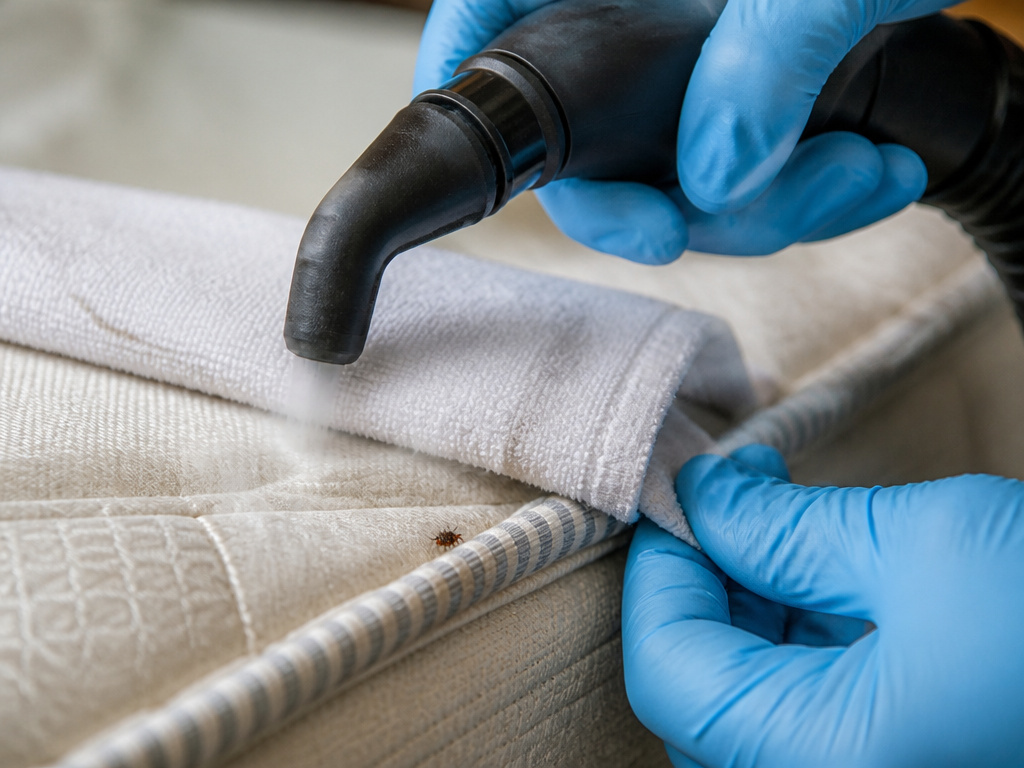
Most handheld steamers ship with useless defaults for bed bugs. Some steamers are capable of emitting steam at least 100°C (212°F), but you may need to adjust settings.
- Low pressure. University of Florida warns high pressure blows bugs away alive.
- Dry steam. Health Canada advises that dry steam or low vapour steamers are better because they leave behind less moisture.
- Towel barrier. Lay a thin towel over delicate fabrics to prevent scorching while letting heat through.
Where this goes sideways: Moving the steamer too fast. Bed bugs hide in folds and seams, pass the nozzle slowly enough that the steam penetrates all layers. Rutgers says retreat every 3 days until traps stay empty for a month.
The Freezer Fallacy
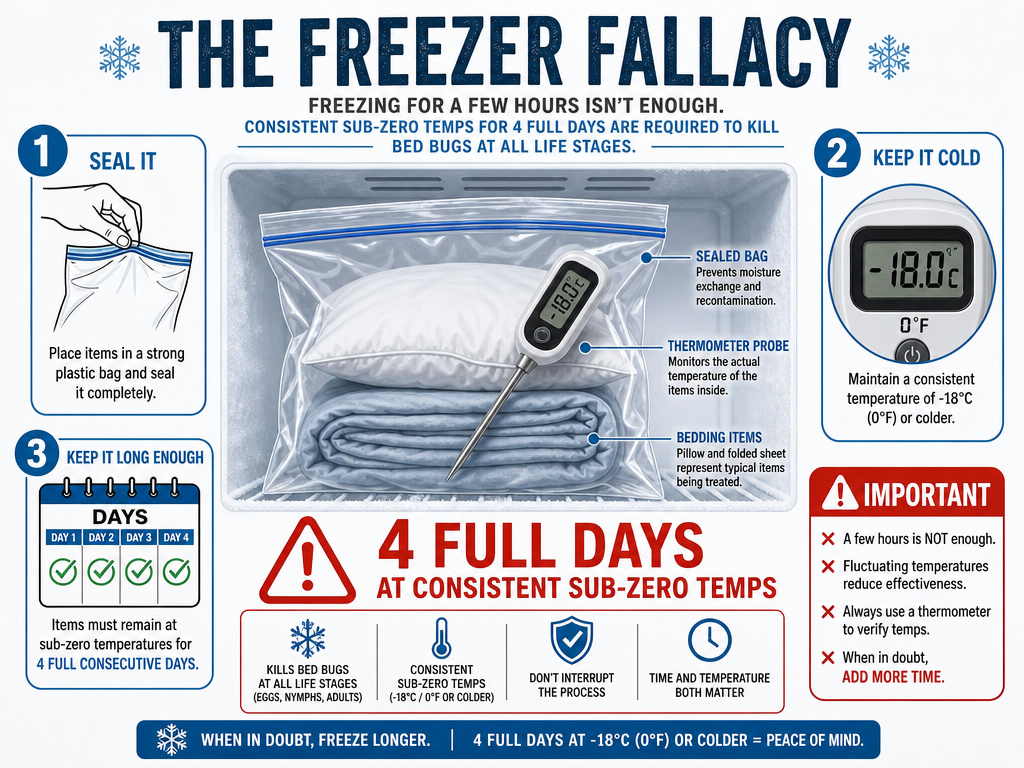
Fair warning: Cornell’s tests show home freezers fail more often than they succeed. The bugs that survive breed cold-resistant offspring. If you must freeze:
- Bag items tightly in plastic first.
- Place a thermometer inside (not just the freezer display).
- Monitor temperatures consistently for 4 full days.
How to vacuum a mattress for bed bugs
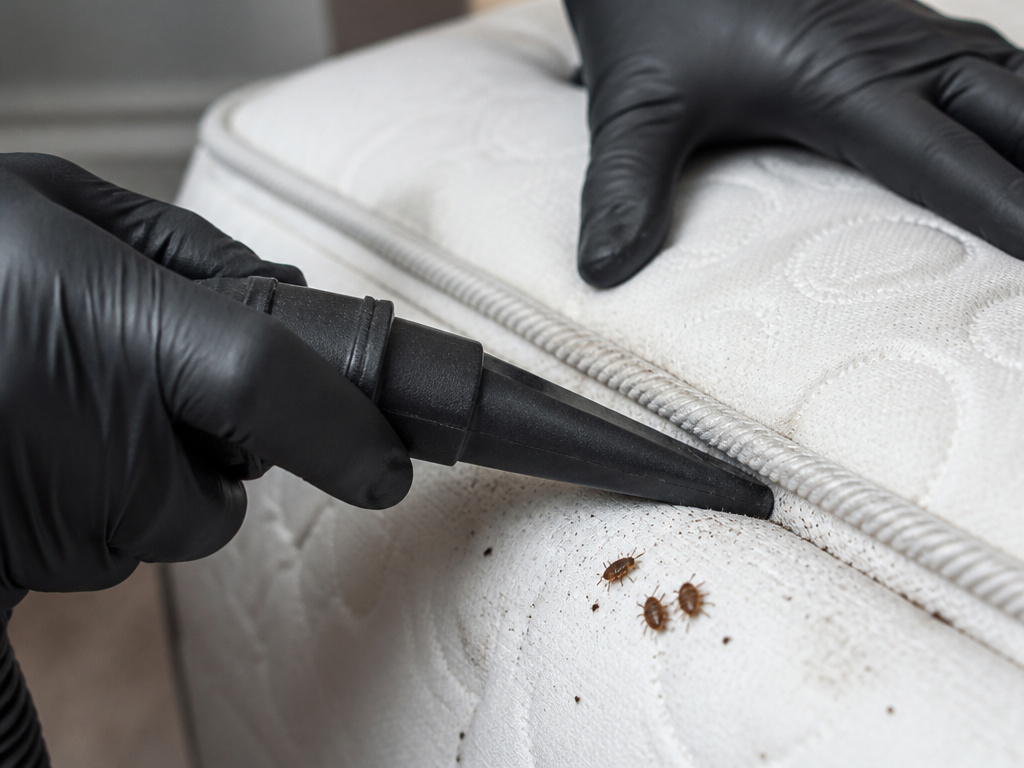
Vacuum your mattress thoroughly, paying close attention to seams, tufts, and edges where bed bugs hide. Use the crevice tool to get deep into the stitching and any cracks in the bed frame. This physically removes bugs and eggs. After vacuuming, immediately seal and dispose of the vacuum bag or canister contents outside to prevent escape. Steam cleaning is also recommended after vacuuming; use low pressure to avoid blowing bed bugs off the surface and move the steamer slowly over seams and fabric to maximize the heat penetration.
How to dispose of a vacuum bag after bed bugs
After vacuuming bed bug areas, the contents of your vacuum are infested. To dispose of them safely, remove the bag or empty the canister directly into a sturdy plastic bag. Seal that bag tightly. Immediately take it outside to your outdoor trash bin. Do not leave the sealed bag indoors or in a garage, as bed bugs could escape. If your vacuum uses a bag, some people choose to place the entire sealed vacuum bag inside a second plastic bag before disposal for extra security.
Are pesticides safe to use on bedding?
Extreme caution is required with chemical treatments on bedding. Many pesticides are not labeled for use on mattresses or linens you sleep on directly due to toxicity risks. Applying the wrong product or using it incorrectly can pose serious health hazards. Always read and follow the label instructions exactly. The label is the law. For bedding, non-chemical methods like thorough heat treatment in a dryer are strongly preferred and recommended over pesticide application for safety and effectiveness.
Frequently Asked Questions
Does washing kill bed bugs?
Washing alone rarely kills bed bugs, the water doesn’t get hot enough. Cornell found drying is essential, and washing first may spread bugs to your machine. Heat-treat items first, then wash to remove stains and allergens.
How do I know if bed bugs are gone?
Use interceptors under bed legs and check weekly. No bugs in traps for an extended period indicates success. Keep encasements on for a year, eggs hatch late, and nymphs die trapped inside.
Can I use rubbing alcohol?
Alcohol kills on contact but evaporates too fast to reach hidden bugs. It’s also flammable near dryer heat. Stick to heat, steam, and encasements proven by the EPA and universities.
The Bottom Line
One rule most guides skip: if you see one bug, assume there are twenty. Treat areas where bed bugs are found and likely hiding places, not just the bedding. The EPA integrated pest management guide calls this the “zone rule,” and it’s why spot treatments fail.
When in doubt, dry it, steam it, or seal it, in that order. And always verify heat with a $7 thermometer instead of trusting an appliance dial.
