
How to Measure a Mattress for Sheets: The 3-Step Process
This post contains affiliate links. As an Amazon Associate, we earn from qualifying purchases.
To measure a mattress for sheets, use a steel tape to record three measurements each for length (outer edges and center) and width, averaging the results. Include mattress toppers in the depth measurement, as California TB 168 requires recording to the nearest 1/16 inch below rounded corners for accuracy.
Standard sheets may not fit mattresses over 14 inches thick, and the ISPA allows +3/4″ to -1/2″ tolerance on mattress dimensions under 60 inches. That gap between labeled size and actual fit is where most mistakes happen, which is why it’s crucial to know how to measure a mattress for sheets. What follows: three specs that matter more than the tag, two tools that replace guesswork, and the one measurement even professionals forget to take.
Key Takeaways
- Measure width, length, and depth at three points each, mattresses compress unevenly over time
- Add topper height to mattress depth, a “12-inch” bed with a 3-inch topper needs 15-inch pocket sheets
- Standard sheets fit up to 14 inches deep, beyond that requires specialty sizing
- California TB 168 requires steel tape measurement to the nearest 1/16 inch for compliance
- ISPA allows +3/4″ variance on mattress dimensions under 60 inches, never assume labeled size equals actual size
The 3-Step Measurement Process
The California Bureau of Household Goods mandates steel tape for mattress measurements because cloth tapes stretch and plastic ones warp, a fundamental rule for how to measure a mattress for sheets. Their Technical Bulletin 168 proves most DIY measuring mistakes come from using the wrong tools.
-
Width: Place two 90° straightedges (a book and ruler work) opposite each other across the mattress. Measure at the head, middle, and foot, averaging the three. For rounded corners, measure immediately below the curvature, not at the apex.
Common mistake: Measuring just once across the middle. Older mattresses often compress unevenly, which can affect measurements.
-
Length: Repeat the three-measurement process from headboard to footboard. Most standard mattresses run 75-80 inches long, but ISPA permits:
| Mattress Size | Nominal Length | Allowed Variance |
|---|---|---|
| Under 60″ | (e.g., Twin 75″) | +3/4″, -1/2″ |
| Over 60″ | (e.g., King 80″) | +1″, -3/4″ |
- Depth: Measure from the top surface to the bottom edge, including any topper or pad. The Sleep Foundation notes that standard sheet pockets max out at 14 inches, beyond that, you’ll need deep pocket sheets.
Tools That Replace Guesswork
A proper measurement needs two items you likely own:
- Steel tape measure: Plastic tapes warp; cloth ones stretch. The California Technical Bulletin 168 document requires steel for compliance checks.
- Straightedges: Two hardcover books or yardsticks work as improvised 90° guides for width/length measurements.
Where Standard Measurements Fail
Three situations break the usual rules:
- Pillow-top or crowned mattresses: Measure depth at the highest point, not the edge. The ISPA’s 3-inch corner radius allowance means some rounding won’t affect fitted sheet dimensions, but extreme contours need custom solutions.
- RV and boat mattresses: These often have non-rectangular shapes or cut corners. The Sleep Foundation sheet size guide notes standard sheets rarely fit them.
- Sagging mattresses: Take depth measurements at the lowest dip and highest edge. Warranty claims typically require showing a measurable depression.
Sheet Labels vs. Reality
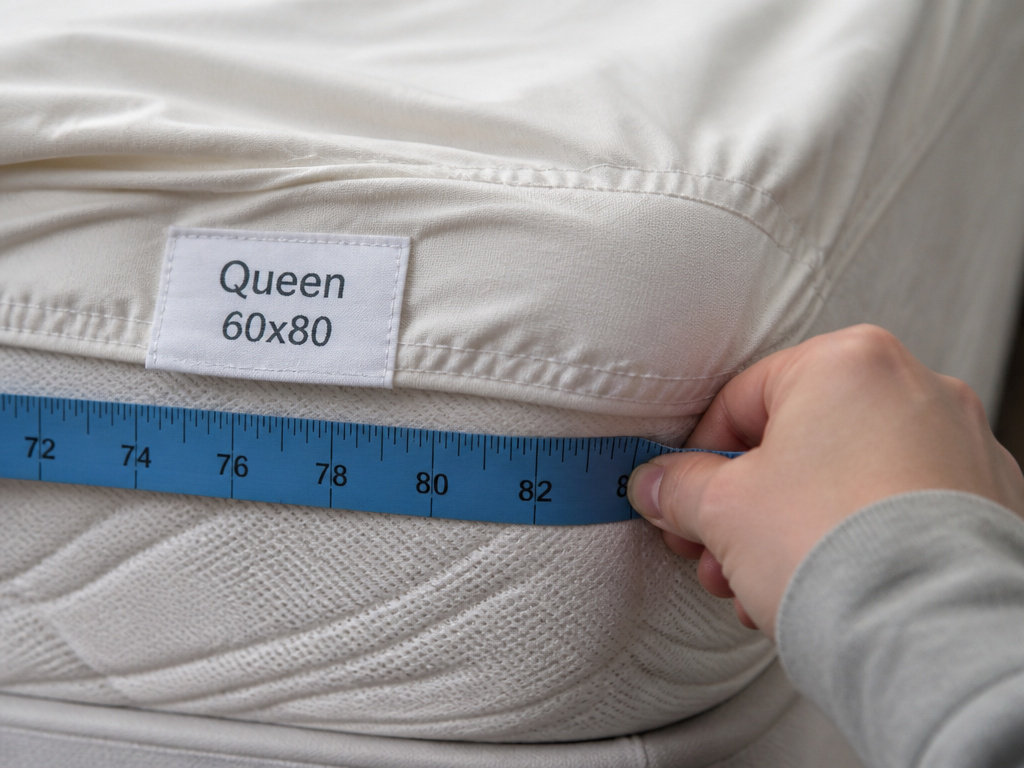
A “Queen” sheet set labeled 60″ x 80″ might fit a mattress measuring anywhere between 59.25″ to 60.75″ wide and 79.25″ to 80.75″ long per ISPA tolerances. This explains why some sheets feel tighter than others despite matching the nominal size.
The part nobody mentions: Fitted sheets often run 1-2 inches larger than the labeled mattress size to account for these variances. A “Queen” fitted sheet might be slightly larger than the nominal mattress size to accommodate manufacturing tolerances.
For non-standard beds, custom fitted sheets solve the problem by matching your exact measurements rather than relying on size categories, which is the ultimate goal of how to measure a mattress for sheets.
Standard Mattress Size Dimensions
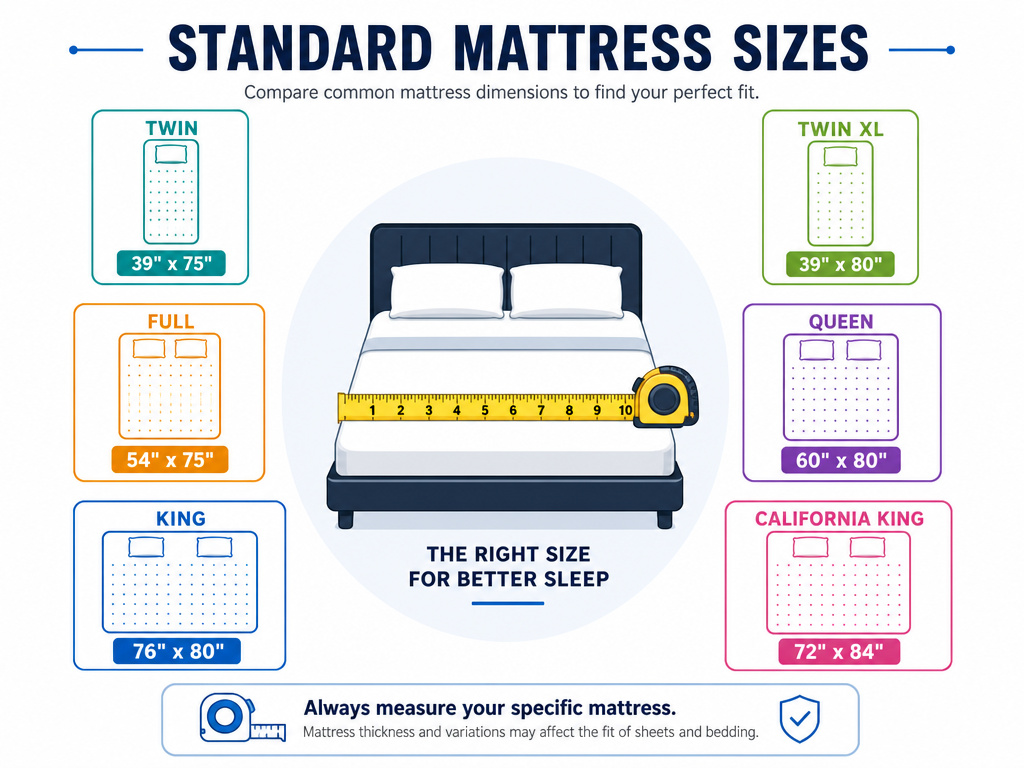
Standard sizes provide a starting point, but always measure your specific mattress. A standard twin mattress measures 38 inches by 75 inches, while a twin XL adds length at 38 inches by 80 inches. A full mattress is typically 54 inches by 75 inches, and According to the Sleep Foundation, a standard queen mattress is 60 inches by 80 inches, while Amerisleep lists a California Queen at 60 inches by 84 inches. King sizes include the standard king at 76 inches by 80 inches and the California king at 72 inches by 84 inches. Other sizes like the full XL, California queen, and various oversized options exist. Remember that manufacturers are allowed slight tolerances in these dimensions, so your mattress might be a fraction of an inch larger or smaller than the stated standard.
Frequently Asked Questions
Do I need deep sheets for a 14-inch mattress?
Yes. Standard sheet pockets typically accommodate up to 14 inches. Beyond that, you’ll need deep or extra-deep pocket sheets. Always measure your mattress with any toppers included, a 12-inch mattress with a 3-inch topper requires 15-inch pockets.
What size is 54×75 in bedsheets?
This indicates a Full-size mattress. However, the sheet size chart shows Full fitted sheets vary between 53.25″ to 54.75″ wide and 74.25″ to 75.75″ long due to manufacturing tolerances.
How do I know what size fitted sheet I need?
Measure your mattress width, length, and total depth (including toppers), then compare to the sheet manufacturer’s pocket depth specs. When in doubt, size up, a slightly loose sheet stays on better than one that’s too tight.
Do most sheets fit a 12-inch mattress?
Most standard sheets accommodate 12-inch mattresses, but always verify the pocket depth. Some budget sheets have shallower pockets, while premium brands often go deeper. The Amerisleep AS5 mattress height is 14 inches.
Before You Go
Measure twice, buy once: The five minutes spent verifying your mattress’s actual dimensions prevents weeks of sheet-straightening frustration. Keep these numbers in your phone notes for future purchases:
- True width (three-point average)
- True length (three-point average)
- Total depth (mattress + topper)
And when your measurements land between standard sizes? That’s when bespoke sheets earn their keep, the extra cost outweighs waking up to a bare mattress corner at 3 a.m.
