
How to Wash a Comforter: Step-by-Step (Without Damage)
This post contains affiliate links. As an Amazon Associate, we earn from qualifying purchases.
Wash your comforter in a front-loading or high-efficiency top-loading washer with at least 4.5 cubic feet capacity using a bulky or bedding cycle. Sources disagree on water temperature: Clorox recommends hot water, while Maytag recommends cool or warm water. For synthetic fills, add detergent and bleach separately; for down, use color-safe bleach mixed with detergent. Sources also disagree on dryer heat: Maytag recommends low or no heat, while Clorox recommends a hot dryer setting. Use clean tennis balls, removing every 20-30 minutes to fluff the fill.
Ever wonder why your comforter seems to lose its loft after a few washes? The answer isn’t in the detergent or water temperature, it’s in matching three things: your washer’s capacity, the right cycle, and how you dry it. Most comforters can handle home washing if you follow these specifics. For a complete guide, search online for how to wash a comforter.
This guide covers washer size requirements (and when to use a laundromat), the temperature and cycle debates, a step-by-step for both synthetic and down fills, plus how often you really need to wash it, all central to washing a comforter. By the end, you’ll know how to keep your comforter clean without shrinking, clumping, or wearing it out prematurely.
Key Takeaways
- Front-load washers are ideal for comforters, but HE top-loaders work if gentle enough (Consumer Reports)
- 5.0 cu. Ft. Capacity is recommended by Maytag and Whirlpool for king-size comforters, while Consumer Reports recommends at least 4.5 cubic feet.
- Wash frequency varies: Consumer Reports recommends every 1-3 months for daily use, the American Cleaning Institute recommends monthly, and Maytag recommends 2-4 times per year. For guest beds, Consumer Reports recommends every 6 months.
- Tennis balls in the dryer prevent clumping and restore loft (Clorox)
- Air-dry 1-2 hours after machine drying to ensure no damp spots remain (Consumer Reports)
Washer Capacity Requirements
I learned the hard way with a king-size down comforter and a 3.8 cu. Ft. Washer, the fill clumped into tennis-ball-sized lumps that never fully separated. That was a $200 dry-cleaning bill to fix.
Your washer needs room for the comforter to move freely, a key principle in how to wash a comforter. The industry splits on minimums:
- 4.5 cu. Ft. (Consumer Reports’ baseline)
- 5.0 cu. Ft. (Maytag, Whirlpool’s standard for kings)
| Washer Type | Pros for Comforters | Cons |
|---|---|---|
| Front-load | Gentle tumbling, no agitator | Smaller capacity models exist |
| HE top-load | Larger capacities available | Agitator can twist and damage fill |
| Commercial laundromat | 6.0+ cu. Ft. Capacities | Less control over cycle settings |
Where this goes sideways: Overloading any washer. The comforter should fill no more than 3/4 of the drum so water and detergent can circulate.
Step-by-Step Washing Process
Before You Start:
- Check the care label, wool and silk usually require professional cleaning (Maytag)
- Spot treat stains with:
- Bleach solution (1/4 cup bleach + 3/4 cup water) for bleach-safe synthetics (Clorox)
- Color-safe bleach for down (Clorox 2™) left 5-10 minutes on small stains (Clorox)
Loading and Detergent
Front-load washers handle comforters best, but HE top-loaders work if they lack a center agitator. Here’s how to load:
- Add comforter alone, no other items
- For synthetic fills: detergent in one compartment, bleach in another
- For down: mix detergent and color-safe bleach together (Clorox)
Cycle Selection
Sources disagree here, match to your comforter’s age and fill:
- Bulky/bedding cycle (Maytag, Whirlpool): Best for most, with cool/warm water
- Heavy-duty + hot water (Clorox): For stained synthetics only
- Delicate (Consumer Reports): Older or fragile comforters
Common mistake: Assuming hotter water cleans better. Heat degrades fills over time, cool or warm suffices for routine washing.
Drying Methods That Prevent Clumping
That musty smell after washing? It’s often from incomplete drying. Here’s how to avoid it:
- Start dryer on low heat (Maytag) or no heat if possible
- Add 2-3 clean tennis balls (Clorox) or wool dryer balls
- Stop every 20-30 minutes to redistribute fill (Whirlpool)
- Finish with 1-2 hours air-drying hung over a rack (Consumer Reports)
The part nobody mentions: Down comforters can take a long time to dry fully. Rushing this leads to mildew at the core.
How Often Should You Wash a Comforter?
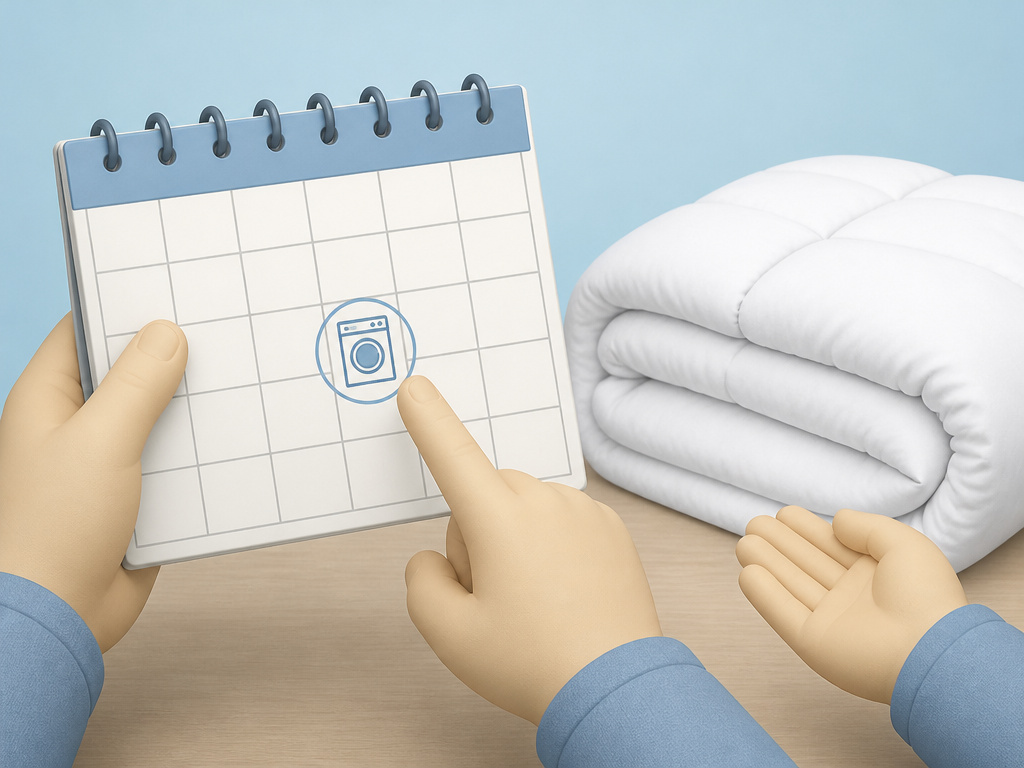
The American Cleaning Institute says monthly, but other experts disagree:
- Monthly: The American Cleaning Institute recommends washing your comforter every month.
- Every 1-3 months: For daily-use beds (Consumer Reports)
- Every 6 months: Guest beds (Consumer Reports)
- 2-4 times yearly: Seasonal or duvet-covered comforters (Maytag)
| Usage | Wash Frequency | Notes |
|---|---|---|
| Daily use + pets | Monthly | More if allergies exist |
| Daily use with sheet | 1-3 months | Most common recommendation |
| Guest bed | Every 6 months | Washed before/after storage |
| With duvet cover | 2-3 times yearly | Wash cover monthly (Whirlpool) |
When to Hand Wash or Use a Bathtub
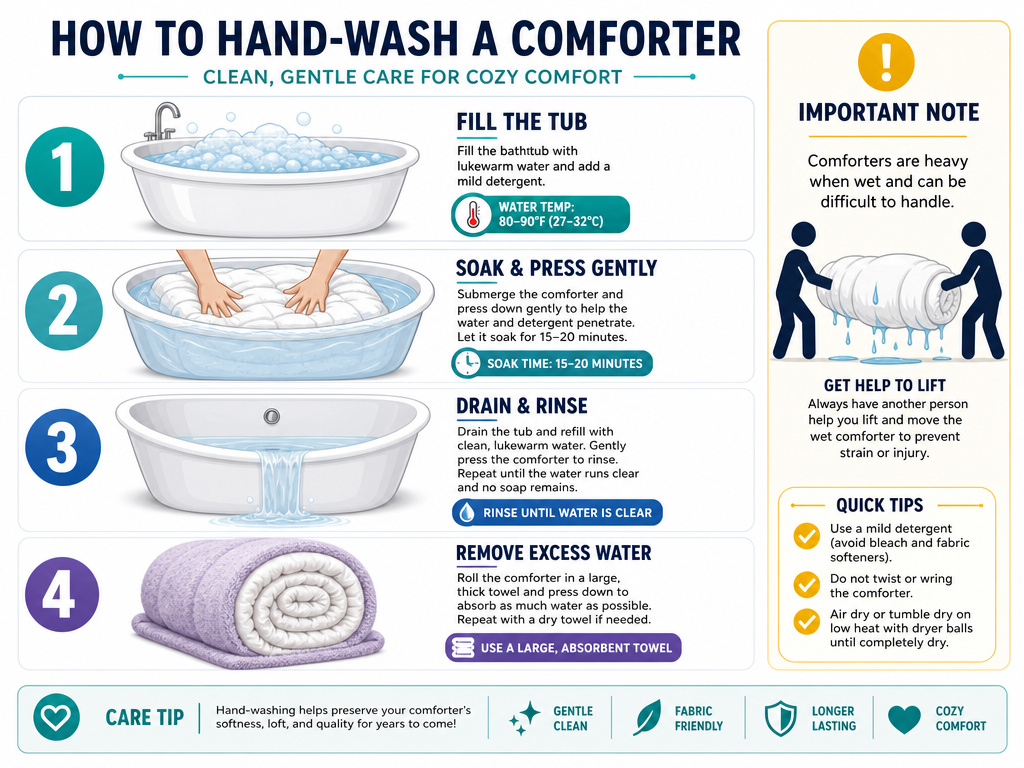
For vintage or delicate comforters, or if your washer is too small:
- Fill bathtub with cool water and mild detergent
- Submerge comforter, gently pressing, no wringing or twisting
- Drain, refill to rinse until water runs clear
- Roll in towels to remove excess water before air-drying
Worth knowing before you start: A sopping wet king comforter can be very heavy. Have a helper for lifting.
Should You Wash a New Comforter Before Using It?
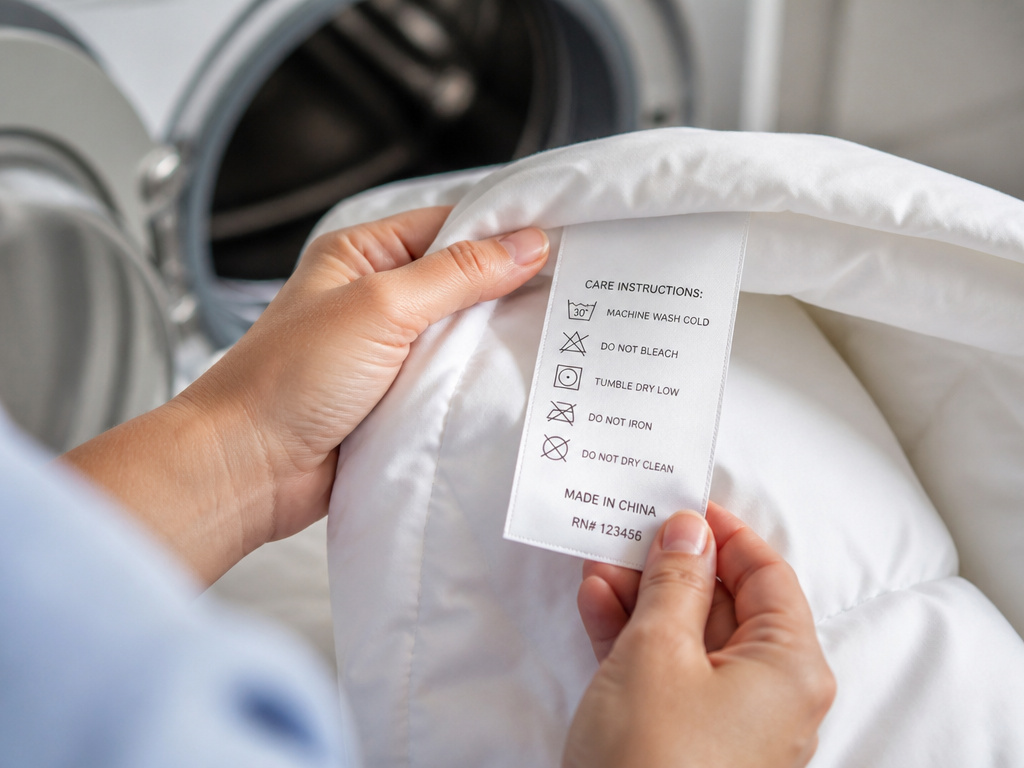
Yes, you should wash a new comforter before its first use. This removes any residues from the manufacturing process and ensures the comforter is fresh and clean for your bed. Always check the care label first for any specific instructions. Follow the general washing guidelines for your comforter’s fill type, using an appropriate cycle and detergent. After washing, make sure the comforter is completely dry before you put it on your bed to prevent any moisture from leading to mold or mildew.
Frequently Asked Questions
Can I wash a comforter in a top-load washer with an agitator?
Yes, but cautiously. Consumer Reports’ Rich Handel notes agitators can twist and damage fills over time. Use a delicate cycle and check for twisting every 10 minutes.
How do I know if my comforter is clean after washing?
Smell the center after drying, any mustiness means remaining moisture. Down should feel light and fluffy; synthetics should have even loft with no clumps.
What if my comforter says “dry clean only”?
For down or wool, heed the label. For synthetics labeled dry clean only, try hand washing first, many manufacturers overstate to avoid warranty claims.
Why does my comforter smell worse after washing?
This usually means trapped moisture. Rewash and dry thoroughly to remove trapped moisture.
The Bottom Line
Skip dry cleaning unless your comforter is wool or silk, most modern synthetics and downs survive machine washing when you:
- Use a large enough washer (5.0 cu. Ft. For kings)
- Pick the bulky or bedding cycle for most comforters, or the delicate cycle for older fills.
- Dry completely (3+ hours with fluff breaks)
For duvet-covered comforters, wash the insert every three to six months and the cover monthly, that balance keeps bedding fresh without wearing out the fill prematurely.
