
How to Wash Pillows: Step-by-Step (Without Damage)
This post contains affiliate links. As an Amazon Associate, we earn from qualifying purchases.
Most pillows can be safely washed in warm water on a gentle cycle with mild detergent, but materials like memory foam require spot-cleaning only. Always check the care tag first, down needs cool water and low heat, while synthetics tolerate warmer temperatures and can use bleach if 100% polyester.
The tag holds the truth. Every pillow type has specific needs, and ignoring them turns a simple wash into a ruined fill. Feathers clump if overheated, foam cracks when submerged, and poly-fill melts at high temps, but done right, a clean pillow lasts years longer. Knowing how to wash pillows correctly is therefore essential.
What follows: the prep steps most skip (like balancing the load), material-specific wash cycles, and the drying tricks that prevent mildew. Plus when to accept that no amount of washing will restore a flattened pillow.
Key Takeaways
- Check the tag first, symbols indicate if machine washing, dry cleaning, or spot-cleaning is safe
- Wash in pairs to balance the machine load, per Sleep Foundation and Consumer Reports testing
- Air-drying risks mildew for down and synthetics according to Clorox, but the Sleep Foundation notes some pillows can be dried outside; using low heat with dryer balls is an alternative.
- Solid memory foam cracks if submerged and should be spot cleaned only; for shredded memory foam, check the manufacturer’s instructions as some may be hand or machine washable.
- Replace any pillow that folds in half without springing back, washing can’t restore loft once the fill breaks down.
The 3-Step Prep Before Washing Any Pillow
Before you start: Never wash pillows without checking the care tag first. Submerging a dry-clean-only pillow voids warranties, and machine-washing solid foam causes irreversible damage.
- Decode the care tag Look for these symbols:
- Dry clean only: Circle
- Hand wash: Basin with hand
- Machine washable: Basin with water waves
-
Bleach allowed: Triangle
-
Pre-treat stains For stains, first check the care tag to see if the pillow can be washed or if it is spot clean only.
-
Balance the load Consumer Reports found washing two pillows together prevents the washer from stalling. If you have only one, add towels of similar weight.
How to Wash Down and Feather Pillows
A Sleep Number DownComfort™ pillow needs different care than a synthetic. Feather fill clumps aggressively if washed wrong. I learned this after ruining a hotel-style pillow by using hot water. The down stuck together in damp clumps that never fully dried.
The right way:
- Use cool or warm water (per Sleep Foundation) and a detergent for delicates; sources vary, with Clorox recommending warm and Sleep Number recommending cold for some down-alternative pillows.
- Select the delicate cycle with an extra rinse (Clorox confirms this removes soap residue)
- Skip fabric softener, it coats feathers and reduces loft
| Mistake | Result | Fix |
|---|---|---|
| Hot water wash | Feathers lose loft permanently | Always cool or warm |
| High-heat drying | Brittle, cracked quills | Low heat with dryer balls |
| Overloading the dryer | Uneven drying → mildew risk | 2-3 cycles with fluffing between |
Drying trick: Add clean tennis balls or dryer balls to break up clumps. Sources disagree on heat: Sleep Foundation recommends lowest heat over multiple cycles, Consumer Reports recommends no-heat air-dry, and Clorox recommends high heat.
Washing Memory Foam Pillows: What Actually Works
Common mistake: Washing solid foam. The Sleep Foundation warns this cracks the material, once damaged, it won’t rebound properly under your head.
For solid foam (Tempur-Pedic, etc):
- Vacuum surface dust monthly
- Spot clean with mild soap and a damp cloth
- Air dry flat away from sunlight (heat warps foam)
For shredded foam (if tag allows washing):
- Hand wash in lukewarm water with a drop of detergent
- Gently squeeze, never twist or wring
- Dry in direct sunlight with a fan blowing across it (per Sleep Foundation)
How Often to Wash Pillows
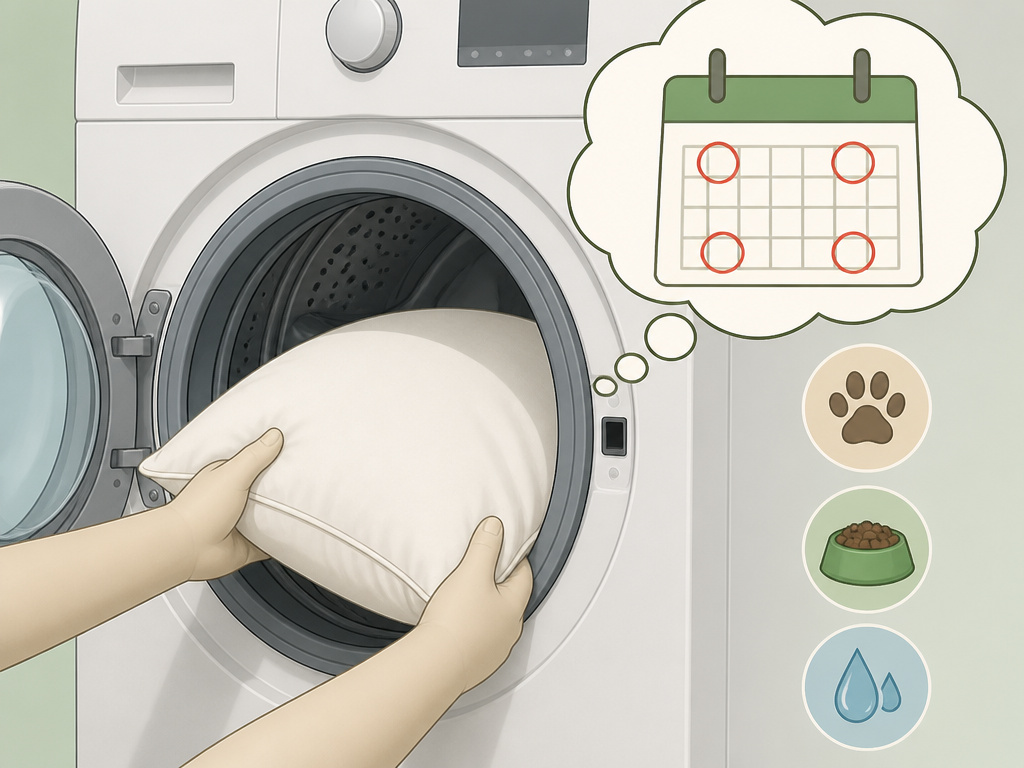
Consumer Reports and Sleep Foundation agree:
- Every 3-6 months for standard use
- Quarterly if you:
- Sleep hot and sweat
- Eat in bed
- Share the bed with pets
Throw pillows should be washed once every 3 to 6 months, depending on how frequently they are used.
Why You Should Skip Fabric Softener on Pillows
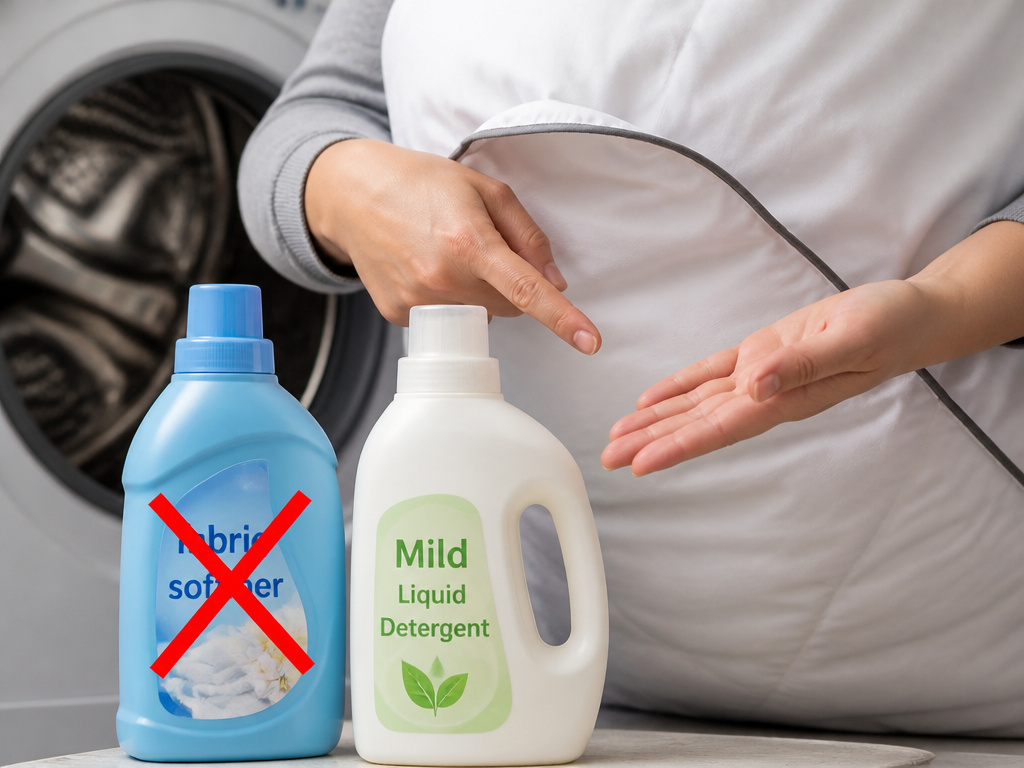
Fabric softener is not recommended for washing pillows. It can leave a coating on the fibers that traps moisture and prevents proper drying, which may lead to mildew or musty odors inside the pillow. For materials like down and feather, this residue can cause the fill to clump together, ruining the pillow’s loft and comfort. Instead, use only a small amount of mild detergent. If you are concerned about softness, fluffing the pillow thoroughly during the drying process is a safer way to help restore its shape.
When to Use a Second Rinse Cycle
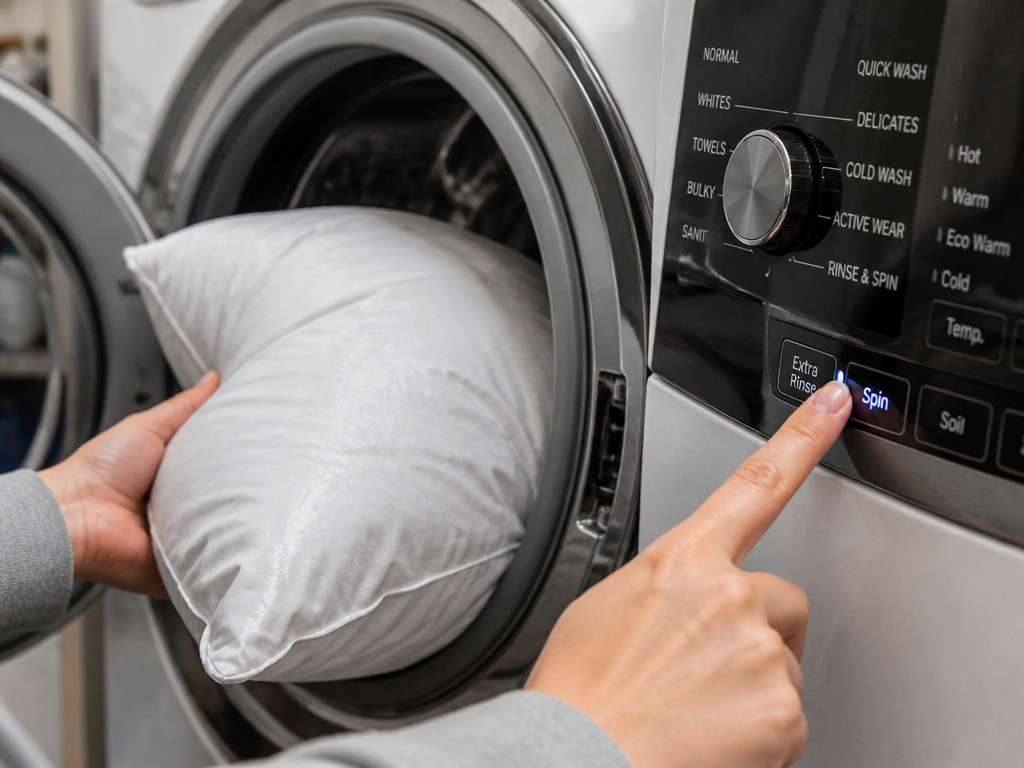
An extra rinse cycle is particularly useful for certain pillow types to ensure all detergent is removed. For feather and down pillows, adding another rinse cycle helps eliminate any lingering soap residue that could cause the fill to clump, a key detail in how to wash pillows. This step is a practical way to protect the delicate materials. If your washing machine has the option, selecting an extra rinse can be beneficial for other pillow fills as well, as it helps prevent detergent buildup that might irritate skin or affect the pillow’s feel.
How to Handle Yellowing and Stains on Pillows
For stains and yellowing, first check the care tag in your research on how to wash pillows to see if the pillow can be washed or if it is spot clean only. Solid memory foam pillows, for example, should only be spot cleaned with a solution of mild detergent and water. For machine-washable pillows like synthetics, using warm water and a gentle cycle with a small amount of mild detergent is a good start. Always allow the pillow to dry completely after cleaning, as lingering dampness can worsen discoloration. For persistent issues, consistent cleaning according to the pillow’s material guidelines is the best approach.
Frequently Asked Questions
Can you wash pillows in a top-loading washer?
Yes, but Consumer Reports recommends front-loaders for gentler action. If using a top-loader:
- Select the shortest gentle cycle
- Stop and redistribute the load if it becomes unbalanced
Why do my pillows smell musty after washing?
Incomplete drying causes mildew. Sleep Number pillows require 2-3 dryer cycles on low heat, the exterior can feel dry while the core stays damp. Adding dry towels speeds the process.
How do you fluff a pillow after washing?
For down: Use the no-heat dryer cycle with tennis balls or dryer balls. For foam: Air dry flat as recommended by Consumer Reports and Sleep Number.
The Bottom Line
Replace any pillow that folds in half without springing back, no wash restores dead fill. For others, stick to the tag’s instructions: cool water for down, spot-cleaning for foam, and always dry longer than you think necessary. A pillow that survives twenty washes beats one that looks perfect but can’t hold its shape.
