
Mattress Topper Pros and Cons: How to Choose the Right One
This post contains affiliate links. As an Amazon Associate, we earn from qualifying purchases.
A mattress topper adds 1 to 4 inches of cushioning to your bed, improving comfort and extending mattress life, but it cannot fix a sagging or lumpy mattress. Memory foam needs at least 1½ inches for pressure relief, latex sleeps cooler, and wool resists mildew, with prices ranging from $100 to $400 for a queen size.
That height change is where most people run into trouble. A 3-inch topper on a 12-inch mattress pushes standard sheets past their pocket depth, leaving you hunting for deep-pocket alternatives before the first wash. The right topper adjusts your sleep surface without turning your bedding into a mismatched puzzle, so it’s useful to weigh the mattress topper pros and cons.
What follows: the real trade-offs between foam, latex, and down toppers; why thickness matters more than marketing claims; and the one mistake that burns out toppers twice as fast as normal wear, all part of the mattress topper pros and cons. We will also discuss ways to secure the topper for restless sleepers, present temperature data from sleep lab tests, and explain when you should skip a topper entirely.
Key Takeaways
- Consumer Reports recommends a memory foam topper that’s at least 1½ to 2 inches thick for minimizing mattress vibrations. For optimal pressure and temperature relief, sources disagree, with the Sleep Foundation recommending 3–4 inches for comfort and a ScienceDirect study finding 30mm (1.2 inches) optimal.
- High-rebound toppers sleep 0.3–0.5°C cooler than low-rebound toppers and increase deep sleep by 24–28% in initial sleep phases (PMC study)
- According to Consumer Reports, a high-quality mattress topper typically lasts three to five years, while NCOA states most mattress toppers last about 2–5 years.
- Parachute’s down mattress topper is dry-clean only.
- Shifting toppers can cause sheet pops and uneven wear at the seams.
The 1½ to 2-Inch Sweet Spot for Memory Foam Toppers
Six months into testing a budget memory foam topper, I noticed dimples where my hips rested, but only in the center third of the bed. Turns out, the 1-inch edges weren’t thick enough to rebound after compression, while the 2-inch middle held up fine.
“Look for a memory foam topper that’s at least 1½ to 2 inches thick to get the full benefit of minimizing mattress vibrations.”. Consumer Reports
This aligns with lab tests showing foam under 1.5 inches bottoms out under adult weight, losing its pressure-relief properties, a key point in the mattress topper pros and cons. For side sleepers or anyone over 130 pounds, the 2-inch mark is safer. Egg-crate foam, convoluted foam, and polyfoam toppers are often under $130.
Slow recovery foam sleeps hotter and develops body impressions faster.
Latex vs. Memory Foam: The Temperature and Support Trade-Off
| Feature | Latex Topper | Memory Foam Topper |
|---|---|---|
| Sleep Temperature | Stays 0.3–0.5°C cooler | Traps body heat |
| Deep Sleep Increase | +24–28% in first 2 hours | No significant change |
| Lifespan | 5–7 years | 3–5 years |
| Price (Queen) | $300–$2,500 | $100–$400 |
The PMC study explains why high-rebound toppers may help hot sleepers: they can dissipate heat, dropping core body temperature. In young subjects, minimum CBT was 36.05°C with a high-rebound topper versus 36.35°C with a low-rebound topper. That half-degree difference helps you fall asleep faster and stay in deep sleep longer.
Downside? Latex costs more, with latex toppers generally costing about $500., and its bouncy feel annoys some combination sleepers. Memory foam’s hug suits restless partners better, as it absorbs motion across the bed.
When a Topper Can’t Help (And When It Shines)
Common mistake: Buying a topper to fix a sagging mattress. Consumer Reports’ Buddy Delaney confirms: “A topper can’t salvage a mattress with a collapsed middle or broken springs.”
Toppers excel at three jobs:
- Softening a too-firm mattress, 3 inches of memory foam eases hip/shoulder pressure for side sleepers
- Adding cooling. A 30mm high-rebound topper reduced testers’ body heat by 0.5°C in the ScienceDirect trial
- Buying time. Extend a lightly worn mattress’s life by 1–2 years while you save for a replacement
But they fail at structural fixes. If your mattress dips more than 1.5 inches under weight, or you wake with back pain from lack of support, a topper is a temporary patch at best.
Stomach Sleepers: The Firmness Most Guides Miss
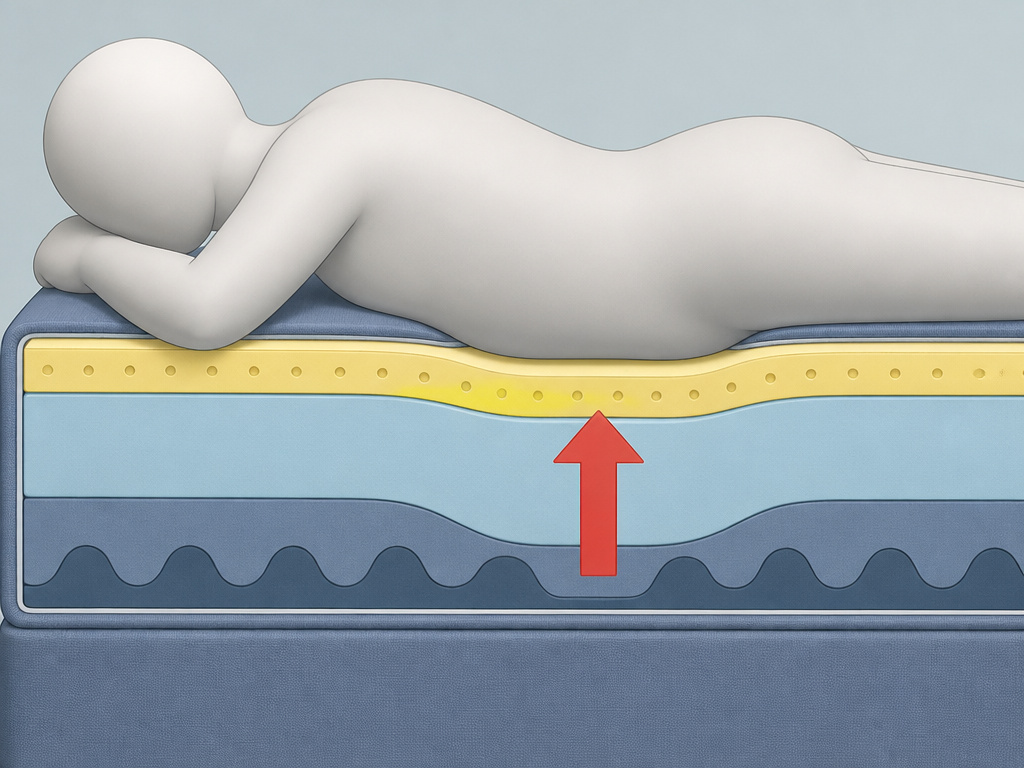
Stomach sleepers need firmer support than back or side sleepers, but most topper advice skips this. The Sleep Foundation’s weight guidelines apply here:
- Under 130 lbs: Medium-firm (5–6 on firmness scale)
- Over 130 lbs: Firm (7–8) to prevent spinal arching
A soft topper may let your hips sink too deep, straining your lower back. Latex or a thin (1–2 inch) high-density foam topper maintains better alignment.
Securing Your Topper: No More Midnight Adjustments
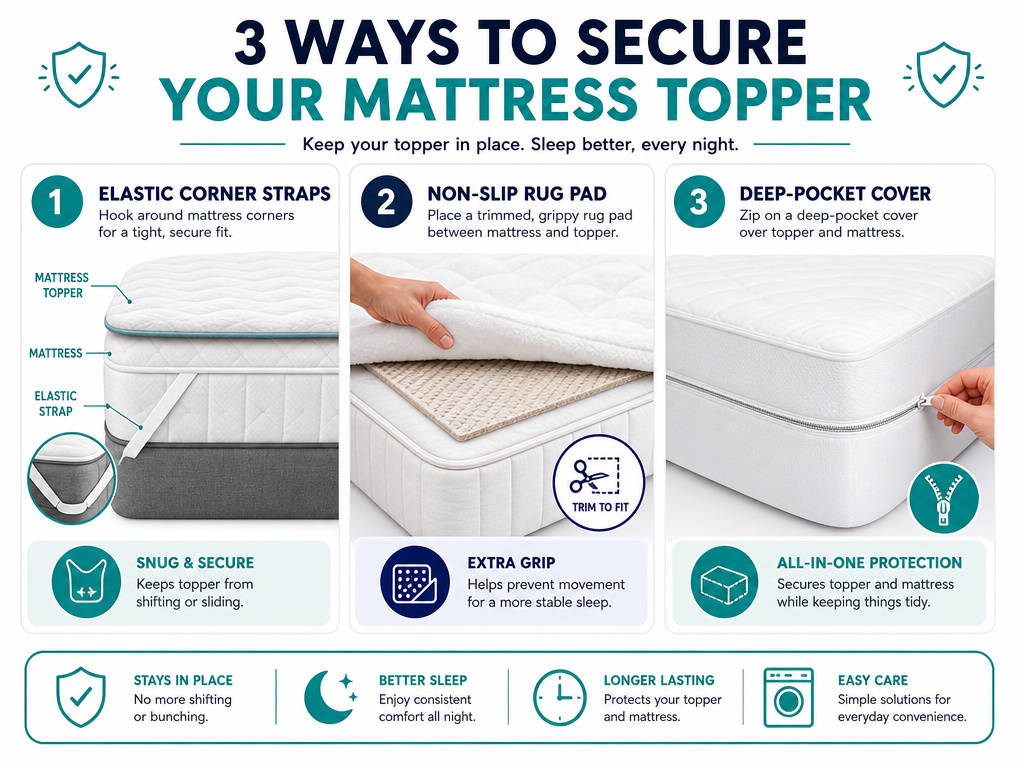
Three methods stop shifting:
- Elastic corner straps grip the mattress like suspenders.
- Non-slip rug pads under the topper add friction without adhesives, trim to size with scissors
- Deep-pocket mattress covers encase both topper and mattress, though they reduce breathability
Some toppers have a grippy underside designed to stay in place without straps. But for most toppers, skipping the anchors means waking up on bare mattress by week three.
Cleaning by Material: What Works (And Ruins) Each Type
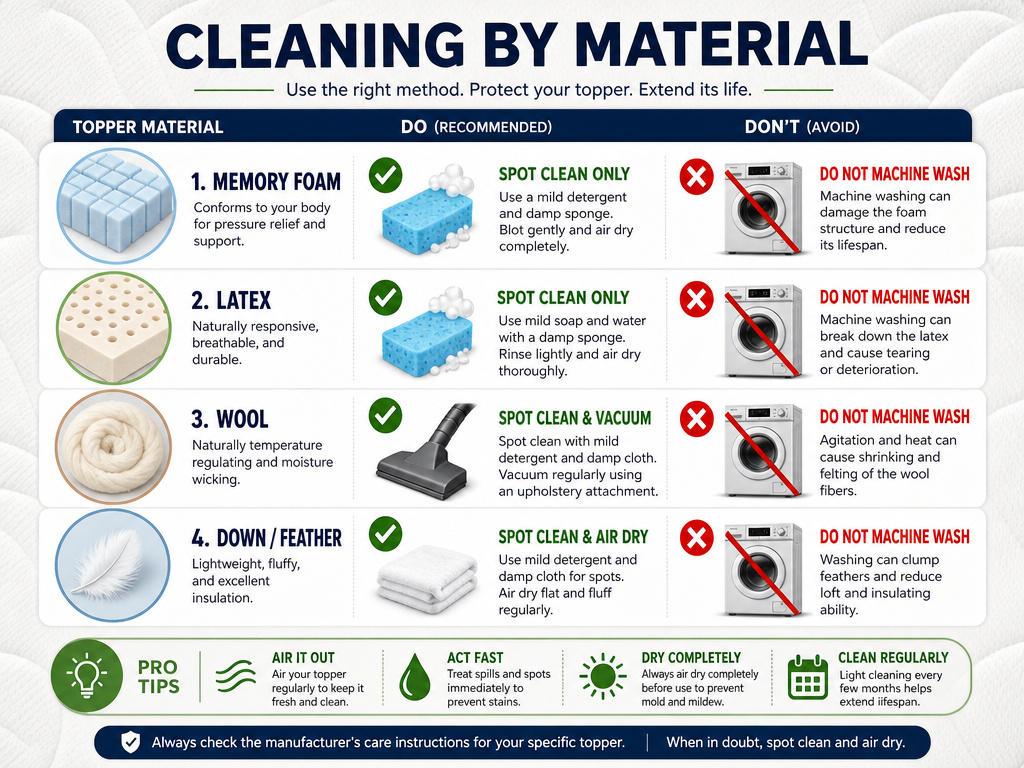
| Material | Cleaning Method | Never Use |
|---|---|---|
| Memory Foam | Spot clean with mild soap | Machine wash |
| Latex | Wipe with damp cloth | Bleach or steam |
| Wool | Professional dry-clean | Home washing machines |
| Down | Dry-clean only (Parachute) | Any liquid detergent |
That last one matters, machine-washing a down topper destroys its loft, leaving flat spots.
Are mattress toppers bad for allergies?
The material of your topper directly impacts your allergy risk. Some materials can harbor dust mites and mold if not properly cared for, while others are naturally resistant. For anyone sensitive to allergens, choosing a material that is easy to clean and less hospitable to mites is key. Always check the care instructions, as some toppers require professional cleaning which may not remove allergens effectively.
Frequently Asked Questions
Do mattress toppers really make a difference?
Yes, for specific issues: a 2-inch memory foam topper can reduce pressure on firm mattresses., while latex improves temperature regulation. They don’t fix sagging or structural problems.
Why are people no longer buying memory foam?
Some avoid it due to heat retention, high-rebound latex or gel-infused foams now address this. But memory foam is still popular for pressure relief.
How often should you replace a mattress topper?
Replace memory foam toppers every 3–5 years. Lifespans for other materials vary. Signs include permanent body impressions, thinning areas, or waking up sore.
Can you use a topper with an adjustable bed?
Yes, but choose one under 3 inches thick and confirm it’s flexible enough to bend with the base. Latex and segmented foam work best.
The Bottom Line
Skip the topper if your mattress sags more than 1.5 inches, no pad fixes broken springs. For everyone else: pick latex if you sleep hot, memory foam for pressure relief, and wool if allergies flare up. Measure your mattress height first, a 16-inch stack needs extra-deep sheets.
