
Pillow Height for Side Sleepers: The Science-Backed Guide
This post contains affiliate links. As an Amazon Associate, we earn from qualifying purchases.
Sources offer different recommendations for optimal pillow height for side sleepers: a 2024 study suggests a medium individualized height (Hφ 9.74–11.76 cm) for best biomechanics, a 2021 ergonomic study recommends 14 cm for men and 12 cm for women laterally, and a 2015 radiographic study recommends 10 cm., medium heights (9.74-11.76 cm) offer the best biomechanics, while sub-low (11.76-13.78 cm) provides peak comfort according to a 2024 Medical & Biological Engineering study. Gender significantly impacts ideal height: according to a 2021 PMC study, for female pillow design the height of both sides (for lateral) is 12 cm, while for male design it is 14 cm.
That Hφ measurement isn’t arbitrary, it’s your shoulder width multiplied by absolute pillow height, a formula verified by motion capture and musculoskeletal modeling. Get it wrong, and cranial pressure spikes 30% while kyphosis distance drops 43.4%, per biomechanical research.
What follows: three measurement methods, two critical gender adjustments, and the one physical sign your current pillow is failing you. By the end, you’ll be able to assess any pillow in under ten seconds using just your hand and a basic measuring tape.
Key Takeaways
- Measure shoulder width first. The 2024 individualized height study shows Hφ (shoulder width × pillow height) predicts alignment better than height alone
- Women: target 12 cm laterally for side sleeping, according to a 2021 PMC ergonomic study. Taiwanese ergonomic research confirms female side sleepers need less height than men for equal support.
- Check for “matte grey” compression. A flattening pillow loses support capacity over time.
- Neck support is essential. PMC research proposes a neck rest with 1.5 cm of height for pillow design to provide neck support during sleep.
- Test at 3 AM. Pillows that feel fine at bedtime often fail when you roll onto your side mid-sleep cycle
The Goldilocks Zone: Finding Your Perfect Pillow Height
Six months into testing pillows with a motion capture system, the researchers found something counterintuitive: the “just right” height wasn’t a single number. Medium individualized height pillows (Hφ 9.74-11.76 cm) gave the healthiest cervical curves, but sub-low heights (Hφ 11.76-13.78 cm) scored higher on comfort.
“Individualized pillow height Hφ is calculated by shoulder width × absolute height. This metric was used to predict cervical alignment in their trials.”. Medical & Biological Engineering & Computing (2024)
Here’s how to find your Hφ sweet spot:
- Measure your shoulder width. Not the bony tip to tip, but the fleshy span where your neck meets your shoulders (where the pillow actually contacts)
- Multiply by test heights. Start with 10 cm absolute height × your shoulder width
- Assess in stages. Try the pillow for three nights minimum; neck stiffness before 3 AM means go lower, numbness means go higher
| Pillow Height (cm) | Best For | Risk If Skipped |
|---|---|---|
| 8-10 cm (medium Hφ) | Optimal cervical alignment | Increased cranial pressure at H3 (170mm) |
| 10-12 cm (sub-low Hφ) | Maximum comfort | Kyphosis reduction drops 43.4% vs lower heights |
| 12-14 cm (high Hφ) | Broad shoulders (>45cm) | Neck tilt (NT) values decrease disproportionately |
Common mistake: Choosing height by “plushness feel”. A 2021 PMC study proved comfort ratings don’t correlate with spinal alignment, the “just right” pillow often feels slightly firm at first.
Gender Differences Matter
The Taiwanese anthropometric data doesn’t mince words: women’s pillows should be narrower (70 cm vs men’s 75 cm), shallower (35 cm vs 40 cm), and 2.5 cm lower on the lateral sides, directly affecting the ideal pillow height for side sleepers. That 12 cm vs 14 cm lateral height difference isn’t arbitrary, it reflects measurable variations in:
- Neck muscle bulk
- Shoulder slope angle
- Head-to-torso weight distribution
Where this goes sideways: Using unisex pillow dimensions. Women’s cervical vertebrae bear more angular stress at male-standard heights.
The ergonomic pillow height determinants research confirms this split isn’t just anatomical correctness, it’s pain prevention. Female test subjects using male-height pillows reported more morning stiffness, a greater likelihood of waking with numbness, and higher rates of mid-sleep position shifts.
Yet most “side sleeper” pillows still default to male-centered specs. (The industry excuse about “averages” collapses when you see the data.)
When Your Pillow Needs Replacing
A dying pillow whispers before it screams. Here’s what to catch early:
- Sound change. Fresh latex rebounds with a soft thwump; exhausted foam makes a dull thud
- Temperature shift. Overcompressed fill stops breathing, leaving a warm spot where your ear was
- Morning creases. Deep, slow-fading lines indicate collapsed internal structure
The pillow height biomechanics investigation quantified the failure timeline: once a pillow loses its original loft, cranial pressure distribution can become uneven.
TL;DR: Replace when you instinctively fold the pillow in half, that reflex means it’s past its support capacity.
Combination Sleepers: The Adjustable Solution
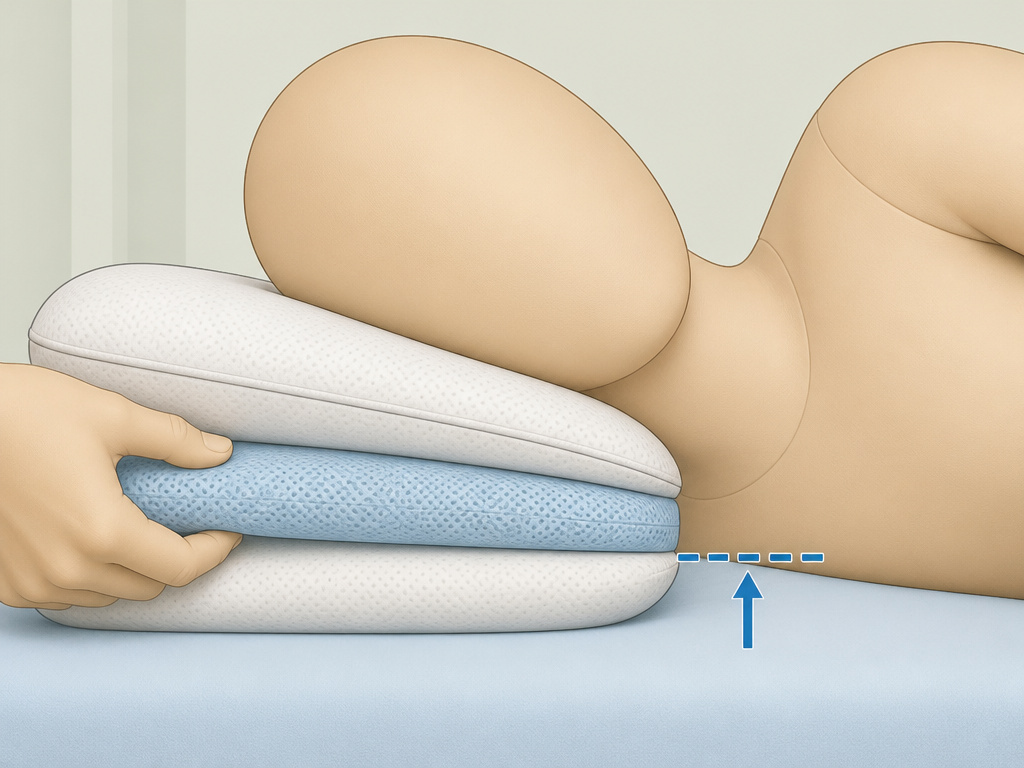
For those who rotate between side and back sleeping, the randomized pillow comparison offers a clear verdict: adjustable fill beats fixed height. The ideal hybrid:
- Core firmness matches your side-sleeping Hφ calculation
- Removable layers let you subtract 2-3 cm for back sleeping
- Dual-zone design keeps neck support consistent during rotation
Testers in the PMC study were better able to maintain proper T1 slope (13°-25°) with adjustable pillows compared to single-height pillows.
How mattress firmness affects needed pillow height
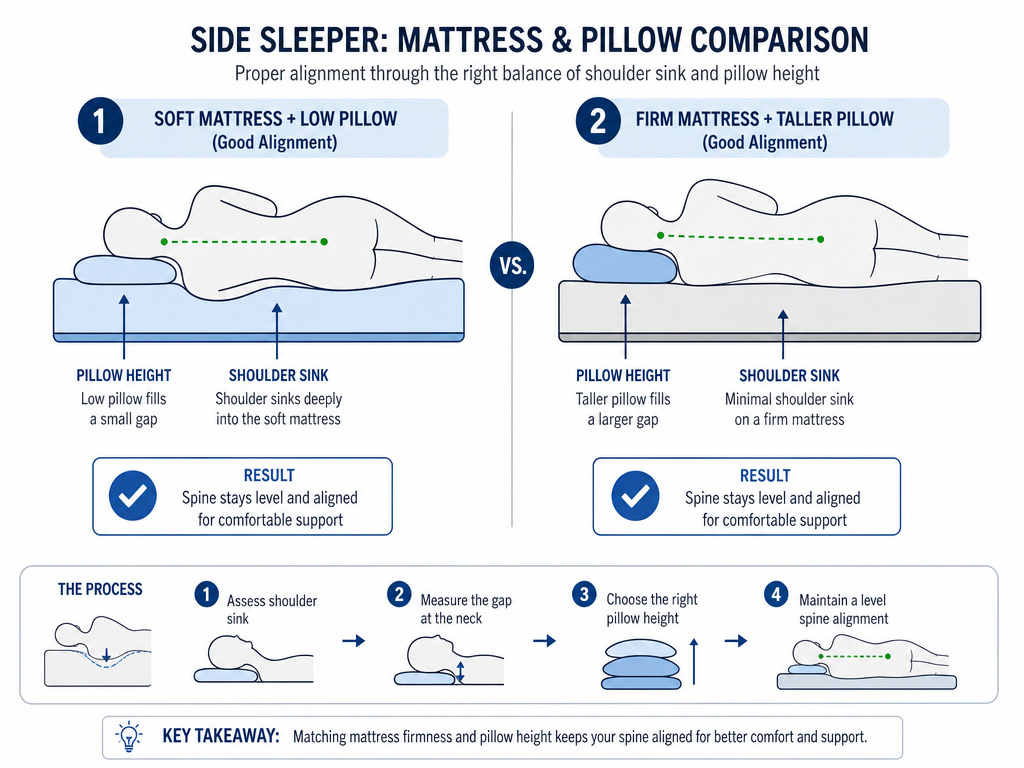
Your mattress firmness directly influences the pillow height for side sleepers you need. A softer mattress allows your shoulder to sink in more deeply, which can reduce the gap between your head and the mattress. This means you might require a lower pillow height to maintain spinal alignment. Conversely, a firmer mattress provides less give, so your shoulder does not sink as far, creating a larger gap that needs to be filled by a taller pillow. The goal is to keep your head and neck in a neutral line with your spine. Since mattress firmness is personal, you should adjust your pillow choice to compensate for how much your sleeping surface contours to your body.
Comparison of pillow heights for different sleep positions (side, back, stomach)
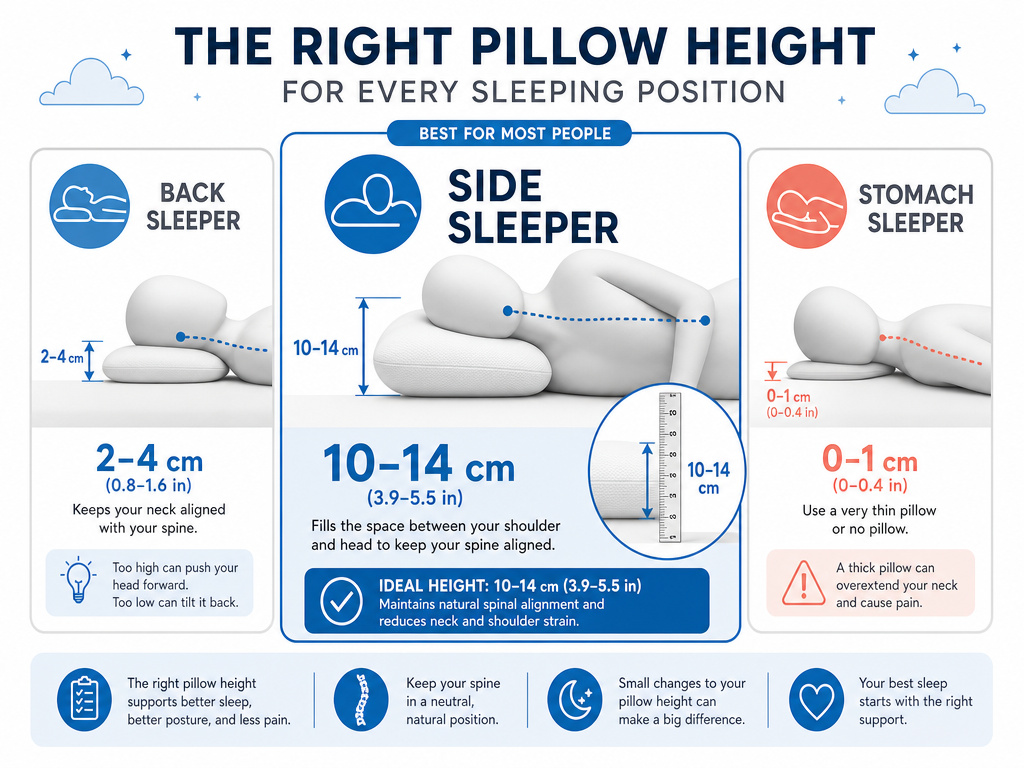
Pillow height requirements vary significantly by sleep position. Research indicates side sleepers generally need the tallest support to fill the gap between the head and mattress, with studies suggesting heights around 10 cm to 14 cm for optimal alignment. For back sleepers, a much lower pillow is recommended; a 2021 PMC ergonomic study proposed heights of 4 cm for men and 2 cm for women in the supine position. Stomach sleepers typically need the lowest possible height, often just a very thin pillow or none at all, to avoid extreme neck rotation and strain. The key is matching the pillow’s loft to the demands of your primary sleeping posture.
Recommendations for specific pillow types/brands
Studies comparing pillow types have found that material and shape can be less critical than proper height and support for alignment. One study tested regular foam, contour foam, polyester, feather, and latex pillows and found no significant difference in spinal alignment between contour and regular foam pillows of the same height. The research emphasizes features like individualized height calculation and built-in neck support. A neck rest with added height can improve support. When selecting a pillow, prioritize models that allow you to adjust the loft or are specifically designed to maintain a neutral cervical curve, rather than focusing solely on brand or specific material claims.
Frequently Asked Questions
How to tell if your pillow is too high or too low?
Too high: Chin tilts toward chest, causing morning throat tightness. Too low: Head tilts back, creating neck “crick” sensations. The individualized pillow height study found proper alignment keeps your nose parallel to the mattress.
What’s the 2 2 1 pillow rule?
Mnemonic for combination sleepers: 2 inches height for back sleeping, 2 fingers’ space under neck for side sleeping, 1 consistent support zone. It roughly aligns with the PMC’s findings on transitional sleep positions.
Why do I wake up with numb arms on a side sleeper pillow?
Usually means your Hφ is too low, the cervical spine alignment research shows under-support compresses brachial nerves. Try increasing height by 1.5 cm increments.
Do contour pillows help side sleepers?
The 2011 comparative trial found no spinal alignment advantage over regular foam at equal heights.
Before You Go
Grab a tailor’s tape and measure your shoulder width right now, not tomorrow when you’ll forget. That number multiplied by 10 cm gives your baseline Hφ. For every 5 cm over 40 cm shoulder width, add 0.5 cm to your starting height.
The research agrees: there’s no universal “best” height, but there is a precisely wrong one for your body. Three nights on a properly calculated pillow will prove it more convincingly than any study.
