
Quilt vs Comforter: Key Differences That Decide
This post contains affiliate links. As an Amazon Associate, we earn from qualifying purchases.
Quilt vs comforter: quilts have three stitched layers with thin batting for moderate warmth and flat drape, while comforters are thick, fluffy bags of insulating fill, baffle-box for even loft or sewn-through for simpler warmth. For most sleepers, quilts work best in warm weather and comforters in cold.
The difference comes down to how they trap heat. A quilt’s compressed batting makes it breathable but limits insulation, while a comforter’s loose fill, down, wool, or synthetic clusters, creates air pockets that retain warmth. Choose based on your climate and whether you sleep hot or cold.
You’ll also get specific recommendations for hot sleepers, cold climates, and layered setups.
Key Takeaways
- Quilts lie flat and typically weigh 2–5 lbs versus comforters’ 2–8 inches of loft, the first breathes, the second insulates
- Baffle-box comforters may resist flattening longer than sewn-through models, while tightly stitched quilts may outlast loose ones.
- Hot sleepers do better with cotton quilts; cold sleepers need down or wool comforters
- Layer quilts over comforters in winter for adjustable warmth, the quilt adds breathable coverage without stifling heat
- Machine-made quilts handle frequent washing better than hand-quilted heirlooms, which need spot care
Quilt vs Comforter Construction
Quilts sandwich a thin batting layer, cotton, wool, or polyester, between decorative top fabric and a plain backing. The stitching compresses the fill, creating that signature flat profile. Comforters encase loose fill (down clusters, synthetic fibers, or wool) in a fabric shell, with baffle-box designs using fabric strips to maintain loft or sewn-through stitching that creates flatter chambers.
Technical snippet: Quilt batting maxes out at 2–3″ thickness (per NapLab), while comforter lofts range 2–8″ (Sleep Foundation). Baffle-box comforters distribute fill evenly for consistent warmth; sewn-through designs compress fill slightly at stitch lines.
The feel test: Run your hand across a quilt and you’ll feel the texture of the stitching, tiny ridges where thread meets fabric. A comforter yields to pressure like a pillow, then slowly rebounds to its original loft.
Here’s how they compare by design:
| Feature | Quilt | Comforter |
|---|---|---|
| Layers | 3 (top, batting, bottom) | 2 (shell + fill) |
| Warmth Source | Compressed batting | Air-trapping fill |
| Drape | Lies flat | Stands puffy |
| Edge Finish | Bound seams | Simple hem |
For beds that need tidy, tailored looks, think guest rooms or tidy sleepers, a quilt’s flat profile wins. Comforters suit those who want hotel-style cloudiness.
Warmth and Seasonal Suitability
Quilts sleep cooler because their thin batting doesn’t trap much air. The Sleep Foundation notes quilts work well in warmer months or mild winters, while comforters are a good option for cold weather. But material changes the calculus:
- Down comforters (500–800 fill power) are warmest but can overheat hot sleepers
- Wool quilts breathe better than polyester batting, handling spring and fall swings
- Synthetics like PrimaLoft mimic down’s loft without allergy risks
Common mistake: Assuming all comforters are equally warm. A 2″ sewn-through polyester comforter insulates less than a 5″ baffle-box wool one. Check loft first, then fill type.
The seasonal switch: Many sleepers use a quilt alone in summer, add it over a comforter in winter for adjustable layers, or fold it at the foot of the bed for decoration.
Durability and Care
Quilts hold up best when: – Tight stitching locks batting in place
- Cotton or wool batting resists clumping after washes
- Edges are bias-bound to prevent fraying
Comforters last longest with:
- Baffle-box construction (prevents fill migration)
- Down-proof fabric that keeps feathers from poking through
- Machine-washable fills like polyester clusters
Where this goes sideways: Washing a delicate heirloom quilt in a regular cycle. The agitation can damage loose stitching. Always check care tags, as some demand hand-washing or professional cleaning. Always check care tags, some demand hand-washing or professional cleaning.
Most machine-made quilts survive years of monthly washes if dried on low heat. Comforters need large-capacity machines; cramming a king-size into a compact washer compresses the fill permanently.
Quilt vs Comforter for Hot Sleepers
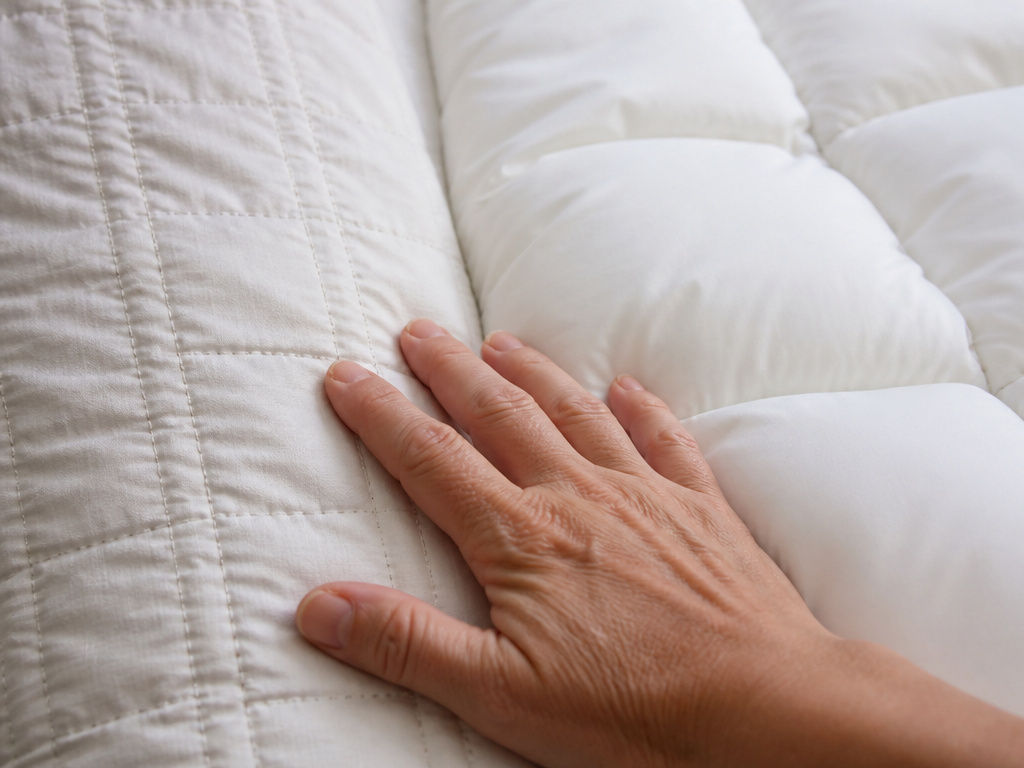
Hot sleepers should prioritize:
- Breathable materials. Cotton quilts over polyester, linen over microfiber
- Lower loft, 2″ quilt batting or lightweight down-alternative comforters
- Moisture-wicking fills. Wool batting pulls sweat away better than polyester
A well-ventilated quilt with cotton batting can offer good airflow for hot sleepers. But if you want fluff without heat, try a low-loft down-alternative comforter.
How much do quilts and comforters cost?
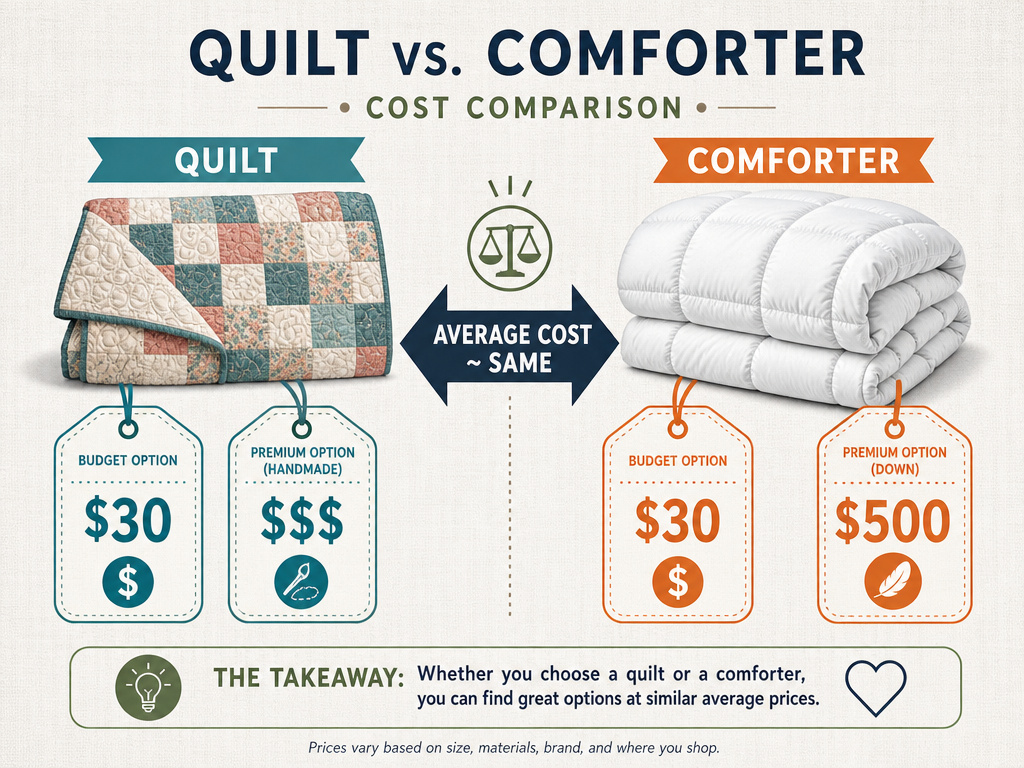
A typical store-bought comforter or quilt will cost about the same on average. The cheapest comforters can run as low as $30. However, the cost can rise significantly based on materials and construction. Hand-made quilts, especially patchwork ones, are often more expensive due to the labor involved. For comforters, a down-filled option can cost up to $500, much more than a basic synthetic version. When budgeting, consider not just the initial price but also the potential lifespan and care requirements of the bedding.
Quilt vs comforter vs duvet: what’s the difference?
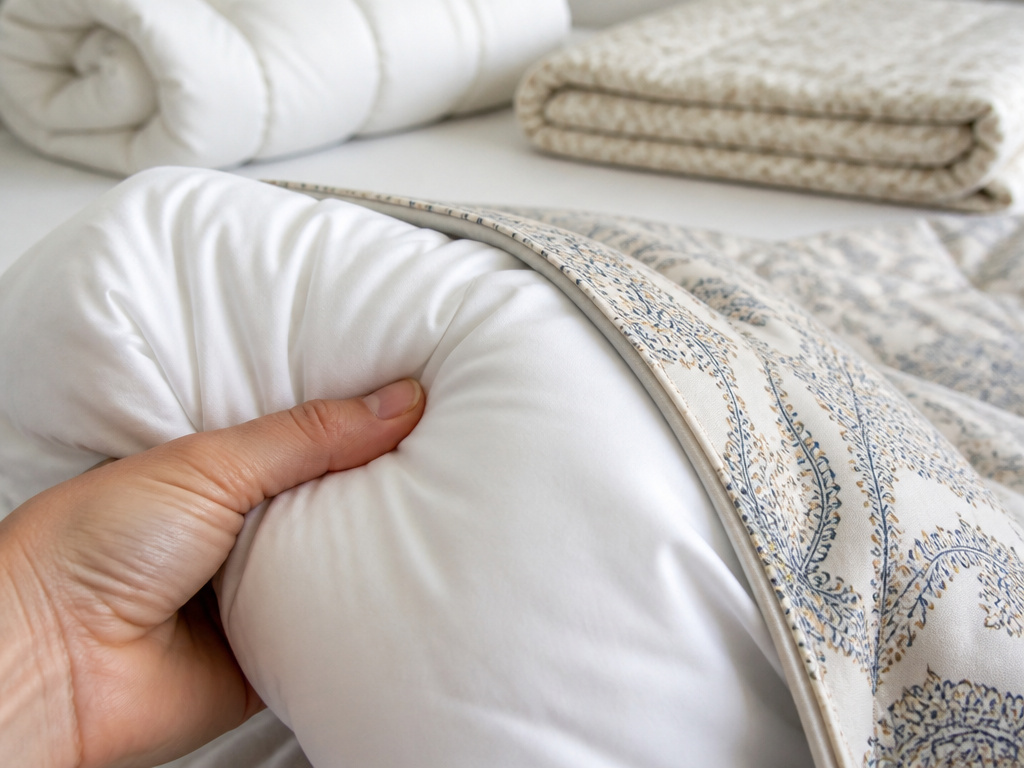
A duvet is a separate category from both quilts and comforters. It is a soft, plush bag of insulation, typically with the highest loft and designed to provide the most warmth, especially when filled with down. Unlike a comforter, which is a finished bedding piece with its own fabric shell, a duvet is meant to be inserted into a removable cover. This cover protects the duvet insert, meaning the duvet itself needs less frequent cleaning. Duvets tend to last longer than both quilts and comforters. They are a good option for cold weather and for sleepers who tend to run cool, but may be too heavy for warmer months.
Frequently Asked Questions
Are quilts good for winter?
Quilts work in winter only if layered. Alone, most can’t handle below-freezing temps, their compressed batting lacks enough insulation. Pair a quilt with a wool blanket or lighter comforter for adjustable warmth.
Can you put a quilt over a comforter?
Yes. This adds warmth while keeping the bedding breathable. The quilt’s tight weave blocks drafts while the comforter underneath provides loft. Fold the quilt at the foot of the bed for easy removal if you overheated.
Which is more durable, a quilt or comforter?
Durability varies: The Sleep Foundation states duvets tend to last longer than both quilts and comforters, while Mattress Nerd suggests a high-quality comforter can last 15 years and a properly cared for quilt can last well over 10 years. Quilts last via tight stitching; comforters via fill retention. Avoid sewn-through comforters and heirloom-style quilts with wide stitch spacing, both degrade faster.
Do hotels use quilts or comforters?
Most hotels use duvets (a type of comforter with a removable cover) for easy washing. Some boutique properties use quilts for a homespun aesthetic, but these are usually display-only atop duvets.
Before You Go
The climate rule: Quilts for humid summers and mild winters; down or wool comforters for dry cold. If your winters regularly go below 30°F, you need a comforter; a quilt alone won’t work.
First step tonight: Feel your current bedding at 3 a.m. If you’re sweating, try a quilt or lighter comforter. Shivering? Layer a quilt over your comforter or upgrade to a higher-loft model.
One contrarian take: Don’t assume down is always better. A high-quality down-alternative comforter with 400+ GSM fill beats cheap, low-fill-power down that clumps in a year. Warmth comes from loft and fill weight, not just the label.
