
Types of Pillow Fillings: By Sleep Position
This post contains affiliate links. As an Amazon Associate, we earn from qualifying purchases.
Pillow fillings come in eight main types: down, feather, memory foam, latex, buckwheat, wool, kapok, and polyester. Each has distinct support, temperature regulation, and durability traits, the best choice depends on sleep position, allergies, and personal preference. Side sleepers need medium-firm 3-5 inch loft; back sleepers do best with medium 3-5 inch; stomach sleepers require soft under 3 inch.
The California Bureau of Household Goods and Services defines legal terms for fillings, “batting” for layered fibers, “gel” for semi-solid mixtures, and “waste” for materials with over 7% trash content or 10% undecorticated fiber. These standards shape what you’ll find inside quality pillows versus budget options, including the types of pillow fillings available.
What follows: filling definitions from regulatory documents, pressure distribution data from sleep studies, allergy risks per material, and the care each of the types of pillow fillings needs to last. By the end, you’ll decode any pillow label and know which filling matches your nights.
Key Takeaways
- Down and feather pillows offer adjustable loft but require frequent fluffing and can trigger allergies (down vs feather).
- Memory foam contours to your head shape at body temperature but sleeps hot, a dealbreaker for warm climates.
- Latex comes shredded or solid, shredded adjusts easily; solid lasts 3+ years without clumping.
- Buckwheat hulls provide 60,950 EU/g endotoxin when new (12.5x synthetic pillows per NIH research).
- Wool and kapok resist dust mites naturally but need periodic sun-drying to prevent compaction.
Down and Feather Fillings
The Venygood orthopedic pillow uses polypropylene capsules in a 50×45 cm roll shape, varying from 8 cm to 4 cm in depth. Down clusters (the soft undercoating of geese) and feathers (the outer quills) differ in loft and durability.
Down pillows compress fully and rebound repeatedly, while feather pillows retain quill structure that can poke through fabric over time.
Three factors decide between down and feather:
- Loft adjustability. Down reshapes easily; feather holds firmer structure
- Allergy risk. Feather quills harbor more dust mites (1.08 µg/g Der f 1 after 3 months)
- Care requirements. Down clumps when wet; feathers bend irreversibly in machines
Memory Foam Fillings
Memory foam pillows like the Sinomax model (50×38 cm, 10-6.5 cm contour) use polyurethane that softens at body temperature. The Yonsei study found memory foam generated less peak pressure on the neck than microfiber fills, but ranked lower for subjective comfort.
Common mistake: Choosing high-density memory foam for hot climates. The material absorbs and retains body heat, leading to night sweats even with “cooling” gel infusions.
Latex Fillings
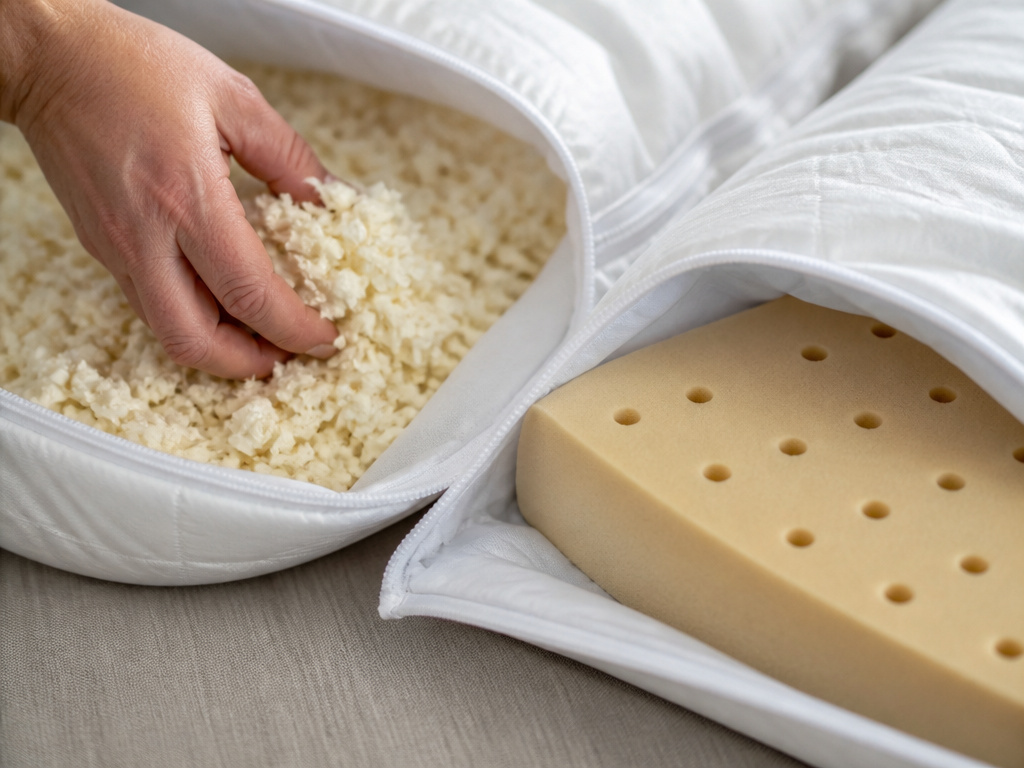
Latex pillows come shredded or solid. Shredded latex mimics down’s adjustability but without the allergy risk, it’s the only filling that meets GOLS organic certification standards. Solid latex holds its shape 3x longer than memory foam but lacks customization.
- Shredded latex: Loft adjusts easily; requires monthly fluffing to prevent clumping
- Solid latex: Maintains 5-inch loft for 3+ years; too firm for stomach sleepers
Latex can resist tensile strength loss better than some synthetic fills, particularly in 100% natural rubber, not synthetic blends.
Buckwheat Hull Fillings
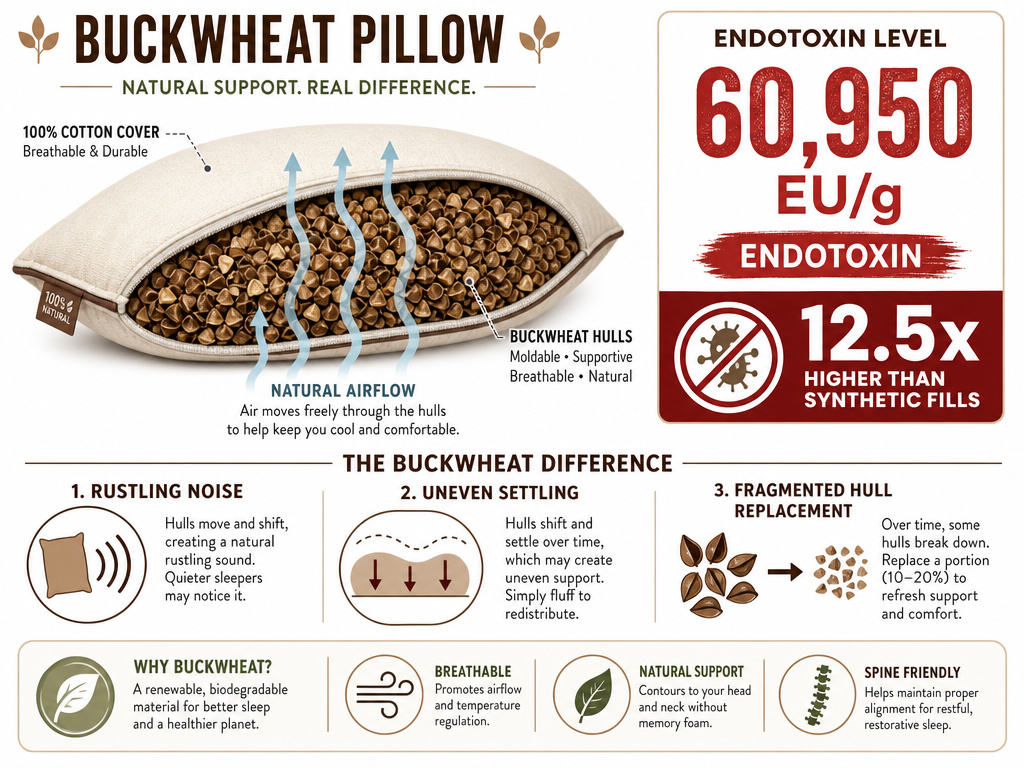
That earthy smell from new buckwheat pillows? It’s 60,950 EU/g of endotoxin, 12.5x higher than synthetic fills according to NIH measurements. The hulls provide unmatched airflow and adjustability, but:
- They’re noisy, rustling with every head turn
- They settle unevenly unless rotated weekly
- They require replacement as hulls fragment over time.
Wool and Kapok Fillings
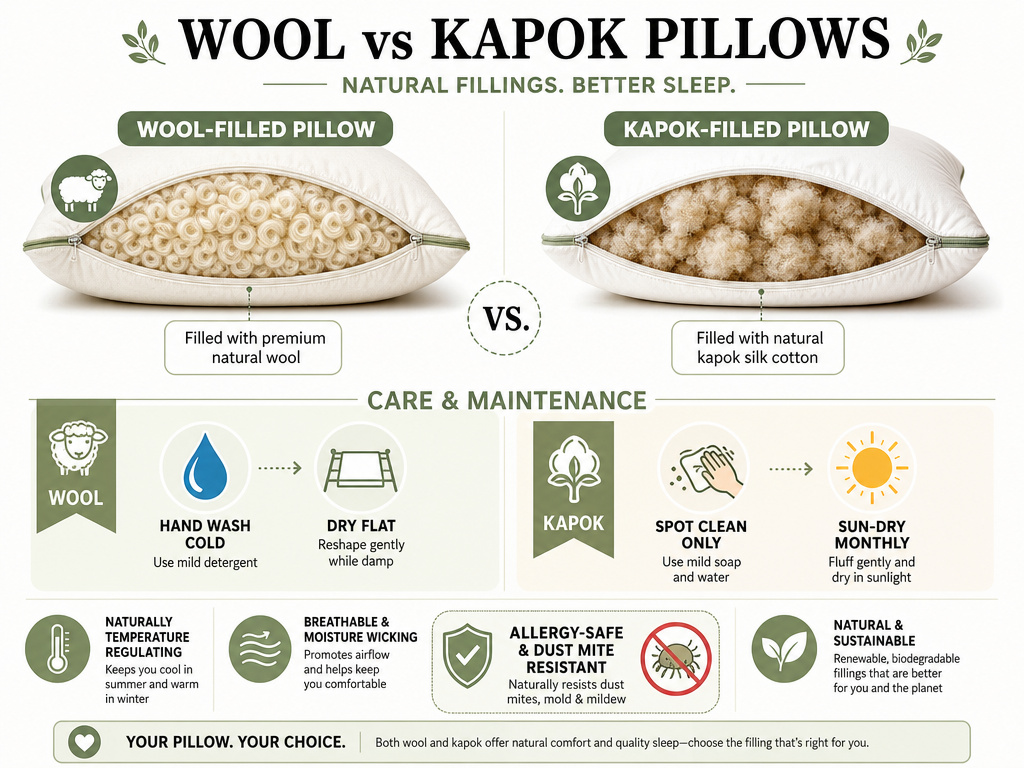
Wool’s natural lanolin repels dust mites, making it ideal for allergy sufferers. Kapok (from the silk-cotton tree) shares wool’s anti-microbial traits but lacks the high heat capacity of some modern phase-change materials.
Care differences:
- Wool: Hand wash cold; reshape while damp; dry flat (machine washing felts fibers)
- Kapok: Spot clean only; sun-dry monthly to maintain loft
Polyester and Synthetic Blends
The BHGS defines “recycled fibers” as textile byproducts with ≤5% thread content, most budget polyester pillows exceed this, leading to clumping. Lyocell-polyester blends can improve moisture wicking but often cost more.
Where this goes sideways: Washing polyester pillows on hot. The fibers can melt and fuse into irreparable clumps if washed at high temperatures.
Cotton Fillings
Cotton is a common natural fiber filling. According to regulatory definitions, cotton may be processed into ‘batting’, which is fibers carded into a layer form, or into ‘shredded’ material, which is cut or torn into pieces. The material may also be classified as ‘waste’ if it contains excessive trash, grease, oil, or pulp content. This classification system helps consumers understand the quality and processing of the filling. Cotton is breathable and often hypoallergenic, but it can flatten over time and may retain moisture. When considering cotton, look for descriptions of its form, such as batting or shredded, to gauge its structure and potential longevity.
Recommendations by Sleep Position
Your preferred sleep position dictates the ideal pillow loft and firmness. Side sleepers need a pillow with a medium to high loft and a mid-range firmness to fill the space between the head and mattress, maintaining spinal alignment. Back sleepers benefit from a medium loft and medium firmness pillow to support the natural curve of the neck without pushing the head too far forward. Stomach sleepers require a soft to medium pillow with a low loft to minimize neck strain. These guidelines help match the pillow’s support, based on the types of pillow fillings, to your body’s posture, aiming to reduce pressure points and improve comfort throughout the night.
Frequently Asked Questions
What type of pillow filling is best for side sleepers?
Side sleepers need 3-5 inch loft with medium firmness, shredded latex or medium-density memory foam work best. The Sleep Foundation confirms this keeps necks aligned without tilting heads forward.
Which pillow filling is healthiest?
For allergy sufferers, wool and kapok resist dust mites naturally. Buckwheat’s high endotoxin levels (60,950 EU/g) may worsen asthma despite allergen claims.
How often should you replace pillow fillings?
- Down/feather: 2 years (loses loft)
- Memory foam: 3 years (develops permanent indentations)
- Latex: 5 years (shredded types clump sooner)
- Buckwheat: 2 years (hulls fragment)
The Bottom Line
Check two things before buying: the California BHGS law label for filling accuracy (see the government filling material specification sheet), and the return policy, you need an adequate trial period to properly test support. For most combination sleepers, a shredded latex pillow offers the best balance of adjustability, durability, and temperature regulation without extreme allergy risks documented in PMC journal article on synthetic vs. Buckwheat. Stomach sleepers are the exception, they’re often better with a thin kapok or wool pillow under 3 inches.
