
Types of Pillowcases: Fabric, Fit, and Closure Explained
This post contains affiliate links. As an Amazon Associate, we earn from qualifying purchases.
Types of pillowcases fall into three main categories: edge styles (Housewife, Oxford, Bag), materials (cotton, silk, polyester satin), and specialized shapes (European, King, U-shaped). Standard UK Housewife/Oxford pillowcases are referenced at 50 × 75 cm internally by King of Cotton, while Manchester Collection lists standard dimensions as 48 × 73 cm. European square pillowcases are commonly referenced at 65 × 65 cm. The right choice balances fabric feel, pillow fit, and closure type that matches how you sleep and wash bedding.
Pillowcase names describe overlapping features, a single case can be both cotton and Oxford, or silk and standard size, depending on the types of pillowcases. The confusion comes from terms that refer to different aspects: some describe the edge style, others the fabric, and others the pillow shape itself, such as the difference between sham and pillowcase.
What follows: a breakdown of the nine most useful terms organized by style, material, and shape, plus when each works best. By the end, you’ll be able to read any product listing and know whether it fits your pillow, matches your sheets, and suits your laundry habits.
Key Takeaways
- Housewife pillowcases fit snugly at 50 × 75 cm (UK standard) with no decorative flange
- Silk pillowcases require gentle washing but reduce friction for hair and skin
- Envelope closures hold better than zippers over time without wearing out
- ISO 12952-1:2010 tests bedding ignitability from cigarette exposure
- Change pillowcases every three days to a week depending on skin and sleep habits
Housewife vs Oxford vs Bag Style Pillowcases
The first decision point is edge style, which affects both looks and function.
Housewife cases fit closely without extra fabric, Oxford styles add a decorative border, and bag styles omit closures entirely for quick changes. The border on an Oxford case extends beyond the pillow compartment.
Housewife cases (sometimes called “standard” in the US) are the workhorses. They fit a 50 × 75 cm pillow snugly, with either an open end or an internal envelope flap to contain the pillow. The tight fit means less shifting during sleep, but it also makes them slightly harder to put on than bag styles.
Oxford cases add a tailored look with that decorative flange, think of it like a picture frame for your pillow. The border can be the same fabric as the case or a contrasting material. Traditional Oxfords have mitred corners where the border fabric meets at 45-degree angles; mock Oxfords use simpler seams. Either way, measure the inner compartment separately from the border when checking fit.
Bag styles dominate hotels for good reason. With no flaps, buttons, or zippers, housekeepers can change them in seconds. The downside? Home users often find pillows work their way out of the open end over time. That trade-off splits neatly by use case, hospitality values speed, while homes usually prefer security.
Pillowcase Materials Compared
| Material | Best For | Care Requirements |
|---|---|---|
| Cotton | Everyday use, hot sleepers | Machine wash warm, tumble dry medium |
| Silk (22 momme) | Reducing hair/skin friction | Hand wash cold, lay flat to dry |
| Polyester satin | Budget silk alternative | Machine wash cold, low heat dry |
| Linen | Breathability in heat | Machine wash gentle, line dry to prevent shrinkage |
| Microfiber | Guest rooms, kids’ beds | Machine wash cool, no fabric softener |
Cotton leads for a reason when you compare the types of pillowcases. A 300-thread-count percale cotton pillowcase feels crisp at first but softens beautifully over many washes without losing structure; explore our top cotton pillowcases for recommendations. It breathes better than microfiber and stands up to hotter washing than silk.
Silk’s smooth surface (especially at 22 momme weight) does reduce friction, but claims about skin and hair benefits often outstrip the peer-reviewed clinical research. The fibers are delicate, hand washing preserves them, but that’s a commitment compared to tossing cotton in with the sheets.
Polyester satin mimics silk’s glide at a fraction of the cost, though it traps more heat, as detailed in our guide comparing silk and satin. It’s the pick when you want the look and feel on a budget, just don’t expect it to last as many washes as quality cotton; check our best satin pillowcases for top choices.
Linen stands out in summer. Its natural texture feels cool against the skin, and the fibers wick moisture better than any other common bedding fabric. Fair warning: it wrinkles aggressively and shrinks if dried too hot.
Specialty Pillow Shapes and Sizes
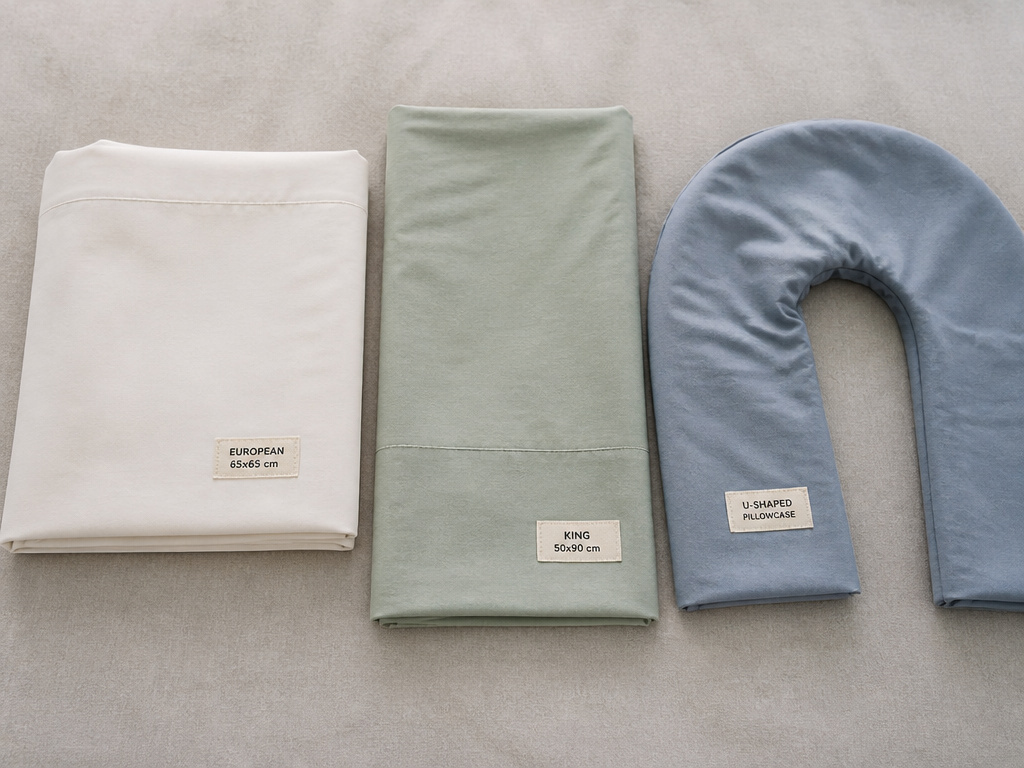
Standard cases fit rectangular pillows, but three shapes break the mold:
- European square (65 × 65 cm) – Popular for decorative pillows, these need cases sized to match exactly since a standard rectangular case won’t fit
- King (50 × 90 cm) – Longer than standard, these require specific cases; a stretched standard case distorts the pillow
- U-shaped – Made for maternity and travel pillows, these have no standard size, measure your pillow before buying
A New England Journal of Medicine study found specialty allergen-blocking cases helped some sleepers, but pore size matters more than material claims. Woven fabrics with very small pores can block dust mites while allowing airflow, something to consider if allergies disrupt sleep.
Envelope vs Zipper vs Open End Closures
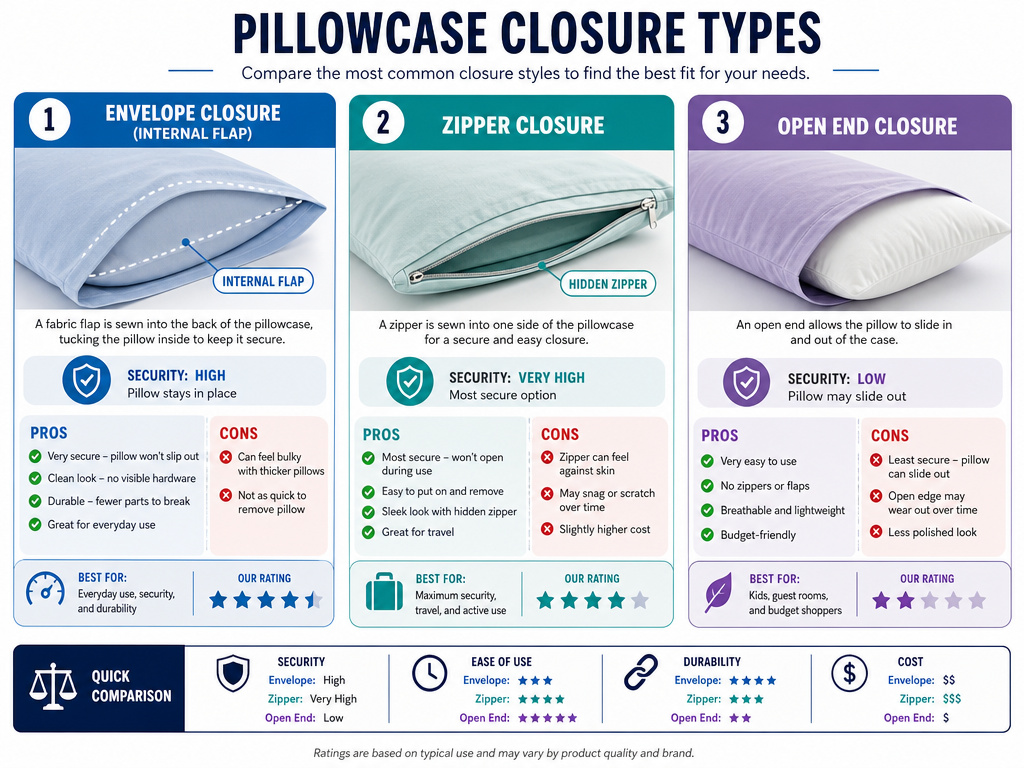
Closure type affects both looks and longevity:
- Envelope (internal overlapping flap) – Holds pillows securely without visible hardware; the flap wears out slower than zippers
- Zipper – Fully contains the pillow but metal teeth can scratch and plastic zippers eventually fail
- Open end – Fastest to change but pillows slip out over time
Hotels prefer open ends for speed, but at home an envelope closure strikes the best balance. The hidden flap keeps pillows in place without introducing failure points like zippers. After testing dozens of cases, envelope closures tend to last longer than zippered ones before showing wear.
What are bag style pillowcases?
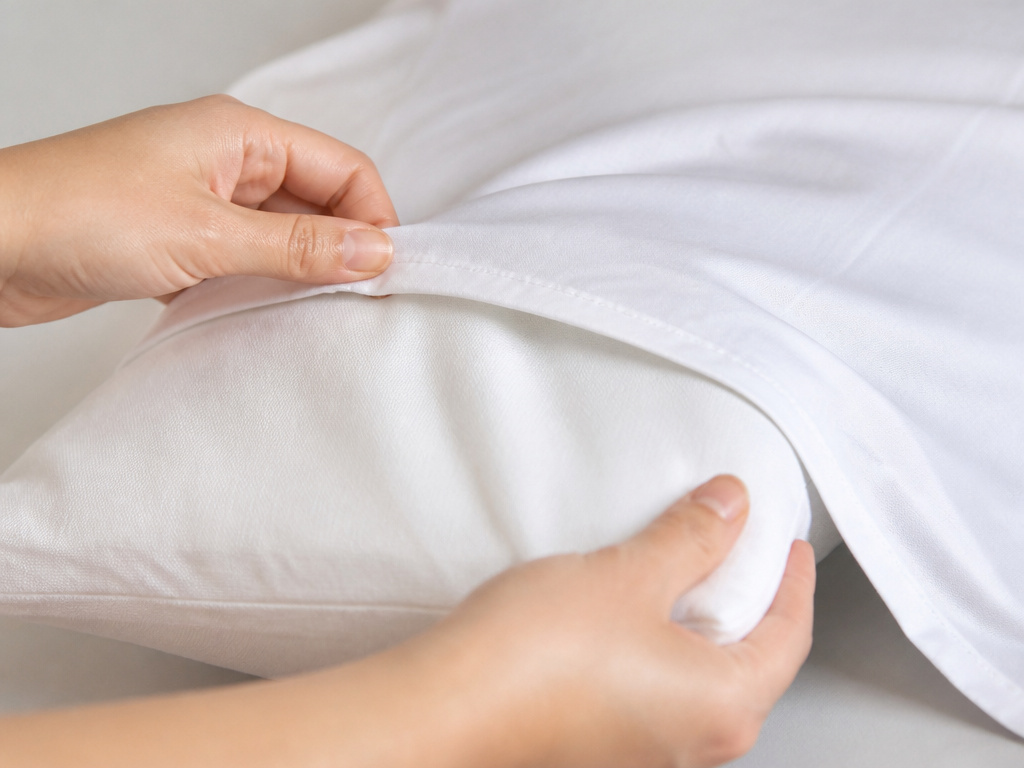
Bag style pillowcases are simple, envelope-like covers without flaps or buttons. They are designed for speed and efficiency, making them a favorite among hoteliers, B&B owners, and housekeepers for whom time is of the essence. To choose the correct size, measure your pillow laid flat and compare it to the case’s usable dimensions, allowing for how its closure works. Remember that a larger quilt cover set does not necessarily include larger pillowcases, so always check the listed size. These cases work well over a pillow protector, provided the protector fits beneath without compressing the pillow.
Is silk good for your hair and skin?
Silk pillowcases are often chosen for their smooth surface, which can reduce friction on hair and skin. The quality of silk is measured in momme; a higher momme number indicates a denser, more durable fabric. However, these pillowcases should not be treated as medical or anti-aging products. They require specific care: always wash silk according to its care label, typically using gentle cycles and mild detergent. For longevity, store silk in a cool, dry, and well-ventilated cupboard away from direct sunlight, folded with matching bedding sets.
Frequently Asked Questions
Housewife is the UK term for what
Americans call a standard pillowcase, both refer to a close-fitting case without a decorative flange. Dimensions vary by source: King of Cotton references 50 × 75 cm for UK Housewife/Oxford, while Manchester Collection lists standard dimensions as 48 × 73 cm.
Are silk pillowcases better for your skin?
Silk’s smooth surface may reduce sleep creases, but clinical studies show no significant improvement in skin conditions versus cotton. The fiber’s main advantage is less friction against hair and skin.
How often should I wash pillowcases?
Yorkshire Bedding recommends washing every two to three days for optimal hygiene, but also advises changing your pillowcase every seven to ten days.
What is an Oxford pillowcase?
An Oxford case has a decorative fabric border (flange) beyond the main pillow compartment, typically 3-5 cm wide. Traditional Oxfords have mitred corner seams; mock Oxfords use simpler construction.
Do higher thread counts mean better quality?
Not necessarily.
Before You Go
Match your pillowcase to your pillow’s exact dimensions, a too-tight case compresses the fill, while a loose one looks sloppy. Standard cases work for most, but measure your pillow first, especially if it’s an odd shape.
The fabric you choose should complement your sheets and withstand your laundry habits. Always follow the specific care label instructions for each material; for example, delicate materials such as silk should always be cleaned according to their label. Whatever you pick, buy two sets so one can air out while the other is in use.
One final test: slide your hand between the case and pillow after a week. If it feels damp or smells off, wash it that day, your nose knows when it’s time.
