
Types of Sheet Weaves: The Science Behind the Feel
This post contains affiliate links. As an Amazon Associate, we earn from qualifying purchases.
The three fundamental sheet weaves, plain (percale), twill, and satin (sateen), dictate breathability, durability, and texture more than thread count or fiber type. Plain weave leads in airflow with its tight 1:1 interlacing. While the NIST 1943 study found it had lower tear resistance than other weaves, other sources note its tight structure may offer good abrasion resistance. Twill balances strength and drape with diagonal ribs; satin’s long floats create sheen but snag easily. Military spec MIL-PRF-17337G confirms plain weave’s use in load-bearing applications with a breaking strength range of 1,200–4,000 lbs in the warp direction, while ASTM D5431-08 specifies different minimum performance requirements for various weaves, such as a 7 N minimum tear resistance for twill/flannel weaves.
That gap between interlacing and performance is why weave matters. A sheet’s structure determines whether it traps heat (sateen’s 8.85 kW/m² radiant resistance beats percale’s 11.56 kW/m² per PMC studies), how often it pills, and even how it feels after ten washes. This is influenced by the fundamental types of sheet weaves.
Here’s how to decode them:
Key Takeaways
- Plain weave (percale) has the highest interlacing density, making it crisp and breathable. The NIST 1943 study found it had lower tear resistance than twill or sateen, though other sources note its tight structure may resist abrasion.
- Satin weave (sateen) reflects light and resists wrinkles but snags more easily than percale due to its long floats.
- Twill’s diagonal ribs strike a middle ground, softer than percale, more durable than sateen (ASTM D5431-08).
- Thermal performance splits by weave: Satin has the lowest radiant heat resistance (PMC 2020), making it feel warmest, while percale’s structure aids in cooling.
Plain Weave vs. Twill vs. Satin: The Durability Trade-Offs
The fundamental types of sheet weaves interlace each warp thread over and under every weft thread in a tight 1:1 grid. This gives percale its signature crispness and airflow, but also its weakest tear resistance. The NIST study comparing 42 cotton fabrics found plain weave had lower tear resistance than twill or sateen weaves.
Technical Snapshot: “Plain weave’s short floats maximize yarn crimp, reducing elongation but increasing shear resistance. Twill’s staggered interlacing (e.g., 2:1 or 3:1) creates diagonal ribs that distribute stress, while satin’s 4+ thread floats prioritize drape over durability.”, Woven Fabrics for Technical Products (2017)
The types of sheet weaves, like twill marketed as twill weave bedding, hide wear better. The diagonal pattern disperses friction across multiple yarns, which is why hotel linens often use a 2:1 twill. Sateen’s luxurious hand comes at a cost: those long floats snag on jewelry or rough heels within months.
How Weave Affects Thermal Regulation
Infrared studies show weave structure impacts heat dissipation more than fiber alone. In the same 100% cotton:
| Weave Type | Radiant Heat Resistance (Qc) | Best For | Worst For |
|---|---|---|---|
| Plain (percale) | 11.56 kW/m² | Hot sleepers | Cold climates |
| Twill | 9.67 kW/m² | Year-round use | High-humidity areas |
| Satin (sateen) | 8.85 kW/m² | Cold sleepers | Summer bedrooms |
Sateen’s tight, reflective surface traps body heat, great for winter, miserable in Miami. Percale’s open grid wicks sweat faster, but twill splits the difference.
Specialty Weaves: Jacquard, Pinpoint, and Dobby
Jacquard weaves (like those in jacquard bedding) embed patterns by lifting warp threads independently. The trade-off? Reduced stretch and higher cost.
Pinpoint weaves use an extra ply of yarn to mimic percale’s crispness with added opacity, a factor in decisions about single-ply vs multi-ply sheets where sheerness matters.
Thread Count Myths and Ply Realities
Thread count measures warp/weft threads per square inch, but ply manipulation inflates numbers. A 600-count sheet made of 3-ply yarns behaves like a 200-count single-ply.
- Combed cotton (see combed vs carded) lasts longer than carded at any thread count.
- Sateen’s sheen may fade over time as its long floats are subject to wear.
Jersey (knit) weave
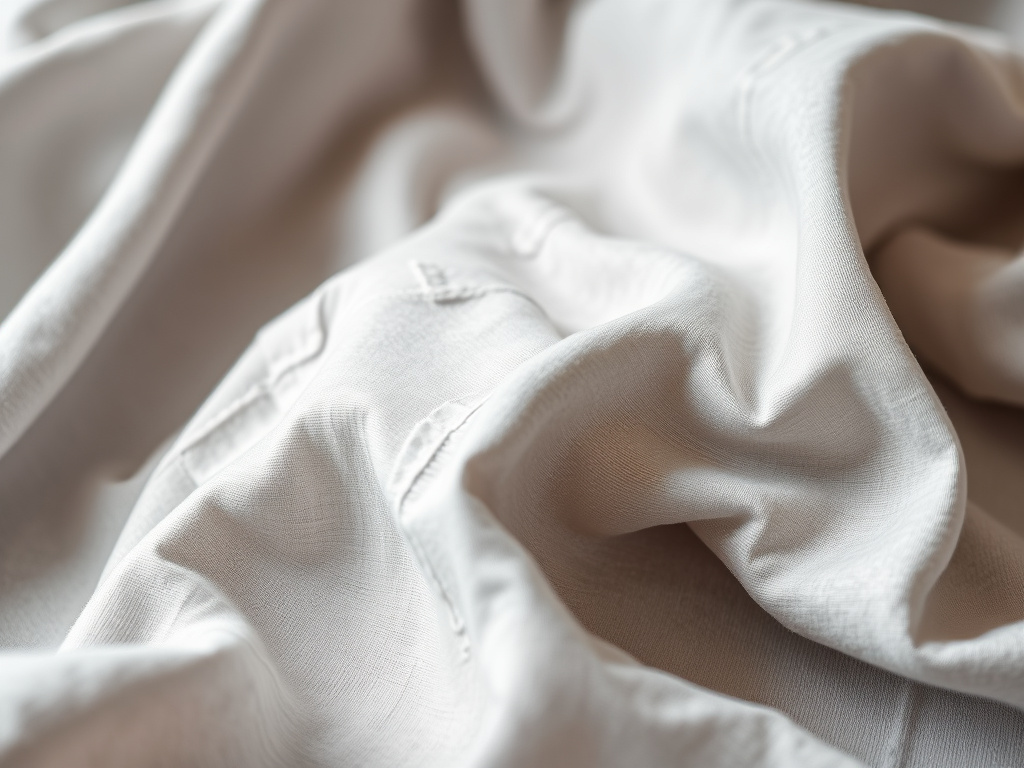
Jersey is a knit fabric, not a woven weave. This fundamental difference means it does not have warp and weft threads in the traditional sense. The ASTM standard covering sheet performance characteristics applies to both woven and knit products for household use, but the specific mechanical data for weaves like plain, twill, and satin does not directly translate to knits. Knit structures like jersey are built from interlocking loops, which give them inherent stretch and a different feel. For practical purposes, when considering jersey sheets, focus on their soft drape and flexibility rather than comparing their tear or tensile strength to woven constructions.
Flannel weave/fabric
Flannel is typically a plain or twill weave fabric that has been brushed to create a soft, fuzzy nap. The weave structure underneath this finishing process is key. According to standards, twill and flannel weaves are grouped together and have a specified lower minimum tear resistance requirement compared to other woven sheets. This suggests the brushed surface or the underlying twill structure may affect durability in specific tests. In general comparisons of weave fundamentals, twill weaves are noted for having longer yarn floats which can improve certain mechanical properties and offer better resistance to radiant heat compared to plain weave.
Microfiber sheets
Microfiber refers to the fineness of the fibers, not a specific weave. These sheets can be made using various weave structures, such as plain, twill, or satin, but from extremely thin synthetic filaments. The performance will therefore combine the characteristics of the chosen base weave with the properties of the ultra-fine fibers. For instance, a plain weave microfiber sheet would have the tight interlacing and crisp hand associated with that structure, but with a different density and feel due to the microfiber yarns. When selecting microfiber sheets, consider that the weave type will influence durability, texture, and breathability just as it does in sheets made from conventional yarns.
Frequently Asked Questions
What weave is coolest for hot sleepers?
Percale weave. Its 1:1 interlacing maximizes airflow, and it has a higher radiant heat resistance (Qc of 11.56 kW/m²) than sateen (8.85 kW/m²), making it feel cooler (PMC 2020).
Why do hotel sheets use twill?
Twill’s diagonal ribs hide wear from industrial laundering. It also feels softer than percale out of the dryer, no ironing needed.
Is sateen the same as satin?
No. Sateen vs satin differs in fiber (sateen uses cotton; satin uses silk/polyester) and float length. Satin’s longer floats feel slicker but snag easier.
How does weave affect sheet longevity?
Percale is known for durability but wrinkles; twill shows few creases; sateen drapes elegantly but may be less resistant to snagging.
Before You Go
Judge weaves by their third wash, new sateen feels lavish, but worn-in percale outperforms it. For most sleepers, a 300-thread percale (percale vs sateen) in combed cotton balances coolness and durability. Skip anything labeled “1,000-count” unless you enjoy laundering cardboard.
