
How to Clean a Mattress: Step-by-Step
This post contains affiliate links. As an Amazon Associate, we earn from qualifying purchases.
To clean a mattress, strip all bedding, vacuum thoroughly with an upholstery attachment, spot-clean stains with appropriate cleaners (never bleach), and finish with a baking soda treatment left for 8-24 hours before vacuuming again. The Washington State Department of Corrections mandates weekly cleaning to prevent mold, while Consumer Reports recommends at least twice yearly for home use.
That gap between weekly institutional cleaning and biannual home care comes down to moisture control – the more people sharing a bed, the more frequent cleaning needs to be. Four variables decide your schedule: sleepers, sweat, spills, and whether you use a protector. Knowing how to clean a mattress is essential for managing these factors.
What follows: the universal 4-step method adapted from hospital protocols, why sources disagree on frequency and technique for how to clean a mattress, and the cleaning mistakes that ruin more mattresses than dirt ever could. By the end, you’ll know exactly how often your specific mattress needs attention and how to spot the warning signs most people miss until it’s too late.
Key Takeaways
- Clean every 3-4 months minimum (weekly if shared in high-humidity areas) per Clorox’s recommendation, while Washington DOC mandates weekly cleaning for institutional settings.
- Use Clorox™ Urine Remover for biological stains with its 3-minute dwell time then blot – never rub
- Rotate mattress head-to-foot when cleaning (most modern mattresses shouldn’t be flipped)
- Baking soda needs 8-24 hours to deodorize properly – Sleep Foundation and Consumer Reports disagree on timing
- Hospital mattresses require inspection under the cover per FDA – home mattresses show damage on the surface
The 4-Step Mattress Cleaning Process
“Weekly cleaning prevents mold growth in shared sleeping environments by removing the moisture that accumulates in mattresses over time.” — Washington State DOC Mold Prevention Protocol
Start by stripping all bedding – sheets, pillowcases, mattress pads – and washing them separately in hot water if possible. This isn’t just about starting fresh; heat kills dust mites that live in bedding fabrics.
Here’s the sequence that works for all mattress types except fully saturated flood victims (those must be replaced):
- Vacuum every surface with an upholstery attachment, paying special attention to seams where dust collects. Go over each section twice – once horizontally, once vertically. Skip this step and you’ll just grind surface dirt deeper during cleaning.
- Treat stains appropriately:
- For urine, blood, or sweat: Sources disagree on application: Clorox recommends spraying Clorox™ Urine Remover directly on the stain, while the Sleep Foundation advises never applying cleaning solution directly to the bed itself and instead using a clean rag. Wait 3 minutes, then blot with a clean, damp cloth.
- For dirt or food: Use a 1:4 mix of mild dish soap to warm water on a cloth, never pouring directly on the mattress.
- Sanitize by lightly misting Clorox™ Disinfecting Mist 6-8 inches from the surface until visibly wet. The surface must stay wet for 5 minutes to kill bacteria – set a timer.
- Deodorize with a full 1-lb box of baking soda sprinkled evenly. Here’s where sources diverge: Sleep Foundation says 8 hours, Consumer Reports insists on 24. Sources disagree on timing: the Sleep Foundation recommends 8 hours or more, while Consumer Reports recommends 24 hours for best results. For heavy odors, Consumer Reports recommends leaving baking soda for 24 hours for best results.
Cleaning Frequency: Why Experts Disagree
| Source | Recommended Frequency | Notes |
|---|---|---|
| Washington State DOC | Weekly | Mandated for shared living spaces |
| Clorox | Every 3-4 months | Tied to mattress rotation schedule |
| Sleep Foundation | Every 6 months | Assumes use of mattress protector |
| Consumer Reports | Twice yearly (4x without protector) | Based on allergy prevention research |
The truth? They’re all correct for different scenarios. That queen bed in your guest room used twice a year? Six-month cleaning is fine. The twin mattress your sweaty teenager uses nightly? That needs the weekly DOC protocol. Memory foam deserves special mention – its dense structure traps moisture, requiring monthly vacuuming even between deep cleans.
Common Mattress Cleaning Mistakes
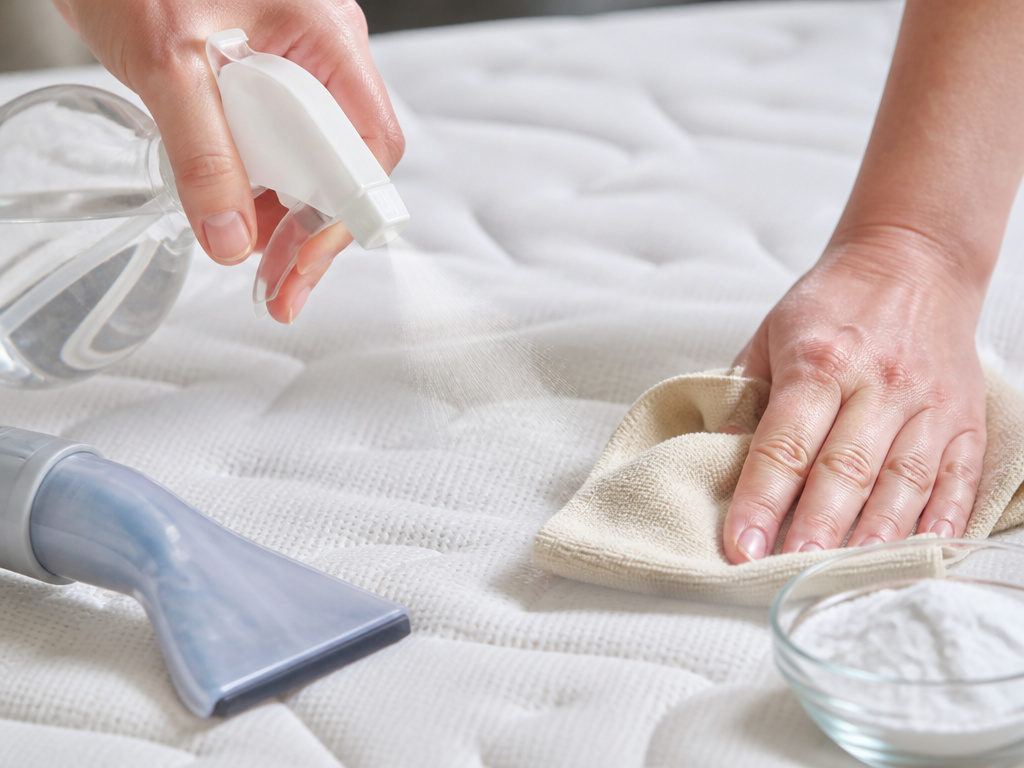
What most people get wrong: Soaking stains immediately. Urine and coffee respond better to a dry blot first to remove excess liquid before any cleaning solution touches them.
Here’s how to avoid the top five errors that shorten mattress life:
- Using bleach or harsh chemicals – These break down mattress fibers over time. Stick to oxygen-based cleaners for whites and enzyme cleaners for organic stains.
- Over-wetting the mattress – Even quality mattresses can only handle light misting. If you can wring water from your cleaning cloth, it’s too wet.
- Skipping the dry vacuum pass after baking soda – Leftover baking soda creates a gritty texture that wears down fabric. Pass the vacuum twice to ensure full removal.
- Assuming all mattresses can be flipped – Most modern mattresses have a designated top and bottom. Check your label before attempting to flip.
- Not checking under the mattress – At least twice yearly, lift the mattress to inspect the underside and box spring for dust accumulation and signs of mold.
For persistent urine odors, an enzymatic cleaner is more effective than standard solutions. The enzymes break down urea crystals that regular cleaners miss.
Special Cases: Memory Foam and Hospital Mattresses
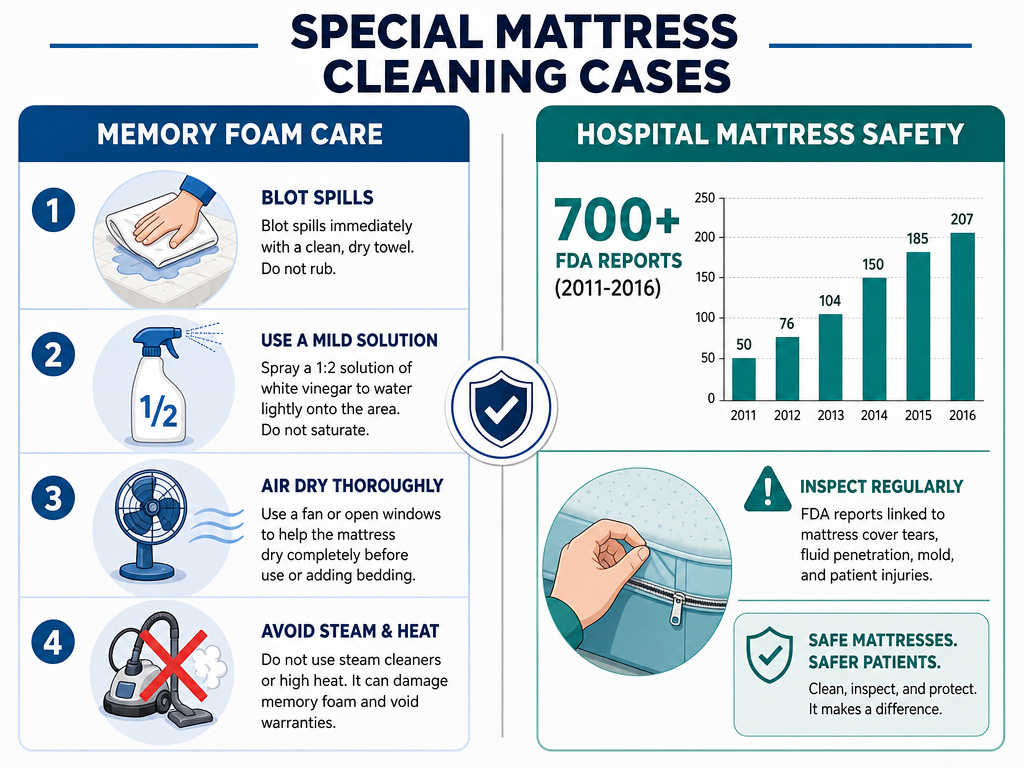
Memory foam presents unique challenges for how to clean a mattress. Its porous structure means liquids sink in faster, yet the material shouldn’t get fully wet. Here’s the adapted approach:
- Blot spills immediately with a dry towel – don’t rub
- Use half the liquid cleaner you would on an innerspring mattress
- Allow 24-48 hours drying time with a fan blowing across the surface
- Never use a steam cleaner – the heat damages foam cells
Hospital mattresses follow FDA guidelines requiring regular inspection under the cover – something home mattress owners should consider if purchasing used medical equipment. From 2011-2016, the FDA received over 700 reports of fluid leaks through damaged hospital mattress covers.
How to clean different types of mattresses
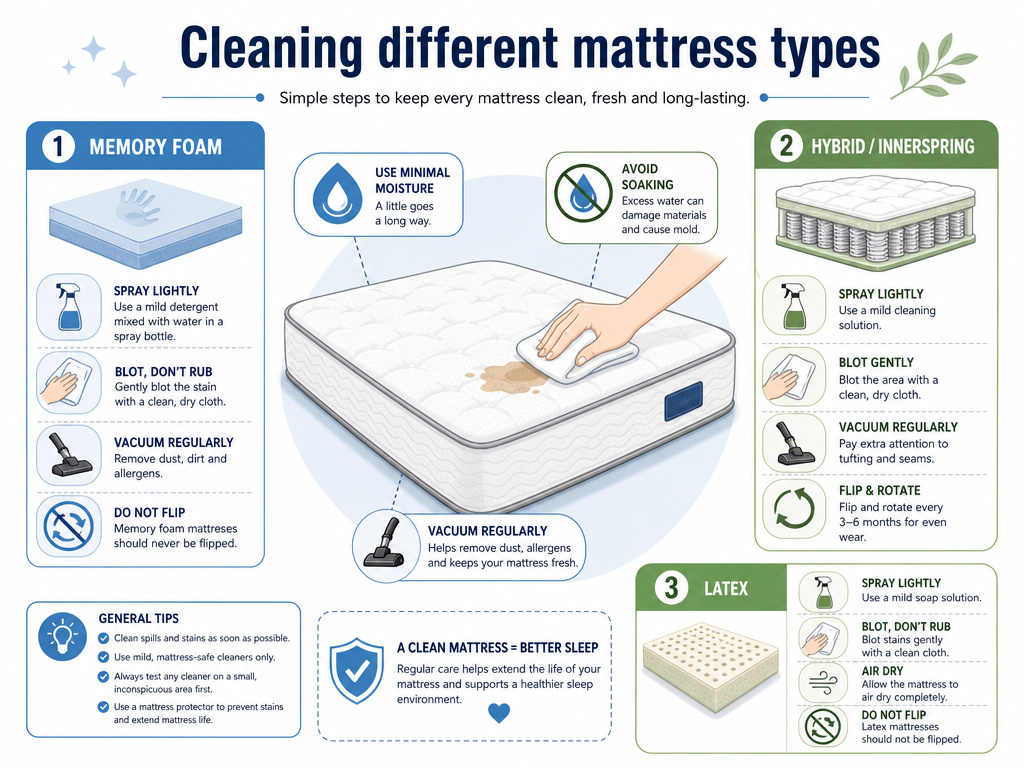
Cleaning methods must adapt to your mattress material. Memory foam is not designed to get wet, so use as little cleaning solution as possible when spot cleaning. For any mattress, avoid soaking it, as too much moisture can lead to mold. Sources disagree: Washington State DOC and the Sleep Foundation advise against spraying cleaning chemicals directly on the mattress, while Clorox recommends spraying its Urine Remover directly onto stains. If your mattress is not designed to be flippable, be cautious when attempting to turn it over and avoid applying too much pressure. Proper care includes regular vacuuming and addressing stains promptly with minimal moisture.
Frequently Asked Questions
What is the best thing to clean a mattress with?
For most home mattresses, a vacuum cleaner with upholstery attachment, baking soda, and a mild detergent solution handle routine cleaning. Specific stains may require specialized stain removers like Clorox™ Urine Remover for biological stains.
How do you sanitize a mattress without washing it?
The Sleep Foundation mattress care resource recommends using a disinfectant spray like Clorox™ Disinfecting Mist, holding it 6-8 inches from the surface until lightly wet, then allowing it to air dry completely.
What takes yellow stains out of a mattress?
Yellow stains from age or sweat respond best to a paste of baking soda and hydrogen peroxide. Apply, let sit for 30 minutes, then gently blot away. For severe cases, repeated treatments may be necessary.
What does vinegar do to a mattress?
White vinegar can neutralize odors and brighten fabric when diluted (1:3 vinegar to water), but it shouldn’t be used on memory foam. Always test on an inconspicuous area first, as vinegar may discolor some mattress fabrics.
Before You Go
Invest in a mattress protector – the $55-100 cost prevents thousands in premature mattress replacement. For homes with allergy sufferers or multiple sleepers, adopt the Washington DOC’s weekly surface vacuuming habit. It takes three minutes and adds years to your mattress’s life.
When stains happen (and they will), treat them immediately with the right cleaner for the stain type – not whatever spray is under the sink. Your future self, sleeping soundly on a fresh, clean mattress, will thank you.
