
10 Best Pillows For Bed Sores in 2026
This post contains affiliate links. As an Amazon Associate, we earn from qualifying purchases.
We chose the Bedsore Rescue Pressure Relief Wedge as the best overall for its precise 30-degree angle and stable, hospital-grade construction. The Mistuki Bedsore Turning Wedge Pillow is best for airflow, and the Drive Medical Folding Bed Wedge is best for portability. Selecting the right support cushion is critical for managing pressure ulcers and preventing new ones.
The goal is to redistribute weight away from vulnerable areas like the tailbone, hips, and heels. Our research analyzed specifications, medical guidance, and patterns in owner feedback to identify these ten products for different needs and care settings.
Top 10 Pillows For Bed Sores in the Market
Certain content that appears on this site comes from Amazon. This content is provided "as is" and is subject to change or removal at any time.
The Best Pillows For Bed Sores, Reviewed
Bedsore Rescue Pressure Relief Wedge

What We Like
- Precise 30-degree angle for pressure redistribution
- Non-slip base reduces need for adjustments
- Hospital-grade, hypoallergenic construction
- Broad support surface for back and hips
Trade-offs
- 26-inch length may not support full torso
- Supports only up to 250 pounds
A 30-degree incline is the clinical sweet spot for offloading pressure from the tailbone and sacrum without sliding a patient down the bed. This wedge gets that angle right with a purpose-built, non-slip base and a width that stabilizes the hips. It’s a straightforward, hospital-grade tool for caregivers managing extended bed rest, where consistent positioning is the entire goal. The materials and design speak to daily, long-term use without fuss.
Its 26-inch length delivers focused support for the tailbone, sacrum, and buttocks, which suits targeted pressure relief but provides less surface area for full-torso positioning. The design supports individuals between 100 and 250 pounds, and its non-slip base keeps it securely in place during extended use. Developed with hospital-grade standards, this wedge uses a breathable, hypoallergenic cover that resists moisture and can be cleaned with disinfectant wipes.
Product photos
Mistuki Bedsore Turning Wedge Pillow

What We Like
- Hollow design enhances sacral airflow
- Extra-long length accommodates taller users
- Removable, washable cover for hygiene
- Can be combined with smaller wedges
Trade-offs
- At 12" wide, it's narrower than the 12"-wide Bedsore Rescue wedge
Its 34.2-inch length makes it a practical option for taller individuals, providing full torso support that many standard wedges lack. A central hollow section promotes airflow directly over the sacrum and coccyx, a design that mechanically reduces pressure and moisture buildup in that critical area. For anyone managing extended bed rest, this focus on breathability and pressure offloading directly addresses a primary cause of ulcers.
Its profile reveals a trade-off: without a specified height, this is a relatively flat positioning aid. It’s more suitable for subtle elevation and turning assistance than for significant upper-body lift, like you’d get from the Drive Medical Folding Bed Wedge. The 12-inch width is also narrower than several peers, such as the Bedsore Rescue wedge, so it’s better for targeted positioning rather than creating a broad, stable base for the entire body. Think of it as a specialist tool, not a general-purpose wedge.
Product photos
NEAUDE Bed Sore Turning Wedge Pillow

What We Like
- Detaches into two separate support pillows
- Long, 34-inch length supports back and thighs
- Zippered cover for easy washing
- Grooved design for breathability and pressure reduction
Trade-offs
- Significantly longer than the 26-inch Bedsore Rescue wedge
- Single-piece foam lacks a folding mechanism for storage
- Detachable parts are not secured, may shift independently
A 34-inch length means this wedge can support a user’s entire back and thighs in one piece, which is the core advantage for preventing bed sores by distributing pressure over a larger area. The detachable design is its clever trick, splitting into a large grooved section for the back and a smaller pillow for limbs. This allows a caregiver to use the parts independently for targeted support under knees or elbows, making it a versatile tool for positioning a bedridden patient.
At 34 inches long, the NEAUDE wedge provides full back and thigh support, which helps prevent bedsores and improve circulation. This length requires a bed with enough space to accommodate it, unlike the more compact 26-inch Bedsore Rescue model. Its detachable design splits into two parts, a large grooved pillow and a smaller one, offering modular positioning. Compared to the multi-piece Lenora Bed Sore Pillow Set, the NEAUDE’s design focuses on two primary supports.
Product photos
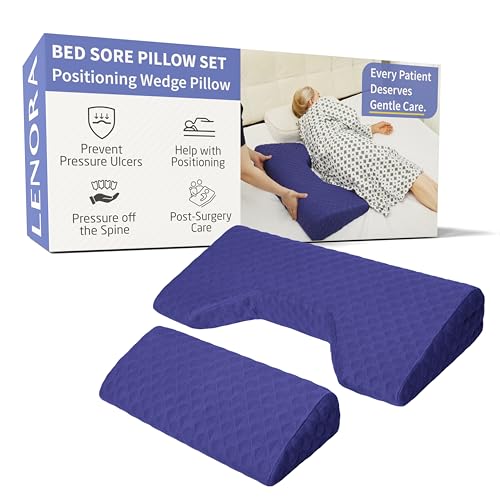
Lenora Bed Sore Pillow Set
What We Like
- Auxiliary pillow prevents sliding and rolling
- Moishield backing prevents liquid seepage
- Zippered, washable cover for hygiene
- Designed to address pressure ulcers to grade four
Trade-offs
- At 3.2 pounds, it's heavier than single-piece foam wedges
- Weighs 3.2 pounds
The inclusion of a separate auxiliary pillow is what defines this set, providing a secondary support structure that actively works to keep a bedridden patient from shifting into a dangerous position. It’s built for a caregiver managing someone at high risk for severe sores, with a cover that handles moisture and washes easily, which matters for long-term daily care. The design focuses on stabilizing the torso and pelvis to redistribute weight away from the sacrum and heels, a targeted approach for preventing new ulcers and aiding the healing of existing ones.
Designed specifically for bedsore prevention and patient immobilization, the Lenora Bed Sore Pillow Set is a dedicated medical tool rather than a general comfort wedge. Its 27-inch length and auxiliary pillow focus on targeted pressure redistribution and preventing a user from sliding, which is a different purpose than providing full-length leg elevation.
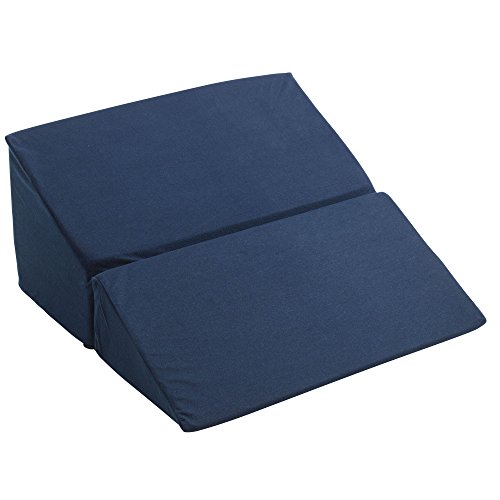
Drive Medical Folding Bed Wedge
What We Like
- Folds compactly for easy storage and transport
- Carry handle makes it portable for travel
- Firm, reclining design provides full support
- Gradual incline helps relieve various discomforts
Trade-offs
- Narrow 13-inch width limits full torso support
- No weight listed, suggesting a very lightweight build
A folding design with a carry handle means this wedge can be tucked into a closet or taken on a trip, a flexibility most solid foam wedges can’t match. For someone managing heartburn or respiratory issues who also needs to pack light, its firm support and compact storage solve a specific logistical problem. It suits a caregiver or patient who values a single, multi-use aid that can be put away between visits or moved from bed to recliner without hassle.
Its 12-inch height and 13-inch width make it more of an upper-body elevator than a comprehensive pressure-relief tool. For dedicated bed sore prevention and turning, a purpose-built wedge offers a longer, wider surface to offload the tailbone and hips more effectively. This one excels at portability, but you sacrifice some specialized therapeutic surface area to get it.
Product photos
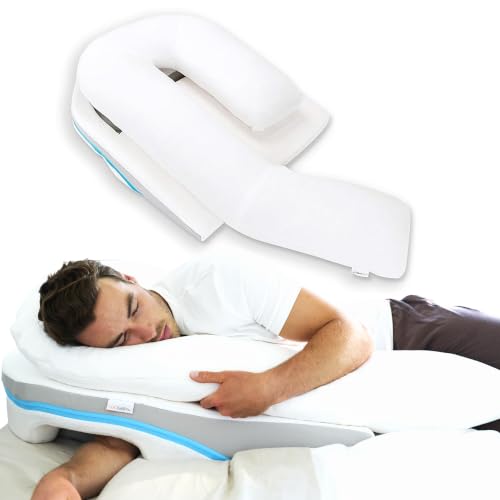
MedCline Shoulder Relief System
What We Like
- Medical-grade foam promises durability and support
- Adjustable fill in body pillow for personalized comfort
- Includes dedicated arm pocket to maintain neutral position
Trade-offs
- Recommended 2-4 week adjustment period for comfort
- New foam may have a light smell for the first few days
The MedCline system uses a dedicated arm hole in its wedge to physically lift the torso and relieve pressure on the shoulder joint, a targeted approach for side sleepers with chronic shoulder pain. It’s built from medical-grade materials for longevity, and the accompanying body pillow is adjustable, letting you fine-tune the support around your arm. This makes it a specialized, premium option for someone whose primary concern is nighttime shoulder pressure from conditions like rotator cuff injuries or bursitis.
That focus comes with a notable adaptation period and a substantial footprint. The system is designed for a specific posture, and it may feel restrictive compared to simpler wedges. For someone needing general pressure relief for bed sores across multiple body areas, a more versatile and lightweight wedge would be easier to reposition. The MedCline is a dedicated tool, not a multi-purpose cushion.
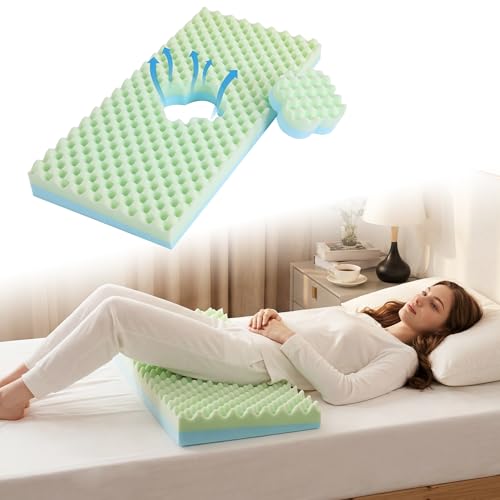
BALAPET Egg Shaped Pressure Relief Mattress
What We Like
- Removable center insert for adjustable pressure relief
- Breathable open-cell foam reduces moisture buildup
- Can be cut to size for wheelchair or chair use
- Large surface area for full torso support
Trade-offs
- Thickness is only 3.5 inches
- No carrying handle or non-slip base mentioned
The removable center cut-out is the defining feature, letting you switch between full-body support and a targeted pressure-free zone for the tailbone and hips. This makes the BALAPET mattress a versatile pick for someone who needs to manage existing sores or prevent them during long periods of supine bed rest. The egg crate foam promotes airflow, a practical detail for keeping skin dry, and its dimensions provide a broad, stable base for the lower back and pelvis.
This is a flat pad, not an angled wedge. It excels at redistributing pressure but doesn’t help with positioning or elevation like the Drive Medical Folding Bed Wedge. That makes it a specialist for direct pressure relief on the bed surface, ideal for a patient who primarily lies flat. Its foam can also be trimmed, which is a thoughtful touch for adapting it to a chair, but it’s fundamentally a mattress topper, not a full positioning system.
Product photos
AOSSA Bed Sore Cushion

What We Like
- Widened support area reduces pressure on buttocks and thighs
- Central hole provides targeted relief for tailbone and hips
- Versatile for positioning head, legs, ankles, or hips
- Lightweight and compact for use in multiple settings
Trade-offs
- Fixed 3-inch thickness limits elevation options
- Supports up to 200 lbs, which may not suit all users
A 15.75-inch square cushion with a central hole makes this a go-to for targeted pressure relief across multiple scenarios. It suits someone managing post-surgery discomfort, sciatica, or the need to redistribute weight while sitting or in bed. The compact size and 200-pound support mean it transitions easily from a wheelchair to an office chair or a car seat, offering a simple solution for preventing sores at common pressure points. This is for the user whose priority is a single, adaptable aid rather than a system of specialized supports.
Its 3-inch thickness provides a gentle lift for pressure relief, but this fixed height means it cannot create the angled incline of a dedicated wedge pillow. A longer, hospital-grade wedge designed for a 30-degree elevation offers a different form of support. The AOSSA cushion is a versatile pressure manager for sitting and localized support, while other products in the category are designed specifically for full-body positioning.
Product photos
TANYOO Long Bed Positioning Wedge

What We Like
- Curved shape protects bedsore-prone areas.
- Anti-slip bottom prevents shifting during sleep.
- Side handle aids in patient repositioning.
- Machine-washable cover simplifies hygiene.
Trade-offs
- Requires 48-hour expansion time after unpacking.
Its 30-degree angled incline and curved shape are designed to shift weight from sore areas and protect bedsore-prone spots. A high-density foam core with a gel memory foam top provides firm support, which can maintain consistent positioning for healing. The product’s long profile, measuring 28 inches, allows for versatile placement under the back or legs.
With a width of 9.1 inches, this wedge is narrower than models like the Lenora Bed Sore Pillow Set, which is 13.3 inches wide. This narrower build may suit targeted placement, but the product’s own description lists it as a multi-use item for the back, legs, head, and feet. A side handle aids in moving the wedge, which can be helpful for repositioning a patient.
Product photos
Holiberty Heel & Ankle Protector Pillow
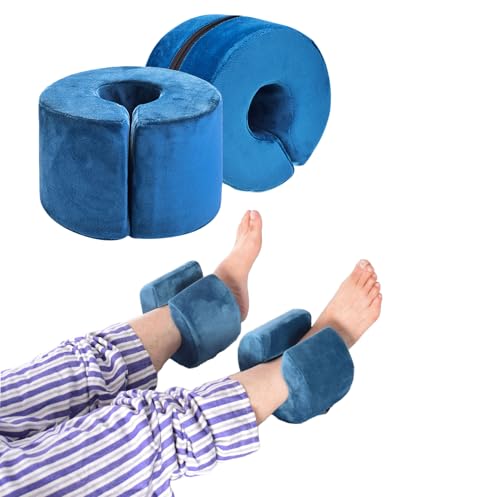
What We Like
- Circular design reduces pressure on specific points
- Removable cover allows for easy cleaning
- Soft, breathable materials for long-term contact
- Compact size fits different foot and wrist types
Trade-offs
- Circular cutout is fixed, not adjustable for different limb sizes
- Requires measuring ankle/wrist before purchase to confirm fit.
The Holiberty Heel & Ankle Protector Pillow uses a circular design to cradle the ankle or wrist, which targets pressure relief directly on the heel or bony prominence. This focus makes it a specialized solution for preventing sores on specific extremities. Its outer cover is made of detachable fabric with a zipper, allowing for cleaning to maintain hygiene without needing a full replacement.
This product has a singular focus. You wouldn’t use it to reposition a patient’s torso like a standard hospital-grade wedge, or to offload the tailbone like the AOSSA Bed Sore Cushion. It solves one problem very directly, so its value is clear if your need is isolated to an ankle or wrist. For pressure relief across larger body areas, a more general wedge pillow will be a better fit.
Product photos
How We Evaluated Pillows For Bed Sores
Our evaluation was research-based, focusing on manufacturer specifications and documented features from medical supply experts. We prioritized criteria proven to aid in pressure ulcer prevention: a product’s ability to offload pressure from specific high-risk areas, its design for hygiene and patient repositioning, and its suitability for different care environments. We looked closely at wedge angles, cut-out shapes, material breathability, and features like washable covers or non-slip bases.
The key factors were pressure redistribution, which hinges on a product’s shape and firmness. We also considered hygiene maintenance, facilitated by removable covers or moisture-resistant materials, and versatility for either single-use or multi-positioning support. For targeted relief, a knee pillow for hip alignment was considered. As this guide is based on documented specifications and feedback, it cannot assess long-term durability or personal comfort, which can vary.
What To Look For In Pillows For Bed Sores
Choosing the right support involves matching the product to the patient’s specific risk areas and mobility. A wedge is different from a flat cushion with a cut-out, and a portable option serves a different purpose than a full-time bedside system.
Focus on the area needing relief: wedges offload the sacrum, cut-out cushions target the tailbone, and full-length pillows aid side positioning. Hygiene features like washable covers are essential, and the patient’s weight and required incline determine the best fit.
Pressure Redistribution & Target Area
The product’s primary job is to shift pressure away from bony prominences. A wedge pillow uses a gradual incline to lift the pelvis and reduce sacral pressure. A cushion with a central hole or groove, like many tailbone pillows, suspends the coccyx entirely. For full-body alignment, especially for side sleepers, a body pillow can help maintain a neutral spine. The shape must correspond directly to the area of concern.
Material & Hygiene
Breathable, supportive foam is standard. Memory foam molds to the body but can retain heat; some designs use open-cell or gel-infused foam for better airflow and cooling. A removable, machine-washable cover is a non-negotiable feature for infection control. For incontinent patients, look for moisture-barrier backing on the cover or the foam itself. Easy cleaning supports long-term use and is as crucial as the initial pressure relief.
Versatility & Care Setting
Consider where and how the pillow will be used. A single-piece foam wedge is ideal for a stable home bed, while a folding design suits travel or part-time care. Some sets include auxiliary pillows to prevent sliding, important for patients who move in their sleep. For those needing more comprehensive support, pairing a wedge with other therapeutic pillows or a specialized mattress topper can create a full pressure-management system.
- Measure the patient’s body dimensions against the product’s length and width to ensure adequate support.
- Check the weight capacity; bariatric patients may need products designed for higher limits. For post-surgical recovery, a dedicated wedge pillow for elevation can be more effective than standard bed pillows.
Always consult a healthcare professional to assess pressure sore risk and get personalized product recommendations.
Pillows For Bed Sores Compared
The table below summarizes key specifications to help you compare these ten picks at a glance.
| Product | Dimensions (LxW) | Key Design Feature | Primary Use |
|---|---|---|---|
| Bedsore Rescue Pressure Relief Wedge | 26 x 12 inches | 30° Pressure Relief | Hospital-Grade Positioning Wedge |
| Mistuki Bedsore Turning Wedge Pillow | 12 x 7 inches | Hollow middle section | Side Sleeping Body Positioning |
| NEAUDE Bed Sore Turning Wedge Pillow | 34 x 12 inches | Detachable two-part wedge | Sleeping Positioning |
| Lenora Bed Sore Pillow Set | 27.0 x 13.3 inches | Includes auxiliary pillow | Positioning Wedge Pillow |
| Drive Medical Folding Bed Wedge | 24 x 13 inches | Folding design | Upper body elevation |
| MedCline Shoulder Relief System | 30"W x 34"L | Arm hole in wedge | Shoulder Pain Relief |
| BALAPET Egg Shaped Pressure Relief Mattress | 35.4" x 16.1" | Removable center hole | Back, hip & tailbone pressure relief |
| AOSSA Bed Sore Cushion | 14.7 x 14.2 inches | Central hole for pressure relief | Positioning Pillow |
| TANYOO Long Bed Positioning Wedge | 28.0 x 9.1 inches | Gel memory foam top | Bed Positioning Pillow |
| Holiberty Heel & Ankle Protector Pillow | 6.69 x 4.33 inches | Circular support | Foot Support Pillow |
Frequently Asked Questions
What is the best pillow for bed sores?
The best pillow depends on the location of the sore and the patient’s needs. For sacral (tailbone) pressure relief, a firm wedge pillow like our best overall, the Bedsore Rescue Pressure Relief Wedge, is often recommended. For targeted, localized relief on the tailbone while sitting or lying flat, a cut-out cushion is more suitable.
What heals bed sores the fastest?
Healing requires professional medical treatment to address infection and promote tissue repair. Offloading pressure completely from the affected area is the most critical supportive measure. Using appropriate pressure-relief mattresses and positioning devices like specialized pillows helps create the environment needed for healing to occur.
What is the best thing to lay on to prevent bed sores?
A surface that evenly distributes body weight is key. This often means a specialized support system, which can include a medical-grade pressure-relief mattress combined with positioning aids like wedge pillows and bolster pillows to reduce heel pressure.
What kind of cushion can I sit on to help prevent bed sores?
A cushion designed for pressure redistribution in a seated position is essential. Look for one with a cut-out or groove for the tailbone, made from high-density foam or gel. These are often called coccyx or donut cushions. They should be used on chairs and wheelchairs, but not as a substitute for regular repositioning in bed.
How often should a patient be repositioned to prevent bed sores?
Repositioning is typically recommended every two hours for bedridden patients, though a healthcare provider will give a specific schedule based on individual risk. Using positioning pillows can help maintain the new position and reduce shear, but they do not replace the need for regular turns. Proper pillow placement for side-lying can protect shoulders and hips.
The Bottom Line
For caregivers seeking a dedicated, stable wedge to offload sacral pressure, the Bedsore Rescue Pressure Relief Wedge is the best overall choice due to its precise angle and non-slip base. If budget is a concern or portability is key, consider the Drive Medical Folding Bed Wedge. For patients with severe sores or who need a comprehensive positioning system, the Lenora Bed Sore Pillow Set with its auxiliary pillow is worth closer inspection.
Ultimately, the most important factor is matching the product’s design to the specific area of the body requiring pressure relief. Always use these supports as part of a broader care plan that includes frequent repositioning and professional medical advice.
