
10 Best Lightweight Camping Mattresses in 2026
This post contains affiliate links. As an Amazon Associate, we earn from qualifying purchases.
Our best overall lightweight camping mattress is the Therm-a-Rest NeoAir Xlite NXT Sleeping Pad for its high warmth-to-weight ratio and proven durability. We also highlight the NEMO Equipment NM-TSREC-RWR for extreme cold and the Sea to Summit Ether Light XR Pro for side sleepers. Choosing the right pad means balancing insulation, comfort, and packed size against your pack weight and sleep style.
Top 10 Lightweight Camping Mattresses in the Market
Certain content that appears on this site comes from Amazon. This content is provided "as is" and is subject to change or removal at any time.
The Best Lightweight Camping Mattresses, Reviewed
Therm-a-Rest NeoAir Xlite NXT Sleeping Pad

What We Like
- High 4.5 R-value for year-round warmth.
- Packs down to a very small size.
- Rugged WingLock valve for easy inflation.
Trade-offs
- Horizontal baffles offer less pressure dispersal than dimpled competitors.
- Comfort is less than the NEMO Tensor or Big Agnes Zoom UL.
The Therm-a-Rest NeoAir Xlite NXT weighs one pound, a standard for ultralight backpacking where every ounce matters. Its 4.5 R-value, achieved with reflective ThermaCapture technology, provides warmth suitable for year-round adventures. The 3-inch thick profile with a baffled internal structure offers stability, and its WingLock valve allows for easy inflation and fast deflation.
The pad’s horizontal baffle structure provides support, but reviewers report this design offers less pressure dispersal than competitors with dimpled surfaces. For those who sleep on their side or prioritize cushioning, other inflatable pads in the category are described as more comfortable. The Xlite NXT’s primary advantage is its proven blend of low weight and high durability for long-distance hiking.
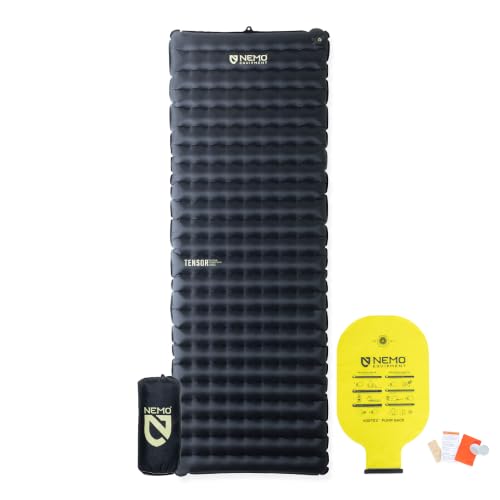
NEMO Equipment NM-TSREC-RWR Lightweight Camping Mattresse
What We Like
- Extremely high 8.5 R-value for deep cold
- Lightweight 1.4-pound pack weight
- Quiet, stable 3.5-inch cushioned loft
- Bluesign-approved, durable nylon fabric
Trade-offs
- Wide 25.2-inch profile may be bulky for ultralight packs
With an R-value of 8.5, this pad is built for sleeping directly on snow or frozen ground without a second thought. Its apex baffle design suspends more insulating layers, and four layers of floating Thermal Mirror film provide quiet insulation. This combination makes it the pick for mountaineers, winter campers, or anyone whose trip hinges on guaranteed warmth from the ground up. The bluesign-approved nylon fabrics offer superior puncture- and tear-resistance, and the pad is notably quiet, so you won’t sound like you’re sleeping on a chip bag.
It’s also not the plushest option in the guide. For general three-season backpacking where weight is the primary concern, NEMO’s own Tensor All-Season model shaves a tenth of a pound. But if your forecast includes negative digits, this pad’s specifications make the trade-off straightforward.
Product photos
Sea to Summit Ether Light XR Pro Sleeping Pad

What We Like
- 4-inch-thick Air Sprung Cell design for plush support
- Includes a pump sack and fast-adjust valve for convenience
- ThermalCore insulation for maximum warmth efficiency
Trade-offs
- The rectangular shape may be bulkier to pack than a mummy cut
- Weighs 1.6 pounds
A 4-inch thickness paired with a 7.4 R-value makes this pad a serious contender for anyone who feels the cold ground and needs cushion for their hips and shoulders. It’s built for side sleepers who want to sink in without hitting bottom, and the Air Sprung Cell construction adapts to keep you stable. The integrated pump sack means you won’t be left breathless inflating it, and the high-airflow valve lets you fine-tune the firmness quickly. This is a premium pad for alpine trips or winter camping where warmth and comfort are non-negotiable.
At 1.6 pounds, this pad weighs more than some ultralight models like the Sea to Summit Ultralight Air Mattress. Research mentions that the NEMO Eclipse offers better pressure dispersal than the Ether Light XR. The pad’s ThermalCore insulation and 7.4 R-value are designed for alpine expeditions and cold-weather camping.
Product photos
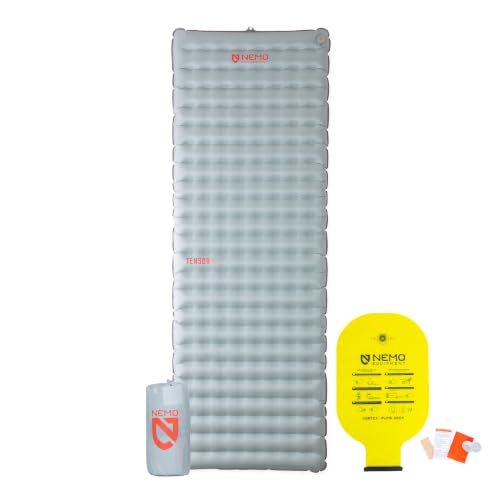
NEMO Equipment NM-TSRAS Lightweight Camping Mattresse
What We Like
- Exceptionally quiet construction for minimal sleep disturbance.
- Spaceframe baffles provide stable, non-springy support.
- High warmth-to-weight ratio from dual-layer metallized film.
- Durable, puncture-resistant nylon fabric shaves grams.
Trade-offs
- At 1.3 lb, it's heavier than the lightest air pads.
- Regular Wide size may be bulky for ultralight purists.
Two layers of floating Thermal Mirror film provide quiet insulation, so you won’t disturb a tentmate with crinkling noises when you shift at night. This pad’s Spaceframe baffles also eliminate springiness, offering stable support without the trampoline effect common in lightweight models. For backpackers who prioritize uninterrupted sleep, this combination of silence and stability is a key advantage.
The trade-off for that quiet stability is a slight weight penalty; at 1.3 pounds, it isn’t the absolute lightest in the category. It weighs more than the 1.0-pound Therm-a-Rest NeoAir Xlite NXT but less than several other insulated pads like the 1.6-pound Sea to Summit Ether Light XR Pro. You’re getting a premium, all-season pad that sacrifices a few ounces for a significantly more peaceful night.
Product photos
Therm-a-Rest Z Lite Sol Sleeping Pad
What We Like
- Lightweight and compact accordion-fold design
- Durable, puncture-proof closed-cell foam construction
- Reflective ThermaCapture coating increases warmth
- Softer top layer for comfort over denser base
Trade-offs
- 0.8-inch thickness provides minimal cushioning for side sleepers
- R-Value of 2.6 limits use in very cold conditions
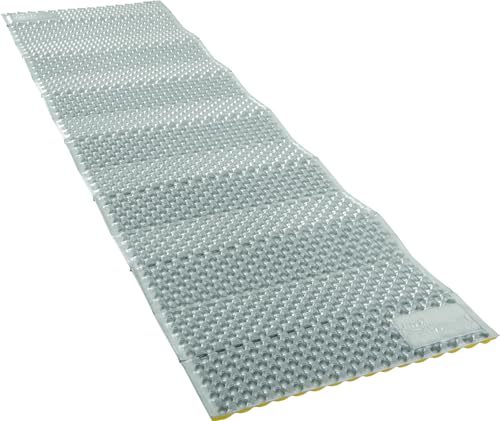
At 14 ounces, this pad is a cornerstone of simple, reliable backpacking. The accordion-folded closed-cell foam is famously tough and doubles as a handy sit pad around camp. Its reflective coating adds a meaningful warmth bump for three-season use. This is the choice for anyone who values durability and simplicity over plushness, or needs a dependable insulating layer under a thinner inflatable pad.
This pad’s closed-cell foam construction is lightweight and nearly impossible to puncture, offering a durable and economical option for sleeping on the ground. Its accordion-style design folds down compactly for easy packing, and the foam is softer on top for comfort while denser on the bottom for insulation. The reflective ThermaCapture coating increases overall warmth, resulting in an R-Value of 2.6 for an extra cozy night’s sleep.
Gear Doctors Ether Ultralight Sleeping Pad
What We Like
- Packs to the size of a water bottle
- Sets up in 90 seconds with foot pump
- Lifetime replacement guarantee
- Ergonomic U-shape design for stability
Trade-offs
- 2-R value limits use to warmer seasons
- Thinner center at 2.36 inches may bottom out
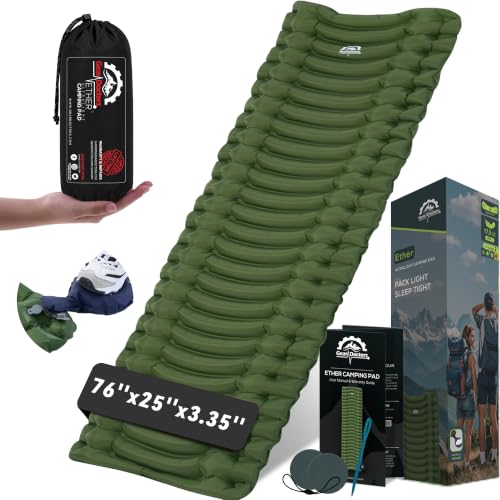
A pad that packs down to the dimensions of a water bottle makes the weight-versus-comfort calculation easy for long-distance backpackers. The Ether is for anyone whose priority is a full-length sleeping pad that disappears into a pack. Its clever foot pump gets it inflated quickly without lung effort, and the contoured shape does a decent job of keeping you centered. This is the pick when minimizing volume is your non-negotiable.
The trade-off for that packability is a 2-R value, which firmly plants this as a three-season pad for spring through summer trips. You’ll also find it a touch narrower than something like the Therm-a-Rest NeoAir Xlite NXT, which could matter for side sleepers who shift around. But if your kit is built around a 1-liter bottle, this mat is designed to slot right in alongside it.
Product photos
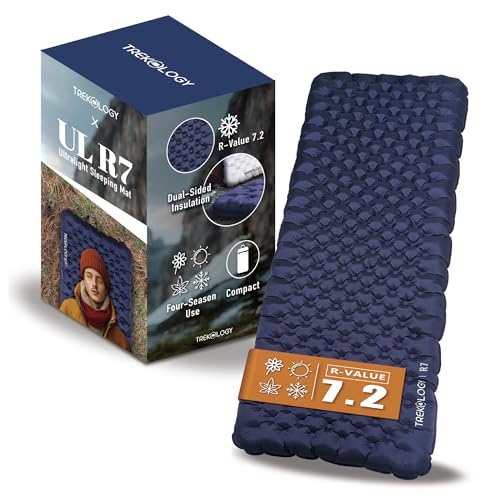
TREKOLOGY UL R7 Sleeping Pad
What We Like
- High 7.2 R-value for all-season insulation
- 4-inch thickness for superior support and comfort
- Packs down to a very compact, portable size
- Durable 40D ripstop nylon construction
Trade-offs
- Requires a separate pump bag or mouth inflation
- At 2 pounds, it's heavier than several ultralight competitors
- Length may be limiting for sleepers over 5'11"
The 7.2 R-value is the headline here, providing a level of ground insulation that makes this pad a genuine contender for colder weather. It means you can pack a single mat for a three-season trip without worrying about a sudden frost. Combined with a generous 4-inch thickness, it creates a sleeping surface that comfortably isolates side sleepers from the ground. This combination of warmth and cushion at this point makes it a standout for backpackers who prioritize a good night’s sleep in variable conditions.
That comfort does come with a trade-off in pack weight. At two pounds, it sits on the heavier side of the ultralight spectrum. For comparison, the Therm-a-Rest NeoAir Xlite NXT achieves a similar R-value at half the weight, though with less thickness. The Trekology UL R7 delivers its notable warmth and support in a package that remains highly packable, just be prepared to carry those extra ounces for the sake of a plush, insulated bed.
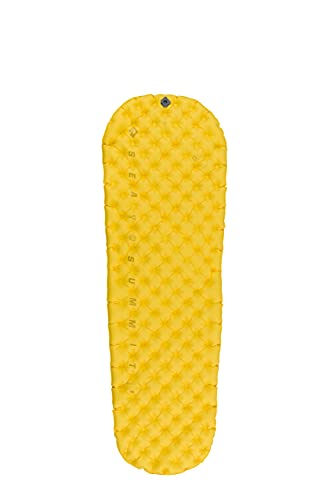
Sea to Summit Ultralight Air Mattress
What We Like
- Air Sprung Cell construction for even pressure dispersion
- Multi-function valve for quick inflation and deflation
- Includes stuff sack, repair kit, and PillowLock patches
- Extremely low weight and compact packed size
Trade-offs
- Low R-value of 1.1 limits use to warm weather
- 2-inch thickness provides less cushion against ground lumps
- Comfort requires careful site selection for level ground
Weighing less than a pound, the Sea to Summit Ultralight Air Mattress is a clear choice for gram-counting backpackers. Its Air Sprung Cell construction mimics a spring mattress, maintaining more body contact area for even pressure dispersion, which reviewers note provides comfort on high-pressure areas like shoulders and hips. Designed for minimalist pursuits like adventure racing or warm-season backpacking, it includes a multi-function valve for fast inflation with the integrated Airstream Pumpsack and quick deflation.
That low weight involves specific compromises. The 1.1 R-value suits only warm-season use, and the two-inch thickness means users report needing to be more intentional about level tent sites, as it won’t block lumps well. For instance, the Therm-a-Rest NeoAir Xlite NXT offers a higher R-value and greater thickness, but it weighs 1.0 pounds, making it notably heavier than this pad’s 0.76 pounds. This mattress is a specialist’s tool for streamlined summer trips where minimal pack weight is critical.
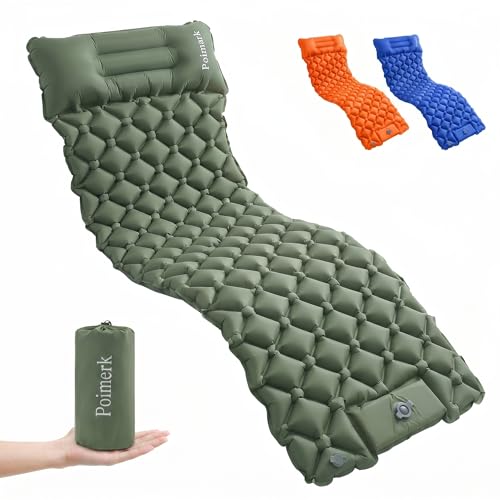
Poimerk Ultralight Sleeping Pad
What We Like
- Fast, hands-free 50-second foot pump inflation
- Built-in ergonomic pillow saves separate gear
- Snap fasteners connect two pads for a double bed
- Ultralight and compact for backpacking
Trade-offs
- Built-in pillow is a fixed feature, not adjustable
- Weighs 1.42 pounds, heavier than some 1-pound ultralight pads
The Poimerk pad uses a built-in foot pump that inflates in about 50 seconds, eliminating the need for mouth blowing or carrying a separate air pump. Its integrated pillow and weight of 1.42 pounds simplify packing for hikes where quick setup matters more than maximum luxury. This design focuses on reducing gear and steps at camp.
The trade-off is in the loft. At 2.3 inches thick, it doesn’t match the deep cushion of models like the Sea to Summit Ether Light XR Pro, which is a full 4 inches. You’re getting off the ground, but side sleepers or those on particularly rocky terrain might find the pressure relief more basic. Its strength is in its integrated, efficient design, not in competing with the plushest beds in the guide.
Product photos
Exped DeepSleep Mat

What We Like
- 3-inch solid foam for firm support
- Includes pump for customizable firmness
- 3D sidewalls maximize SUV sleeping space
- Made with 100% recycled polyester fabric
Trade-offs
- At 4.5 pounds, it is heavy for backpacking
- Wider than some ultralight pads like the Therm-a-Rest Z Lite Sol
The 3-inch solid foam core gives the Exped DeepSleep Mat a level of firm support that thinner, air-filled pads can’t match. That makes it ideal for car campers or anyone using it in an SUV, where the low profile preserves headroom while the substantial insulation blocks ground chill. The included pump lets you dial in the exact firmness you want without huffing and puffing, a thoughtful touch for a pad designed for settled, comfortable sleep.
That comfort comes with a clear trade-off in portability. At 4.5 pounds, it’s significantly heavier than dedicated backpacking pads like the Therm-a-Rest NeoAir Xlite NXT. This mat is built for drives to the campsite, not miles on the trail. For car-based adventures where you prioritize a bed-like sleep surface and can spare the space, its design delivers. If your pack needs to be light, look to the ultralight category instead.
How We Evaluated Lightweight Camping Mattresses
Our evaluation is research-based, comparing manufacturer specifications like R-value, weight, and thickness across dozens of models. We prioritized warmth, packed size, and comfort based on expert round-ups and consistent patterns in owner feedback. This approach identifies pads that excel in specific conditions, like the best camping mattresses for side sleepers. Our research cannot replicate years of field testing, but it highlights the proven trade-offs between weight, insulation, and comfort that matter most on the trail.
What To Look For In Lightweight Camping Mattresses
Your choice hinges on the season, your sleep position, and how much weight you’re willing to carry. A heavier, thicker pad often means more comfort and warmth, while the lightest options prioritize packability above all else.
Look for a high R-value for cold weather, sufficient thickness for your sleep style, and a packed size that fits your backpack. Weight is critical but should be balanced against durability and comfort.
R-Value (Insulation)
The R-value measures a pad’s resistance to heat loss; a higher number means better insulation. For summer camping, an R-value around 2-3 may suffice, but for three-season use, aim for 4.5 or higher. Our research shows pads like the NEMO Equipment NM-TSREC-RWR, with an R-value of 8.5, are built for sub-freezing mountaineering, while many lightweight backpacking pads cluster in the 4-6 range for versatile warmth.
Thickness & Comfort
Thickness directly impacts pressure point relief, especially for side sleepers. A 2-inch pad may be adequate for back sleepers on soft ground, but side sleepers often need 3 inches or more. The Sea to Summit Ether Light XR Pro uses a 4-inch Air Sprung Cell design specifically for plush support, a common feature in comfortable camping pads for side sleepers. Thinner pads, like the 0.8-inch Therm-a-Rest Z Lite Sol, are durable and simple but offer minimal cushioning.
Weight & Packed Size
Every ounce counts for backpackers, but the lightest pad isn’t always the best. Ultralight inflatables like the Gear Doctors Ether Ultralight can pack to the size of a water bottle, but often sacrifice insulation or thickness. Compare the packed dimensions and weight against your pack’s capacity and your trip’s length. A slightly heavier pad with a higher R-value, like many camping mattress options, can be worth the trade-off for colder or longer trips.
- Check the packed dimensions against your backpack’s interior or side pockets.
- Consider if the pad includes a pump sack, which affects total weight and convenience.
- Evaluate the fabric denier (D); a higher number like 40D is more durable but often heavier than 20D.
- Remember that foam pads, while bulky, are virtually puncture-proof and require no inflation.
Your perfect pad balances the minimum weight you can carry with the minimum comfort and warmth you need to sleep.
Lightweight Camping Mattresses Compared
The comparison table below details key specs like R-value, weight, and thickness to help you visualize the differences between our picks.
| Product | Weight | Thickness | Dimensions |
|---|---|---|---|
| Therm-a-Rest NeoAir Xlite NXT Sleeping Pad | 1.0 Pounds | 3.0 inches | 72 x 25 inches |
| NEMO Equipment NM-TSREC-RWR Lightweight Camping Mattresse | 1.4 Pounds | 3.5 inches | 72 x 25.2 inches |
| Sea to Summit Ether Light XR Pro Sleeping Pad | 1.6 Pounds | 4.0 inches | 72 x 25.2 inches |
| NEMO Equipment NM-TSRAS Lightweight Camping Mattresse | 1.3 pounds | 3.5 inches | 72 x 25.2 inches |
| Therm-a-Rest Z Lite Sol Sleeping Pad | 14 ounces | 0.8 inches | 72 x 20 inches |
| Gear Doctors Ether Ultralight Sleeping Pad | 17.5 oz | 3.2 inches | 72 x 22 inches |
| TREKOLOGY UL R7 Sleeping Pad | 2.0 pounds | 4 inches | 70.9 x 23.6 inches |
| Sea to Summit Ultralight Air Mattress | 0.76 pounds | 2 inches | 66 x 21.5 inches |
| Poimerk Ultralight Sleeping Pad | 1.3 pounds | 2.3 inches | 72 x 26 inches |
| Exped DeepSleep Mat | 4.5 pounds | 3 inches | 72 x 25.6 inches |
Frequently Asked Questions
What is the best lightweight mattress for camping?
The best overall lightweight mattress for most backpackers is the Therm-a-Rest NeoAir Xlite NXT. It offers a high 4.5 R-value for three-season warmth, packs down very small, and uses durable materials proven over countless trail miles, making it a reliable, high-performance choice.
What is the most comfortable camping mattress?
Comfort is subjective and depends on sleep position, but pads with greater thickness and specialized internal structures excel. The Sea to Summit Ether Light XR Pro, with its 4-inch Air Sprung Cells, is designed for plush, pressure-relieving comfort, particularly for side sleepers who need more cushioning.
What is the lightest camping mat?
The absolute lightest camping mats are minimalist foam pads like the Therm-a-Rest Z Lite Sol, but they offer minimal cushioning. Among full-featured inflatables, models like the NEMO Tensor Elite Ultralight Insulated (not in our top ten) can weigh under 9 ounces, though they often have lower R-values suited only for warm weather.
Are air pads or foam pads better for backpacking?
Air pads generally offer better comfort and packability for their weight, making them ideal for most backpackers who value sleep quality. Foam pads like the Therm-a-Rest Z Lite Sol are nearly indestructible, simple, and provide good value, but their bulk and lower comfort make them better for back sleepers or as a supplemental insulating layer.
How important is R-value in a sleeping pad?
R-value is critically important for safety and comfort in cool conditions. A pad with an R-value below 3 is generally only suitable for summer, while a value of 4.5 or higher is needed for three-season use. For winter camping, our research shows you need a dedicated high-R-value pad, like the NEMO Equipment NM-TSREC-RWR with an R-value of 8.5.
The Bottom Line
For most backpackers, the Therm-a-Rest NeoAir Xlite NXT Sleeping Pad is the best overall choice, delivering reliable warmth and a minimal packed size without sacrificing proven durability. Budget-conscious shoppers or those who prioritize simplicity should look at the Therm-a-Rest Z Lite Sol, while winter campers need the extreme insulation of the NEMO Equipment NM-TSREC-RWR. Ultimately, matching the pad’s R-value and thickness to your expected conditions and sleep style is the single most important factor for a restful night outdoors.
