
10 Best Air Mattresses For Hospital Bed in 2026
This post contains affiliate links. As an Amazon Associate, we earn from qualifying purchases.
Our best overall pick is the MedVance Alternating Air Mattress System for its ultra-quiet operation, digital monitoring, and safety features. For advanced moisture management, we recommend the Drive Medical Med-Aire Low Air Loss Mattress System. The Invacare MA500 is a top choice for moderate-risk patients needing a basic, reliable system.
For a patient spending long hours in bed, the wrong surface can lead to painful pressure sores and restless nights. These therapeutic air mattresses are engineered to redistribute weight and enhance comfort. Our research identified key features that matter most, from pump noise to safety alarms.
This guide compares ten systems to help you match the right technology to a patient’s specific needs.
Top 10 Air Mattresses For Hospital Beds in the Market
Certain content that appears on this site comes from Amazon. This content is provided "as is" and is subject to change or removal at any time.
The Best Air Mattresses For Hospital Beds, Reviewed
MedVance Alternating Air Mattress System

What We Like
- Ultra-quiet dual pump cores under 20 dB
- Digital LED screen displays weight and pressure
- Emergency CPR deflation via red tag
- Cell-on-cell design prevents bottoming out
Trade-offs
- At 28 pounds, it's heavier than the 13.5-pound Invacare model
- Standard 36-inch width excludes narrower bed frames
A 450-pound weight capacity and cell-on-cell air support mean this mattress system can handle significant weight while actively working to prevent pressure sores. The fully digital pump with diagnostic alarms allows for precise customization to a patient’s needs, which suits caregivers managing long-term care at home. Its integrated, low-air-loss design and 24-hour power outage protection provide a reliable safety net that simpler mattress toppers can’t match.
The MedVance Alternating Air Mattress System is a full replacement mattress weighing 28 pounds, which means it’s a permanent fixture designed for a dedicated bed setup. Its dimensions are made to fit most standard hospital bed frames. For users who need pressure relief but not a full mattress replacement, the MedVance Alternating Pressure Mattress Pad is a lighter alternative designed for the same frame size.
Product photos
Drive Medical Med-Aire Low Air Loss Mattress System

What We Like
- Combines alternating pressure with low air loss therapy
- Digital control unit with diagnostic alarms
- Fluid-resistant, vapor-permeable cover reduces moisture
- Auto-return feature after two static hours
Trade-offs
- At 31.4 pounds, it's heavier than the 13.5-pound Invacare MA500
- Control unit requires power and monitoring for alarms
- A dedicated mattress replacement, not a simple overlay
A 450-pound weight capacity and dual alternating pressure with low air loss make this system a serious tool for managing advanced pressure injury risk. It suits caregivers or facilities needing a full replacement mattress that actively redistributes weight while controlling moisture and shear. The twenty individual air cells allow for precise immersion, and the multiple cycle times let you tailor therapy to a patient’s comfort and skin condition.
This mattress system is a powered medical device, which means it requires an electrical outlet and adds more complexity than a basic non-powered pad. Its digital pump must remain plugged in and monitored for alarms, though an auto-return function reactivates alternating pressure if left static for over two hours. For those requiring its specific combination of low air loss and alternating pressure, it is a capable choice. For simpler prevention needs, a product like the Vive Alternating Pressure Mattress Pad offers a lighter, more straightforward approach.
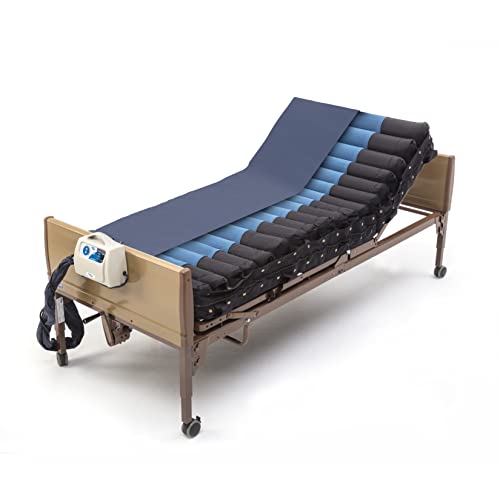
Invacare MA500 microAIR Alternating Pressure Mattress
What We Like
- Cell-in-cell design for safety during power loss
- Natural heel slope reduces pressure on heels
- Quilted nylon cover offers low shear and moisture protection
Trade-offs
- Not rated for high-risk or Stage IV pressure sores
- Basic two-cell cycle lacks advanced pulsation features
A 350-pound capacity and a design for low-to-medium risk makes the Invacare MA500 a focused choice for preventing early-stage pressure injuries. Its alternating two-cell cycle redistributes weight steadily, which is exactly what’s needed for someone who spends long hours in bed but hasn’t developed severe ulcers. The safety net of its cell-in-cell construction means the mattress won’t fully deflate if the power goes out, a genuine relief for caregivers managing moderate risk.
The trade-off is its therapeutic scope; it’s built for stages I-III, not for complex wound care. Compared to something like the ProHeal Low Air Loss Alternating Pressure Mattress, the MA500 lacks features like side air perimeters or comprehensive digital controls. You’re getting a reliable, straightforward system that excels within its defined purpose, without the extras, or the higher weight, of more intensive care mattresses.
MedVance Alternating Pressure Mattress Pad

What We Like
- Ultra-quiet dual-core pump for minimal disturbance
- Removable, waterproof cover for easy cleaning
- Instant CPR deflation via red tag for safety
- Digital pump with alarms for patient-specific adjustment
Trade-offs
- The 8-inch thickness may require adjusting bed rails.
- No low air loss feature for moisture management.
An operating volume under 20 decibels makes this pump exceptionally quiet for a bedroom, a critical feature for anyone who needs therapeutic pressure relief without the constant hum of machinery. The digital controls and diagnostic alarms offer a level of customization typically found in clinical settings, suited for caregivers managing a patient’s specific pressure sore prevention needs. Its hospital-grade nylon cover is built to withstand frequent cleaning, which matters when maintaining hygiene is a daily task.
The trade-off for that focused, ultra-quiet performance is the absence of a low air loss feature, which the Drive Medical Med-Aire system includes to help manage skin moisture. This pad is a dedicated pressure-relief tool, not a climate manager. It prioritizes silent operation and straightforward, secure use with its anti-slip coating and bed straps, making it a strong contender when pump noise is the primary concern over advanced moisture control.
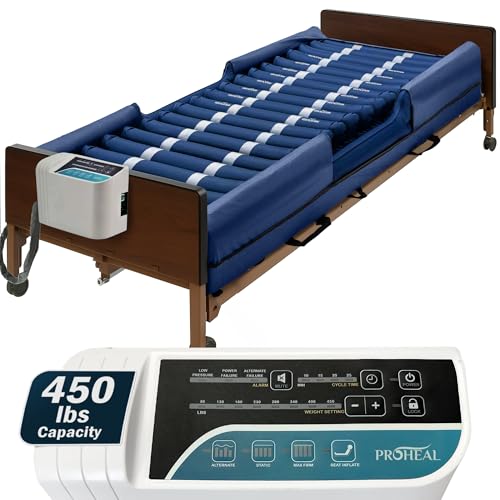
ProHeal Low Air Loss Alternating Pressure Mattress
What We Like
- Comprehensive three-alarm digital system
- Low air loss with 18 moisture-wicking holes
- Cell-on-cell design retains air during power loss
- Four customizable alternating pressure cycles
Trade-offs
- At 30 lb, it's heavier than the 13.5 lb Invacare MA500.
- No remote control, unlike the MedVance Alternating Air Mattress System.
The ProHeal mattress stands out for its comprehensive three-alarm digital system, covering low pressure, power failure, and alternating failure. That makes it a serious choice for caregivers who need clear, immediate notification if anything disrupts the therapy. Its cell-on-cell design also means the lower four inches stay inflated during a power outage, providing a critical buffer while you address the situation. This combination suits someone managing a patient at high risk for pressure injuries where consistent, monitored support is non-negotiable.
Weighing 30 pounds, this mattress is a more substantial piece of equipment to move than lighter systems like the 13.5-pound Invacare MA500. It also lacks a remote control, so adjusting its four alternating cycles requires interaction at the pump unit. You’re getting an alarm-focused clinical system, but that comes with a physical presence and direct control scheme better suited for a dedicated care setup.
Product photos
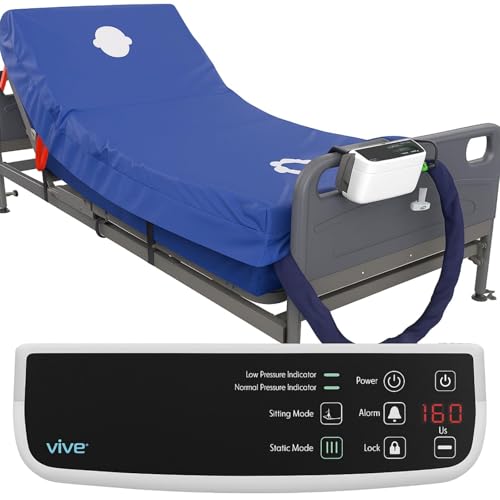
Vive Alternating Pressure Hospital Replacement Mattress
What We Like
- Ultra-quiet variable pressure pump
- Waterproof, breathable vinyl cover
- Three static head cells for pillow support
- Adjustable pressure and cycle frequency
Trade-offs
- Pump warranty is one year; mattress pad warranty is 60 days.
- No remote control or digital alarm system.
An ultra-quiet pump makes this alternating pressure system a strong choice for bedrooms where noise is a concern. The 16 air cells cycle to redistribute pressure, and you can adjust both the firmness and the speed of that cycle for comfort. It suits someone who needs a straightforward, effective system for pressure sore prevention without a noisy motor disrupting sleep. The three static cells at the head act as a built-in air pillow, which is a thoughtful touch for positioning.
Its dimensions and controls involve some compromises. At 34 inches wide, it will leave a slight gap on each side of a standard 36-inch hospital bed frame. Unlike a system with a digital remote and built-in alarm, this one focuses on being a reliable, quiet workhorse for core pressure relief rather than offering advanced digital features.
Product photos
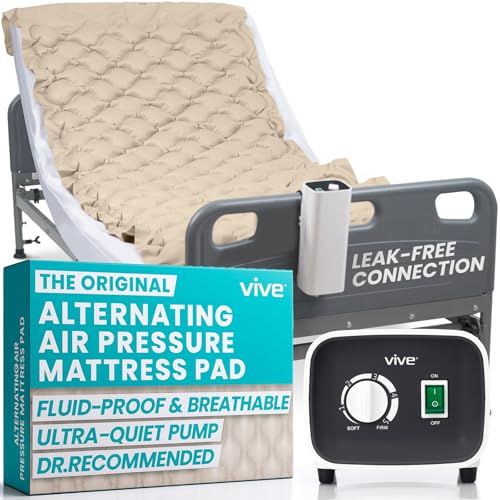
Vive Alternating Air Pressure Mattress Pad
What We Like
- Extremely quiet 22 dBA pump operation
- Proprietary wave-like 130-cell algorithm
- Waterproof construction with 300 lb capacity
- Secure top and bottom tuck-in flaps
Trade-offs
- Pad is only 3 inches thick
- No remote or digital control interface
A pump operating at just 22 dBA is quieter than a whisper, so it is unlikely to disturb a patient or caregiver during sleep. The Vive pad uses 130 air cells that alternately inflate and deflate on a six-minute cycle to redistribute weight and manage skin maceration. Its waterproof vinyl construction supports up to 300 pounds and is designed as a topper that fits on an existing mattress or frame.
At three inches thick and seven pounds, this pad is a lightweight addition rather than a full mattress replacement. For comparison, a full replacement unit is eight inches thick and weighs 28 pounds. The Vive pad provides a simpler, quieter solution for adding alternating pressure therapy to a current bed setup.
Product photos
Alcedo Alternating Air Pressure Mattress Pad
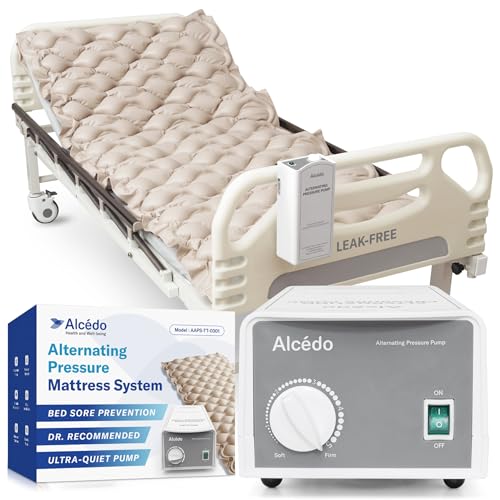
What We Like
- Alternating pressure technology for bedsore prevention
- Ultra-quiet pump for undisturbed sleep
- High-density, waterproof construction supports 300 lb
- Fits standard hospital and home beds
Trade-offs
- 75-inch length leaves a gap on 80-inch beds
- 300 lb capacity limits user weight
A 300-pound capacity and medical-grade alternating pressure make this pad a practical choice for home caregivers needing a reliable overlay for bedsore prevention. Its ultra-quiet pump with five firmness settings allows customization without disturbing sleep, and the waterproof surface simplifies maintenance. It suits those seeking a straightforward, durable overlay that fits most standard beds without the complexity of a full mattress replacement system.
The Alcedo pad’s 75-inch length is shorter than a standard 80-inch hospital bed, requiring the uninflated end to be tucked securely beneath the mattress. It provides core alternating pressure relief, while other systems offer additional features such as a digital interface or a thicker, 8-inch profile.
VOCIC Alternating Pressure Mattress Pad
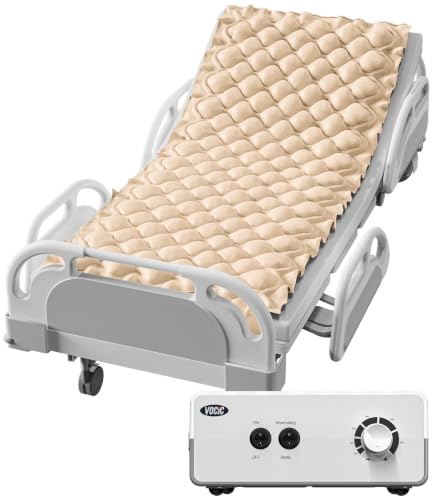
What We Like
- One-piece bubble cells resist shifting
- Upgraded ceramic pump is ultra-quiet
- Long securing flaps prevent pad movement
- Includes repair kit for minor punctures
Trade-offs
- Shorter and narrower than standard hospital bed sizes
- Maximum 300 lb weight capacity
The 15-inch securing flaps are the main event here, tucking deep under the mattress to lock the pad firmly in place. That makes the VOCIC pad a standout for home care situations where a restless patient or frequent repositioning would normally dislodge a standard topper. Its whisper-quiet ceramic pump and one-piece cell construction support that secure fit with reliable, shift-free operation. This combination suits caregivers who need a stable, low-profile pressure relief solution that won’t slide around during nightly routines.
Its dimensions make it a better fit for home beds than hospital frames. At just under 75 inches long, it is shorter than the standard 80-inch hospital mattress length, so it works best as a topper rather than a full replacement. The 33.5-inch width also falls short of the common 36-inch hospital width, meaning it provides a more tailored fit on a twin or slightly narrower care bed.
Product photos
Lunderg Alternating Air Pressure Mattress Pad
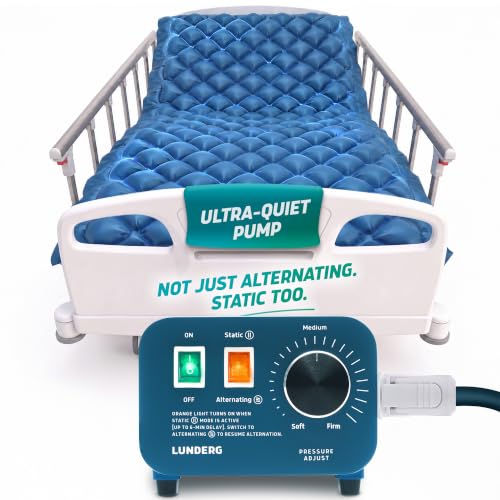
What We Like
- Ultra-quiet 23 dBA pump operation
- Static mode for a stable sleeping surface
- Waterproof and durable mattress topper
- Quick connector for easy hose setup
Trade-offs
- Inflation requires a 20-minute wait time
- No listed dimensions for pad fit verification
- Requires a separate sheet to manage moisture
Its pump operates at 23 dBA, a whisper-quiet level that helps prevent sleep disruption for patients or caregivers in a bedroom. This pad includes a static mode, allowing all cells to stay fully inflated and provide a stable surface when a break from the alternating motion is desired. Developed by medical experts, it is designed to relieve pressure on skin and bony areas to aid in bedsore prevention and healing.
Initial setup requires some patience, as it takes a full 20 minutes to inflate before you can fine-tune the firmness. Unlike a fully digital system with alarms and a remote, the Lunderg offers simpler, knob-based pressure control. It’s a straightforward, quiet workhorse focused on core pressure relief rather than high-tech monitoring, best for home environments where simplicity and silence are the priority.
How We Evaluated Air Mattresses For Hospital Beds
We compared product specifications, manufacturer documentation, and expert round-ups from medical supply retailers to understand the clinical features of each system. We also analyzed patterns in owner feedback to gauge real-world performance in areas like durability and ease of use. Our evaluation prioritized pressure relief technology, pump noise level, safety features, and compatibility with standard bed frames. Because this is a research-based evaluation, we cannot verify long-term durability claims or the exact clinical outcomes for individual patients.
What To Look For In Air Mattresses For Hospital Beds
The right system balances clinical need with the practicalities of home care. Key factors include the type of pressure therapy, the control unit’s features, and the system’s physical fit and maintenance.
Focus on the patient’s risk level for pressure sores, the need for moisture control, and how much noise the pump makes. A secure fit on the bed frame and easy-to-clean covers are also essential for long-term care.
Pressure Relief Technology
The core function is to redistribute pressure. Basic alternating pressure systems inflate and deflate cells in a cycle, which is suitable for low-to-moderate risk patients. For higher risk or existing ulcers, a system that combines alternating pressure with low air loss therapy actively manages moisture and heat at the skin surface. Some advanced models also offer pulsation modes for additional stimulation. The cell design, such as cell-on-cell or cell-in-cell, affects stability and safety during a power loss.
Pump & Control Features
The pump is the system’s brain. Ultra-quiet pumps, often under 23 decibels, are crucial for uninterrupted sleep. Digital control units with LED screens allow for precise pressure adjustment and often include diagnostic alarms for low pressure or pump failure, a critical safety feature. Look for an emergency CPR deflation function, typically a red pull-tag, for immediate response situations. Remote controls add convenience but are less common.
Fit, Maintenance & Capacity
Ensure the mattress dimensions match the bed frame; a standard hospital bed is 36 inches wide by 80 inches long. An overlay pad sits on top of an existing mattress, while a replacement mattress system takes its place. Waterproof, breathable, and removable covers are essential for hygiene and easy cleaning. Always check the manufacturer’s stated weight capacity, which commonly ranges up to 300 pounds for standard models, with bariatric options available for higher weights.
- Verify the mattress length and width against your bed frame before purchasing.
- Confirm the pump’s warranty period, which can differ from the mattress warranty.
- Look for a system with a repair kit for addressing minor air leaks.
The most important factor is matching the system’s therapeutic features to the patient’s specific risk level and care needs.
Air Mattresses For Hospital Beds Compared
The table below summarizes key specifications and features across our top picks to help you compare them at a glance.
| Product | Weight Capacity | Cover Material | Dimensions (LxWxH) |
|---|---|---|---|
| MedVance Alternating Air Mattress System | 450 pounds | Quilted poly PU | 80" x 36" x 8" |
| Drive Medical Med-Aire Low Air Loss Mattress System | 450 lbs | Removable 4-way stretch PU | 80" x 36" x 8" |
| Invacare MA500 microAIR Alternating Pressure Mattress | 350 lb | N/A | 80" x 36" x 8" |
| MedVance Alternating Pressure Mattress Pad | N/A | Hospital grade nylon | 80" x 36" x 8" |
| ProHeal Low Air Loss Alternating Pressure Mattress | N/A | Removable fluid-resistant nylon | 80" x 36" x 8" |
| Vive Alternating Pressure Hospital Replacement Mattress | 350 pounds | Waterproof vinyl | 80" x 34" x 8" |
| Vive Alternating Air Pressure Mattress Pad | 300 lb | N/A | 77" x 33" x 3" |
| Alcedo Alternating Air Pressure Mattress Pad | 300 lb | Waterproof, breathable | 75" x 35" x 0" |
| VOCIC Alternating Pressure Mattress Pad | 300 lbs | N/A | 74.8" x 33.5" x 8.3" |
| Lunderg Alternating Air Pressure Mattress Pad | 300 lbs | N/A | N/A |
Frequently Asked Questions
What is the best air mattress for a hospital bed?
For most caregivers needing a full-featured, hospital-grade system, the MedVance Alternating Air Mattress System is the best overall choice. It offers an ultra-quiet dual pump, a digital display for monitoring, and critical safety features like emergency CPR deflation.
What is the best air mattress for bedridden patients?
Bedridden patients at high risk for pressure ulcers often benefit most from a system combining alternating pressure with low air loss therapy, like the Drive Medical Med-Aire Low Air Loss Mattress System. This integrated approach manages pressure and moisture, which are key concerns for immobile patients.
Can you use an air mattress on a hospital bed?
Yes, therapeutic air mattresses are specifically designed to replace the standard mattress on a hospital bed frame. They connect to a control pump and are a common solution for pressure sore prevention in both home and clinical settings, as discussed in the guide on hospital bed mattresses.
What kind of mattress is best for a hospital bed?
The best type depends on the patient’s mobility and skin integrity. For those confined to bed or with fragile skin, an alternating pressure air mattress system is often recommended.
How does low air loss therapy help?
Low air loss therapy gently circulates air through the mattress surface to wick away moisture and reduce heat buildup. This helps maintain a drier microclimate around the skin, which is crucial for preventing moisture-related skin breakdown, especially when paired with a pressure care mattress for long-term care.
The Bottom Line
The MedVance Alternating Air Mattress System is the best overall choice for caregivers seeking a comprehensive, quiet, and safety-focused alternating pressure system for a standard home hospital bed. If budget is a primary concern or the patient is at a lower risk, the reliable Invacare MA500 offers solid basic therapy.
For those managing advanced pressure ulcers, the Drive Medical Med-Aire system with integrated low air loss is the specialized pick. Ultimately, selecting the right air mattress comes down to honestly assessing the patient’s risk level and matching it to the appropriate therapeutic technology.
