
10 Best Hospital Bed Mattresses in 2026
This post contains affiliate links. As an Amazon Associate, we earn from qualifying purchases.
Our best overall hospital bed mattress is the Invacare MA500 Alternating Pressure Mattress System for its active, two-to-one alternating pressure cycle that effectively redistributes weight for patients at low-to-medium risk. For a top foam option, consider the Invacare Fortress Cell Foam Hospital Mattress, and for automated monitoring, the Drive Medical Med-Aire Low Air Loss Mattress System with its alarm stands out.
Choosing the wrong mattress can lead to pressure sores, patient discomfort, and extra work for caregivers. This guide focuses on pressure redistribution, ease of cleaning, and specific patient needs. Our research is based on manufacturer specifications, expert round-ups, and patterns in owner feedback to help you find the right fit.
Top 10 Hospital Bed Mattresses in the Market

Certain content that appears on this site comes from Amazon. This content is provided "as is" and is subject to change or removal at any time.
The Best Hospital Bed Mattresses, Reviewed
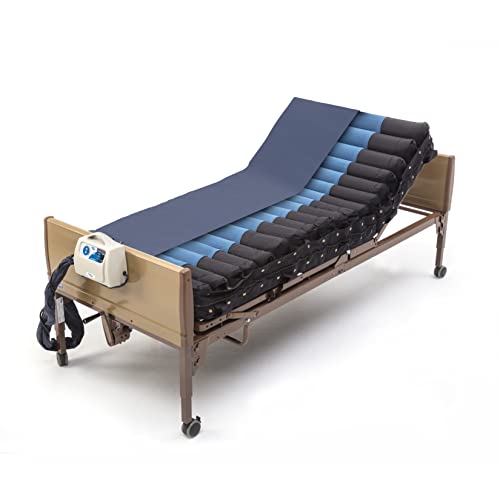
Invacare MA500 Alternating Pressure Mattress System
What We Like
- Alternating 2:1 cycle for pressure redistribution
- Natural heel slope reduces pressure point
- Vapor-permeable, low-shear cover protects skin
- Lightweight at 13.5 pounds for handling
Trade-offs
- Not rated for high-risk or stage IV sores
- Requires power for alternating pressure function
The 350-pound weight capacity and alternating pressure cycle make the Invacare MA500 a solid choice for someone at low to medium risk of developing pressure sores. Its cell-in-cell design provides a safety net against bottoming out during a power outage, which is a thoughtful touch for home care. The quilted, vapor-permeable cover addresses moisture and friction, two major concerns for skin integrity, while the natural heel slope specifically targets a vulnerable area. For managing stages I to III ulcers, this system brings a clinical-grade approach into a home setting without overwhelming complexity.
This alternating pressure system requires a power outlet to operate its pump, unlike non-powered foam mattresses. At 8 inches tall, the Invacare MA500 is thicker than some 6-inch foam alternatives, so verify clearance with your bed’s side rails. It is intended for individuals at low-to-medium risk or with stages I-III pressure sores, making it a targeted choice for preventive care rather than advanced wound treatment.
Invacare Fortress Cell Foam Hospital Mattress

What We Like
- Fortress cells target pressure relief and improve airflow.
- Removable, fluid-resistant cover simplifies infection control.
- Full anti-slip bottom prevents mattress migration.
- Made in USA with a fire-protective layer.
Trade-offs
- At 6 inches thick, it lacks the depth of advanced air systems.
- The 25-pound weight requires two people for easier handling.
Five fortress-shaped foam cells define this mattress, designed to reduce skin stress through targeted support and enhanced air flow. That combination matters for patients who remain in one position for extended periods, as it aims to redistribute pressure consistently. The design is paired with a fluid-resistant, removable cover for straightforward cleaning.
This is a static foam mattress, so it does not actively shift pressure like the Invacare MA500 Alternating Pressure Mattress System. Its focus is on providing reliable, passive support with an emphasis on easy maintenance, positioning it as an alternative to more complex powered systems.
Product photos
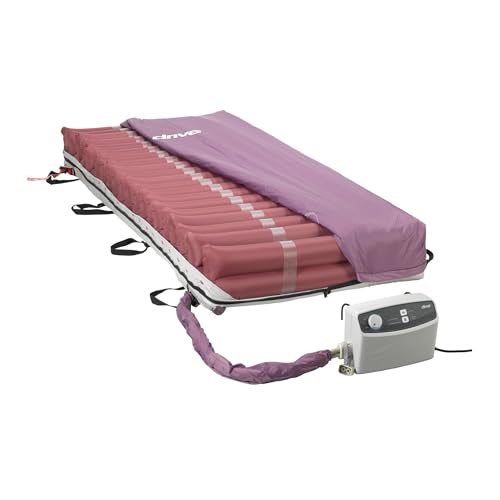
Drive Medical Med-Aire Low Air Loss Mattress System
What We Like
- Audio-visual alarm alerts caregivers to low pressure
- Vapor-permeable cover reduces moisture and heat buildup
- Individual replaceable air cells simplify maintenance
- Alternating pressure system minimizes pressure points
Trade-offs
- System relies on a powered pump for core function
An audio-visual alarm system alerts caregivers to low pressure, making this a focused choice for situations requiring consistent pressure relief without constant supervision. The alternating pressure from 20 individual air cells redistributes weight, while the vapor-permeable cover helps manage moisture and heat. This Drive Medical system is designed for home or facility use where automated monitoring is a key feature.
The trade-off is in the setup: at 14.6 inches thick, this is a substantial mattress replacement system that needs a hospital bed frame capable of accommodating its depth. Compared to a simpler foam option like the Drive Medical Gravity 9, this unit adds complexity with its pump and alarm, but that complexity is the point for its targeted care. It’s for the buyer whose priority is automated monitoring over passive support.
Drive Medical Gravity 9 Pressure Redistribution Mattress
What We Like
- Full-length memory foam top layer for comfort
- Articulation cuts in base extend mattress durability
- Integrated heel slope and channeling for ulcer prevention
- Fluid-proof, tear-resistant, low-shear cover
Trade-offs
- Lacks raised side rails for fall prevention
- At 23 pounds, it is heavier than some 6-inch foam models
- Six-inch profile may require a bed deck adjustment
With a 450-pound weight capacity, this mattress supports a wide range of users in care settings. Its multi-layered foam design, including a full-length memory foam top layer, provides pressure redistribution for comfort and support. A channel-cut foam layer under the foot section and a 6-inch to 4-inch heel slope specifically target heel ulcer prevention.
The mattress weighs 23 pounds, which can affect how easily it is moved. It lacks raised side rails, a feature present on the HOMBYS Memory Foam Mattress with Side Guards. Compared to the 20-pound ProHeal Channel-Cut Foam Hospital Mattress, this model is heavier but includes the specialized heel design.
ProHeal Bariatric Foam Hospital Bed Mattress

What We Like
- High 1000 lb weight capacity for bariatric needs
- Two-layer foam design redistributes pressure effectively
- Removable, fluid-resistant cover with 360-degree zipper
- Vapor-permeable top layer creates a cooler sleep surface
Trade-offs
- At 42 inches wide, it requires a bariatric-specific bed frame.
- Weighs 26.9 lb, making solo cover removal and cleaning a physical task.
With a weight capacity of 1000 pounds, this mattress is designed for bariatric patients who exceed the limits of standard hospital beds. Its two-layer foam construction aims to redistribute pressure for moderate to high-risk patients, working to prevent bed sores, while the vapor-permeable, low-shear cover helps manage moisture and reduce skin friction. According to its description, it seeks to blend firm support with ultra comfort for home care and medical facilities.
Its substantial 42-inch width locks it into compatible bariatric bed frames, making it overkill for a standard 36-inch hospital bed. Compared to narrower foam mattresses meant for low to moderate risk, this model is the firm, heavy-duty option. It focuses on core pressure relief and durability for higher-weight patients. A system like the Invacare MA500 would offer more dynamic relief but at a lower weight capacity.
Product photos
MedVance Alternating Air Mattress

What We Like
- Ultra-quiet dual pump cores for minimal disturbance
- High 450-pound weight capacity accommodates most patients
Trade-offs
- Requires a power source, unlike passive foam mattresses
An operating volume under 20 dB makes this alternating air system the quietest in the guide, a critical feature for bedrooms where pump noise disrupts sleep or care. Its digital controls and diagnostic alarms allow for precise customization to a patient’s needs, while the 450-pound capacity offers broad suitability. This mattress suits caregivers who prioritize a peaceful environment and require a system that can be finely tuned without guesswork.
Its reliance on power, while offering substantial outage protection, means it isn’t as simple as a static foam option like the ProHeal Channel-Cut mattress. Choose this for its exceptional quietness and adjustability; look elsewhere if you need the absolute lightest system or a completely power-free solution.
Product photos
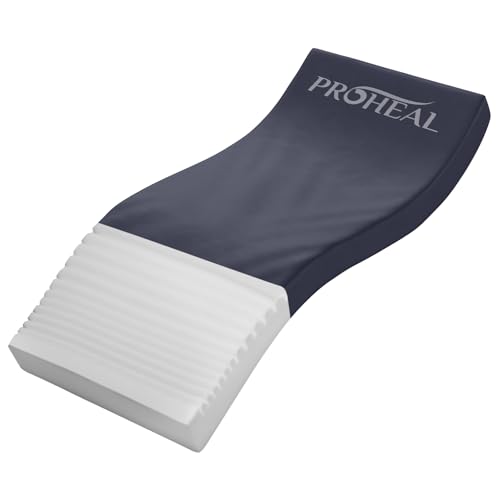
ProHeal Channel-Cut Foam Hospital Mattress
What We Like
- Channel-cut foam design for pressure redistribution
- Waterproof, removable cover for hygiene
- 28 ILD foam provides a firm yet soft surface
- Zippered cover allows for easy cleaning
Trade-offs
- 6-inch height lacks the depth of higher-end mattresses
- Designed specifically for low to moderate risk patients
A 28 ILD foam rating creates a surface that is firm enough for support but soft enough for immersion. This immersion is the core of its pressure redistribution design, making the ProHeal mattress a considered choice for a patient at low to moderate risk of bedsores. The primary need here is a consistent, supportive surface that relieves pressure points without the complexity of an air system. Its channel-cut cells and five-zone construction aim to distribute weight evenly, offering a straightforward approach to a common problem.
Consider its profile and weight. At 6 inches thick and 20 pounds, it is a notably lighter and shallower mattress compared to heavier foam models, which suggests a simpler foam construction. For a patient who is very lightweight or whose risk is strictly low, this simplicity is an affordable virtue. If the patient’s condition or weight suggests a higher risk, a thicker, heavier foam mattress or an alternating pressure system would be the logical next step.
Product photos
HOMBYS Memory Foam Mattress with Side Guards

What We Like
- Built-in foam side guards for fall prevention
- FDA registered as a Class I medical device
- Targeted pressure relief in five body zones
- Easy-clean, machine-washable waterproof cover
Trade-offs
- Requires 24-48 hours to fully expand after unboxing
With a weight capacity of up to 450 lbs, this mattress can support a wide range of users. Its built-in foam side guards are designed to prevent slipping or rolling off the bed, which enhances safety for restless individuals. As an FDA-registered medical device, it meets specific standards for safety and hygiene. The central section remains open for easier assisted entry and exit. A five-zone memory foam top layer is intended to effectively reduce pain in critical areas like the back and hips, while a waterproof, removable cover simplifies cleanup for long-term hygiene.
You trade advanced pressure management for that safety focus. For someone at high risk for pressure injuries, that trade-off matters. But for a patient primarily needing security from rolling or slipping out of bed, the HOMBYS design delivers a specific, valuable peace of mind.
Product photos
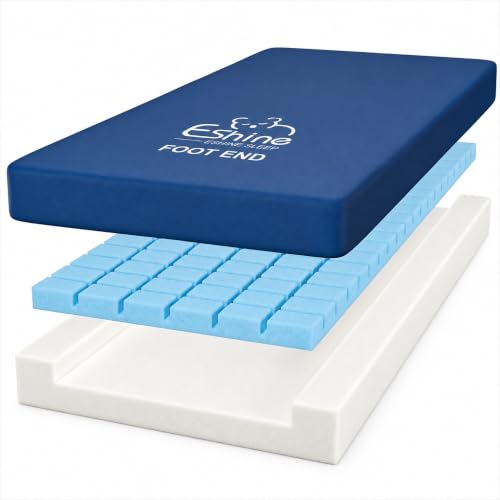
ESHINE Hospital Bed Mattress for Back Pain
What We Like
- High 450 lb weight capacity for broad support
- Waterproof, low-friction TPU cover eases cleaning
- U-core foam design targets pressure redistribution
- Hypoallergenic, high-density foam construction
Trade-offs
- At 6 inches thick, it lacks the depth of some premium pressure-relief systems
- No integrated alternating pressure or air flow features
A 450-pound weight capacity means this mattress can properly support a wide range of patients without bottoming out, which is foundational for managing back pain. The ESHINE combines that sturdy base with a two-layer foam design featuring a unique U-core and contoured insert, a construction aimed at immersing the body and redistributing pressure away from the spine. It suits someone seeking a straightforward, maintenance-free foam mattress that prioritizes even support and a waterproof, easy-transfer surface over advanced therapeutic technologies.
This design is a static foam block, so it won’t actively rotate pressure points like a powered alternating pressure system. You’re getting a capable, well-built foam mattress that focuses on core support and easy care, not dynamic relief. For chronic back pain where consistent, firm foundational support is the primary goal, and where managing moisture and cleanliness is a daily concern, this design hits the key points without complication.
Product photos
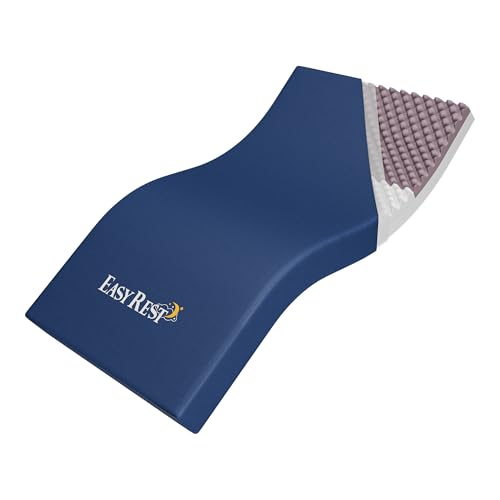
EASY REST Hospital Bed Mattress
What We Like
- Over 200 independent semicircular structures for pressure relief
- Waterproof cover simplifies cleaning and maintenance
- Non-slip bottom keeps mattress securely in place
Trade-offs
- At 72 pounds, it is heavier than most foam mattresses
- No alternating pressure or low air loss features
A maximum weight capacity of 450 pounds allows this mattress to support users where many standard hospital bed mattresses would not. Its design uses over 200 independent semicircular structures to let the body sink in gently and distribute pressure evenly, which helps ease discomfort during long hours of lying down. This focus on pressure redistribution makes it a practical option for bedridden individuals, the elderly, and people with limited mobility who need durable support without a complex therapeutic system.
That durable, dense foam construction comes with considerable weight, as the mattress measures 72 pounds compared to a much lighter 20-pound model. While the non-slip bottom helps it stay in place, its heft is a factor during initial setup. The static foam design provides pressure relief through its semicircular structures, but it does not offer the active, shifting support of a powered alternating pressure mattress.
Product photos
How We Evaluated Hospital Bed Mattresses
We compared these mattresses by examining manufacturer specifications for features like pressure redistribution technology, weight capacity, and cover materials. We also studied expert round-ups from medical supply resources and analyzed recurring themes in owner feedback about durability, noise levels, and ease of cleaning.
Key criteria included the type of pressure relief (active alternating air versus passive foam), the ease of infection control with removable or fluid-resistant covers, and the overall weight and handling for caregivers. We prioritized features that directly impact patient skin health and caregiver workload.
Our evaluation is research-based, so we cannot comment on long-term durability beyond what owners report. We also note that clinical suitability for specific medical conditions should always be confirmed with a healthcare professional.
What To Look For In Hospital Bed Mattresses
The right mattress depends on the patient’s risk level, mobility, and specific care needs. A mattress that works for back pain may not be sufficient for preventing pressure ulcers.
Focus on pressure redistribution technology, cover hygiene, and weight capacity. Alternating air systems actively shift pressure points, while high-density foam offers passive support. A removable, waterproof cover is crucial for infection control, and the mattress must support the patient’s weight without bottoming out.
Pressure Redistribution
The core purpose is to prevent pressure ulcers. Passive foam mattresses use high-density or channel-cut foam to distribute weight evenly. For higher risk, an active system like an alternating pressure mattress uses a pump to rhythmically inflate and deflate air cells, reducing pressure on any one area longer. The patient’s mobility and sore history determine which type is necessary; a basic twin size hospital bed mattress may suffice for low-risk, mobile patients.
Cover and Hygiene
A cleanable surface is non-negotiable in care settings. Look for a vapor-permeable, fluid-resistant, and low-shear cover to protect skin while blocking contaminants. Many feature a full-length zipper for removal and machine washing, which simplifies infection control. Pairing your mattress with a dedicated waterproof mattress protector adds an extra layer of defense against spills and accidents.
Support and Capacity
The mattress must support the patient’s weight without compressing completely. Check the manufacturer’s stated weight capacity, bariatric models support over 1,000 pounds, while standard ones often handle 450 pounds. Thickness also matters; a 6-inch foam mattress may be sufficient, but some patients or conditions benefit from the deeper support of a 9-inch design or an air mattress system. Also consider the mattress weight itself, as a heavier model makes solo cover changes difficult.
- Confirm the mattress width (usually 36″ or 42″) matches your bed frame.
- Ensure any powered system has a quiet pump if used in a bedroom.
- Check for non-slip bottoms to prevent dangerous shifting.
- Look for targeted features like integrated heel slopes or side guards if needed.
- Verify the sheet sizes needed, as hospital beds often use Twin XL.
The best mattress aligns the technology with the patient’s specific risk factors and care environment.
Hospital Bed Mattresses Compared
For a quick view of how our picks compare on key specifications, see the table below.
| Product | Mattress Height | Cover Material | Core Design/Technology |
|---|---|---|---|
| Invacare MA500 Alternating Pressure Mattress System | 8.0 inches | Quilted nylon, urethane-backed | Alternating pressure, cell-in-cell |
| Invacare Fortress Cell Foam Hospital Mattress | 6.0 inches | Medical-grade polyurethane | 5 Fortress Shaped Cells |
| Drive Medical Med-Aire Low Air Loss Mattress System | N/A | Vapor permeable moisture-wicking | 20 replaceable 8-inch bladders |
| Drive Medical Gravity 9 Pressure Redistribution Mattress | 6 inches | N/A | Multi-layered die-cut foam |
| ProHeal Bariatric Foam Hospital Bed Mattress | 6 Inches | Removable nylon, waterproof vinyl | Two-layered high-density foam |
| MedVance Alternating Air Mattress | 8 inches | N/A | Cell-on-cell design |
| ProHeal Channel-Cut Foam Hospital Mattress | 6.0 inches | Waterproof nylon top, vinyl bottom | Channel-cut high density polyurethane |
| HOMBYS Memory Foam Mattress with Side Guards | 6.0 inches | Removable, waterproof PU | 5-zone memory foam + base foam |
| ESHINE Hospital Bed Mattress for Back Pain | 6" | Healthcare grade TPU | U-core with contoured insert |
| EASY REST Hospital Bed Mattress | 6 Inches | Waterproof | N/A |
Frequently Asked Questions
What is the most comfortable mattress for a hospital bed?
Comfort is subjective and tied to medical need. For general comfort with pressure relief, a multi-layer foam mattress like our Best Multi-Layer Foam Design pick provides contouring support. For patients needing active pressure redistribution to prevent sores, an alternating pressure system is often considered more comfortable for long-term bed rest.
Does a hospital bed require a special mattress?
Yes, hospital beds typically require a specific size, usually eighty inches long by thirty-six inches wide, and a mattress designed to articulate (bend) with the bed frame without buckling. Standard home mattresses are not compatible. The mattress must also fit securely within the bed’s side rails.
Does Medicare pay for hospital bed mattresses?
Medicare Part B may cover a hospital bed mattress if it is deemed medically necessary by a doctor and supplied by a Medicare-approved supplier. Coverage typically applies to alternating pressure or low air loss mattresses for patients with severe pressure ulcers, not for standard foam mattresses. Always verify current coverage with the supplier and Medicare.
What is the best mattress for a medical bed?
The best mattress depends on the patient’s condition. For active pressure sore prevention, an alternating pressure system is best. For support and easy cleaning in long-term care, a high-density foam mattress with a removable cover is ideal. Our guide ranks options for various needs, from bariatric support to fall prevention.
What is the difference between an air mattress and a foam mattress for a hospital bed?
An air mattress (alternating pressure or low air loss) uses a powered pump to dynamically shift support and manage moisture, ideal for higher-risk patients. A foam mattress provides static, passive support and is simpler, quieter, and doesn’t require power, making it suitable for lower-risk situations or where electricity is unreliable.
The Bottom Line
Our best overall pick for home caregivers is the Invacare MA500 Alternating Pressure Mattress System. It’s an active system designed to prevent pressure sores in patients at low-to-medium risk. For a simple, high-capacity foam mattress, the ProHeal Bariatric Foam Hospital Bed Mattress is the right choice. Those concerned about patient falls should look to the HOMBYS Memory Foam Mattress with Side Guards.
Ultimately, matching the mattress’s pressure redistribution technology to the patient’s specific risk level is the most critical factor in ensuring safety and comfort.
