
10 Best Twin Mattresses For Hospital Bed in 2026
This post contains affiliate links. As an Amazon Associate, we earn from qualifying purchases.
Our best overall twin mattress for a hospital bed is the Invacare Solace Hospital Bed Mattress for its therapeutic zoned support and highly fluid-resistant cover. For managing larger patients, the ProHeal offers exceptional weight capacity, while the Alcedo pad provides ultra-quiet alternating pressure. Choosing a mattress for a hospital bed means balancing pressure relief, hygiene, and safety to support recovery and prevent complications. We researched specifications, manufacturer data, expert round-ups, and owner feedback patterns to identify ten mattresses that meet these critical needs.
Top 10 Twin Mattresses For Hospital Beds in the Market
Certain content that appears on this site comes from Amazon. This content is provided "as is" and is subject to change or removal at any time.
The Best Twin Mattresses For Hospital Beds, Reviewed
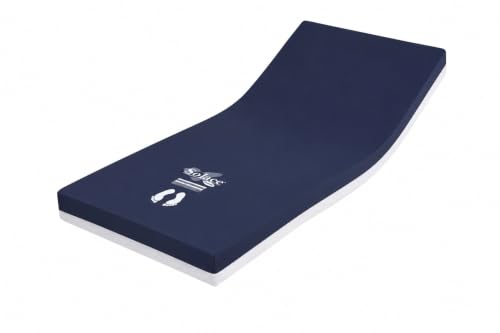
Invacare Solace Hospital Bed Mattress
What We Like
- Deep fortress-cut cells for superior pressure redistribution
- 3-zone targeted firmness for total body alignment
- Welded waterproof zipper for maximum fluid resistance
- Dual-layer anti-bottoming foam design
Trade-offs
- Requires an 84-inch long bed frame.
- Weighs 25 pounds.
The 3-zone targeted firmness is what sets this mattress apart for long-term care. A firm 40.5 IFD section supports the lower back and hips, flanked by medium-firm and lighter-firm zones for the head and heels. This precision engineering creates a balance of comfort and medical-grade support that helps maintain proper spinal alignment. It’s built for patients who need reliable pressure relief and stability, with a dual-layer foam design that prevents bottoming out even during extended stays.
Ultra-deep fortress-cut cells and a two-way stretch cover work together to minimize friction and shearing on the skin when a patient turns, making this a strong choice for managing pressure injury risk. The mattress provides more targeted features than a basic high-density foam option, which may only offer general pressure relief. Its 84-inch length requires confirmation that your specific bed frame can accommodate it.
Product photos
ProHeal Hospital Bed Memory Foam Mattress

What We Like
- High 1000 lb weight capacity for larger patients
- Sloped heel section for pressure redistribution
- Removable, low-shear, waterproof cover
- 7-year non-prorated core warranty
Trade-offs
- 6-inch height may not fit all bed frames
- 80-inch length is shorter than some 84-inch models
A 1000-pound capacity makes this mattress a standout for safely supporting larger patients, a crucial feature for both home and clinical settings where weight limits are a primary concern. The design is explicitly targeted at pressure ulcer prevention, using a multi-tiered foam construction with a dedicated sloped heel to shift pressure away from vulnerable areas. It suits caregivers needing a durable, high-capacity mattress that prioritizes pressure redistribution for moderate to high-risk patients.
With a 1000-pound weight capacity, this mattress is built to support larger patients without compromising its pressure relief goals. Its 28 ILD rating indicates an ultra-soft foam pad, which creates a deeply cushioned feel. That softness differs from the zoned, targeted support described for the Invacare Solace model. At 80 inches long, it fits standard home hospital beds but is shorter than some institutional 84-inch frames, so verifying your bed’s exact dimensions is essential.
Product photos
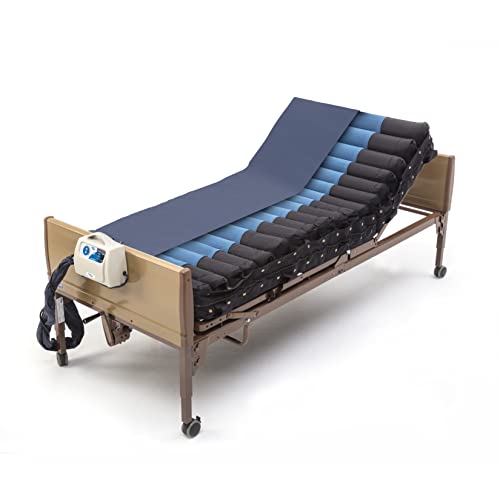
Invacare MA500 Alternating Pressure Mattress System
What We Like
- Cell-in-cell safety design prevents bottoming out
- Natural heel slope reduces pressure on heels
- Vapor-permeable cover offers low shear and friction
Trade-offs
- Intended only for low-medium risk, stages I-III sores
A 350 lb weight capacity and an alternating two-cell cycle make the Invacare MA500 a focused tool for managing early-stage pressure sores at home. It suits someone who needs active pressure redistribution but isn’t dealing with severe, high-risk ulcers. The cell-in-cell design is a thoughtful safety net, keeping a protective air cushion even if the pump fails, which lets caregivers rest a bit easier.
This alternating pressure mattress is specifically intended for individuals at low to medium risk of pressure sores, or stages I-III, meaning it’s designed for preventative care and early-stage treatment rather than advanced wound management. Unlike a static foam mattress like the Drive Medical Decompressing Foam Mattress, it provides dynamic pressure relief through its cycle of inflating and deflating air cells. For the appropriate patient, this active redistribution is the core therapeutic benefit.
Drive Medical Decompressing Foam Mattress

What We Like
- High-density decompressing foam provides pressure relief
- Removable, fluid-resistant cover protects against moisture
- Four corner straps secure the mattress to the bed frame
- Side carry handles simplify lifting and placement
Trade-offs
- The foam requires up to 72 hours to fully expand after unboxing
A 275-pound weight capacity and decompressing foam make this mattress a straightforward choice for standard home care. It delivers essential pressure-relief support without complex zoning or therapeutic layers. The removable, fluid-resistant cover simplifies cleanup, which is a practical advantage for long-term maintenance. This is a mattress built for reliable, everyday comfort on a hospital bed frame.
With a height of eight inches, the Drive Medical mattress provides a substantial foam layer for pressure relief, which is thicker than some six-inch alternatives like the ProHeal. This depth offers a balance of support and cushioning for standard home care. Its design is best suited for users within the 275-pound weight capacity.
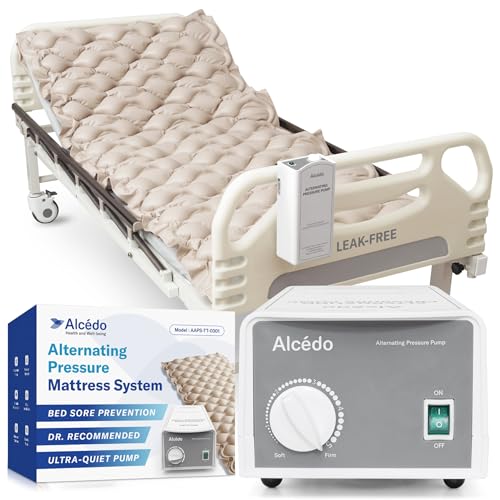
Alcedo Alternating Air Pressure Mattress Pad
What We Like
- Ultra-quiet pump for undisturbed sleep
- Five pressure settings for customizable firmness
- Waterproof, durable surface for easy cleaning
- FSA/HSA eligible for healthcare savings
Trade-offs
- 35-inch width fits narrower than many hospital beds
An ultra-quiet pump makes this alternating air pad a standout for anyone needing pressure relief without the usual motor hum. It suits someone who is bedridden or has limited mobility, where maintaining circulation and preventing bedsores is the priority, but a peaceful room is non-negotiable. The five pressure settings let you dial in the exact firmness, and the waterproof surface simplifies upkeep in a home care environment.
This pad’s 35-inch width fits standard twin beds, but it is narrower than the 36-inch width seen on alternatives like the Invacare Solace or ProHeal mattresses. You must securely tuck its uninflated edges beneath your mattress. Its design prioritizes active pressure relief and quiet operation over being a full-height replacement mattress.
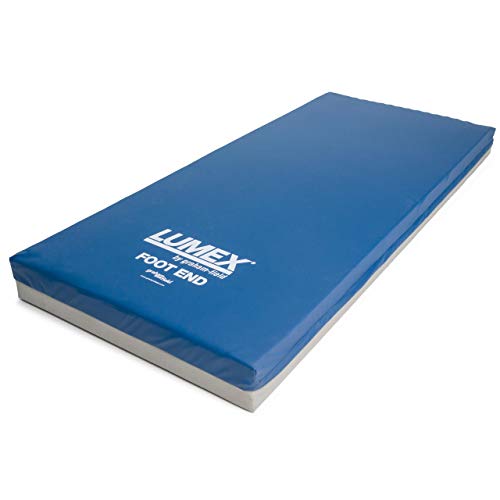
Graham-Field LS100-35 Twin Mattresse
What We Like
- Egg crate topper with over 150 air pockets for cooling
- Fluid-resistant, removable cover for easy cleaning
- Multi-layer foam for targeted pressure relief
- Rolled and compressed for simple setup
Trade-offs
- Twin XL length may not fit all bed frames
- 35-inch width is narrower than many 36-inch hospital bed frames
The Graham-Field LS100-35’s defining feature is its egg crate foam topper, which uses over 150 air pockets to actively disperse heat. This makes it a strong candidate for anyone who sleeps hot or deals with night sweats, particularly on an adjustable bed frame where airflow can be restricted. The two-layer foam construction is designed to conform and relieve pressure, which suits elderly users or those with limited mobility who need a balance of cushioning and support without the complexity of an air system.
Cooling airflow from its egg crate topper defines this mattress, prioritizing temperature management over advanced medical support. Over 150 air pockets disperse heat for all-night comfort, while a fluid-resistant vinyl and nylon cover simplifies cleanup after spills. Two layers of premium foam provide targeted pressure relief, conforming to the body on an adjustable base, but it lacks the deep, zoned fortress-cut design some specialized medical mattresses offer. This makes it a straightforward choice for general comfort and easy maintenance rather than maximum pressure redistribution.
Product photos
Kölbs Pressure Redistribution Medical Mattress

What We Like
- Fire-retardant cover for safety compliance
- Waterproof, removable cover for easy cleaning
- Non-slip underside keeps mattress in place
- High-density foam for pressure redistribution
Trade-offs
- Thinner 5.5-inch height than several 6-inch alternatives.
- Will not fit a standard 75-inch twin bed frame.
Its fire-retardant construction meets a specific safety standard, which is a primary requirement for many institutional and home care settings. High-density foam inside redistributes a patient’s weight to help prevent pressure sores, fulfilling a core medical need. Weighing 22 pounds, the mattress remains light enough for one person to reposition during bed changes or cleaning. A removable, waterproof cover allows for straightforward wipe-downs between patients or after spills.
The trade-off is in the thickness and simpler construction. At 5.5 inches tall, it provides a slimmer profile than options like the 6-inch ProHeal or Invacare Solace mattresses, which might offer more cushioning for some patients.
Product photos
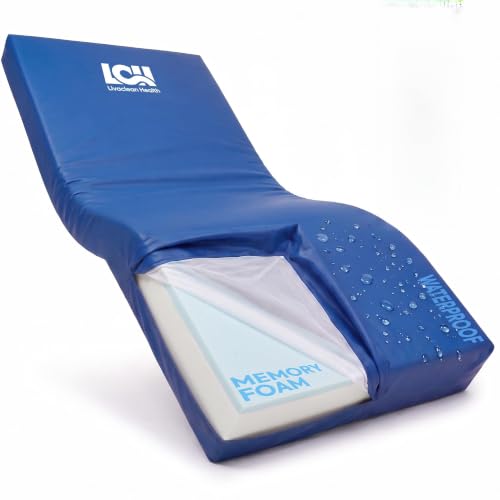
Livaclean Health HBM_01 Twin Mattresse
What We Like
- Gel memory foam for pressure relief
- Includes waterproof, fire-retardant cover
- Secures with four corner straps
- Backed by an 8-year foam warranty
Trade-offs
- Requires 48-hour expansion time
- Initial chemical odor needs ventilation
A 30mm layer of gel memory foam gives this mattress its primary advantage, offering contouring pressure relief that suits long-term stationary use. The included waterproof cover simplifies hygiene. Four corner straps keep it from shifting on an adjustable frame, making it a straightforward choice for home recovery or elder care where gel foam comfort is the priority.
With a weight capacity of 242 pounds, this mattress is designed to support bariatric patients and seniors, making it suitable for many home care and recovery scenarios. For users requiring support beyond that limit, alternatives like the ProHeal Hospital Bed Memory Foam Mattress offer a higher capacity. The mattress ships compressed for delivery convenience, but requires 48 hours to fully expand, and some may notice a mild odor from the fire-retardant cover upon unboxing, which dissipates with ventilation.
Product photos
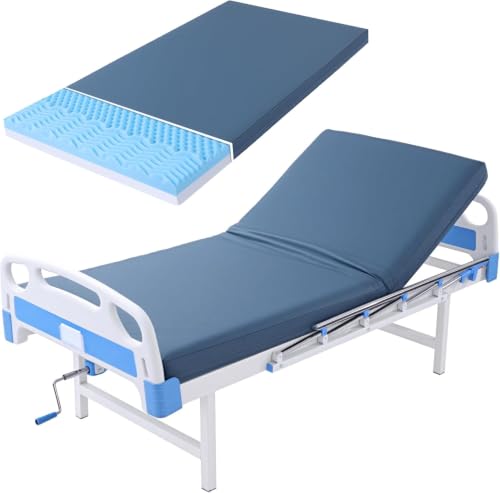
HOMBYS 5-Zone Medical Mattress
What We Like
- Five-zone design targets shoulders, back, hips, legs
- FDA registered as a medical device
- Machine-washable, leakproof cover simplifies hygiene
- High-density foam core resists sagging
Trade-offs
- At 4 inches, it is thinner than most hospital bed mattresses
- Four-inch height is thinner than many comparable models.
The HOMBYS mattress uses a five-zone memory foam design to apply distinct support to the shoulders, back, hips, and legs. This targeted approach makes it a strong candidate for someone seeking to alleviate specific pressure points and maintain spinal alignment during long-term bed rest. Its status as an FDA-registered medical device adds a layer of assurance for clinical or demanding home care use.
At four inches thick, this mattress is slimmer than many hospital bed alternatives, including the six-inch ProHeal model, so it provides a firmer sleeping surface. Its design prioritizes straightforward utility, anchored by a removable and machine-washable waterproof cover for easy cleaning in care settings.
Product photos
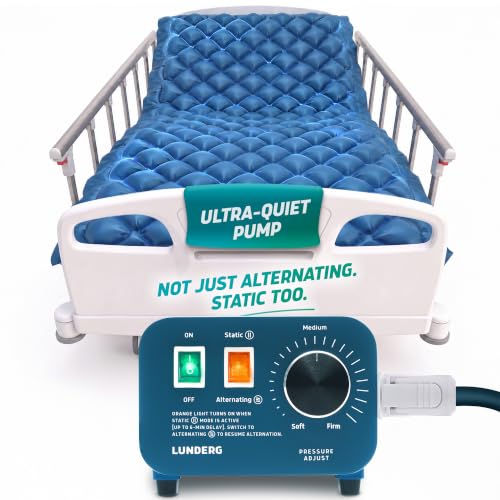
Lunderg Alternating Air Mattress Pad
What We Like
- Whisper-quiet pump at 23 dBA
- Static mode for stable, non-alternating surface
- Waterproof and durable construction
- Quick connector simplifies hose setup
Trade-offs
- Requires a 20-minute initial inflation period
- Designed for 300 lb capacity, less than some systems
- Pad must be covered with a sheet to manage moisture
The pump operates at 23 dBA, which is described as whisper-quiet, so it’s unlikely to disturb sleep in a home care setting. This feature, combined with a static mode that keeps all cells fully inflated for a stable surface, makes the pad a flexible choice for someone whose need for pressure relief might vary. It’s a straightforward system for home use where noise is a concern.
The trade-off is the 300-pound weight capacity, which is sufficient for many but falls short of the Invacare MA500 system’s 350-pound limit. That makes the Lunderg a better fit for standard home care, while the Invacare might be the call for a broader safety margin. You’re getting a capable, quiet air system here without the premium features, or the premium price, of the top-tier medical models.
How We Evaluated Twin Mattresses For Hospital Beds
Our research focused on manufacturer specifications, product documentation, and patterns in expert round-ups and owner feedback. We prioritized pressure redistribution capabilities, fluid resistance and cleanability, and weight capacity and durability, as these are the core factors that directly impact patient safety and caregiver ease. Since this is a research-based evaluation, we cannot report on long-term durability or subjective comfort beyond what the specifications and owner feedback indicate.
What To Look For In Twin Mattresses For Hospital Beds
The right mattress can significantly improve patient comfort and aid in preventing pressure sores. Key considerations include the level of pressure redistribution, how easily the surface can be kept clean, and the mattress’s structural limits.
Focus on pressure redistribution design, fluid-resistant and removable covers for hygiene, and verified weight capacity. Ensure the mattress length (typically 80 or 84 inches) and width (often 35 or 36 inches) match your specific bed frame.
Pressure Redistribution
This is the mattress’s primary function: to spread body weight to minimize pressure points and the risk of skin breakdown. Designs vary from zoned high-density foam, like the five-zone system in the HOMBYS mattress, to active alternating air systems, like the Invacare MA500. Gel-infused or egg-crate foam surfaces, such as in the Graham-Field model, also aid in pressure relief and can add a cooling effect. For patients at higher risk, active systems or mattresses with targeted heel and hip support are often recommended.
Hygiene and Fluid Resistance
A waterproof, removable cover is non-negotiable for infection control and easy cleaning. Look for welded zippers, like on the Invacare Solace, for maximum fluid barrier integrity. Some covers are also low-shear to reduce friction on the skin and fire-retardant for safety compliance, as with the Kölbs mattress. A guide to hospital bed mattresses will detail how these features work together. For an added layer of protection, consider a compatible waterproof mattress protector.
Weight Capacity and Dimensions
Always verify the manufacturer’s stated weight capacity, which ranges widely from 242 pounds on the Livaclean model to 1000 pounds on the ProHeal. Equally important are the physical dimensions: most hospital bed mattresses are 80 or 84 inches long and 35 or 36 inches wide.
An 84-inch mattress will not fit an 80-inch frame, and a 35-inch width will leave gaps on a 36-inch bed. Also check the mattress height to ensure it fits your bed’s side rails. For those considering a foam topper instead, our resource on mattress toppers for hospital beds explains the differences.
- Confirm your bed frame’s exact length (80″ or 84″) and width (35″ or 36″).
- Check the manufacturer’s maximum weight capacity, which is often lower than a standard mattress.
- Ensure the mattress height allows the bed’s safety rails to function properly.
- Look for corner straps or a non-slip underside to keep the mattress securely in place.
- For foam models, note the required expansion time, which can be up to 72 hours.
The most critical step is matching the mattress’s length and width to your specific hospital bed frame.
Twin Mattresses For Hospital Beds Compared
Use the table below to quickly compare the key features of our top picks.
| Product | Cover Type | Thickness (inches) | Core Material/Type |
|---|---|---|---|
| Invacare Solace Hospital Bed Mattress | 2-way stretch waterproof | 6 | Dual-Layer Therapeutic Foam |
| ProHeal Hospital Bed Memory Foam Mattress | Removable waterproof nylon | 6 | Memory Foam |
| Invacare MA500 Alternating Pressure Mattress System | Quilted nylon | 8.0 | Alternating Pressure System |
| Drive Medical Decompressing Foam Mattress | Removable nylon | 6 | High-Density Foam |
| Alcedo Alternating Air Pressure Mattress Pad | Waterproof, breathable | N/A | Alternating Air Pressure |
| Graham-Field LS100-35 Twin Mattresse | Vinyl and nylon zippered | 6 | Multi-Layer Medical Foam |
| Kölbs Pressure Redistribution Medical Mattress | Fire-retardant, waterproof, removable | 5.5 | High-density foam |
| Livaclean Health HBM_01 Twin Mattresse | Removable waterproof | 6 | Gel memory foam |
| HOMBYS 5-Zone Medical Mattress | Removable waterproof PU | 4 | Memory Foam |
| Lunderg Alternating Air Mattress Pad | Waterproof | N/A | Alternating Air Pressure |
Frequently Asked Questions
What is the best twin mattress for a hospital bed?
The best twin mattress depends on the patient’s specific needs. For overall therapeutic support and fluid resistance, our top pick is the Invacare Solace Hospital Bed Mattress. For higher weight capacity, consider the ProHeal, and for active pressure sore prevention, an alternating air system like the Invacare MA500 may be necessary.
Can a regular twin mattress work on a hospital bed?
A regular twin mattress is not recommended. Standard twin mattresses are typically 75 inches long, while hospital bed frames are 80 or 84 inches long, leaving dangerous gaps. Hospital bed mattresses are also designed with firmer support, fluid-resistant covers, and often include securing straps, which are essential for safety and care.
What type of mattress is best for a hospital bed?
The best type is one designed specifically for medical use, prioritizing pressure redistribution and hygiene. For low to medium risk patients, a high-density foam mattress with a removable waterproof cover is often sufficient. For higher risk, an alternating air pressure mattress or a specialized foam system with targeted zoning is typically required.
Does a hospital bed require a special mattress?
Yes, a hospital bed requires a mattress built to its unique dimensions (80″ or 84″ long) and functional needs. These mattresses feature secure fastenings, waterproof surfaces, and support structures aimed at preventing pressure sores. Using a standard mattress creates a safety hazard and fails to provide the necessary therapeutic benefits. You can explore more about these specialized hospital bed mattresses to understand the options.
How do I choose between a foam mattress and an air mattress for a hospital bed?
Choose a high-quality foam mattress if the patient is at lower risk for pressure sores and you prioritize a quiet, stable surface. Opt for an alternating air mattress if the patient is at higher risk, immobile, or already has pressure sores, as the moving air cells provide active relief. Our review of alternating-pressure air mattress options can help with that decision.
The Bottom Line
For most caregivers seeking durable support and maximum fluid protection, the Invacare Solace Hospital Bed Mattress is the best overall choice. If budget is the primary concern, the Drive Medical Decompressing Foam Mattress provides reliable pressure relief, while those managing a larger patient should look to the ProHeal for its high weight capacity.
Before selecting any model, the single most important step is to verify the exact length and width of your hospital bed frame to ensure a safe, secure fit.
