
10 Best Backpacking Air Mattresses in 2026
This post contains affiliate links. As an Amazon Associate, we earn from qualifying purchases.
Our best overall backpacking air mattress is the Therm-a-Rest NeoAir XLite NXT, which offers an exceptional warmth-to-weight ratio for three-season trips. The NEMO Tensor All-Season is a top choice for comfort and stability, while the Sea to Summit Ether Light XR Insulated is ideal for side sleepers.
Choosing the right pad is crucial for warmth and rest on the trail. A good pad insulates you from the cold ground far more than your sleeping bag alone. This guide is based on research into specifications, expert round-ups, and patterns in owner feedback to help you find the right balance of weight, warmth, and comfort for your adventures.
Top 10 Backpacking Air Mattresses in the Market
Certain content that appears on this site comes from Amazon. This content is provided "as is" and is subject to change or removal at any time.
The Best Backpacking Air Mattresses, Reviewed
Therm-a-Rest NeoAir XLite NXT Sleeping Pad

What We Like
- Exceptional warmth-to-weight ratio for three-season use
- Foam-free design packs down very small
- Stable 3-inch support from baffled internal structure
- WingLock valve for easy inflation and fast deflation
Trade-offs
- Narrower 20-inch width may feel restrictive for some sleepers
- At 3 inches thick, lacks the plush feel of thicker 4-inch pads
Weighing just 13 ounces, the NeoAir XLite NXT makes it possible to carry serious warmth without a serious burden in your pack. Its 4.5 R-value is a clear step above basic summer pads, providing reliable insulation for shoulder-season trips and cool nights. This is the pad for backpackers who scrutinize every ounce but refuse to sacrifice a warm night’s sleep. The combination of minimal packed size and proven, year-round performance is why it sets the standard.
Weighing just 13 ounces, the Therm-a-Rest NeoAir XLite NXT sets the standard for ultralight backpacking, making it a top choice for hikers who prioritize saving weight on high-mileage trips. Its 3-inch profile and internal baffles provide stable support, while the 4.5 R-value offers enough insulation for three-season and shoulder-season adventures. The pad rolls up as small as a 1-liter water bottle, a compact size that saves crucial pack space.
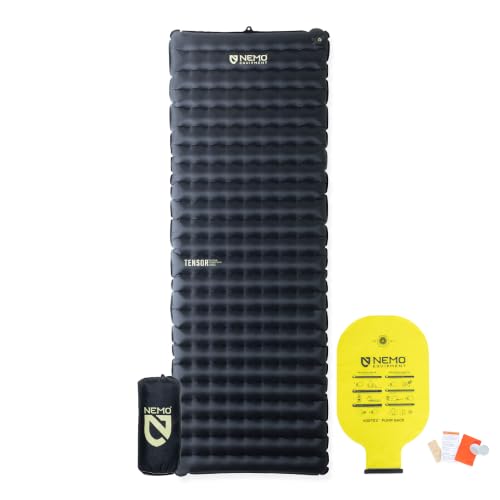
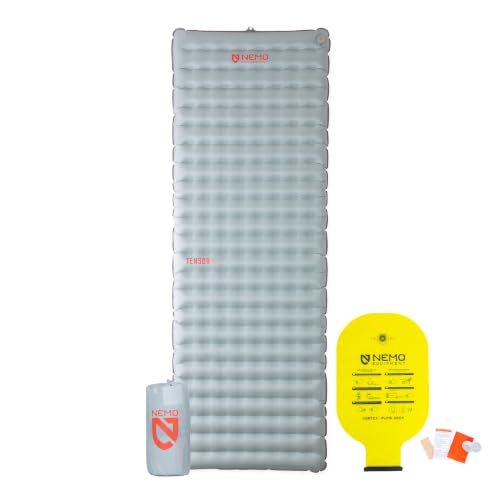
NEMO Equipment NM-TSRAS Backpacking Air Mattresse
What We Like
- Spaceframe baffles for exceptional stability
- Two-layer Thermal Mirror film for high warmth
- Impressive quietness from fabric and construction
- 3.5 inches of cushioned, stable loft
Trade-offs
- At 1.3 lb, heavier than the Therm-a-Rest NeoAir XLite NXT.
- 3.5-inch height is lower than some plush competitors like the Sea to Summit Ether Light XR.
The 3.5 inches of loft, supported by NEMO’s Spaceframe baffles, creates a sleep surface that feels solid and cradle-like, not bouncy. Combined with the dual-layer Thermal Mirror insulation, this pad delivers a premium balance of cushion and reliable warmth from the ground up. It suits backpackers who prioritize sleep quality and are willing to carry a slight weight premium for a bed that genuinely feels like one.
The trade-off for that comfort is a pack weight of 1.3 pounds. That’s a meaningful half-pound more than the featherlight Therm-a-Rest NeoAir XLite NXT, a consideration for ultralight gram-counters. For those who find most pads too noisy or unstable, however, the Tensor’s quiet, firm support is the point, not the penalty.
Product photos
Therm-a-Rest NeoAir XTherm NXT Sleeping Pad

What We Like
- 7.3 R-value ideal for extreme cold
- Durable 70D ripstop nylon bottom
- WingLock valve for easy use in freezing conditions
- Foam-free design packs as small as a 1-liter bottle
Trade-offs
- Heavier than ultralight three-season pads
- Regular Wide width may be bulkier for minimalists
A 7.3 R-value means this pad is built to trap heat when the ground is frozen solid, not just for a chilly night. That extreme insulation comes from reflective ThermaCapture technology and a Triangular Core Matrix, a combination trusted by mountaineers. It’s the pad you reach for when a cold snap threatens your sleep, offering a reliable barrier against the deepest chill. The durable 70D ripstop nylon bottom withstands the wear and tear of extended expedition use.
This level of winter performance does mean a slight weight and packed-size trade-off compared to dedicated summer pads like the Therm-a-Rest NeoAir XLite NXT. The XTherm NXT prioritizes maximum warmth over absolute minimalism. For three-season backpackers, that extra heft is unnecessary, but for anyone venturing into snow or sustained sub-freezing temperatures, it’s the defining feature that makes a safe, warm night possible.
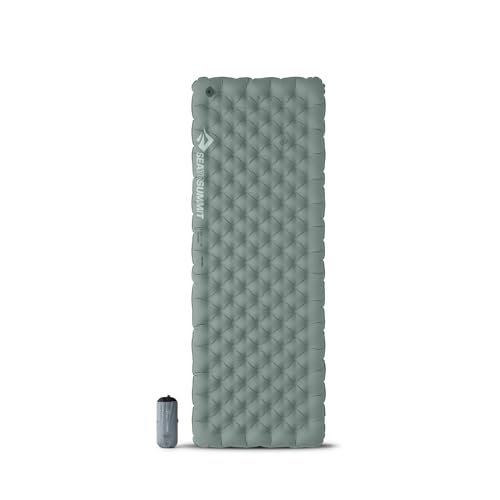
Sea to Summit Ether Light XR Insulated Sleeping Pad
What We Like
- Air Sprung Cell construction for stable, cushioned support
- 4.1 R-value for extended three-season warmth
- Integrated pump sack for fast, easy inflation
- Nearly four-inch profile cushions shoulders and hips
Trade-offs
- At 1.3 lb, it's heavier than some ultralight pads like the Sea to Summit Ultralight XR (0.9 lb)
- The 4.1 R-value is lower than pads designed for extreme cold conditions
A 3.9-inch thickness with Air Sprung Cell construction means your hips and shoulders sink into a stable, body-conforming surface instead of bottoming out on the ground. This makes it a standout choice for side sleepers and restless campers who need cushioning that adapts to their position throughout the night. The ASTM-tested R-value of 4.1 provides reliable warmth for most three-season trips, and the included pump sack gets you to bed quickly without a lot of lung power.
The Ether Light XR’s plush comfort comes with a slight weight penalty, making it less ideal for ultralight hikes where every ounce is critical. At 1.3 pounds, it is heavier than some competing models like the Sea to Summit Ultralight XR, which weighs 0.9 pounds. This pad is best for campers who prioritize sleep quality over carrying the absolute lightest gear.
Product photos
NEMO Equipment NM-TSREC-RWR Backpacking Air Mattresse
What We Like
- Extremely high 8.5 R-value for deep cold
- Quiet, stable 3.5-inch cushioned loft
- Premium, durable bluesign-approved nylon fabrics
- Unprecedented warmth-to-weight ratio from design
Trade-offs
- At 1.4 lb, it's heavier than many ultralight pads
An R-value of 8.5 means this pad is built for conditions where the ground actively steals your warmth, suspending insulating layers in a way that prioritizes heat retention above all else. It suits mountaineers and winter backpackers who need uncompromising insulation from frozen earth, with a stable, quiet 3.5-inch height that prevents rolling off its support. The focus is squarely on surviving the coldest nights in comfort, not on shaving every possible ounce.
That singular focus on extreme warmth comes with a tangible trade-off in pack weight. At 1.4 pounds, it carries a noticeable penalty compared to pads that sacrifice some R-value for a significantly lighter load. For trips where temperatures are merely chilly rather than brutal, the extra heft of this specialized insulation becomes harder to justify.
Product photos
Big Agnes Rapide Super Light Sleeping Pad

What We Like
- Quilted top for pillowy sleeping surface
- High R-value for three-season warmth
- Quick-adjust valves for firmness tuning
- Lifetime guarantee against defects
Trade-offs
- Heavier than the 0.8 lb Therm-a-Rest XLite NXT
- Not intended to replace a true winter pad
With an R-value up to 4.8, this pad provides enough insulation for three-season and cooler shoulder-season trips, so you stay warm as temperatures drop. Its quilted top and 3.5-inch thickness create a cushioned, pillowy surface that cradles you without the typical air mattress bounce. The 4.25-inch outer chambers contribute to a stable platform for consistent support.
That comfort comes with a weight trade-off. At 1.4 pounds, it is heavier than some ultralight competitors, making it a choice for those who prioritize sleep quality over minimizing pack weight. The Therm-a-Rest NeoAir XLite NXT, for example, weighs 0.8 pounds, but reviewers note its non-dimpled baffles create a firmer, less comfortable sleep surface sometimes compared to a surfboard.
Product photos
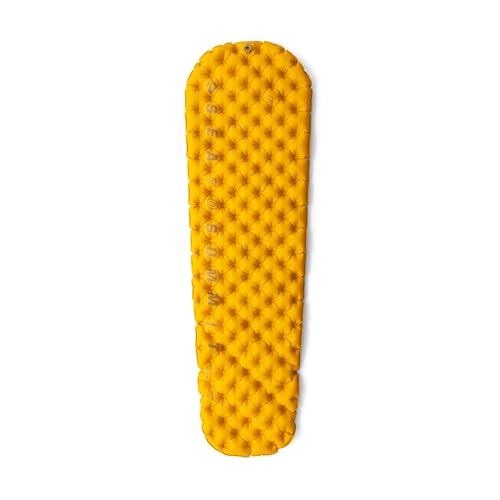
Sea to Summit Ultralight XR Insulated Sleeping Pad
What We Like
- Extremely light at 14.6 ounces
- Air Sprung Cells disperse pressure effectively
- Integrated valve and pump sack for quick inflation
- Hybrid shell balances durability and weight
Trade-offs
- 2.6-inch thickness provides less cushion on uneven ground
- R-value of 3.6 is lower than many winter-oriented pads
- Wider side-sleeper pads offer more surface area
Weighing 14.6 ounces, the Sea to Summit Ultralight XR Insulated Sleeping Pad is a serious contender for backpackers focused on minimizing pack weight. Its Air Sprung Cell design uses 151 individual cells to distribute pressure, which reviewers report provides exceptional stability and comfort for high-pressure areas like shoulders and hips. This combination of low weight and effective pressure relief makes it a strong option for three-season trips where its R-value of 3.6 delivers sufficient warmth.
The pad’s 2.6-inch thickness means it won’t block ground lumps as well as thicker models, so users need to be more intentional about selecting a level tent site. Compared to many thicker pads, including the Sea to Summit Ether Light XR, research indicates it is comfier on high-pressure areas relative to its weight. While thinner, reviewers note its comfort exceeds expectations for sleeping, though your knees will feel the ground more when kneeling on it.
Gear Doctors Ether Ultralight Sleeping Pad
What We Like
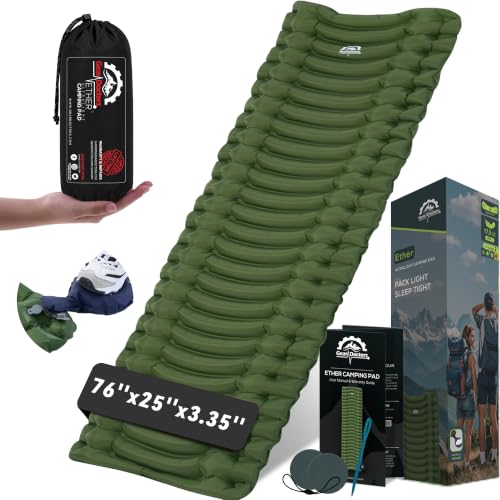
- Packs to the size of a water bottle
- Includes a detachable foot pump for lung-free inflation
- Ergonomic U-shape design stabilizes side sleepers
- Backed by a lifetime replacement guarantee
Trade-offs
- The 2 R-value limits it to warm-weather camping
- At 17.5 oz, it's heavier than some ultralight pads like the NeoAir XLite
- The tapered center thickness may not suit all sleepers
A 3.1-inch diameter packed size means this pad disappears into a backpack like a forgotten water bottle. That’s the core appeal for anyone counting every cubic inch. The included foot pump gets it inflated in under ninety seconds, which is a thoughtful touch when you’re already out of breath from the hike. It’s a straightforward choice for a minimalist who wants a reliable, compact sleep surface without fuss.
You trade some warmth for that packability, though. The 2 R-value insulation is strictly for spring and summer nights. For colder trips, you’d look at something like the NEMO Tensor All-Season. The pad’s clever ErgoCushion design does a decent job of keeping you centered, but the thinner center is a noticeable compromise for that bottle-sized roll.
Product photos
TREKOLOGY Ultralight Backpacking Sleeping Pad
What We Like
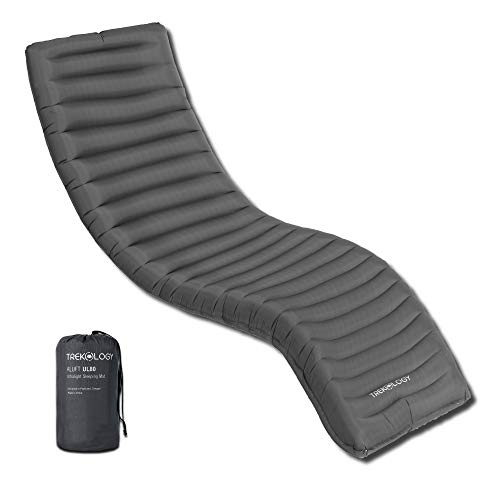
- 4-inch thickness with contoured sides for centered support
- Ultralight 1.2-pound weight for backpacking loads
- Packs down small for minimal pack space
- Rapid inflation valve needs no pump
Trade-offs
- R-value of 1.6-2 is unsuitable for winter or sub-freezing camping
- Requires manual inflation by mouth or a separate pump
- At 22.4 inches wide, it is narrower than many premium wide models
With a 4-inch thickness and raised contoured sides, this pad is built to cradle sleepers, a clear advantage for restless side sleepers or anyone who shifts during the night. The TREKOLOGY Ultralight Backpacking Sleeping Pad suits three-season backpackers prioritizing cushioning in a package that weighs 1.2 pounds and packs down to 7.3 by 4.7 inches. Its design focuses on delivering a specific kind of comfort for the weight, making it a straightforward choice for warm-weather trips where every ounce counts.
The trade-off is its estimated 1.6-2 R-value, which rules it out for anything beyond mild fall conditions. You’ll stay warm on a cool summer night, but it’s not built for frost. Compared to the insulated, winter-ready NEMO Tensor Extreme, the TREKOLOGY is a warm-weather specialist. It also requires you to inflate it by mouth. This is fine for a few minutes of effort, but a consideration if you prefer the integrated pump systems found on other pads.
BISINNA 9R-Value Sleeping Pad
What We Like
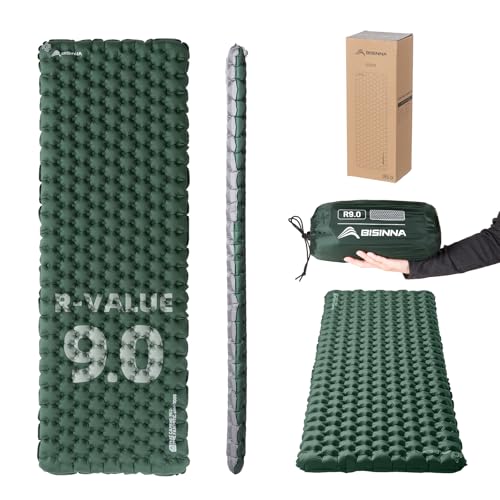
- Exceptionally high R-9 rating for winter use
- Includes a multi-use pump sack and dry bag
- Wide, 25-inch design accommodates side sleepers
- Rugged 20D ripstop nylon construction
Trade-offs
- At 26.6 oz, it is heavier than ultralight pads like the Therm-a-Rest NeoAir Xlite NXT
- Pump sack is required for inflation; no integrated pump
An SGS-tested R-value of 9 means this pad reliably blocks cold from frozen ground or snow, making it a genuine four-season option. It suits backpackers who prioritize warmth in shoulder seasons or winter conditions over cutting every possible ounce. The included pump sack that doubles as a dry bag adds thoughtful utility, and the 25-inch width offers a stable platform for restless sleepers.
With an SGS-tested R-value of 9, this pad provides verified insulation for four-season use, from snow to high-altitude treks. Its 26.6-ounce weight is heavier than many ultralight models, but it offers a higher R-value than similarly sized pads such as the NEMO Tensor All-Season. The weight is a practical trade-off for that level of cold-weather performance.
Product photos
How We Evaluated Backpacking Air Mattresses
Our evaluation began with a review of manufacturer specifications and expert round-ups from outdoor gear specialists. We focused on the criteria that matter most for a night on the trail: insulation value, packed size and weight, sleeping comfort, and overall durability. We also analyzed recurring themes in owner feedback to understand real-world performance and common trade-offs. This research-based approach provides a comprehensive overview, but it cannot replicate the personal experience of sleeping on a pad, as individual comfort preferences for thickness and surface feel vary widely.
What To Look For In Backpacking Air Mattresses
The right sleeping pad balances four key factors: insulation, weight, packed size, and sleep support. Your choice should align with your typical camping temperatures, how much weight you’re willing to carry, and your preferred sleeping position.
Prioritize R-value for warmth, weight and packability for your load, and thickness/construction for sleep comfort. Side sleepers often need thicker pads, while winter campers require the highest R-values.
Insulation (R-Value)
The R-value measures a pad’s resistance to heat flow, or how well it insulates you from the cold ground. A higher number means greater warmth. For summer camping, a lower R-value is often sufficient. Three-season use typically requires a value around four or five. For winter backpacking or mountaineering, you’ll need a pad with a high R-value. The highest-rated pads in this list, like the NEMO Equipment NM-TSREC-RWR, reach an R-value of 8.5 for extreme conditions.
Weight and Packed Size
Every ounce counts in your pack, so weight is a primary concern for backpackers. Ultralight pads, like the Sea to Summit Ultralight XR Insulated, can weigh less than a pound. However, lower weight often comes with trade-offs in thickness or insulation. Packed size is equally important; some pads compress to the size of a water bottle, maximizing space in your backpack. Our research into lightweight camping mattresses shows that the lightest options often use advanced materials and foam-free designs.
Comfort and Support
Comfort is subjective but heavily influenced by pad thickness and internal construction. Thicker pads, like the 4-inch TREKOLOGY Ultralight, provide more cushioning for side sleepers and uneven ground. Internal baffle designs, such as the Air Sprung Cells in Sea to Summit pads, can offer more stable, pressure-dispersing support than traditional horizontal baffles. For a deeper look at options that prioritize restful support, our guide to camping mattresses for back pain explores key features. Consider these practical checks before you buy:
- Check the width: Standard is 20 inches; wider pads (25 inches) offer more room to move.
- Consider the valve: Integrated pump sacks speed inflation; manual valves require lung power.
- Read owner reports on noise: Some materials can be noticeably loud when you shift positions.
- Review the warranty: Lifetime guarantees, like that on the Big Agnes Rapide Super Light, offer long-term peace of mind.
Your sleeping position is the best guide: side sleepers usually need the thickest pads, while back sleepers can often use thinner, lighter models.
Backpacking Air Mattresses Compared
The following table compares the key specifications of our top picks to help you see the differences at a glance.
| Product | Weight | R-Value | Thickness |
|---|---|---|---|
| Therm-a-Rest NeoAir XLite NXT Sleeping Pad | 13 oz (370 g) | 4.5 | 3 inches |
| NEMO Equipment NM-TSRAS Backpacking Air Mattresse | 1.3 Pounds | N/A | 3.5 inches |
| Therm-a-Rest NeoAir XTherm NXT Sleeping Pad | 19 oz (540 g) | 7.3 | 3 inches |
| Sea to Summit Ether Light XR Insulated Sleeping Pad | 1.3 pounds | 4.1 (ASTM-tested) | 3.9 inches |
| NEMO Equipment NM-TSREC-RWR Backpacking Air Mattresse | 1.4 pounds | 8.5 | 3.5 inches |
| Big Agnes Rapide Super Light Sleeping Pad | 1.4 pounds | Up to 4.8 | 3.5 inches |
| Sea to Summit Ultralight XR Insulated Sleeping Pad | 14.6 ounces | 3.6 | 2.6 inches |
| Gear Doctors Ether Ultralight Sleeping Pad | 17.5 oz | 2 | 3.35" edges, 2.36" center |
| TREKOLOGY Ultralight Backpacking Sleeping Pad | 1.2 Pounds | 1.6-2 | 4 inches |
| BISINNA 9R-Value Sleeping Pad | 26.6 oz (pad only) | 9 (SGS-tested) | 3.5 inches |
Frequently Asked Questions
What is the most important feature in a backpacking sleeping pad?
The most critical feature is its R-value, which determines how well the pad insulates you from the cold ground. Without sufficient insulation, even the warmest sleeping bag will feel cold. Weight and packed size are also vital for backpacking, as they directly impact your pack load and space.
Can I use a regular air mattress for backpacking?
No, a regular air mattress is not suitable for backpacking. It will be far too heavy and bulky to carry in a pack, and most lack any meaningful insulation (R-value). Backpacking pads are specifically engineered to be lightweight, compact, and thermally insulating for outdoor use.
How do I choose a sleeping pad for side sleeping?
Look for a pad that is at least 3.5 to 4 inches thick to cushion your shoulders and hips. A wider width (25 inches or more) can also help prevent you from rolling off. Pads with specialized internal structures, like the Sea to Summit Ether Light XR‘s Air Sprung Cells, are often recommended for stable, pressure-relieving support.
What R-value do I need for winter backpacking?
For winter backpacking or mountaineering in sustained sub-freezing temperatures, you need a pad with a high R-value. Pads specifically designed for extreme cold, like the Therm-a-Rest NeoAir XTherm NXT (R-7.3) or the NEMO Equipment NM-TSREC-RWR (R-8.5), provide the necessary insulation for safety and comfort.
Are inflatable pads less durable than foam pads?
Inflatable pads are generally more susceptible to punctures than closed-cell foam pads, which are virtually indestructible. However, modern inflatable pads use durable ripstop nylon fabrics and often include repair kits. For maximum durability in rough conditions, some backpackers use a thin foam pad underneath their inflatable one for added protection.
The Bottom Line
The Therm-a-Rest NeoAir XLite NXT is our best overall pick for backpackers who want the best balance of warmth and minimal weight for three-season trips. If your budget is tighter but you need verified high insulation for winter, the BISINNA 9R-Value Sleeping Pad delivers exceptional R-value at a more accessible point.
For those who prioritize plush comfort above all else, the Sea to Summit Ether Light XR Insulated is the award winner to seek out. Ultimately, matching the pad’s R-value to your coldest expected temperatures is the single most important factor for a warm, restorative night in the backcountry.
