
10 Best Camping Mattresses For Bad Back in 2026
This post contains affiliate links. As an Amazon Associate, we earn from qualifying purchases.
Our best overall camping mattress for a bad back is the Therm-a-Rest MondoKing 3D Self-Inflating Sleeping Pad for its superior pressure relief and extreme insulation. The Zzuvjoy Memory Foam Self-Inflating Pad offers high-value memory foam comfort, while the Intex Dura-Beam Comfort Plush Air Mattress is best for high-capacity, high-profile support.
Camping with back pain means isolation from the hard ground and proper spinal alignment are non-negotiable. A thin pad won’t cut it; you need cushioning that targets pressure points without sacrificing warmth or stability. This guide is based on detailed research into specifications, manufacturer data, and patterns in owner feedback, giving you a clear comparison of ten pads designed to support a sore back.
Top 10 Camping Mattresses For Bad Back in the Market
Certain content that appears on this site comes from Amazon. This content is provided "as is" and is subject to change or removal at any time.
The Best Camping Mattresses For Bad Back, Reviewed
Therm-a-Rest MondoKing 3D Self-Inflating Sleeping Pad

What We Like
- 4.25-inch thickness for superior pressure relief
- High 7.0 R-value for extreme condition insulation
- Separate inflation and deflation valves for easy setup
- Vertical sidewalls maximize usable sleep surface
Trade-offs
- At 4.38 pounds, it's heavy for backpacking.
- Deflation and rolling require notable effort.
- Top-loading stuff sack design is less convenient than side-loading.
The Therm-a-Rest MondoKing 3D stands out with a 4.25-inch thickness, which provides a substantial cushion that distances a sleeper from the hard ground. Its 7.0 R-value offers insulation for use in extreme conditions, so warmth is maintained. This combination makes the pad a dedicated choice for car campers who value comfort and thermal performance.
The trade-off for that comfort is a pad that demands some commitment to pack down and a weight that rules out long-distance hiking. It’s a specialist, not a generalist. If you need a more portable option for backpacking with back pain, the Overmont Ultralight Thick Camping Pad offers a much lighter weight, though with less structured support and insulation.
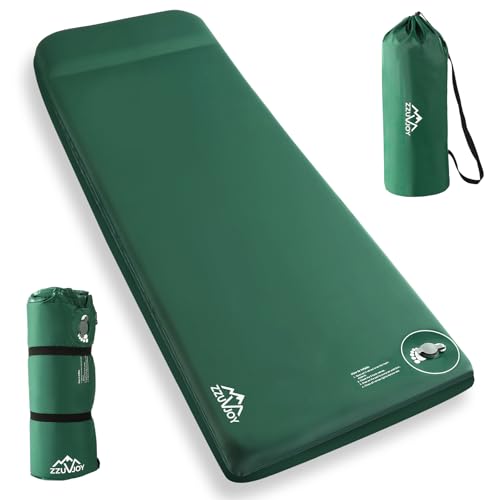
Zzuvjoy Memory Foam Self-Inflating Sleeping Pad
What We Like
- Foot-pump inflation for quick, hands-free setup
- High-density memory foam core for pressure relief
- Adjustable firmness via air-to-foam ratio
- Silent, crinkle-free surface for undisturbed sleep
Trade-offs
- At 27.6 inches wide, it's narrower than a standard twin mattress
- Weighs 4.6 pounds, heavier than ultralight air pads like the POWERLIX
The 3.1-inch-thick memory foam core is the key here, providing the contouring support and pressure relief that can make a real difference for a sore back after a night on the ground. Combined with a 9.5 R-value for serious insulation, this pad is built for car campers and anyone who prioritizes mattress-like comfort over minimal pack size. The clever foot-pump system means you can inflate it without getting lightheaded, and the ability to tweak the firmness lets you dial in the perfect support.
The foam comfort comes with a trade-off in bulk and weight. It won’t compress to the size of a pure inflatable pad like the Overmont Ultralight, but it does pack down to a compact size with its shoulder carry bag, making it easy for drive-in camping. For those prioritizing a sleep experience that rivals a real mattress, this is often a fair swap, especially when driving to your site. If maximum portability is the primary need, a thinner, lighter pad might be the call, but for quiet, supportive comfort, the Zzuvjoy pad delivers.
Product photos
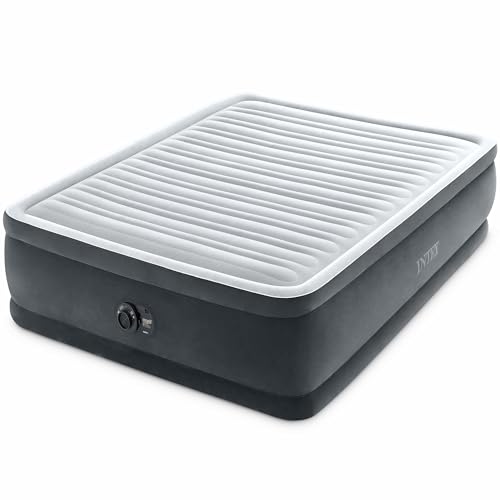
Intex Dura-Beam Comfort Plush Air Mattress
What We Like
- 22-inch high-rise design for easy bed entry and exit
- Unique edge construction resists sagging for perimeter support
- Lumbar-focused Dura-Beam system for full-body support
- Built-in pump simplifies setup and takedown
Trade-offs
- 19.4 lb weight makes it heavy for backpacking
- Requires a 110-120V AC power source for the pump
- Material stretch requires reinflation over initial 2-3 nights
This mattress holds up to 600 pounds and sits 22 inches high, creating a stable platform that is easier to get in and out of than a ground pad. That height is a significant advantage for anyone with back pain. Its horizontal Dura-Beam construction specifically targets lumbar support, and the edge design prevents the roll-off feeling common in cheaper air mattresses. It suits campers who prioritize a bed-like sleeping surface and have access to mains power.
The trade-off is portability. At 19.4 pounds and reliant on AC power, it’s a car-camping specialist, not a backpacking item. For a more packable, insulated option with similar thickness, the Therm-a-Rest MondoKing 3D is a self-inflating alternative, though it offers less height off the ground. The Intex is built for basecamp comfort over trail weight.
TOBTOS Extra Thick Double Camping Mattress

What We Like
- Extra-thick 6-inch design isolates from hard ground
- Spacious 51-inch width prevents couples from crowding
- Built-in foot pump inflates pad in 2-3 minutes
- U-shaped curved design helps prevent rolling off
Trade-offs
- No R-value is listed for insulation in cold weather
- At 51 inches wide, it requires a very large tent
A six-inch thickness creates a generous air cushion that keeps two sleepers well off the hard ground, which is the primary defense against waking up sore. The width is its real advantage for couples; at over four feet across, it provides enough space to avoid the elbow jostling and edge-roll that ruins sleep on narrower double pads. That combination of depth and breadth directly addresses the pressure points that aggravate a bad back in a tent.
The TOBTOS mattress prioritizes comfort for two with its 6-inch thickness and spacious 51-inch width, which keeps sleepers well-cushioned from hard ground. It lacks any stated insulation value, so its thermal performance is unrated for cold conditions. For car campers focused on comfort, its design is a strong choice, but those needing guaranteed heat retention might consider a self-inflating pad like the Therm-a-Rest MondoKing 3D, which uses a foam core.
Product photos
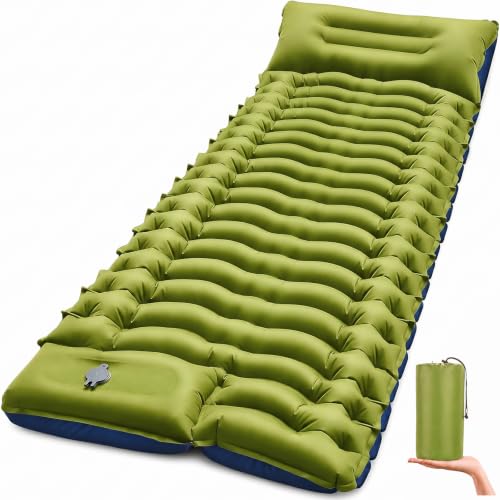
Overmont Ultralight Thick Camping Pad
What We Like
- Built-in foot pump inflates pad in under a minute
- Ergonomic wave-shaped cells target back and hip support
- Ultralight, compact pack size fits easily in a backpack
- Durable, waterproof surface wipes clean for simple care
Trade-offs
- Integrated pillow design cannot be removed or adjusted
- At 1.98 lb, it is heavier than some dedicated ultralight pads like the Kitbony
The Overmont Ultralight Thick Camping Pad provides a 4.7-inch thick sleeping surface that isolates you from rocks and uneven ground. At 1.98 pounds, it remains light enough for backpacking. Its built-in foot pump inflates the pad in under a minute, eliminating the need for a separate pump or mouth-blowing.
The integrated pillow and ergonomic wave-shaped cells are part of an all-in-one design, which saves pack space. Compared to other pads like the self-inflating Zzuvjoy model, the Overmont offers greater thickness while weighing significantly less. It does not, however, provide the wider sleeping area of a true double-width camping mattress.
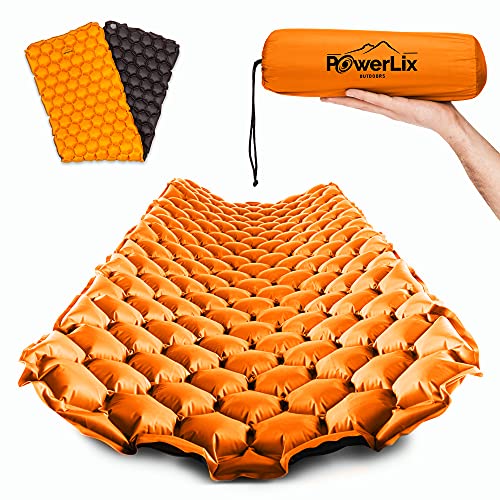
POWERLIX Ultralight Inflatable Sleeping Pad
What We Like
- Ergonomic hexagon design supports pressure points.
- Includes inflation bag, repair kits, and storage bag.
- Lightweight and packs small for backpacking.
- Waterproof and insulated for all-weather use.
Trade-offs
- At 2 inches thick, it offers less cushion than the 6-inch TOBTOS.
- 22.8-inch width is narrower than many car-camping mats.
- No built-in pump; requires manual inflation with bag.
The 2-inch profile with a hexagonal air-cell pattern is the central feature here, designed to cradle your pressure points without the bulk of a foam core. For a backpacker with a sore back, that means targeted support and a compact roll, all backed by a straightforward inflation system and a warranty from a U.S.-based team. It suits those who prioritize packability and ergonomic design over maximum plushness.
The POWERLIX pad’s 2-inch height provides a supportive sleep surface, though its profile is lower than some thicker mats like the 3.1-inch Zzuvjoy or 4.2-inch Therm-a-Rest MondoKing. Its 1.98-pound weight and compact packed size, as stated on Amazon, make it a clear choice for backpackers prioritizing a light load over maximum cushioning. The hexagon air cell design is intended to ergonomically support pressure points for comfort on the trail.
Dr. Air Queen Air Mattress with Pump

What We Like
- Built-in pump inflates or deflates in three minutes
- Advanced honeycomb internal coil system for balanced support
- Thick, puncture-resistant PVC with waterproof coating
- Low-pile flocked surface grips sheets securely
Trade-offs
- At 18 pounds, it is heavy for backpacking
- 18-inch height requires more air volume to fill
- Queen size is too wide for most tent footprints
A mattress that inflates fully in three minutes is for the camper who wants to trade a hand pump for a bed. The internal honeycomb coil system is designed to adapt to your body’s curves, which matters when you’re trying to keep a sore back level on the ground. This is a good pick for car campers or cabin guests who need a spacious, quickly ready surface and appreciate that the quiet pump won’t disturb the whole site.
While it inflates in three minutes and fits a standard queen sheet, this air mattress weighs 18 pounds and is 60 inches wide, which limits its portability for remote camping compared to lighter pads. If you need serious back support on a hike, the Therm-a-Rest MondoKing 3D weighs only 4.4 pounds.
Product photos
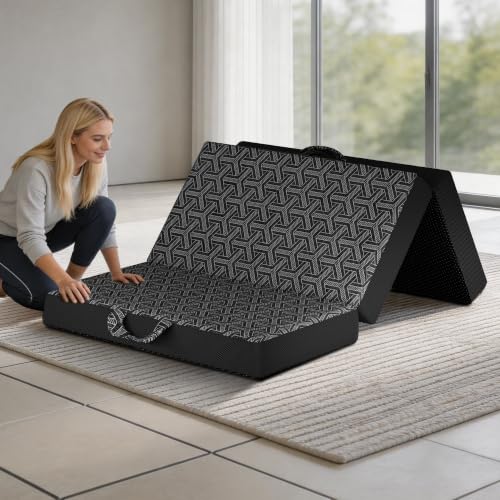
Kousiera Tri-Folding Memory Foam Mattress
What We Like
- Dual-layer foam for spinal alignment
- Breathable cover promotes air circulation
- Tri-folding design for easy storage
- CertiPUR-US and Oeko-Tex certified materials
Trade-offs
- At 19 pounds, it's heavy for backpacking
- Large folded size needs significant storage space
The Kousiera Tri-Folding Memory Foam Mattress combines a 4-inch dual-layer memory foam core with a tri-fold design, delivering pressure relief and spinal alignment in a portable format. Its breathable, washable cover and non-slip bottom allow it to stay secure on floors or cots, and the manufacturer notes compatibility with Murphy cabinet beds for storage. This construction suits scenarios like hosting guests or car camping where a foldable, supportive surface is needed.
Weighing 19 pounds and folding into a bulky package, this mattress is not meant to be carried on a hike. For pure car camping comfort, it offers more substantial material support than a typical inflatable like the Dr. Air Queen Air Mattress, but lacks the packability of a true camping pad like the Therm-a-Rest MondoKing. You choose this for its mattress-like feel, knowing you’ll need a vehicle to transport it.
Product photos
Kitbony Self-Inflating Camping Pad

What We Like
- Fast foot-pump inflation under 50 seconds
- Ergonomic cushioning for spinal alignment
- Puncture-resistant 40D nylon construction
- Ultralight 1.7-pound packable weight
Trade-offs
- No R-value specified for insulation
A built-in foot pump that inflates the pad in under 50 seconds solves the most tedious part of setting up camp, especially after a long hike when you’re saving your breath. For someone with back pain, the specified ergonomic cushioning and structure designed to maintain spinal alignment are the key draws. This mat suits campers who want to trade a few extra ounces for the convenience of rapid, effortless setup and solid ground protection from its 40D nylon shell.
It’s a straightforward, durable support layer that gets you off the ground quickly and comfortably, but you’ll need to consider your climate separately. For three-season car camping or backpacking where weight is a moderate concern and convenience is king, it’s a practical mid-range choice.
Product photos
SODEF Foldable Orthopedic Mattress

What We Like
- Visco-elastic foam conforms for spinal alignment
- Medium-firm, two-layer foam construction for support
- Folds for easier transport and multi-functional use
Trade-offs
- At 6.3 inches thick, it is bulkier than inflatable pads
- The 4-6 hour expansion time requires advance planning
With a 6.3-inch height built from two distinct foam layers, this mattress prioritizes structured support for sleep. A 0.8-inch visco-elastic top conforms to pressure, and a 5.1-inch polyurethane latex base creates a medium-firm foundation. This combination aims for straight spinal alignment, suiting a camper who values that specific benefit. Its foldable design eases transport and allows partial opening for use as a sofa, adding versatility for car camping or dorm rooms.
This pad is bulky and does not self-inflate at all. You will need to plan for the space in your vehicle and the several hours it takes to fully expand after unsealing. For backpackers or anyone counting ounces, the SODEF is a non-starter. But if you drive to your site and want to avoid the potential sag of an air mattress like the Intex Dura-Beam, this foam construction provides consistent, maintenance-free support night after night.
Product photos
How We Evaluated Camping Mattresses For Bad Backs
Our evaluation prioritized research into product specifications, manufacturer documentation, expert round-ups, and consistent patterns in owner feedback. We focused on criteria most critical for back pain: thickness for pressure relief, material and design for spinal support, and insulation value (R-value) for maintaining comfortable sleep temperature. We also considered setup ease and packed size, as these impact practical use for campers with limited mobility or storage.
The key factors were cushioning depth, support type, and warmth. Thicknesses from 4 to 6 inches provide essential ground isolation, while materials like high-density foam or ergonomic air cells offer targeted support. A high R-value, like the 7.0 on the MondoKing, is crucial for cold-weather campers to prevent stiffness. Our research into best camping mattresses and camping mattress pads helped establish these benchmarks.
The main limit of our research-led approach is that we cannot replicate long-term durability testing or personal comfort feel. We rely on aggregated owner reports about issues like air retention over multiple nights or foam recovery, which provides a strong indicator but not a guaranteed personal result. For more on specific sleep styles, our guide to camping mattresses for side sleepers explores related support needs.
What To Look For In Camping Mattresses For Bad Backs
Choosing the right mattress involves balancing cushioning, support, and practical features for your camping style. A pad that’s perfect for car camping may be impossible to backpack with.
Prioritize thickness (4 inches or more) for pressure relief, a supportive core (memory foam or ergonomic air chambers), and sufficient insulation (R-value). Ease of setup is also key if bending or kneeling is difficult.
Thickness & Cushioning
Thickness is the first defense against a hard ground. Pads under 3 inches often leave pressure points on hips and shoulders. Look for models in the 4 to 6-inch range, like the 6-inch TOBTOS or 4.25-inch MondoKing, to properly isolate your spine. This depth allows the mattress to conform without bottoming out. Beyond just height, the cushioning material matters. High-density memory foam, as in the Zzuvjoy, provides slow-responding support, while air chambers with internal structures, like the Dr. Air Queen‘s honeycomb coils, offer a firmer, more stable feel.
Support & Spinal Alignment
Support prevents your back from sagging into an unnatural position. Self-inflating pads with foam cores combine cushion and inherent structure. For targeted relief, ergonomic designs like the POWERLIX’s hexagon grid or the Overmont’s wave-shaped cells aim to cradle pressure points. If you prefer a traditional bed feel, a high-rise air mattress like the 22-inch Intex Dura-Beam offers familiar, uniform support. Our review of memory foam camping mattresses details how that material conforms for alignment.
Insulation & R-Value
Insulation is critical for back pain, as cold ground can cause muscles to tense and stiffen. The R-value measures thermal resistance; a higher number means better insulation. For three-season camping, an R-value of 4 or higher is advisable. For cold weather, pads like the MondoKing with an R-value of 7.0 provide extreme protection. Note that some comfortable pads, like the TOBTOS, do not list an R-value, making them better suited for warm-weather trips. If you camp in varied conditions, prioritize a pad with a defined, substantial R-value.
Practical Features
- Inflation Method: Built-in pumps (Intex, Dr. Air) or foot pumps (Zzuvjoy, Kitbony) are easiest for those with limited mobility or lung power.
- Packed Size & Weight: For car camping, weight matters less. For backpacking, ultralight pads under 2 pounds like the Kitbony are essential.
- Surface Width: A wider pad (over 25 inches) allows for movement without rolling off, crucial for restless sleepers.
- Setup Time: Pads that inflate in under a minute, like the Overmont, minimize pre-sleep hassle.
- Valve Design: Separate inflation and deflation valves, as on the MondoKing, simplify adjustment and packing.
For most campers with back pain, a thick, supportive pad with easy inflation is worth the extra packed size. You can explore our guide to self-inflating camping mattresses for a popular blend of convenience and comfort.
Camping Mattresses For Bad Back Compared
The comparison table below summarizes key specifications to help you weigh thickness, insulation, weight, and special features side-by-side.
| Product | Thickness | Weight | Inflation System |
|---|---|---|---|
| Therm-a-Rest MondoKing 3D Self-Inflating Sleeping Pad | 4.25 inches | 4.4 pounds | TwinLock |
| Zzuvjoy Memory Foam Self-Inflating Sleeping Pad | 3.1 inches | 4.6 Pounds | Foot-operated pump |
| Intex Dura-Beam Comfort Plush Air Mattress | 22 inches | 19.4 Pounds | Built-in AC electric pump |
| TOBTOS Extra Thick Double Camping Mattress | 6.0 inches | 4.1 Pounds | Built-in foot pump |
| Overmont Ultralight Thick Camping Pad | 4.7 inches | 1.98 lb | Built-in foot pump |
| POWERLIX Ultralight Inflatable Sleeping Pad | 2.0 inches | N/A | Inflation bag |
| Dr. Air Queen Air Mattress with Pump | 18 inches | 18.0 pounds | Built-in pump |
| Kousiera Tri-Folding Memory Foam Mattress | 4 inches | 19.0 Pounds | N/A |
| Kitbony Self-Inflating Camping Pad | N/A | 1.7 Pounds | Foot pump |
| SODEF Foldable Orthopedic Mattress | 6.3 inches | N/A | N/A |
Frequently Asked Questions
What is the best camping mattress for people with bad backs?
The Therm-a-Rest MondoKing 3D is our top choice overall. Its 4.25-inch thickness and 7.0 R-value provide exceptional pressure relief and insulation, making it ideal for car campers who prioritize comfort and warmth for back pain relief.
What is the best camping bed for people with bad backs?
For a bed-like experience, a high-rise air mattress such as the Intex Dura-Beam Comfort Plush is a strong option. Its 22-inch height makes getting in and out easier, and its internal lumbar support system is designed for full-body alignment, similar to a home mattress.
What type of mattress is best for lower back pain?
A mattress that prevents sagging and offers firm, conforming support is best. High-density memory foam pads, like the Zzuvjoy, or ergonomic air pads, like the POWERLIX, are designed to cradle pressure points and maintain spinal alignment throughout the night.
What is the best way to camp if I have a bad back?
Choose a campsite with flat ground and use a thick, insulated sleeping pad for maximum separation from the hard earth. Consider a cot adapter if you use a camping cot, and always have a plan for easy setup to avoid straining your back before bed. For couples, a wide, thick pad like the TOBTOS can prevent crowding and discomfort.
Are foam or air mattresses better for back pain?
It depends on your support preference. Foam mattresses, like the Kousiera Tri-Folding, offer consistent, contouring support and are less prone to overnight air loss. Air mattresses, especially those with internal coil systems, provide a firmer, more adjustable sleep surface. Both can be excellent; prioritize thickness and a supportive design. Our articles on foam camping mattresses and air camping mattresses explore the pros and cons of each type.
The Bottom Line
The Therm-a-Rest MondoKing 3D is the best overall camping mattress for a bad back, offering an unmatched combination of thick cushioning and high insulation for car campers who drive to their site. It’s the benchmark for comfort but requires effort to pack.
If you’re on a budget but want memory foam comfort, choose the Zzuvjoy Memory Foam Pad. For couples needing space, the TOBTOS Extra Thick Double pad provides ample room. Backpackers should look to the Kitbony or POWERLIX for ultralight, supportive options.
Ultimately, the most important factor is sufficient thickness to isolate your spine from the ground. Whether you choose foam, air, or a hybrid, prioritize at least 4 inches of supportive cushioning for a restful night that lets you enjoy the outdoors without pain.
