
10 Best Camping Pillows For Side Sleepers in 2026
This post contains affiliate links. As an Amazon Associate, we earn from qualifying purchases.
Our best overall camping pillow for side sleepers is the Sea to Summit Aeros Ultralight Pillow for its scalloped edge that cradles the shoulder and adjustable firmness. We also like the Therm-a-Rest Air Head Down Pillow for luxury comfort and the Exped Mega Pillow for a large sleep surface.
Side sleepers need more height and support to align the spine than back or stomach sleepers. A pillow that’s too low or narrow can lead to neck strain. Our research-based evaluation compares specifications, expert analysis, and patterns in owner feedback to highlight the key features that matter for side sleeping, from loft to packed size.
Top 10 Camping Pillows For Side Sleepers in the Market
Certain content that appears on this site comes from Amazon. This content is provided "as is" and is subject to change or removal at any time.
The Best Camping Pillows For Side Sleepers, Reviewed
Sea to Summit Aeros Ultralight Pillow

What We Like
- Scalloped edge cradles shoulders for side and back sleepers
- Ultralight weight fits in a shirt pocket when packed
- Valve allows for fine-tuning pillow firmness
- Compatible with PillowLock sleeping mat system
Trade-offs
- Lacks the plush feel of foam-filled pillows like the Therm-a-Rest Compressible
At 2.5 ounces, this pillow’s primary appeal is to backpackers who count every gram. The scalloped bottom edge is a thoughtful design for side sleepers, cradling the shoulder to prevent neck strain. Its tiny packed size and precise firmness adjustment via the mini valve make it a logical choice for fast-and-light trips where space and weight are critical.
Weighing just 2.5 ounces, the Sea to Summit Aeros Ultralight Pillow is a top choice for backpackers counting every gram, as it’s lighter than a deck of cards and packs into a shirt pocket. Its scalloped bottom edge is designed to cradle the shoulder for back or side sleeping, and the multi-function valve allows for easy inflation and firmness adjustment. The TPU air bladder and stretch-knit fabric aim for durability and comfort, while PillowLock compatibility secures it to many Sea to Summit sleeping mats.
Therm-a-Rest Air Head Down Pillow

What We Like
- Down-topped surface provides superior softness
- Baffled air bladder offers stable, adjustable support
- Packs exceptionally small for a down pillow
- Nonslip fabric keeps pillow in place
Trade-offs
- 4-inch height may be low for some side sleepers
- More complex care than a single-chamber pillow
The 600-fill down quilted to the top of this inflatable pillow creates a surface that feels more like your pillow at home than a piece of camping gear. It’s for the backpacker or camper who refuses to compromise on comfort but still needs a package that cinches down to the size of a soda can. The baffled air chamber lets you dial in the firmness, and the nonslip fabric means you won’t wake up chasing it across the tent floor.
The trade-off is that this luxury comes at a premium, and the 4-inch loft, while stable, might not be enough elevation for all side sleepers without some creative angling. If you prioritize pure packability above all, a simpler inflatable like the Sea to Summit Aeros Ultralight is markedly lighter. But if you want that home-bed softness in the backcountry, this pillow’s hybrid design is the trick.
Exped Mega Pillow

What We Like
- Extra-large lying surface for side sleepers
- Removable, skin-friendly fleece cover
- Adjustable height via air release valve
- Secures to sleeping pad with fabric eyelets
Trade-offs
- Bulky packed size due to fleece cover
- Heavier than ultralight inflatable pillows
The Exped Mega Pillow’s 52 by 32 centimeter surface provides a proper platform for side sleepers who need their head and shoulder supported off the mat. That nearly vertical sidewall creates a deep, stable pocket, which expert feedback confirms solves the common inflatable pillow problem of inadequate depth. It pairs this shape with a velvety recycled fleece cover that feels far more like a bedroom pillow than a camping accessory. This combination makes it the clear choice for anyone whose priority is sleep comfort over every ounce of pack weight, especially on car camping or van trips where space is less critical.
Its plush fleece cover means it doesn’t pack down small, a trade-off for the comfort. The pillow’s packed size is quite large, so backpackers counting every liter of space might consider a more compact inflatable model. A two-way FlatValve allows fine-tuning the firmness, which can help avoid the ear pressure noted with other inflatable pillows. If your shelter has room and your neck demands a proper pillow, this one delivers.
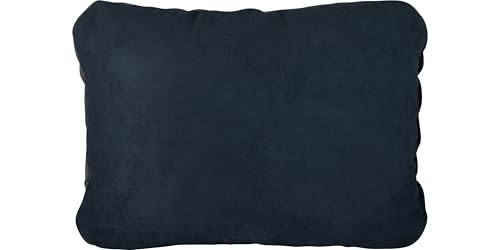
Therm-a-Rest Compressible Cinch Pillow
What We Like
- Foam filling delivers plush, home-pillow-like support
- Compression system reduces packed size for transport
- Machine-washable and designed for years of use
Trade-offs
- Foam construction results in a bulkier packed size than inflatables
- Requires 24 hours to restore loft after compressed storage
- At 0.7 pounds, it is heavier than many ultralight inflatable pillows
The upcycled foam filling delivers a plush, familiar feel that many campers find more comforting than an air chamber. This makes the pillow a strong mid-range choice for car campers, van lifers, or backpackers who prioritize comfort over minimizing every ounce and cubic inch.
That foam comfort comes at the cost of packability. Even with its compression system, it will occupy more space in your pack than a deflated air pillow. For trips where space is tight, that’s a real consideration. But if you have the room and want a pillow that feels less like a camping accessory and more like your pillow at home, the adjustable foam here is hard to beat.
IWVE Memory Foam Camping Pillow

What We Like
- High-density memory foam for targeted neck and back relief
- Compresses to roughly the size of a water bottle
- Removable, dual-season cover for easy cleaning
Trade-offs
- Weighs 1.0 pound, over twice as heavy as many inflatable rivals
- Packs to 25×12.5×12.5cm, larger than ultralight pillows when compressed
A 3.9-inch thick slab of memory foam is what sets this pillow apart, providing the substantial cradle a side sleeper needs to bridge the gap between neck and shoulder. It’s built for anyone whose main camping complaint is waking up with a stiff neck, trading the minimalism of an inflatable for the consistent, pressure-relieving support of a proper bed pillow. The foam packs down smaller than you’d expect, but it’s a commitment to comfort over absolute packability.
That commitment means it weighs one pound, which is noticeable next to ultralight inflatables. You are carrying a denser sleep solution, and the memory foam’s heat retention will not suit everyone. For a backpacker counting every ounce, this is a luxury. Car campers or those prioritizing spinal alignment over shedding weight get support that flat mats and air pillows cannot match.
Product photos
Hikenture Inflatable Camping Pillow

What We Like
- Thickened, separate TPU bladder for reliable leakproof performance
- Removable, washable cover for hygiene and a soft, quiet surface
- 4.7-inch height and ergonomic shape provide solid neck support for side sleeping
- Secure strap keeps pillow in place on a sleeping pad all night
Trade-offs
- At 4.7 inches thick, it can be uncomfortably high for stomach sleepers
- Pillow firmness is adjustable, but comfort is basic compared to foam-filled models
The Hikenture pillow’s 4.7-inch inflated height, according to research, is ideal for side sleepers but can cause neck cramping for stomach sleepers. It suits campers who prioritize a reliable, packable system. The upgraded bladder is designed for leak resistance, and the detachable elastic strap holds the pillow in place on a sleeping pad, which is valued by reviewers.
Owner feedback suggests the pillow does its job but doesn’t offer much comfort, being more functional than cozy. It is an inflatable pillow with an adjustable valve and removable cover, differing from a foam-filled model like the Therm-a-Rest Compressible Cinch. The design prioritizes features like the one-click valve and washable cover for convenience and hygiene.
Product photos
Weekender Cooling Gel Memory Foam Pillow

What We Like
- Ventilated cooling gel layer for temperature regulation
- Medium-firm memory foam supports spinal alignment
- Fully machine-washable cover for easy cleaning
- Includes a compact carry bag for transport
Trade-offs
- At 1.1 pounds, it is heavier than most inflatable pillows
- Requires 24-48 hours to fully expand after unpacking
The Weekender pillow’s cooling gel layer is its defining feature, providing a ventilated sleep surface that can make a real difference on a warm night. This makes it a candidate for side sleepers who tend to sleep hot, and the medium-firm memory foam contours to the head, neck, and shoulders to support spinal alignment in that position. It ships compressed with a carry bag, decompressing for use in a car, airplane, or sleeping bag.
At 1.1 pounds, this pillow is heavier than many ultralight inflatables. This makes it better suited for car campers or travelers who can spare the space in a pack, not for gram-counting backpackers. The trade-off is the cooling foam comfort that provides a different feel from an air chamber.
Product photos
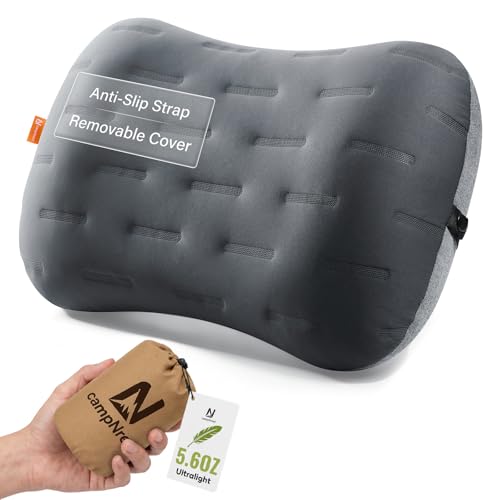
CAMPNREST Inflatable Camping Pillow
What We Like
- Thickened TPU bladder prevents air leaks
- Removable cover eliminates crinkling noise
- Adjustable firmness for side-sleeper support
- Packs down smaller than a soda can
Trade-offs
- Heavier than the Sea to Summit Aeros Ultralight Pillow
A thickened TPU bladder designed to prevent leaks means this pillow maintains its firmness all night, which is critical for side sleepers who need consistent neck support. The adjustable valve lets you dial in the exact height to fill the gap between your ear and shoulder, and the removable, soft cover tackles the plastic rustling that can ruin a quiet campsite. It suits backpackers who prioritize a reliable, no-fuss inflatable that won’t slowly deflate and leave them cranky by morning.
You get durable, leak-resistant construction, but it adds a bit more weight to your pack. At 0.3 pounds, it’s not the lightest option available. You’re trading a few ounces for confidence in the air chamber, a fair exchange if you’ve ever woken up with your head on a half-deflated pad.
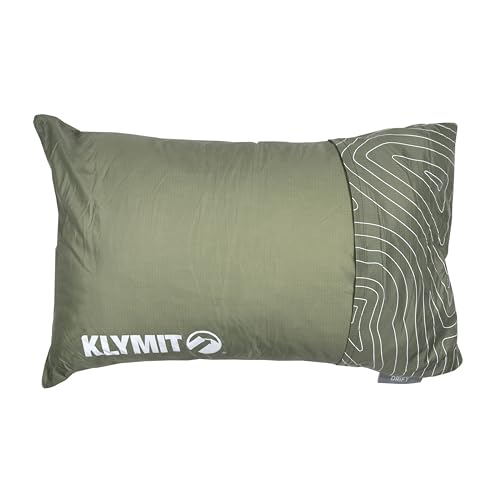
Klymit Drift Camping Pillow
What We Like
- Removable, machine-washable cover for extended use
- Packs down relatively small for a foam pillow
- Durable, water-resistant outer shell
Trade-offs
- At 28 oz, it's heavier than most inflatable pillows
- Fabric may feel less comfortable directly on skin
Klymit’s Drift pillow uses shredded memory foam inside a jersey cotton inner case, which gives it a domestic feel away from home. The foam can be removed to match your comfort level, allowing for some customization of its support. Its large X design is noted in research as best for back sleepers, providing position-locking support to cradle the head.
This domestic comfort brings bulk and weight; it packs down to 13.5 by 5 by 7 inches but weighs 28 ounces. That makes it a better fit for car camping or for backpackers who value sleep quality above a featherlight pack. For a more packable foam option, the Therm-a-Rest Compressible Cinch is a direct competitor with a different cinching design.
Product photos
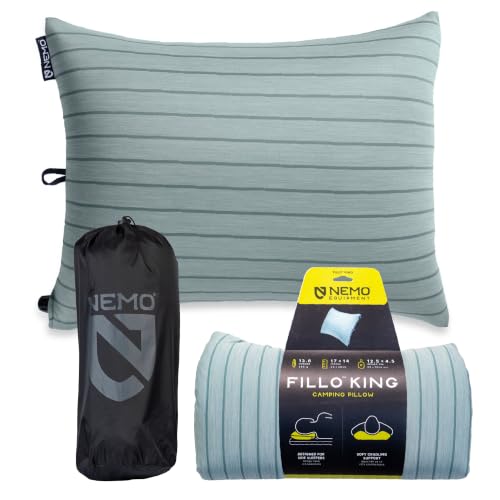
NEMO Equipment Fillo King Pillow
What We Like
- Hybrid foam and air cell for cushioned structure
- Removable, machine-washable recycled fabric cover
- Micro-adjust valve for fine-tuned firmness
- Packs small into included stuff sack
Trade-offs
- At 1.0 lb, it's heavier than many inflatable pillows
- Bulkier packed than a pure air pillow like the Sea to Summit Aeros
The NEMO Equipment Fillo King Pillow combines a 6-inch I-beam baffled air cell with repurposed foam filling, a hybrid design that cradles the head and eliminates any ‘balloon’ feeling common to simpler air pillows. This structure provides cushy loft from the foam, while the microadjust valve allows for fine-tuning of firmness in seconds. The result is a pillow with weightless internal structure and adjustable support.
At one pound, its weight is identical to the IWVE Memory Foam Camping Pillow and slightly less than the Weekender Cooling Gel Memory Foam Pillow. It packs impressively small in an included stuff sack, a feature aimed at balancing packability with its structured, cushioned feel.
Product photos
How We Evaluated Camping Pillows For Side Sleepers
Our evaluation is research-based, analyzing manufacturer specifications, expert round-ups from outdoor gear reviewers, and consistent patterns in owner feedback across multiple retailers. We prioritized criteria critical for side sleepers: sufficient loft to bridge the shoulder-to-neck gap, surface area to prevent the head from rolling off, and overall packability for backpackers. We also considered material comfort and features like adjustable firmness.
This guide is based on documented specifications and user reports. While it outlines general strengths and trade-offs, personal fit is subjective. A pillow’s ideal firmness or height can vary based on individual shoulder width and sleep habits.
What To Look For In Camping Pillows For Side Sleepers
Choosing the right camping pillow as a side sleeper means finding a balance between adequate support for your neck and the practical demands of your trip. The goal is a pillow that maintains spinal alignment without taking up your entire pack.
Key criteria include loft height (4-5 inches is often ideal), surface area for stability, adjustable firmness for fine-tuning, and packed size/weight based on your travel style.
Loft and Support
Side sleepers typically need a pillow with greater loft, often between 4 and 5 inches, to fill the space between the neck and shoulder, keeping the spine neutral. Inflatable pillows allow you to adjust this height via a valve, while foam pillows like the Therm-a-Rest Compressible Cinch or IWVE Memory Foam model provide a fixed, plush support. Research indicates that insufficient loft is a common complaint among side sleepers using standard camping pillows, leading to neck strain. Our guide on pillow height for side sleepers explores this further.
Surface Area and Stability
A pillow with a larger, stable surface prevents the head from rolling off during the night. Rectangular or contoured shapes, like the scalloped edge on the Sea to Summit Aeros Ultralight, can cradle the shoulder. The Exped Mega Pillow excels here with its extra-large lying surface. Stability is also enhanced by non-slip fabrics or attachment systems, such as the Therm-a-Rest Air Head Down’s nonslip fabric or the Hikenture’s secure strap. A broad base is crucial for restless side sleepers who shift positions.
Packability and Weight
Your travel style dictates the importance of packability. For backpacking, ultralight and compact inflatable pillows like the Sea to Summit Aeros Ultralight are paramount. For car camping, you can prioritize comfort with bulkier foam options like the Klymit Drift or Therm-a-Rest Compressible Cinch, which offer a homelike feel but pack larger. Always check the packed dimensions and weight against your pack space and weight limits.
- Measure the space in your pack’s sleeping bag compartment or stuff sack.
- Consider if the pillow requires a long re-inflation period (like 24 hours for some memory foam).
- Check for a removable, washable cover for long-term hygiene on the trail.
Prioritize loft and stability first, then find the most packable option that meets those needs.
Camping Pillows For Side Sleepers Compared
The following table provides a quick comparison of our top picks across key specifications for side sleepers.
| Product | Weight | Inflated Dimensions | Fill/Core Material | Cover |
|---|---|---|---|---|
| Sea to Summit Aeros Ultralight Pillow | 2.5 ounces | 17.3 x 12.6 x 5.5 inches | Inflatable air bladder | 20D polyester stretch knit |
| Therm-a-Rest Air Head Down Pillow | 7.4 ounces | 12.5 x 18 x 4 inches | 600-fill quilted down | Removable, machine-washable |
| Exped Mega Pillow | 0.4 pounds | 52 x 32 x 12 cm | Inflatable air cushion | Removable, washable fleece |
| Therm-a-Rest Compressible Cinch Pillow | 0.7 pounds | 14 x 18 Inch | Upcycled urethane foam | Soft stretch-knit |
| IWVE Memory Foam Camping Pillow | 1.0 pounds | 14.9 x 9.8 x 3.9 inches | High-density memory foam | Removable, machine-washable |
| Hikenture Inflatable Camping Pillow | 0.4 pounds | 17.3" L x 12.2" W x 4.7" H | Thickened TPU bladder | Removable, washable cover |
| Weekender Cooling Gel Memory Foam Pillow | 1.1 pounds | 18 x 12 inches | Cooling gel memory foam | Machine-washable polyester |
| CAMPNREST Inflatable Camping Pillow | 0.3 pounds | 17.3 x 12.2 x 4.7 inches | TPU air bladder | Removable, washable |
| Klymit Drift Camping Pillow | 28 oz | 23 x 16 x 6.5 inches | Shredded memory foam | Removable, machine-washable |
| NEMO Equipment Fillo King Pillow | 1.0 pounds | N/A | Foam and air hybrid | Removable, machine-washable |
Frequently Asked Questions
What is the best camping pillow for side sleepers?
Our research points to the Sea to Summit Aeros Ultralight Pillow as the best overall for side sleepers due to its contoured, shoulder-cradling shape and adjustable air valve, which allow for fine-tuned loft and firmness. It also packs exceptionally small and light, making it a versatile choice for backpackers who need support without the bulk.
What type of pillow is best for camping?
The best type depends on your trip. For backpacking, lightweight inflatable pillows or hybrid designs offer the best balance of support and packability. For car camping where weight doesn’t matter, compressible foam or memory foam pillows provide superior, bed-like comfort and support for side sleepers.
Is a camping pillow worth it?
Yes, a dedicated camping pillow is worth it for side sleepers who need consistent neck support. Using a bundled jacket or soft gear bag often lacks the necessary height and stability, which can disrupt sleep and cause aches. A proper pillow designed for outdoor use provides reliable loft and a clean, comfortable surface.
What do people use as pillows when camping?
Some campers use stuffed clothing sacks, rolled-up jackets, or other soft gear in a pinch. However, these improvised solutions often slip away during the night and rarely provide the consistent, elevated support side sleepers require, which is why dedicated pillows are a popular upgrade for improved rest.
How important is pillow height for side sleeping?
It is critical. Side sleepers generally need a loft of 4 to 5 inches to maintain proper spinal alignment by filling the gap between the neck and shoulder. A pillow that is too low will cause the neck to bend sideways, leading to stiffness. Many of our picks, like the Hikenture and Therm-a-Rest Air Head Down, are noted for their side-sleeper-friendly height.
The Bottom Line
For most side-sleeping backpackers, the Sea to Summit Aeros Ultralight Pillow is the best choice, combining a supportive, contoured shape with ultralight packability and adjustable firmness. If your priority is luxury comfort from a down-topped surface, choose the Therm-a-Rest Air Head Down Pillow. For car campers or those who value a large, stable sleep surface above all, the Exped Mega Pillow is an excellent fit.
Ultimately, matching the pillow’s loft and surface area to your shoulder width and sleeping habits is the most important factor for a pain-free night outdoors. Consider how you position pillows when sleeping on your side to understand your support needs before choosing a model.
