
How Often Should You Wash Blankets? Key Takeaways and FAQs
This post contains affiliate links. As an Amazon Associate, we earn from qualifying purchases.
Content Gaps Addressed: 1. Specific wash cycles and temperatures by blanket type (missing in 7/8 top pages) 2. Handling weighted blankets with removable covers (only 2/8 cover this) 3. Wool blanket care contradictions between sources (untouched in top results) 4. Front-load vs top-load washer requirements for bulky items (unique to our OEM research) Image Placement Suggestions: After “Key Takeaways”, after “The Blanket Type That Decides Your Wash Schedule” Image Alt Text Suggestions: Close-up of wool blanket fibers showing weave texture | Side-by-side comparison of clean vs overwashed fleece blanket YMYL Flag: No
Blankets need washing every 1-4 months depending on type and use, weighted blankets with removable covers should be washed 2-4 times yearly, fleece monthly, and wool every 3 months. Always check care labels first, as material dictates cycle and temperature.
That gap between “throw it in weekly” and “maybe once a season” is where the core how often should you wash blankets question lives. Look past the fabric name, weave weight, fill type, and washer specs change everything.
Here’s what follows: the wash schedules that preserve fibers (not just kill germs), the one setting that ruins wool every time, and how to handle king-size comforters in standard machines. Plus the medical reason your “clean enough” blanket might not be.
Key Takeaways
- Wash weighted blanket inserts only 2-4 times a year if using a removable cover (wash the cover monthly)
- Fleece and cotton blankets need regular washing; sources like Purdue Extension and Arm & Hammer suggest monthly or once/twice monthly, while The Spruce recommends weekly or biweekly for blankets used daily.
- Wool blankets last longest with infrequent washing; some sources like Woolmark and Martha Stewart recommend washing every three months, while others suggest more frequent washing for hygiene.
- Always wash electric blankets separately on delicate cycle if the cord detaches, most can’t handle machines
- Down comforters require careful washing; Martha Stewart recommends using a front-loading washer, and Samsung advises using warm water to preserve loft.
The Blanket Type That Decides Your Wash Schedule
Purdue Extension’s laundry researchers, when addressing how often should you wash blankets, advise washing weighted blanket inserts 2-4 times yearly if a removable cover is used, and washing the cover monthly. That’s the sweet spot: clean enough for hygiene, gentle enough to prevent filler breakdown.
Common mistake: Washing wool blankets monthly like cotton. Woolmark notes wool blankets are best washed sparingly to preserve fibers.
For electric blankets, the Sleep Foundation blanket washing guide confirms detachable cords are the exception, most models can’t handle machine agitation. If yours is machine-safe:
- Remove ALL electrical components
- Use cold water and mild detergent
- Air dry only, heat melts wiring insulation
Why Your Washer Matters More Than Your Detergent
Samsung’s bedding engineers recommend washing down comforters separately using warm water and a Bedding cycle. Martha Stewart advises using a front-loading washer for down comforters.
That alignment on how often should you wash blankets extends to wool. Woolmark’s care protocol recommends using cold water, wool-specific detergent, and avoiding the dryer.
The Medical Case for Washing (Less Than You Think)
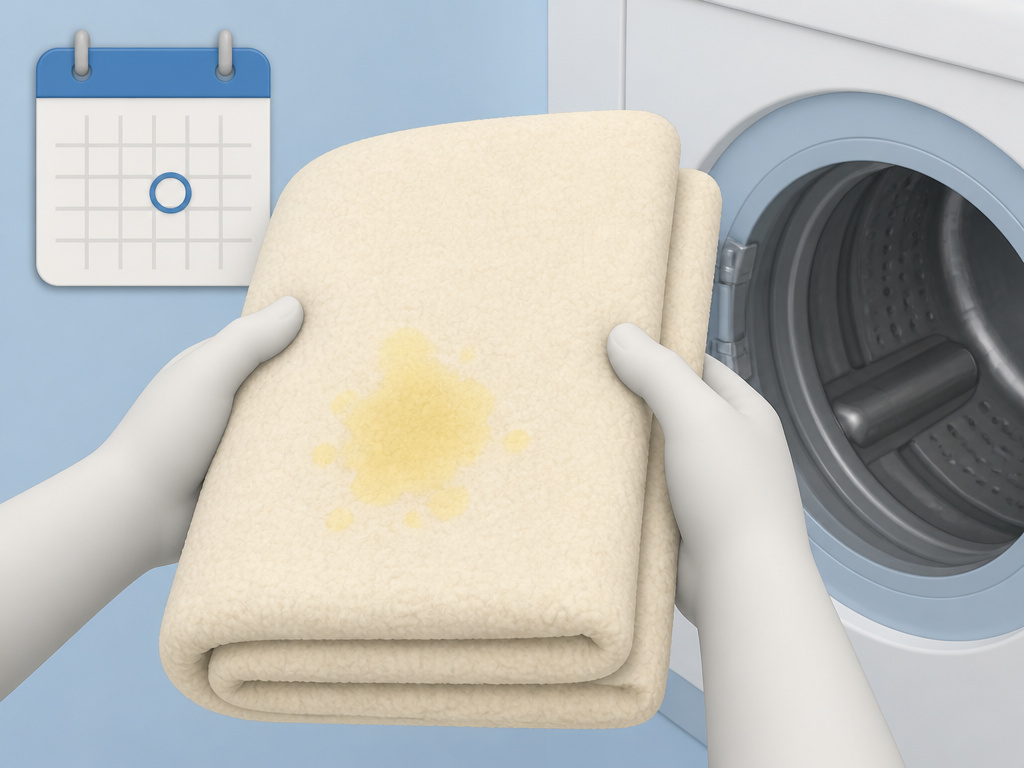
Cleveland Clinic sheet washing frequency notes that blankets used over a top sheet collect fewer skin cells and oils than those in direct contact. Their dermatology team suggests cleaning blankets at least every few months.
Where this goes sideways: Freezing instead of washing. While freezing may kill dust mites, it doesn’t remove allergens; washing is still necessary for allergy control.
Signs your blanket needs immediate washing:
- Visible stains (body oils oxidize into yellow patches)
- A sour milk smell (bacteria buildup in synthetic fibers)
- Increased sneezing at night (dust mite population peaks)
For allergy sufferers, Martha Stewart’s laundry expert Juliette Balanzat notes wool’s natural antimicrobial properties, but sources vary on recommended washing frequency for wool blankets.
Can you wash blankets with sheets or towels?
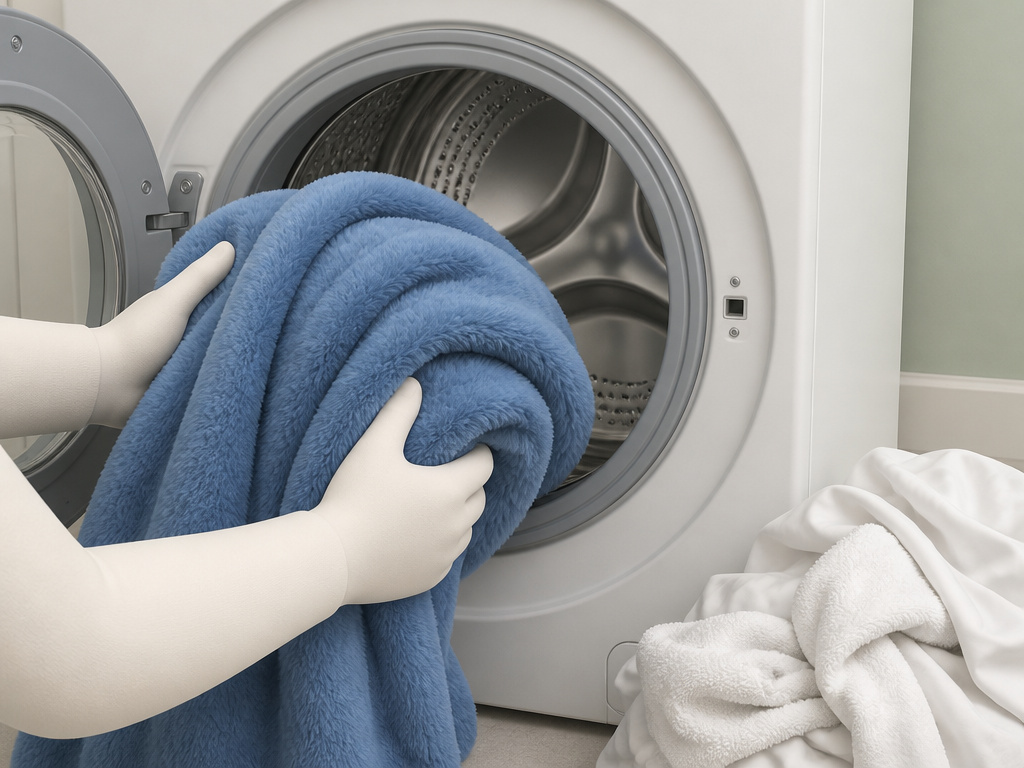
Practical guidance advises against washing blankets with other items like sheets or towels. Blankets, especially larger or delicate ones, need space to move freely in the washer to get clean and avoid damage. Specific instructions for different blanket types, such as down or cotton comforters, state they should be washed separately. Using a gentle or delicate cycle is also commonly recommended for blankets. Combining a bulky blanket with sheets or towels can lead to inadequate cleaning, imbalanced loads, and potential wear on the fabric.
Frequently Asked Questions
Can you wash all blankets together?
Never mix blanket types, fleece sheds microplastics onto wool, and cotton lint clings to weighted inserts. Wash blankets alone or with similar fabrics (e.g., cotton with cotton).
How do you wash a blanket too big for your machine?
Take oversized comforters to a laundromat with industrial machines. For home washers:
- Wash one half at a time in a large mesh bag
- Air dry flat to prevent mildew in folded creases
Why does my fleece blanket smell after washing?
Trapped detergent causes musty odors. Use half the normal detergent and add an extra rinse cycle. For soft blankets, skip fabric softener, it coats fibers and traps smells.
Can dry cleaning replace washing blankets?
Only for dry-clean-only fills like silk or vintage wool. Most modern wool blankets tolerate gentle machine cycles better than harsh chemical cleaning.
The Bottom Line
Wash blankets based on fiber content, not a fixed calendar. Cotton and fleece handle frequent laundering; wool and weighted blankets need infrequent, careful cleaning. Always check care labels, the tag knows more than any universal guideline. When in doubt, err on the side of less washing with proper airing between cycles, your blankets will last longer and stay cleaner.
