
Types of Cotton Sheets: Weave, Fiber, and Feel Explained
This post contains affiliate links. As an Amazon Associate, we earn from qualifying purchases.
Content Gaps Addressed: – How to verify Egyptian/Supima cotton claims – Seasonal suitability (summer vs winter sheets) – Interaction between weave and cotton type – Long-term softness and pilling data Image Placement Suggestions: after intro, after “Percale vs Sateen” section, after “Thread Count Myths” section Image Alt Text Suggestions: 1. Close-up comparison of percale and sateen weave textures 2. Egyptian cotton fiber under magnification showing staple length 3. Side-by-side of new vs washed sheets showing pilling YMYL Flag: No
Cotton sheets come down to three factors: weave type (percale or sateen), fiber quality (staple length), and thread construction (single-ply vs multi-ply). The ASTM D5431 standard requires 100% cotton woven sheets to have a minimum breaking force of 178 N (40 lbf) and tear resistance of 7 N (1.5 lbf), but many marketed as “luxury” fail these basics.
That 178 N threshold separates sheets that last from those that fray at the corners within a year. The best sets combine long-staple fibers with the right weave for your climate, percale for hot sleepers, sateen for those who want warmth, and flannel only if you face real winter.
Key Takeaways
- Percale weave (1-over-1-under) sleeps cooler than sateen, ideal for hot climates or night sweats
- Staple length matters more than “Egyptian” labels, real Supima cotton often outperforms vague “Egyptian” claims
- Thread counts above 400 often use plied yarns that reduce breathability while increasing marketing claims
- 100% cotton outperforms blends in durability tests, with less shrinkage than poly-cotton after washing
- Organic certifications (GOTS/Oeko-Tex) verify chemical safety, important for babies or sensitive skin
Percale vs Sateen: The Weave That Changes Everything
“Percale is to sateen what a crisp oxford shirt is to silk pajamas, both have their place, but you wouldn’t wear one to do the other’s job.”
Percale’s simple one-over, one-under weave creates a matte finish that feels crisp and cool. Consumer Reports testing found L.L.Bean’s 280-thread-count percale sheets outperformed higher-count sateens in both breathability and durability after repeated washes. The open structure allows more air circulation, which some sources recommend for hot sleepers, while others note that sateen can also be durable and silky.
Sateen’s satin weave (where threads float over multiple yarns) gives that smooth, lustrous feel many associate with luxury. But there’s a tradeoff:
| Weave | Feel | Best For | Durability | Thermal |
|---|---|---|---|---|
| Percale | Crisp, matte | Hot sleepers, summer | Durable with proper care | Breathable |
| Sateen | Silky, glossy | Cool climates, winter | Durable with proper care | Retains warmth |
The Target Threshold 400TC sateen set carried Oeko-Tex certification in Wirecutter’s testing, meaning it met strict chemical safety standards, important since some sateens use formaldehyde-based wrinkle-resistant treatments.
Egyptian vs Pima vs Organic: The Cotton Fiber Guide
Long-staple cottons like Egyptian and Pima (sold as Supima in the U.S.) have extra-long staple fibers versus regular cotton’s shorter staples. That extra length matters:
- Fewer fiber ends means less pilling at friction points (hips, feet)
- Stronger yarns can be spun finer without breaking
- Smoother surface feels softer from the first wash
But the “Egyptian cotton” label alone guarantees nothing. The Cotton Incorporated guide notes some “Egyptian” sheets mix short-staple fibers to cut costs. Real verification requires:
- Supima certification for U.S.-grown Pima cotton
- DNA testing for Egyptian cotton (rare outside luxury brands)
- GOTS or Oeko-Tex marks for organic cotton’s chemical safety
Worth noting: Consumer Reports found up to 6% shrinkage in cotton sheets after a year of washing. ASTM D5431 allows just 5% for durable-press woven cotton. Only 3 of 10 tested “deep pocket” sets still fit 14-inch mattresses post-shrinkage.
Thread Count Myths and Realities
Cotton Incorporated notes that around 400 threads per square inch is a typical maximum manufacturers can comfortably fit. Cotton Incorporated’s technical guide explains that’s roughly the maximum number of quality yarns that fit in a square inch without resorting to tricks:
- Plied yarns: Counting each strand separately (e.g., calling a 200-thread fabric “400TC” by using two-ply yarns)
- Fiber blends: Mixing shorter, cheaper fibers to boost numbers
- Dense weaves: Creating stiff, less-breathable fabric to hit counts
Common mistake: Chasing thread count over fiber quality. A 280-thread percale with long staples outperforms a 600-thread blend every time.
The ASTM D5431 standard doesn’t even include thread count in its performance specs, just measurable outcomes like tear strength (minimum 7 N) and pilling resistance (4.0 rating minimum).
Seasonal Pairings and Climate Considerations
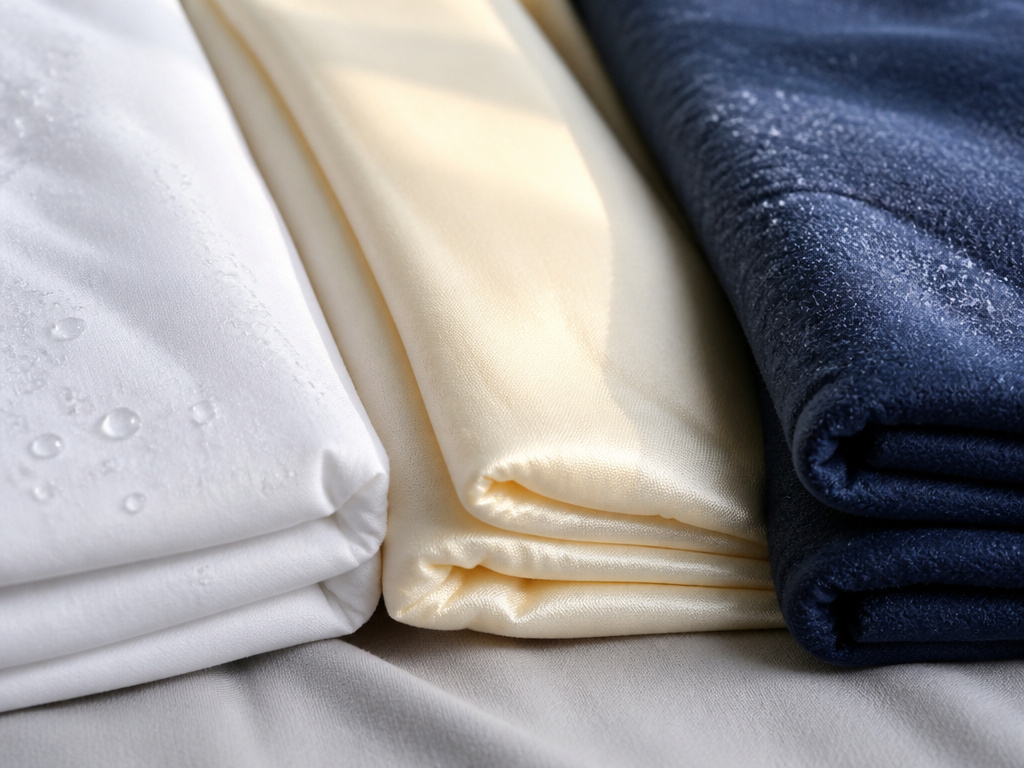
Your local weather should dictate your weave choice more than marketing claims when you compare types of cotton sheets:
Summer/Humid Climates:
- Percale weave is recommended for hot sleepers for its breathable feel.
- Lighter thread counts
- Avoid sateen’s heat retention
Winter/Dry Climates:
- Sateen weave (retains warmth)
- Flannel for cold weather
- Heavier thread counts
Year-Round Moderate Climates:
- Percale for warm months
- Switch to sateen when temps drop
- Have flannel sheets for cold snaps
The Starfos study found 100% cotton woven fabrics outperformed knits for thermal insulation when dry, but in humid conditions, cotton/PU blends actually felt warmer (dryer) against the skin. That’s why Florida sleepers should avoid flannel entirely.
Care and Longevity: Making Sheets Last
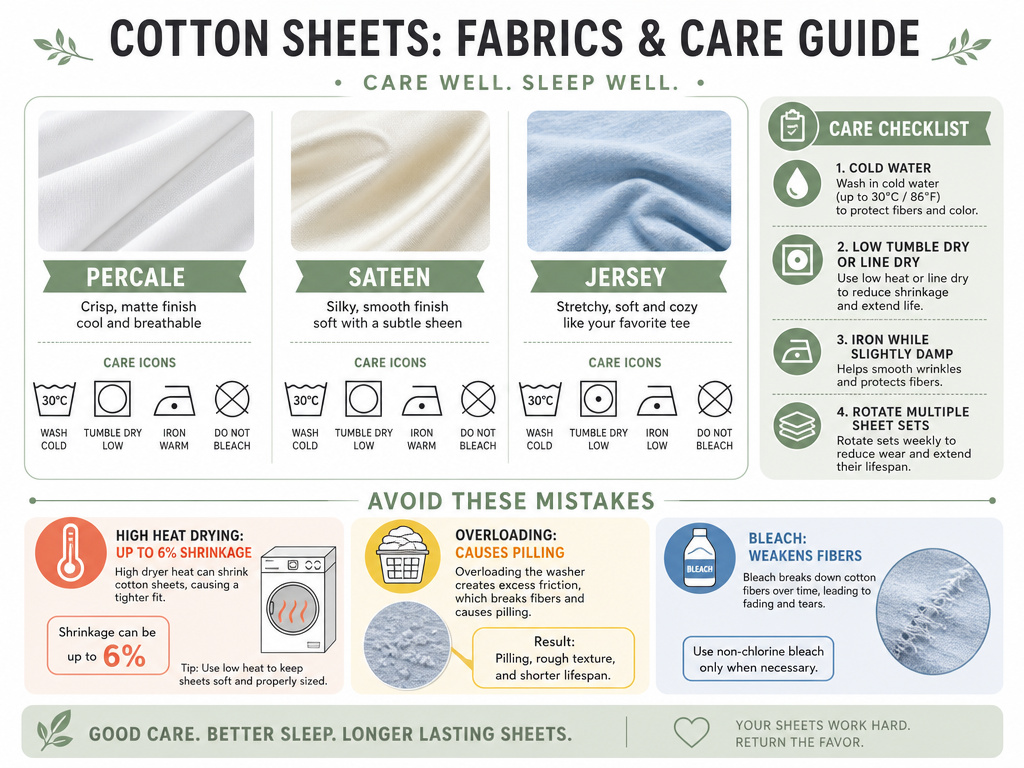
Three laundry habits destroy cotton sheets faster than anything else:
- High heat drying: Causes shrinkage, with Consumer Reports observing up to 6% and ASTM D5431 allowing a maximum of 5% for durable-press woven cotton.
- Overloading washers: Creates abrasion that pills fibers
- Bleach use: Weakens cotton fibers over time
Where this goes sideways: Ignoring care labels. Washing at higher temperatures than recommended can lead to premature wear.
For longest life:
- Wash in cold water
- Tumble dry low or line dry
- Iron while slightly damp if needed
- Rotate between multiple sets to share wear
What is jersey cotton?
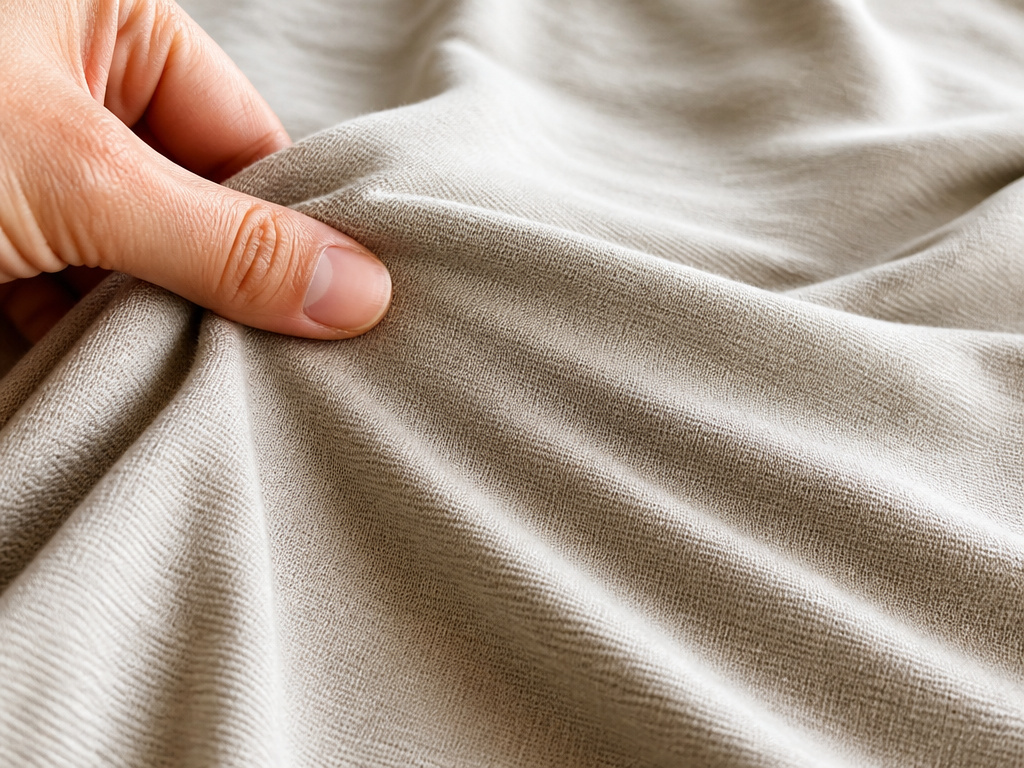
Jersey cotton is a knitted fabric, not a woven one, which gives it a distinct feel and performance. According to a study on fabric properties, 100% cotton woven fabrics with a hairy surface outperformed knits in thermal insulation when dry. This suggests that jersey sheets, being knits, may behave differently in warmth and breathability compared to woven percale or sateen. For durability, the ASTM standard sets minimum requirements for tear resistance that apply to both woven and knitted sheeting, so look for sheets that meet such industry benchmarks. The soft, stretchy nature of jersey comes from its knit construction, offering a casual, t-shirt-like feel on the bed.
What are flannel cotton sheets?
Flannel cotton sheets are woven fabrics known for their brushed, napped surface that creates a soft, fuzzy texture. This hairy surface is key to their performance. A fabric study found that 100% cotton woven fabrics with a hairy surface outperformed knits in thermal insulation when dry, making flannel a good option for retaining warmth. The ASTM standard has specific requirements for different sheet types, though it sets a minimum pilling rating for woven non-flannel sheets, implying flannel may have different considerations for surface durability. The napping process traps air, providing insulation, which is why these sheets are often favored for cooler climates.
Best cotton sheets for hot vs. Cold sleepers
The weave of a cotton sheet significantly affects its temperature feel across different types of cotton sheets. For hot sleepers, a percale weave is recommended for a crisp, cool sheet due to its breathable, open structure. For those who prefer a warmer feel, a sateen weave offers a buttery, smoother hand. Fabric studies support this, showing that 100% cotton woven fabrics with a hairy surface, like some flannels, outperformed knits in thermal insulation when dry. Consumer Reports recommends choosing 100% cotton designs for better breathability. When selecting sheets, consider that a high thread count may result in a stiffer fabric, which can affect drape and breathability, so weave type is often more critical than thread count alone for temperature regulation.
Frequently Asked Questions
What’s the difference between 100% cotton and cotton percale?
“100% cotton” refers to fiber content, while “percale” describes the weave. Percale sheets must be 100% cotton, but not all cotton sheets use percale weave, some are sateen, flannel, or jersey.
Which is softer, Pima or Egyptian cotton?
When both use extra-long staples, they feel similar. But Supima-certified Pima cotton has stricter verification than generic “Egyptian” labels, making it a safer bet for guaranteed softness.
How often should I replace cotton sheets?
With proper care, quality cotton sheets can last for years. Replace when:
- Pilling covers a significant portion of the surface
- Threadbare spots appear
- Elastic won’t stay tucked
- Stains won’t wash out
Are organic cotton sheets worth it?
For babies, allergy sufferers, or chemical sensitivities, yes. GOTS certification ensures no toxic dyes or finishes. For others, the premium may not justify the cost difference vs quality conventional cotton.
Before You Go
Skip any sheet set that doesn’t specify the types of cotton sheets via:
- Fiber type (Egyptian, Pima, or just “cotton”)
- Weave (percale, sateen, etc.)
- Certification (GOTS, Oeko-Tex) if organic
The L.L.Bean 280-thread percale and Target Threshold 400TC sateen prove price doesn’t always predict performance. Judge sheets by their fiber pedigree and weave first, thread count last. And always check return policies, how a sheet sleeps night one often differs from night 30.
