
9 Best Mattresses To Prevent Bed Sores in 2026
This post contains affiliate links. As an Amazon Associate, we earn from qualifying purchases.
Our research points to the Drive Medical Med-Aire Low Air Loss Mattress as the best overall for its active pressure redistribution and moisture control. We also highlight the Invacare Solace Deep Fortress-Cut Mattress for its advanced foam design and the Lunderg Alternating Air Pressure Pad for its quiet pump.
These picks form a strong foundation for preventing painful bedsores. Selecting the wrong surface can lead to skin breakdown and complicate care. This guide, based on a review of specifications, expert analysis, and patterns in owner feedback, helps you choose confidently among nine key options.
Top 9 Mattresses To Prevent Bed Sores in the Market
Certain content that appears on this site comes from Amazon. This content is provided "as is" and is subject to change or removal at any time.
The Best Mattresses To Prevent Bed Sores, Reviewed
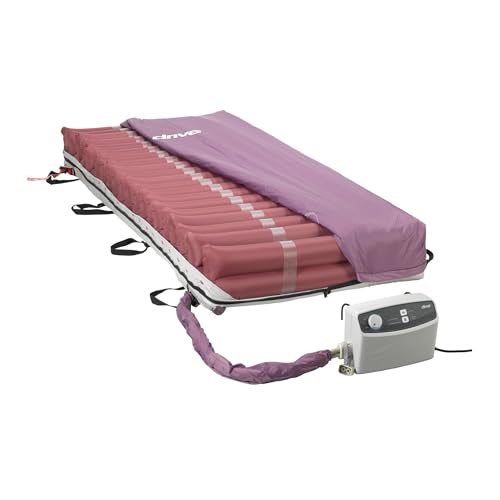
Drive Medical Med-Aire Low Air Loss Mattress
What We Like
- Alternating pressure and air cell design for targeted relief.
- Vapor permeable cover reduces moisture and heat buildup.
- Audio visual alarm alerts caregivers to low pressure.
- Built-in pillow provides enhanced head stability.
Trade-offs
- 20 bladders and a pump system require more maintenance than foam.
Drive Medical’s mattress replacement system uses alternating pressure from a pump to shift support areas, which helps reduce the risk of pressure sores. Its vapor-permeable cover works to pull moisture away from the skin, addressing a key cause of skin breakdown. The built-in pillow section adds stability for the head, while the audio-visual alarm alerts caregivers to low pressure, creating a monitored solution for home or facility care.
The trade-off is its specialized nature. It’s a complete mattress replacement system designed for hospital beds, not a pad you can lay on a standard mattress. If you need a simpler, lower-profile option, the Invacare Solace Deep Fortress-Cut Mattress offers zoned pressure relief in a traditional foam design. But for active, managed pressure relief and moisture control, this Drive Medical system delivers the integrated features that justify its place.
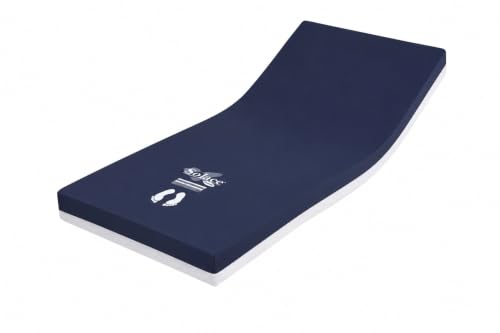
Invacare Solace Deep Fortress-Cut Mattress
What We Like
- Deep fortress-cut cells for enhanced airflow and pressure redistribution
- Dual-layer foam design prevents bottoming out
- Three-zone firmness targets head, lower back, and heels
- Welded waterproof cover is easy to clean and durable
Trade-offs
- Static foam design lacks the active pressure cycling of air systems
Ultra-deep fortress-cut cells provide significantly deeper castellations than standard medical mattresses. These cuts enhance airflow around the skin and allow the foam to move fluidly with a patient during turns, which helps prevent friction. A three-zone design uses different firmness levels for the head, lower back, and heels to create targeted support for total body alignment.
The construction is a static foam design, unlike products like the Invacare MA500 Alternating Pressure System listed as an alternative. Its dual-layer anti-bottoming design combines a high-density base with a plush therapeutic layer to prevent sinking. The welded waterproof cover with two-way stretch fabric moves with the patient to reduce shearing and won’t bunch up.
Product photos
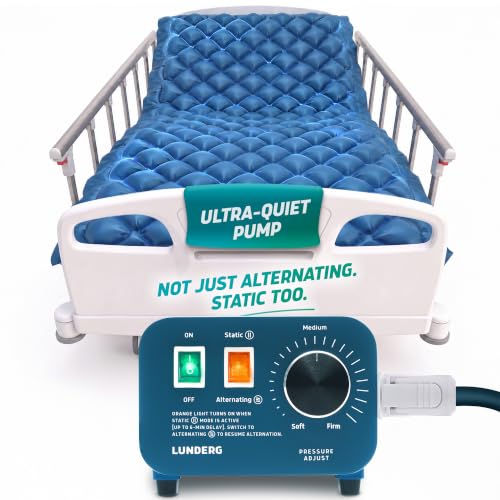
Lunderg Alternating Air Pressure Mattress Pad
What We Like
- Whisper-quiet 23 dBA pump minimizes sleep disruption
- Static mode offers a stable, non-alternating surface
- Waterproof and durable construction for long-term care
- Works on both hospital beds and standard home mattresses
Trade-offs
- Requires a 20-minute initial inflation period
- Needs a sheet over the pad to avoid moisture contact
- Excess material must be tucked in after inflation
Its pump operates at 23 dBA, which creates a near-silent environment crucial for uninterrupted rest in a care setting. This pad includes a static mode, allowing caregivers to lock in a firm, stable surface if the alternating motion becomes bothersome. The alternating pressure is designed to relieve pressure on skin and bony areas to aid in bedsore prevention.
Setup involves a specific 20-minute inflation sequence and tucking of material, which is less instant than simply unrolling a foam topper. The Lunderg pad is defined by its straightforward, ultra-quiet operation for home use. A more feature-rich hospital-grade system with integrated low air loss, like the Drive Medical Med-Aire, represents a different approach.
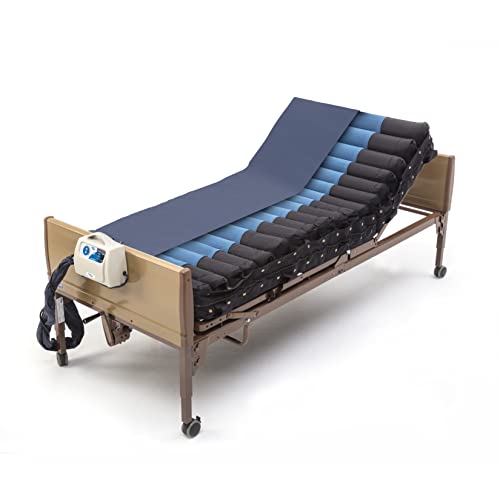
Invacare MA500 Alternating Pressure System
What We Like
- Natural heel slope reduces heel pressure
- Cell-in-cell design for power failure safety
- Vapor-permeable, low-shear quilted cover
- Alternating cycle redistributes pressure continuously
Trade-offs
- At 8 inches thick, requires a compatible bed frame
- Designed for low-medium risk, not highest-risk cases
The 350 lb capacity and alternating pressure cycle make this system a focused choice for someone needing reliable pressure redistribution without extreme complexity. Its natural heel slope is the standout feature, directly addressing one of the most vulnerable areas for skin breakdown. This makes it particularly suitable for individuals at low to medium risk or with early-stage pressure injuries, where targeted heel relief can prevent a common problem from worsening.
This system is specifically intended for individuals at low to medium risk of pressure sores, or stages I-III, so it’s not designed for the most severe cases. Its alternating pressure technology actively redistributes weight by inflating and deflating air cells on a cycle, which helps relieve pressure on skin and bony areas. For someone within that moderate risk range needing focused heel protection, the integrated natural heel slope is a dedicated feature not found on all general-purpose mattress pads.
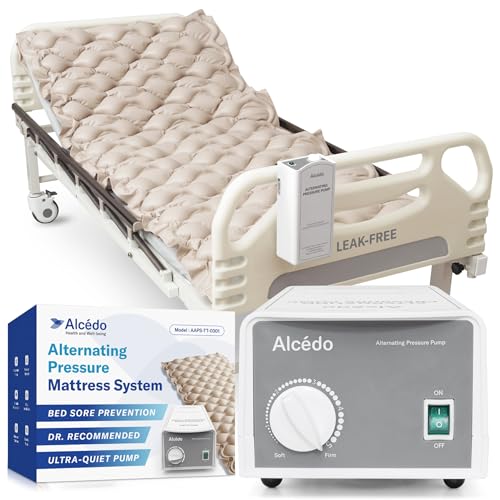
Alcedo Alternating Air Pressure Mattress Pad
What We Like
- Medical-grade alternating pressure for sore prevention
- Waterproof, breathable, and easy-clean surface
- Five adjustable firmness settings for custom comfort
- Secure fit for standard hospital and home beds
Trade-offs
- Twin size limits use on larger beds
- Requires tucking uninflated portion under mattress
With an inflated area measuring 75 by 35 inches, this pad fits a hospital bed or a twin bed at home, so it can replace a standard mattress without overhang. Its pump offers five adjustable pressure settings, allowing you to customize firmness for individual comfort preferences over long-term use. The product is designed for home and healthcare use with a focus on preventing bedsores for individuals with limited mobility.
Its focused design comes with clear limits on size and capacity. This pad fits a standard bed perfectly, but it won’t cover a queen or full mattress, and the 300-pound weight capacity rules it out for heavier individuals. For those needs, a product like the Invacare MA500 Alternating Pressure System, with its greater width and higher capacity, becomes the necessary step up. This Alcedo pad excels as a quiet and effective solution precisely because it serves a specific, common bed size.
MedVance Alternating Air Pressure Mattress Pad

What We Like
- Ultra-quiet digital pump under 20 decibels
- Automatic 6-minute pressure redistribution cycles
- Waterproof, breathable, and easy-clean vinyl
- Universal fit for most standard hospital beds
Trade-offs
- Requires consistent electrical power for the pump
With an ultra-quiet digital pump operating under 20 dB, this mattress pad allows for peaceful rest in shared bedrooms where pump noise is a concern. Its pressure relief system cycles every six minutes to redistribute weight, aiming to reduce pressure buildup and improve circulation. This makes it a candidate for bed sore prevention where a near-silent environment is a priority.
The pad has a 2.8-inch profile, so it functions as a topper on an existing mattress rather than a full replacement. It provides alternating pressure relief on top of the user’s current sleeping surface. For those needing a dedicated therapeutic mattress, alternatives like the Invacare Solace Deep Fortress-Cut offer a different 6-inch foam-based design without a separate pump unit.
Product photos
Drive Medical Gravity 9 Pressure Redistribution Mattress

What We Like
- Dedicated heel slope and channel cut for ulcer prevention
- Full-length memory foam top layer for pressure redistribution
- Fire-retardant, fluid-proof cover is easy to clean
- Horizontally scored bottom layer extends mattress durability
Trade-offs
- No raised side rails may be a concern for some care settings
The 6-inch heel slope and channel-cut foam layer target pressure relief exactly where it’s needed most, making this mattress a focused solution for patients at high risk for heel ulcers. It suits long-term care or home settings where a consistent, supportive surface is the priority, and the multi-layered foam construction is designed to hold up under constant use. The low-shear, fluid-proof cover is a practical detail for managing hygiene without compromising the therapeutic support underneath.
This is a static foam mattress, not a dynamic air system like the Invacare MA500. It relies on its material design to redistribute weight, which is simpler to maintain but doesn’t offer the alternating pressure cycles some care protocols require. For heel-focused prevention without the complexity of a pump, it’s a straightforward choice. When full-body pressure relief that actively shifts points of contact is needed, an alternating system might be the better route.
Product photos
ProHeal Memory Foam Hospital Bed Mattress

What We Like
- High 1000 lb capacity for larger patients.
- Multi-tiered foam zoning for targeted pressure relief.
- Removable, waterproof cover with 360-degree zipper.
- Sloped heel redistributes pressure to the lower leg.
Trade-offs
- 6-inch height offers less depth than some air systems.
- Static foam design lacks dynamic pressure adjustment.
A 1000-pound weight capacity makes this foam mattress a solid choice for supporting larger, immobile patients at home. Its design uses specific foam densities in different zones, firmer under the torso and memory foam at the heel, to redistribute pressure in a way that aims to prevent bed sores. The sloped heel section is a thoughtful detail, shifting load away from that vulnerable spot. It suits someone needing a durable, high-capacity static surface that blends firm support with pressure relief, backed by a long warranty.
This mattress uses a static foam design, so unlike the Drive Medical Med-Aire or other air systems, it does not actively alternate pressure. For optimal sore prevention, it relies on caregiver-assisted patient repositioning. Its construction is built for a substantial 1000 lb capacity, making it a durable, well-built foam choice for managing moderate to high risk patients in a home setting where an air pump is not preferred.
Product photos
ObboMed OB-1620 StandardAir Mattress

What We Like
- Patented Easy Go opening simplifies bedpan procedures
- Lateral rotation at 15° and 25° aids pulmonary function
- 15 LPM Low Air Loss therapy manages skin moisture
- Alternating pressure redistributes weight for ulcer prevention
Trade-offs
- At 60 pounds, it requires a suitable hospital bed frame
- Bedpan and bed frame are not included with purchase
- Designed for medium-high risk, not for low-risk prevention
The ObboMed OB-1620’s lateral rotation feature, which tilts a patient to 15 or 25 degrees, is a specific clinical function designed to assist lung function and reduce pulmonary infection risk. This system is intended for individuals at medium-high risk of pressure sores, encompassing stages I to IV, where its alternating pressure and low air loss therapy work together to manage skin pressure and moisture.
At 60 pounds, this is a substantial system that requires a compatible bed frame. Its value lies in combining multiple clinical functions like rotation and a patented bedpan opening for complex care scenarios, rather than offering basic pressure relief alone.
Product photos
How We Evaluated Mattresses To Prevent Bed Sores
This guide is based on a review of manufacturer specifications, medical product documentation, and patterns in expert recommendations and user feedback. The analysis prioritized three core criteria. First is pressure redistribution technology, comparing alternating air to static foam. Next are features for patient care, like alarms, heel protection, and moisture control. Finally, practical considerations for home or facility use include noise, bed compatibility, and maintenance. This approach highlights well-documented solutions, though it cannot assess long-term durability or individual patient outcomes.
What To Look For In Mattresses To Prevent Bed Sores
The right mattress or pad is a critical tool in a comprehensive care plan to prevent pressure injuries. It works by redistributing weight away from vulnerable bony areas like the tailbone, hips, and heels.
Look for systems that actively or passively redistribute pressure, manage skin moisture, and fit your specific bed frame and care environment.
Pressure Redistribution Technology
This is the core function. Alternating pressure systems use a pump to cycle air through cells, actively shifting support points. This is ideal for higher-risk individuals. Static foam or air designs rely on deep, zoned cushioning to passively spread weight. The choice often depends on risk level and caregiver capacity for pump maintenance. For a detailed comparison, our guide to alternating pressure mattresses explains the benefits and trade-offs.
Patient Care & Safety Features
Look for details that address specific risks. Dedicated heel slopes or channels are crucial, as heels are a common site for ulcers. Vapor-permeable or low-air-loss covers help manage moisture and heat, reducing skin breakdown risk. Audio-visual alarms alert caregivers to low system pressure, a vital safety net. For patients needing additional postural support, specialized pillows for bed sores can complement the mattress.
Practical Fit & Usability
Consider your real-world environment. Pump noise level, measured in decibels, matters immensely for shared sleeping spaces. Mattress thickness and weight determine if it fits a standard home bed frame or requires a hospital bed. Waterproof, easy-clean covers are non-negotiable for hygiene. Finally, assess the maintenance: air systems with pumps need more attention than a simple foam mattress. Many caregivers find that a dedicated mattress for hospital beds offers the best combination of features and compatibility.
- Check the mattress dimensions against your bed frame’s interior width and length.
- Verify the pump’s decibel rating if quiet operation is needed for sleep.
- Ensure the cover is waterproof and has a durable, low-shear surface.
- Confirm the weight capacity if caring for a larger individual.
The best system is the one that will be used correctly and consistently in your specific care setting.
Mattresses To Prevent Bed Sores Compared
The following table compares key specifications and features across our top picks to help you see the differences at a glance.
| Product | Weight Capacity | Therapeutic Technology | Cover Features |
|---|---|---|---|
| Drive Medical Med-Aire Low Air Loss Mattress | N/A | Alternating pressure | Vapor permeable, shear friction reduction |
| Invacare Solace Deep Fortress-Cut Mattress | N/A | 3-zone targeted firmness | 2-way vertical stretch, Welded waterproof zipper |
| Lunderg Alternating Air Pressure Mattress Pad | 300 lbs | Alternating & Static | Waterproof |
| Invacare MA500 Alternating Pressure System | 350 lb | Alternating pressure, 2-cell cycle | Vapor permeable, low shear |
| Alcedo Alternating Air Pressure Mattress Pad | 300 lb | Alternating pressure | Waterproof |
| MedVance Alternating Air Pressure Mattress Pad | N/A | Alternating pressure | Waterproof |
| Drive Medical Gravity 9 Pressure Redistribution Mattress | 450 lbs | Pressure Redistribution Foam | Fluid proof, low shear |
| ProHeal Memory Foam Hospital Bed Mattress | 1000 lb | Pressure Relief | Nylon, waterproof |
| ObboMed OB-1620 StandardAir Mattress | N/A | Alternating pressure & Low Air Loss | N/A |
Frequently Asked Questions
What kind of mattress prevents bed sores?
Mattresses designed to prevent bed sores use pressure redistribution technology. This includes alternating air systems that dynamically shift support and specialized static foam mattresses with deep, zoned cushioning. The goal is to reduce prolonged pressure on bony prominences like the sacrum and heels, which is the primary cause of pressure injuries.
What is the best mattress for preventing bedsores?
The best type depends on the patient’s risk level and care environment. For higher-risk individuals, an alternating pressure mattress with a low-air-loss cover is often recommended. For lower-risk prevention or where pump maintenance is a concern, a high-quality static foam mattress with targeted heel and zone support can be very effective.
What is the best thing to lay on to prevent bed sores?
Beyond a full mattress replacement, a pressure-relief mattress pad or topper can be an effective solution for standard beds. Look for medical-grade alternating air pads or high-density foam mattress toppers for bed sores. These provide active or passive pressure redistribution and often feature waterproof, breathable covers.
Do you need a special mattress to prevent bed sores?
For individuals who are bedridden or have very limited mobility, a specialized mattress or pad is a crucial part of prevention. Standard mattresses do not provide the necessary pressure redistribution or moisture management. A therapeutic surface is considered a standard of care in these situations to maintain skin integrity.
What features help with heel protection?
Look for mattresses with a dedicated heel slope design or channel cut. This engineered feature reduces pressure directly on the heel by allowing it to sink into a recessed area, distributing weight to the lower leg instead. Some advanced foam and air mattresses specifically highlight this as a key design element.
The Bottom Line
The Drive Medical Med-Aire Low Air Loss Mattress is our best overall pick for caregivers managing high-risk patients, thanks to its active alternating pressure and integrated moisture control. For those seeking a maintenance-free option, the Invacare Solace Deep Fortress-Cut Mattress offers excellent static foam support, while budget-conscious shoppers should consider the Alcedo Alternating Air Pressure Pad for a standard bed. Ultimately, consistent pressure redistribution is the single most important factor in choosing a mattress to prevent bed sores.
